
A Complete Guide to Dogwood Tree Care

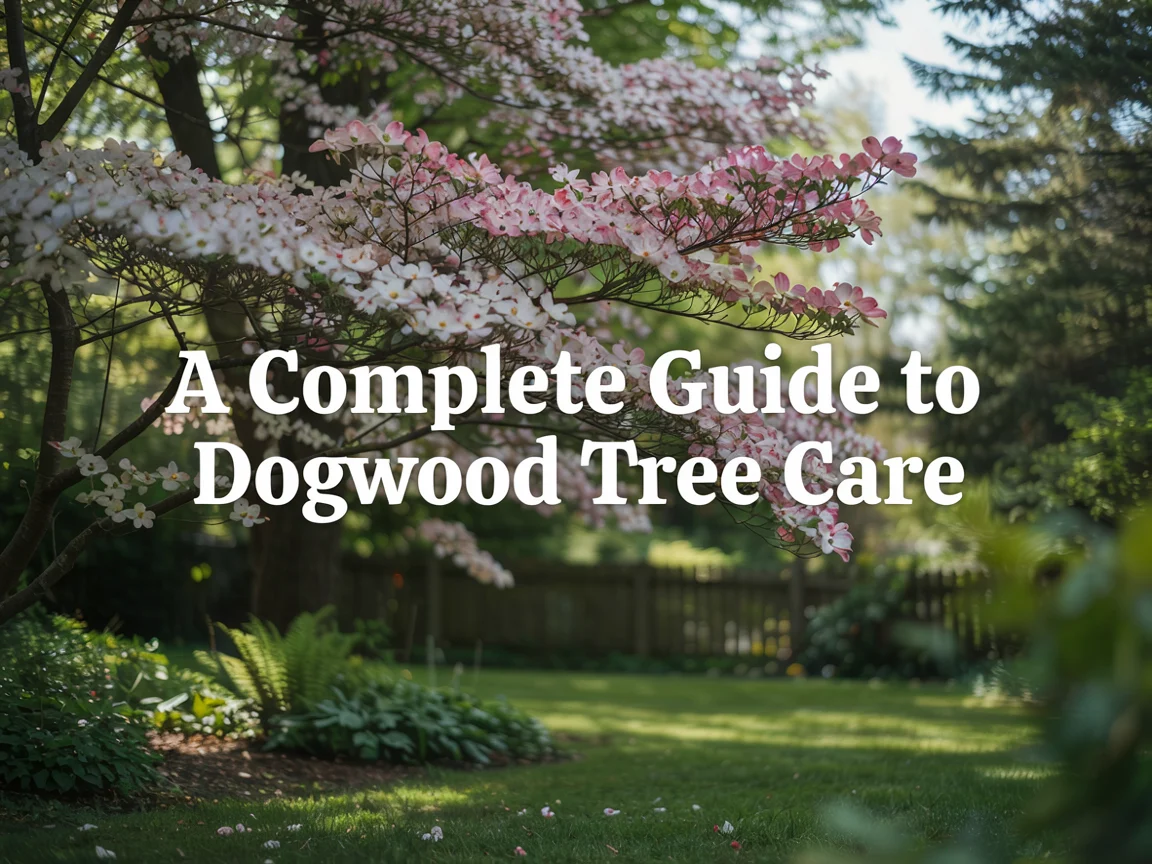
Dogwood is one of the most graceful small trees for a home landscape, known for layered horizontal branching and a spring flower display that rivals almost anything else blooming at the same time. It’s also a tree that’s genuinely more prone to stress and disease than many alternatives, which makes getting the basic care right particularly worthwhile.
Choosing the Right Planting Site
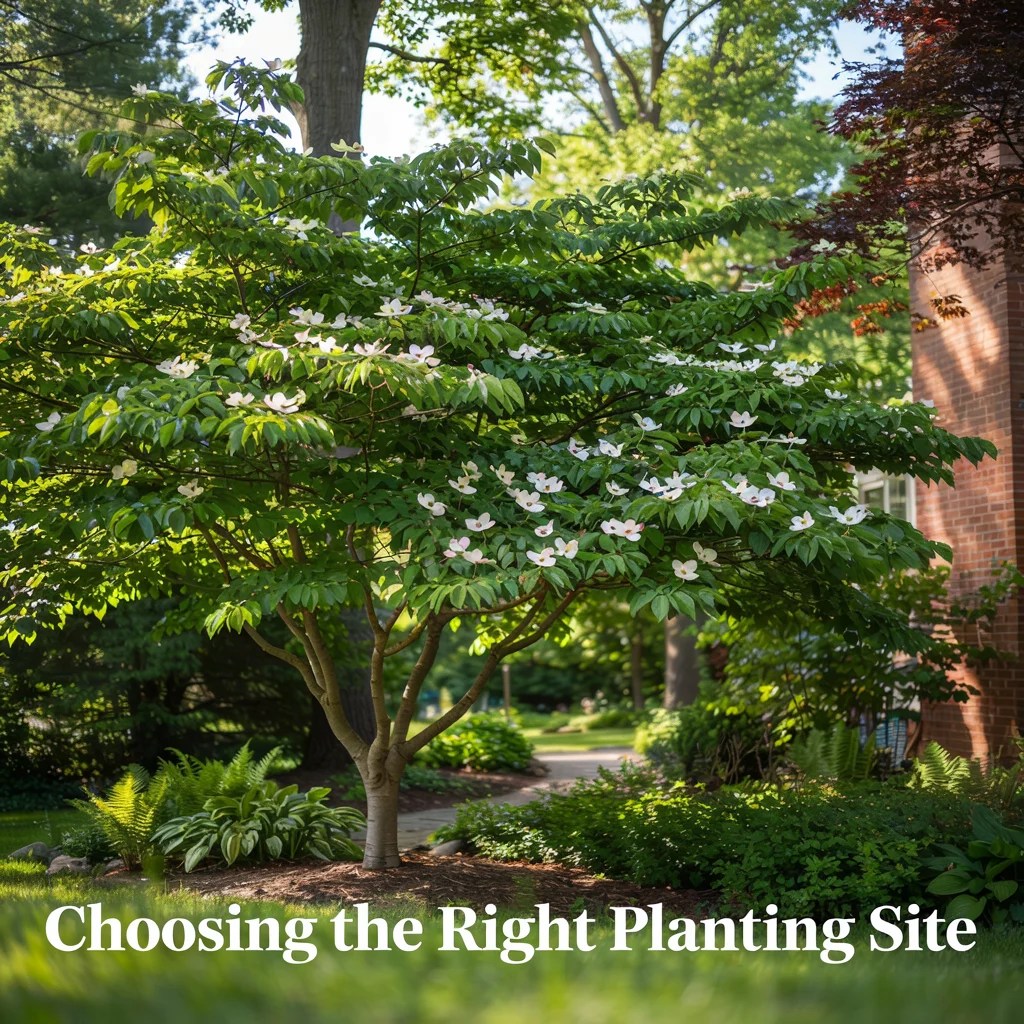
Choosing the right planting site sets the tone for a dogwood’s entire lifespan, since this tree performs noticeably better with some protection from harsh conditions than when planted in full, exposed sun.
Why Dogwood Prefers Partial Shade Over Full Sun
Why dogwood prefers partial shade over full sun comes down to its natural role as an understory tree, generally growing best with morning sun and afternoon shade rather than all-day exposure.
Avoiding Sites With Poor Air Circulation
Avoiding sites with poor air circulation matters considerably for dogwood, since stagnant, humid conditions around the foliage significantly increase the risk of fungal disease.
Preparing Well-Drained, Slightly Acidic Soil
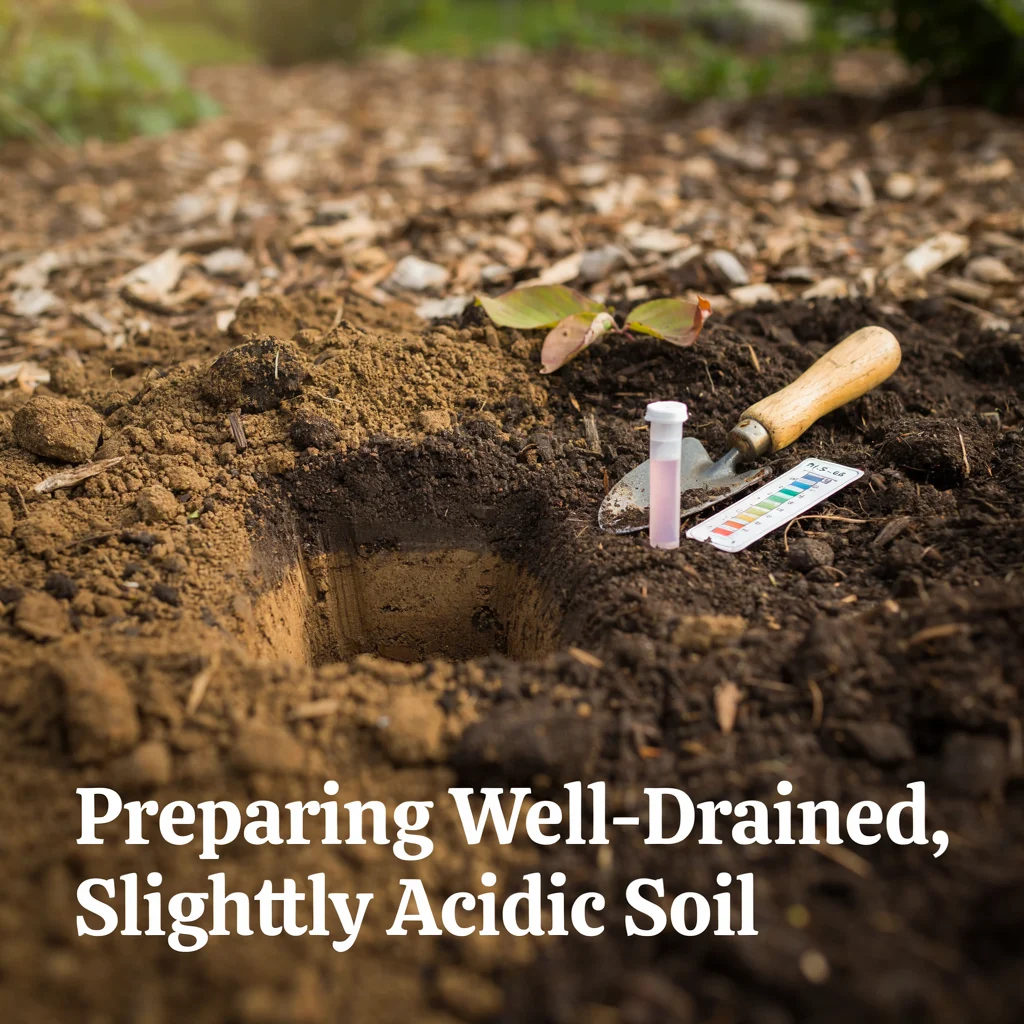
Preparing well-drained, slightly acidic soil gives a newly planted dogwood the best possible start, since this tree is notably sensitive to both poor drainage and soil pH that’s too alkaline.
Testing and Adjusting Soil pH Before Planting
Testing and adjusting soil pH before planting, aiming for a slightly acidic range, helps dogwood access nutrients properly and avoids the yellowing foliage alkaline soil can cause.
Why Good Drainage Prevents Root Stress
Why good drainage prevents root stress comes down to dogwood’s shallow, fibrous root system, which is considerably more prone to rot in consistently soggy soil than deeper-rooted trees.
Watering Consistently Through Establishment
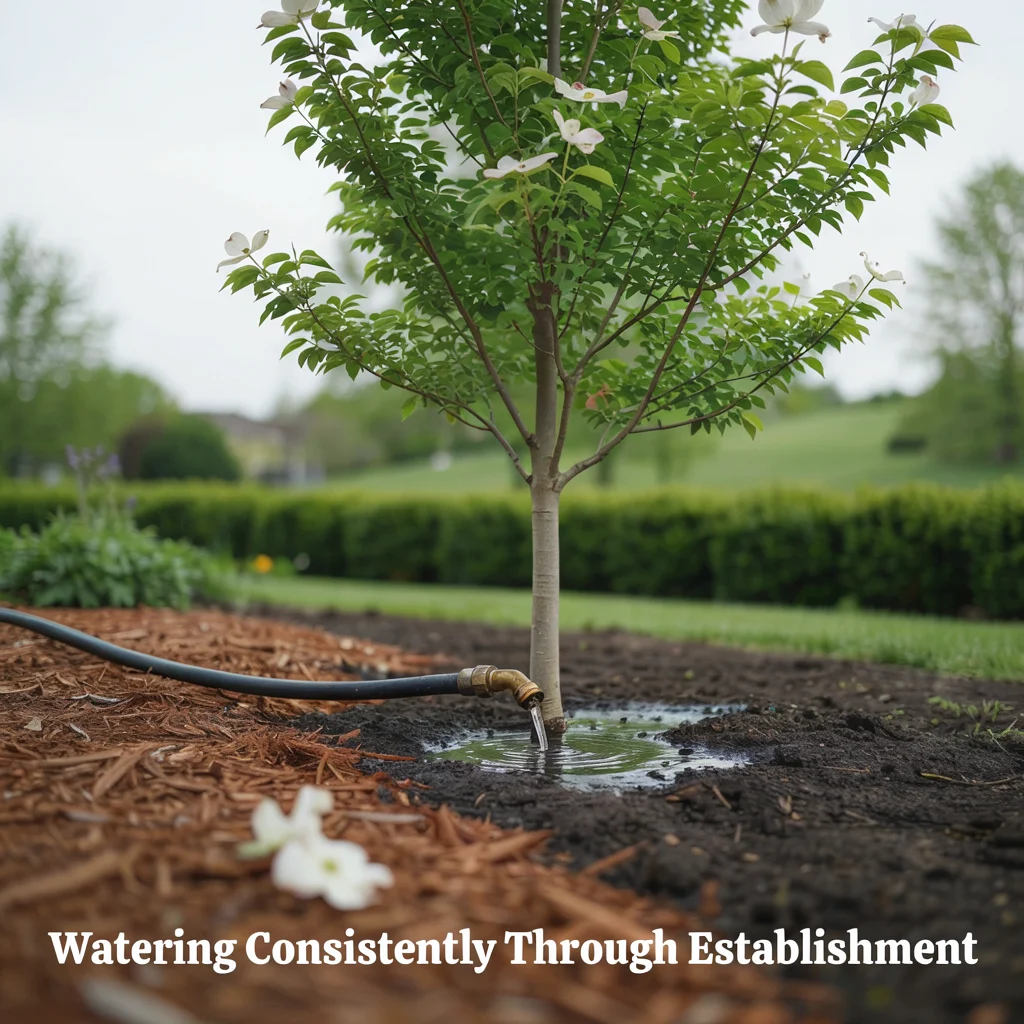
Watering consistently through establishment, particularly during the first two growing seasons, helps a young dogwood develop the root system it needs to handle occasional dry spells later on.
How Much Water a Young Dogwood Actually Needs
How much water a young dogwood actually needs is typically a deep watering once or twice weekly during dry periods, tapering off as the tree matures and its root system expands.
Why Drought Stress Makes Dogwood More Disease-Prone
Why drought stress makes dogwood more disease-prone comes down to a weakened tree’s reduced ability to fend off the fungal and insect problems that more readily take hold in stressed trees.
Mulching Properly to Protect the Root Zone
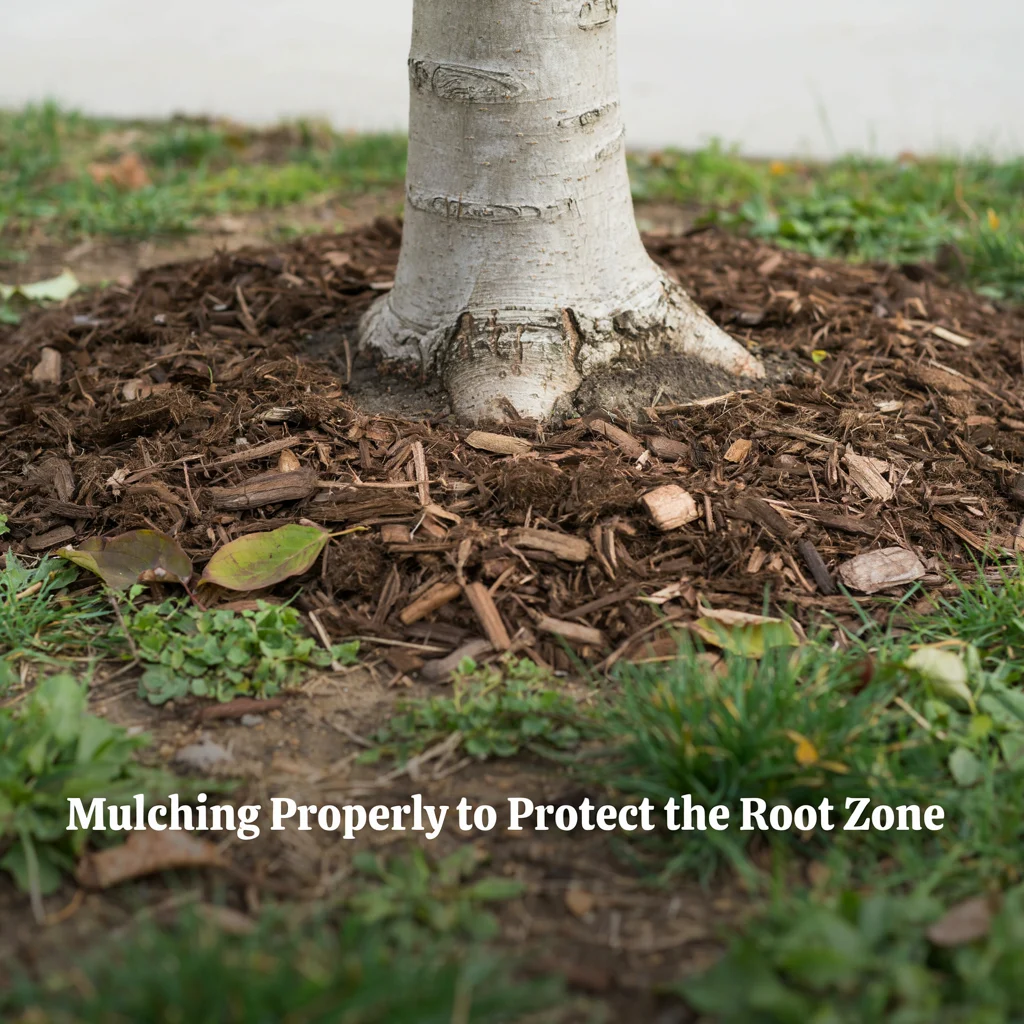
Mulching properly to protect the root zone with a 2 to 3 inch layer helps dogwood retain the consistent soil moisture it prefers while also protecting shallow roots from temperature swings.
Why Mulch Volcanoes Are Especially Harmful to Dogwood
Why mulch volcanoes are especially harmful to dogwood comes down to trunk rot risk, since piling mulch directly against the bark traps moisture against the trunk and invites disease and pests.
Keeping Mulch Pulled Back From the Trunk
Keeping mulch pulled back from the trunk by a few inches avoids this problem entirely while still providing the moisture and temperature benefits mulch offers the root zone.
Fertilizing Sparingly and at the Right Time
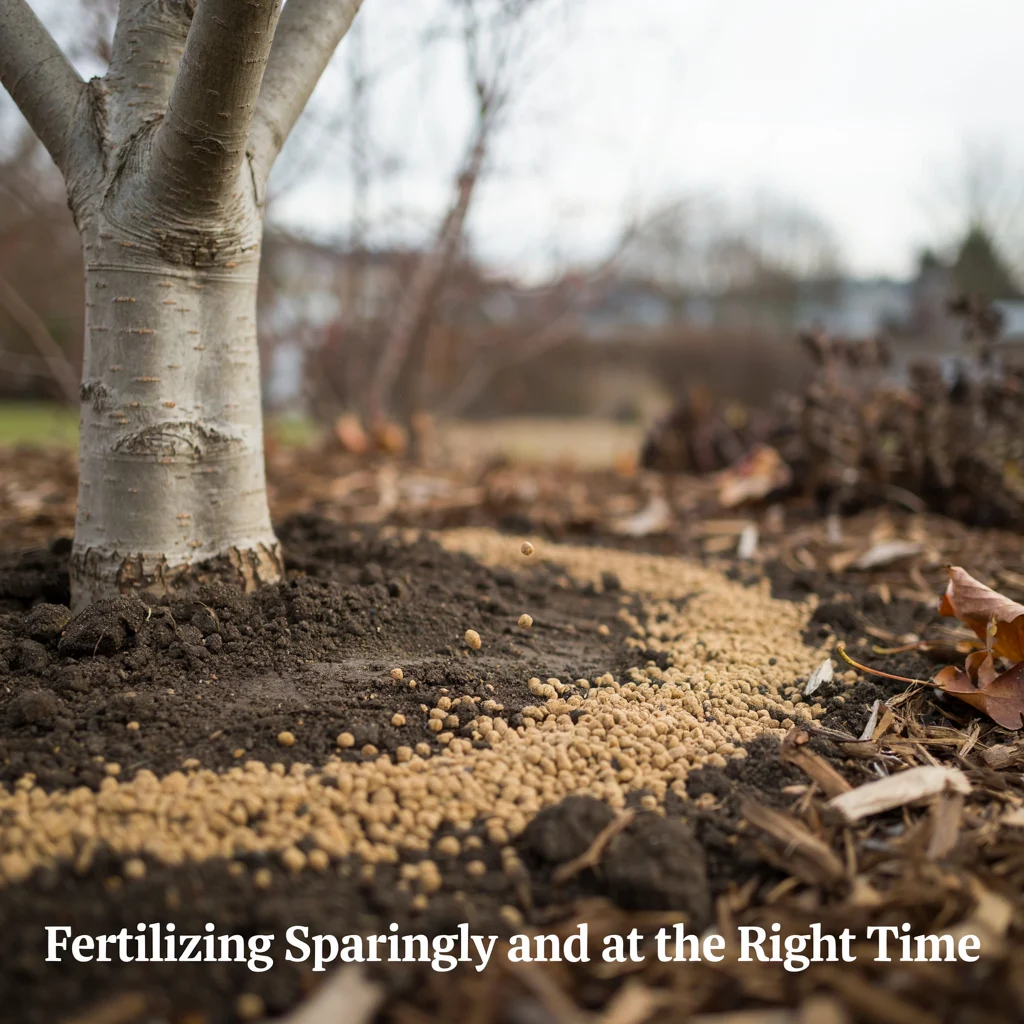
Fertilizing sparingly and at the right time supports healthy growth without pushing the kind of soft, rapid growth that’s more vulnerable to pests and disease.
Why Late Winter Is the Best Time to Fertilize Dogwood
Why late winter is the best time to fertilize dogwood comes down to timing growth with the plant’s natural cycle, giving nutrients time to become available as the tree breaks dormancy in spring.
Signs That a Dogwood Is Being Over-Fertilized
Signs that a dogwood is being over-fertilized include excessive leafy growth at the expense of flowering, which is a common result of applying too much nitrogen-heavy fertilizer.
Watching for Anthracnose and Other Common Diseases
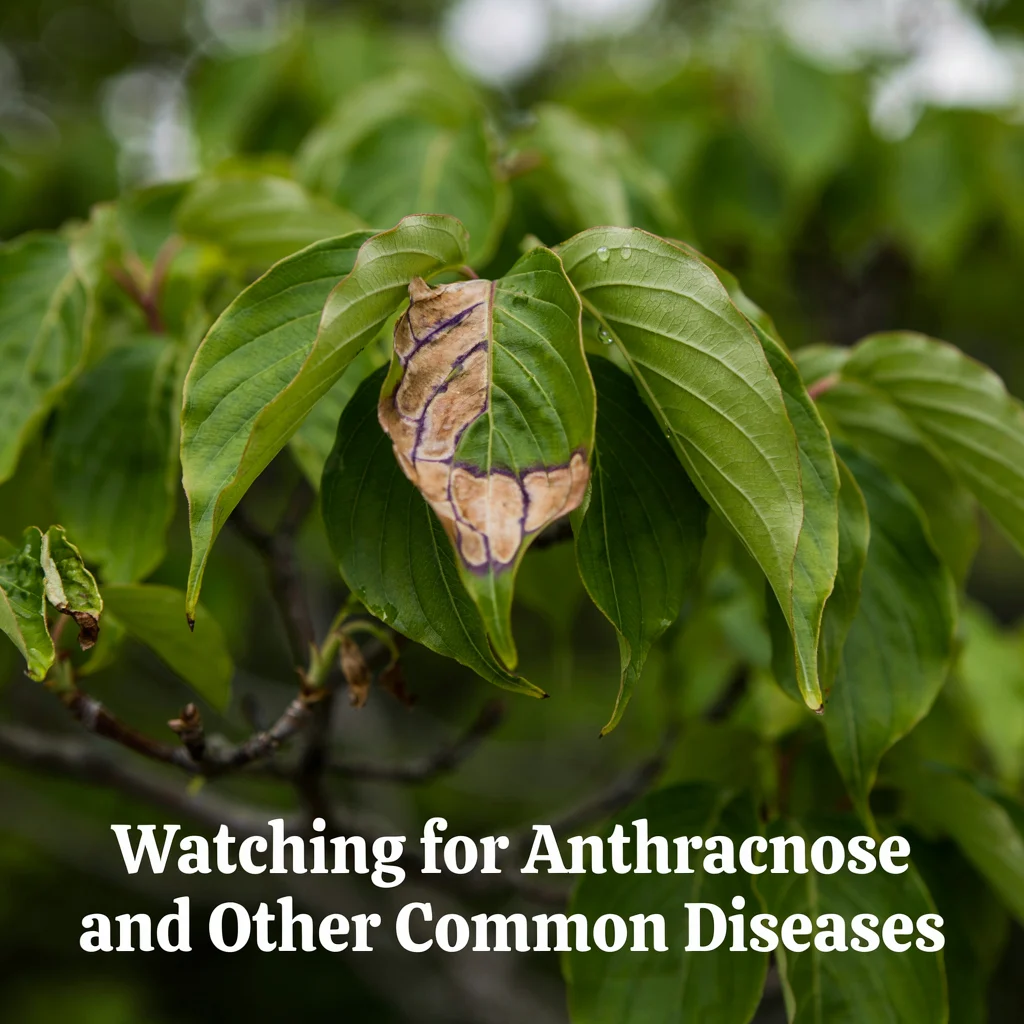
Watching for anthracnose and other common diseases is arguably the single most important part of ongoing dogwood care, since this tree is notably more disease-susceptible than many other ornamental species.
Recognizing Early Signs of Dogwood Anthracnose
Recognizing early signs of dogwood anthracnose, including tan or purple-bordered leaf spots and dieback of lower branches, allows for earlier intervention before the disease spreads significantly.
Cultural Practices That Reduce Disease Pressure
Cultural practices that reduce disease pressure include cleaning up fallen leaves each autumn, pruning for better air circulation, and avoiding overhead watering that keeps foliage wet longer than necessary.
Pruning for Structure and Airflow
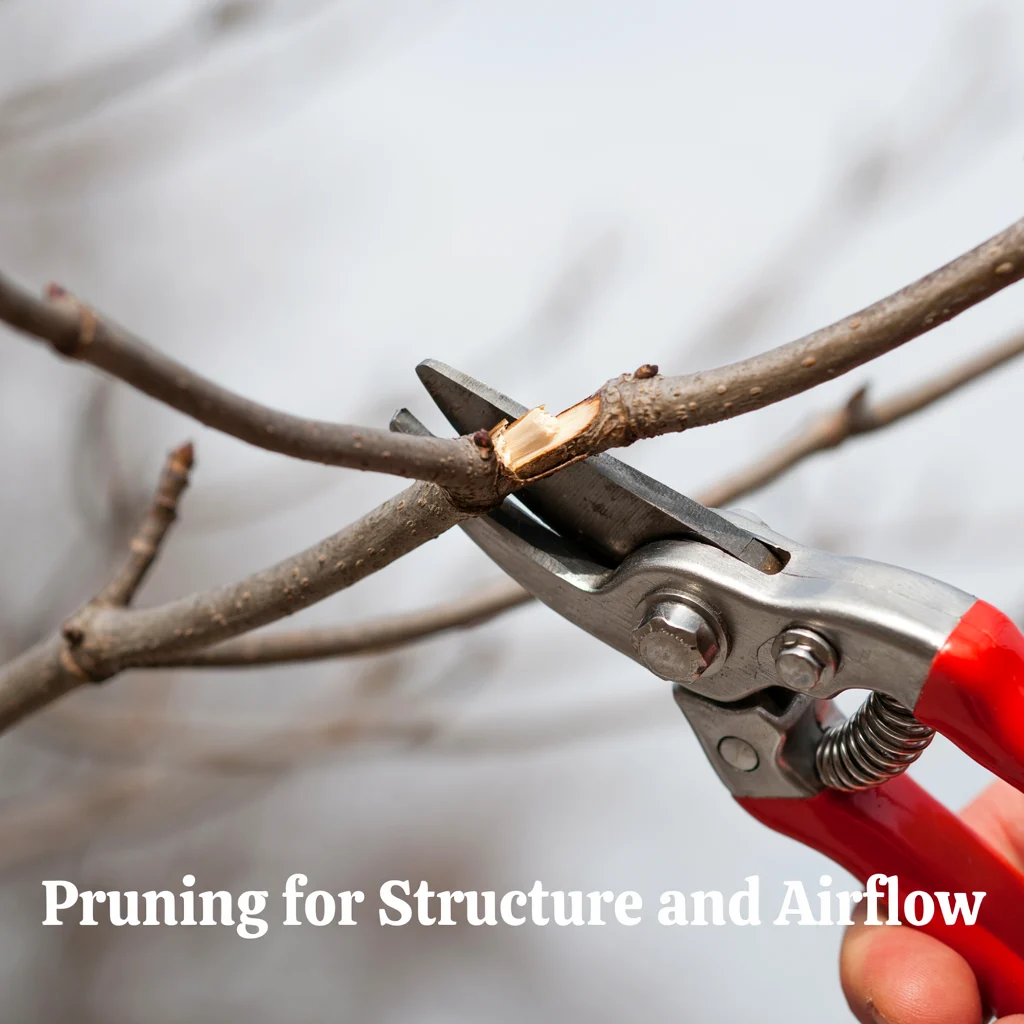
Pruning for structure and airflow should generally be done sparingly and during the right season, since improper timing or overly aggressive pruning can stress a dogwood unnecessarily.
Best Time of Year to Prune Dogwood
Best time of year to prune dogwood is during dormancy in late winter, which minimizes stress and reduces the risk of attracting disease-carrying insects drawn to fresh pruning wounds in warmer weather.
Removing Dead or Diseased Wood Promptly
Removing dead or diseased wood promptly, rather than waiting for the next scheduled pruning session, helps prevent disease from spreading further into otherwise healthy parts of the tree.
The Bottom Line
Dogwood asks for more attentiveness than many low-maintenance trees, particularly around site selection, consistent moisture, and disease monitoring, but the spring flower display and graceful branching structure make that extra care worthwhile for most gardeners. Getting the planting site and watering right early on goes a long way toward avoiding the disease issues dogwood is most known for.
For more on this, our guides on How to Grow Ligularia: Planting and Care Guide, How to Grow Morning Glory: Planting and Care Tips, and Simple Steps for Creating a More Eco-friendly Garden cover related ground. For related ideas, see our guides on How to Start a No-Till Raised Bed Garden and Plants That Like Wet Soil.
Frequently Asked Questions
How Often Should a Dogwood Tree Be Watered?
A newly planted dogwood typically needs deep watering once or twice a week during dry periods, tapering to occasional watering during drought once the tree is well established.
Why Are the Leaves on My Dogwood Turning Brown or Spotted?
Brown or spotted leaves on a dogwood are commonly a sign of anthracnose or another fungal disease, often worsened by poor air circulation or excess moisture on the foliage.
Does Dogwood Need Full Sun to Bloom Well?
Dogwood generally blooms well in partial shade and doesn’t require full sun, unlike many other flowering trees, since it naturally grows as an understory species.
How Long Does It Take a Dogwood Tree to Mature?
A dogwood tree typically takes about 10 to 15 years to reach its full mature size, though it often begins flowering within just a few years of planting.
What Is the Most Common Problem With Dogwood Trees?
Anthracnose is generally the most common and serious problem with dogwood trees, particularly in humid climates or on trees already stressed by drought or poor site conditions.