
Woodland Garden Lighting for Magical Nights

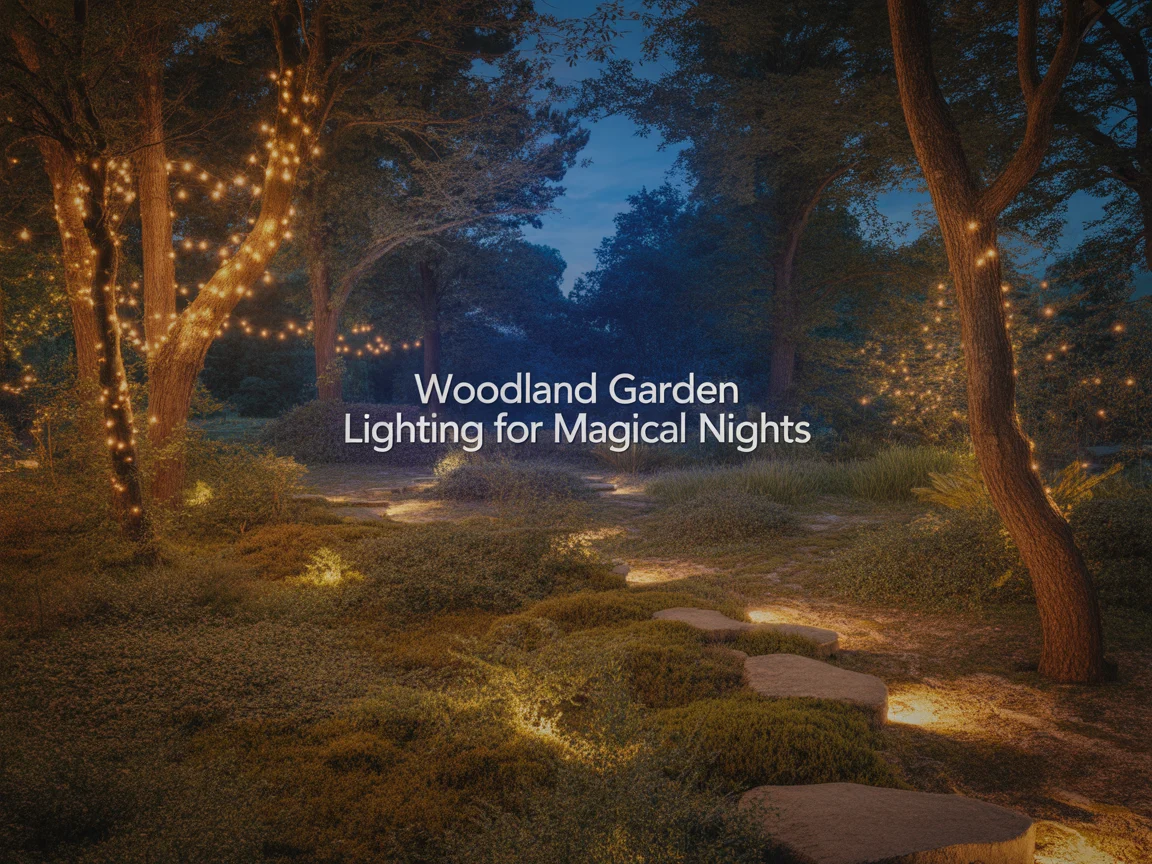
The first time I lit a woodland garden properly, I switched the system on at dusk and then simply stood still for a long time, because the space I had been working in for weeks had become somewhere I no longer recognized. Three mature beech trunks I had uplit with warm white spots rose out of the dark like cathedral columns, a thread of fairy light traced the underside of the canopy, and a single lantern glowed at the turn of the bark path where it disappeared into the ferns. By daylight it had been a pleasant shaded garden. By night it was an enchanted forest, and the owner stayed out there until well past eleven on a cold October evening simply because she could not bring herself to go inside. That moment taught me that woodland garden lighting is not decoration added to a garden — it is the creation of an entirely second garden that only exists after dark.
Woodland garden lighting ideas combine warm-toned low-voltage and solar fixtures including tree uplights, hanging lanterns, fairy string lights, path spikes, and downlights with a deliberately restrained, layered design through shade-tolerant planting and a mature or developing tree canopy, creating a magical evening atmosphere that transforms the woodland garden from a daytime green space into an enchanting nighttime sanctuary. The lighting gives the woodland garden a reason to be enjoyed after dark, and the trees, ferns, and stone give the lighting the natural forms it needs to feel genuinely woodland rather than merely illuminated.
Since that first installation I have designed, fitted, and refined woodland garden lighting across sites ranging from a tiny urban courtyard with a single multi-stem birch to large rural gardens with established oak woodland. I have created beautiful, atmospheric woodland lighting from a handful of solar lights costing almost nothing, and I have also designed complete low-voltage landscape lighting systems that turn a garden into a destination. In this article I am sharing the best woodland garden lighting ideas covering tree lighting, path lighting, lanterns, technology, DIY approaches, and seasonal design.
Tree Trunk Uplighting for Dramatic Woodland Atmosphere
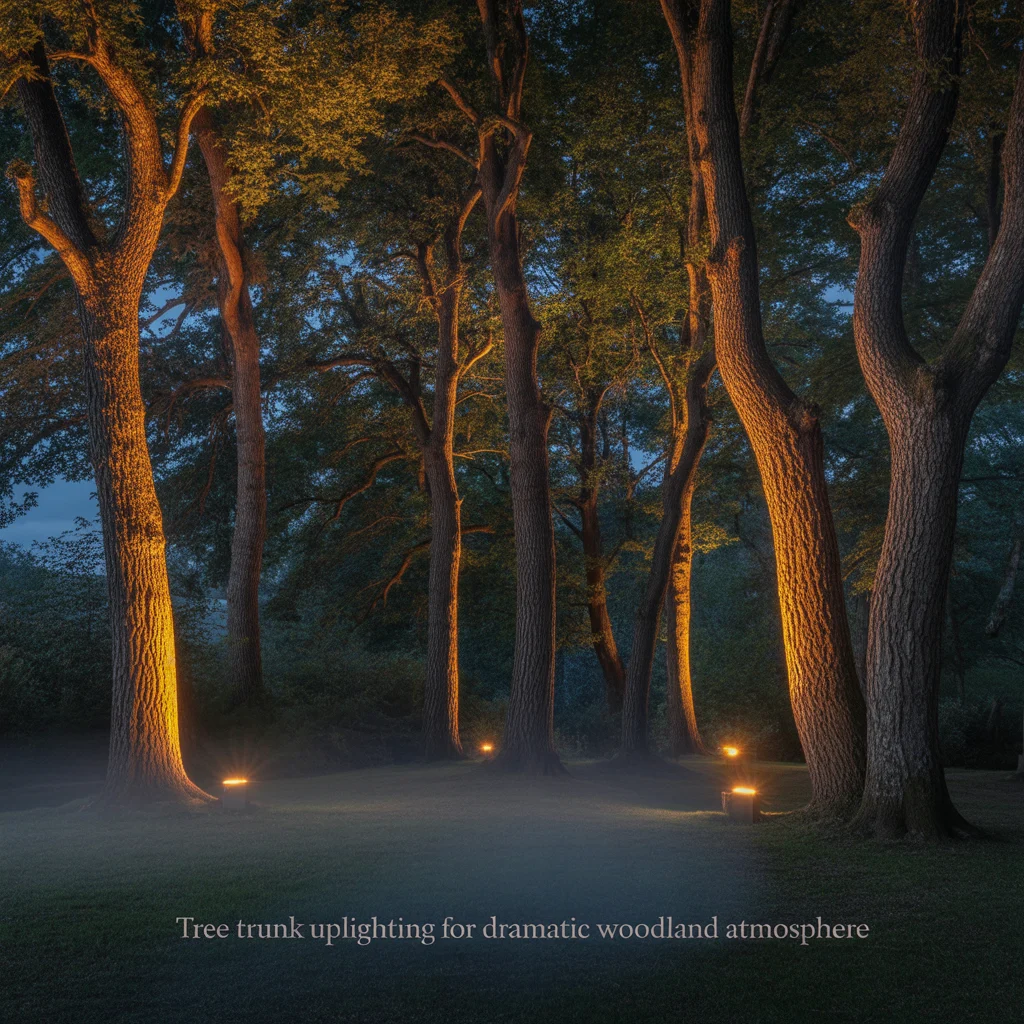
Tree trunk uplighting is the single most transformative woodland garden lighting idea, using ground-set spotlights angled upward to wash light over the trunk and into the canopy of a mature tree, creating the dramatic vertical structure that defines a beautifully lit woodland garden. I uplit a group of three mature trees in my own woodland section using warm-white spots set at the base of each trunk, and the effect of the illuminated trunks rising out of the dark surrounding planting did more to create atmosphere than every other fixture in the garden combined. Further design ideas covering path materials, planting, and layout suited to a wide range of growing conditions are explored in these woodland garden paths suited to cold zone 4 climates.
Spotlight Types for Tree Uplighting
A 12V low-voltage spike spotlight, a flush in-ground uplight, and an adjustable surface-mounted spot are three fixture types suited to woodland tree uplighting. A 12V low-voltage spike spotlight pushed into the soil at the trunk base provides the most flexible and easily adjusted uplight, allowing the beam angle to be re-aimed seasonally as the canopy grows, which makes it the standard choice for most woodland tree uplighting. A flush in-ground uplight set into a small gravel-filled pit gives the most discreet daytime appearance because the fixture disappears at ground level, suiting a refined design where no hardware should be visible by day. An adjustable surface-mounted spot fixed to a low stake or stone provides a robust option where soil conditions make a spike unstable.
Beam Angle and Color Temperature for Tree Lighting
A narrow 15-degree beam, a medium 24 to 36-degree beam, and a warm 2700K color temperature are three specifications suited to woodland tree uplighting. A narrow 15-degree beam concentrates the light into a tight column up a tall, slender trunk such as a birch or pine, emphasizing height. A medium 24 to 36-degree beam spreads the light across a broad, spreading canopy such as an oak or beech, washing the underside of the branches. A warm 2700K to 3000K color temperature is essential for woodland uplighting because cool white light renders bark and foliage harsh and clinical, while warm white renders the natural browns and greens with the inviting, firelit quality that makes the lighting feel magical rather than commercial.
Positioning Uplights at the Tree Base
Tree uplights are positioned by setting the fixture 12 to 24 inches from the trunk base and angling the beam to graze up the bark surface, which reveals the texture of the bark and avoids the flat, washed-out look of a light aimed straight up the center. I set two opposing uplights on larger specimen trees to model the trunk from both sides and eliminate a harsh single-direction shadow, and I conceal each fixture behind a fern or low planting so the source is invisible while the lit trunk appears to glow from within.
Fairy String Lights Through the Woodland Canopy
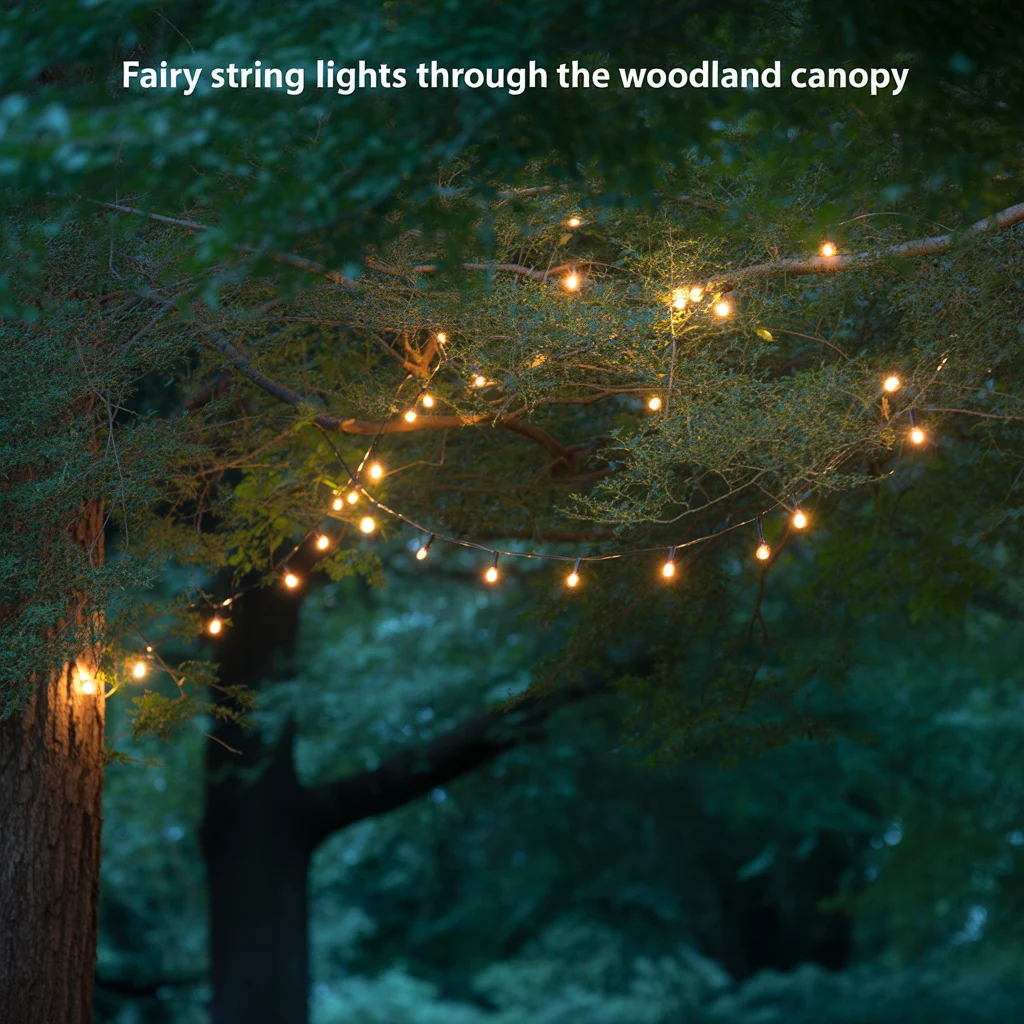
Fairy string lights wound through tree branches are the most iconic and widely shared woodland garden lighting idea, draping warm pinpoint LEDs through the canopy to create the magical, star-scattered effect that appears in almost every beautiful woodland garden lighting picture. I wound warm-white fairy lights through the lower branches of a multi-stem tree above a seating area, and the effect of the tiny lights suspended in the dark canopy turned an ordinary corner into the most photographed spot in the entire garden.
Fairy Light Types for a Woodland Canopy
Warm-white copper-wire string lights, solar fairy lights, and low-voltage connectable string lights are three types suited to a woodland canopy. Warm-white copper-wire string lights use a fine, almost invisible wire that disappears against bark by day and suspends the LEDs as floating points of light by night, making them the most magical option for branch wrapping. Solar fairy lights with a panel sited in a sunnier gap provide a completely wireless installation suited to a tree away from any power source, though their evening run time is shorter in winter. Low-voltage connectable string lights run from the same transformer as the rest of a landscape lighting system, providing reliable all-night operation and the ability to link multiple trees on a single controlled circuit.
Wrapping Technique for Branch Lighting
Fairy lights are wrapped along a woodland canopy by following the natural lines of the branches rather than spiraling tightly, threading the string along the top of each main limb so the LEDs sit upward and outward into the open canopy. I avoid wrapping trunks in tight candy-cane spirals because that reads as a festive municipal display rather than a naturalistic woodland effect, and instead I run loose, irregular runs that echo the random structure of the branches. A warm 2700K LED color temperature keeps the canopy lighting consistent with the warm tone of the tree uplighting below.
Density and Coverage for a Magical Effect
A light spacing of 4 to 6 inches, a coverage of one main canopy zone per seating area, and a total of 200 to 400 LEDs per medium tree are three guidelines suited to woodland fairy lighting. A 4 to 6-inch LED spacing produces the scattered-star density that looks magical without becoming a solid sheet of light. Concentrating coverage in one canopy zone above a key spot such as a bench or table creates a focal pool of light rather than diluting the effect across the whole garden. A budget of 200 to 400 LEDs for a medium tree gives a convincing canopy without overwhelming the natural form of the branches.
Hanging Lanterns From the Woodland Canopy
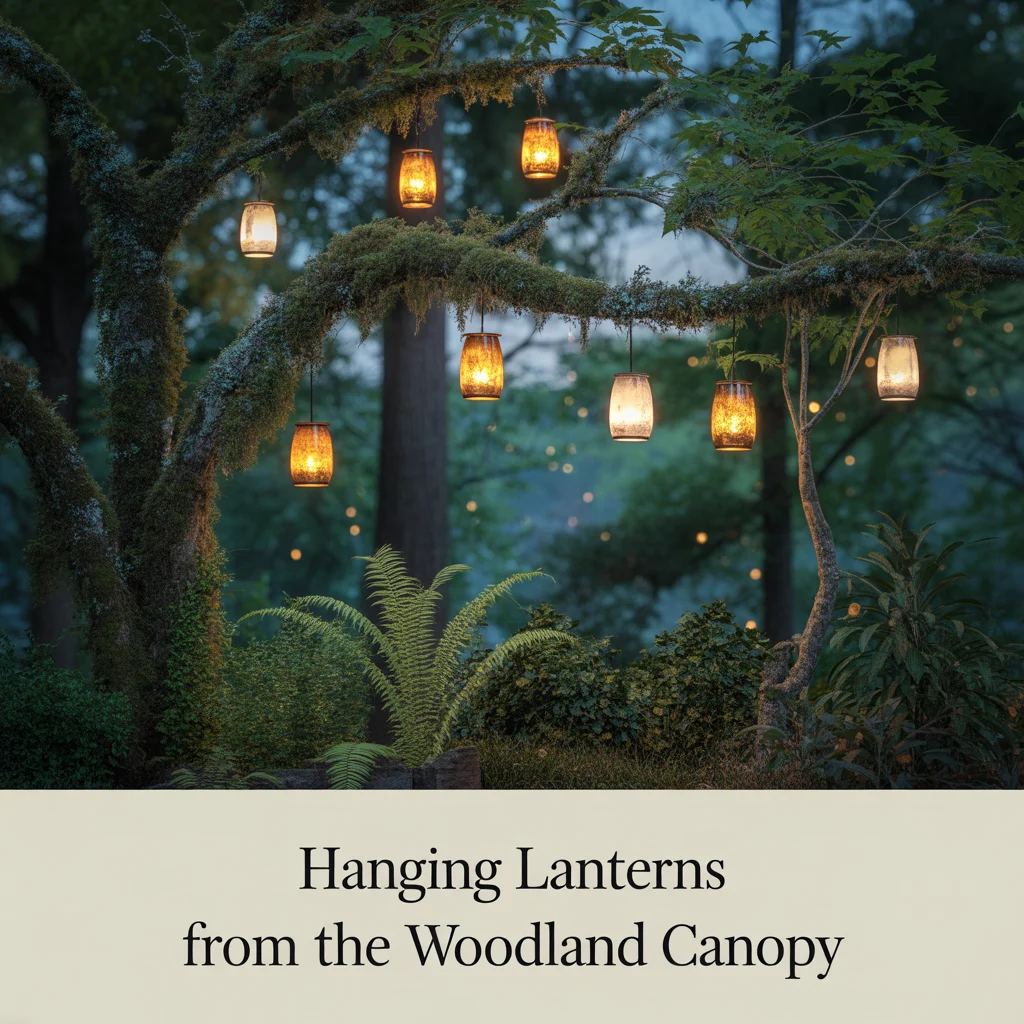
Hanging lanterns suspended from tree branches are a classic woodland garden lighting idea that combines the rustic charm of a flickering enclosed flame or warm bulb with the natural anchor points the canopy provides, creating pools of soft, swinging light at head height through the woodland. I hung a series of rustic metal lanterns from the lower branches along a woodland path, and the gentle movement of the lanterns in the breeze and the warm flickering light inside them gave the path a storybook quality that fixed lighting could never produce. Further inspiration for adapting this kind of naturalistic woodland approach to a wider range of climates can be found in these natural woodland gardens that work in colder zones.
Lantern Types for a Woodland Garden
Rustic metal candle lanterns, solar LED lanterns, and Moroccan pierced lanterns are three lantern types suited to a woodland canopy. Rustic metal candle lanterns holding a real or LED candle provide the most authentic flickering glow and weathered, aged appearance that suits an informal woodland setting, developing an attractive patina over time. Solar LED lanterns with an integrated panel and warm flickering bulb provide a maintenance-free hanging light that needs no candle replacement and switches on automatically at dusk. Moroccan pierced lanterns cast intricate patterns of light onto the surrounding foliage and ground, suiting a more decorative or entertaining-focused woodland corner.
Hanging Lanterns Safely From Branches
Lanterns are hung safely from a woodland canopy by selecting living branches of at least 2-inch diameter, using a soft tree-friendly strap or coated wire rather than thin cord that cuts into the bark, and hanging at a clearance that keeps the lantern above head height on the path. I use adjustable hanging straps that spread the load and do not damage the bark, and I site flame lanterns well clear of dry foliage and never leave a real candle unattended. For most woodland paths I hang lanterns at 7 to 8 feet so they glow at eye level for a seated viewer while staying clear of anyone walking beneath.
Solar Spike Lights Along Fern-Lined Paths
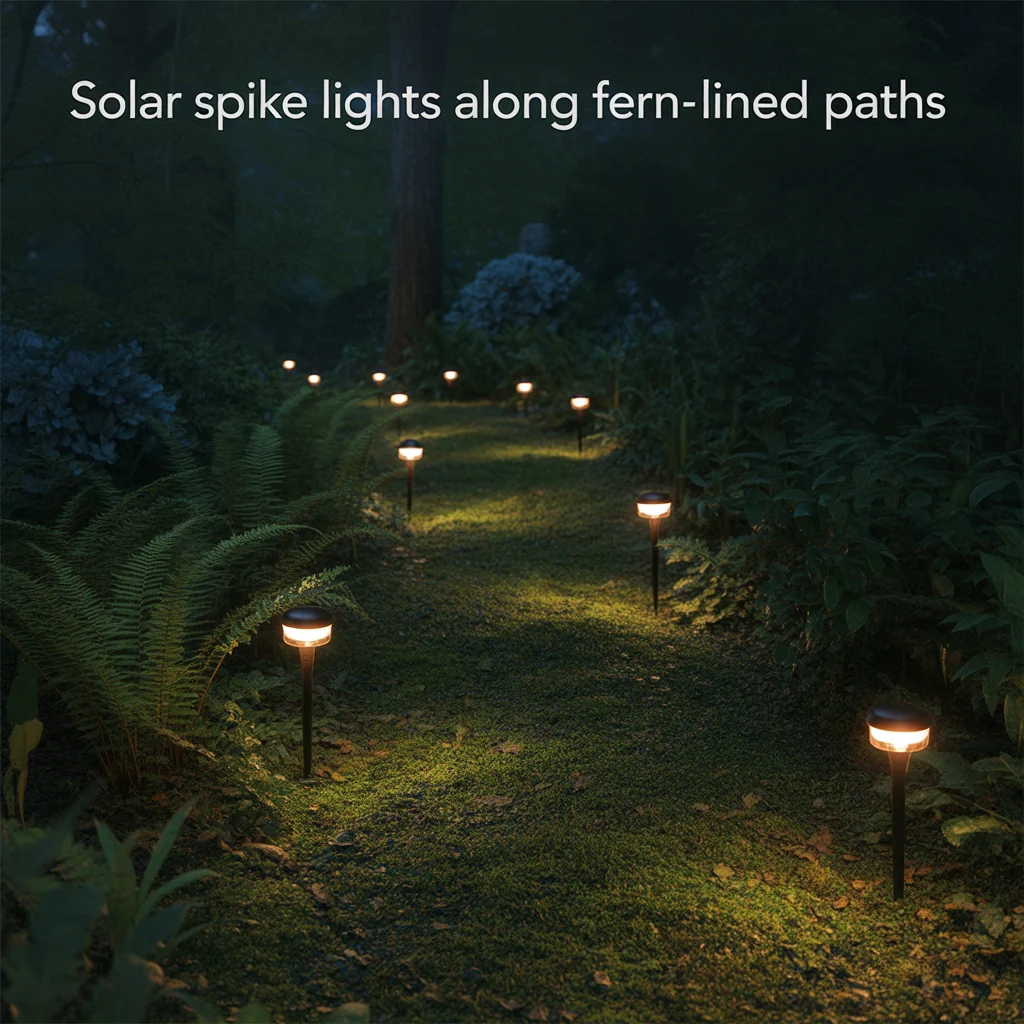
Solar spike lights pushed into the ground along a path are the most accessible woodland garden lighting idea, providing both atmospheric glow and practical navigation safety along a fern-lined route with no wiring and no running cost. I lined a curved bark path through ferns with simple warm-white solar spike lights, and although they are the most modest fixtures in any woodland garden, the line of soft glows tracing the curve of the path through the planting created exactly the gentle, guided-discovery effect that makes a woodland path inviting after dark.
Solar Light Types for a Woodland Path
Warm-white solar spike lights, solar bollard lights, and solar cap lights on path edging are three types suited to a woodland path. Warm-white solar spike lights with a small panel on top push directly into the soil between path-edge plants and cast a soft pool onto the path surface, making them the simplest and most flexible woodland path light. Solar bollard lights at 12 to 18-inch height provide a slightly taller, more defined edge marker suited to a path that needs clearer navigation. Solar cap lights fixed to log roll or post edging integrate the light into the path edge itself, suiting a path with existing timber edging.
Solar Performance in a Shaded Woodland
Panel placement, battery capacity, and a warm color temperature are three considerations for solar lighting in shade. Panel placement is the critical factor in a woodland garden, because the dense canopy that creates the daytime atmosphere also blocks the sunlight solar lights need, so I site separate-panel solar fixtures with the panel in a sunnier gap and only the light unit beneath the trees. A larger battery capacity of 1000mAh or above extends run time through the long winter evenings when woodland lighting matters most. A warm 2700K to 3000K solar LED keeps the path lighting consistent with the warm tone of the rest of the woodland scheme rather than the harsh blue-white of cheaper solar units.
Spacing Path Lights for Safe Navigation
Solar path lights are spaced for safe navigation by setting fixtures at 4 to 6-foot intervals along the path edge, with a closer 3-foot spacing at each curve or step where the route changes and clear guidance matters most. I stagger the lights on alternating sides of a wider path rather than lining them up in a rigid avenue, which keeps the effect naturalistic, and I place an additional light at any change of level so the foot placement is always clearly visible.
Low-Voltage Landscape Lighting System
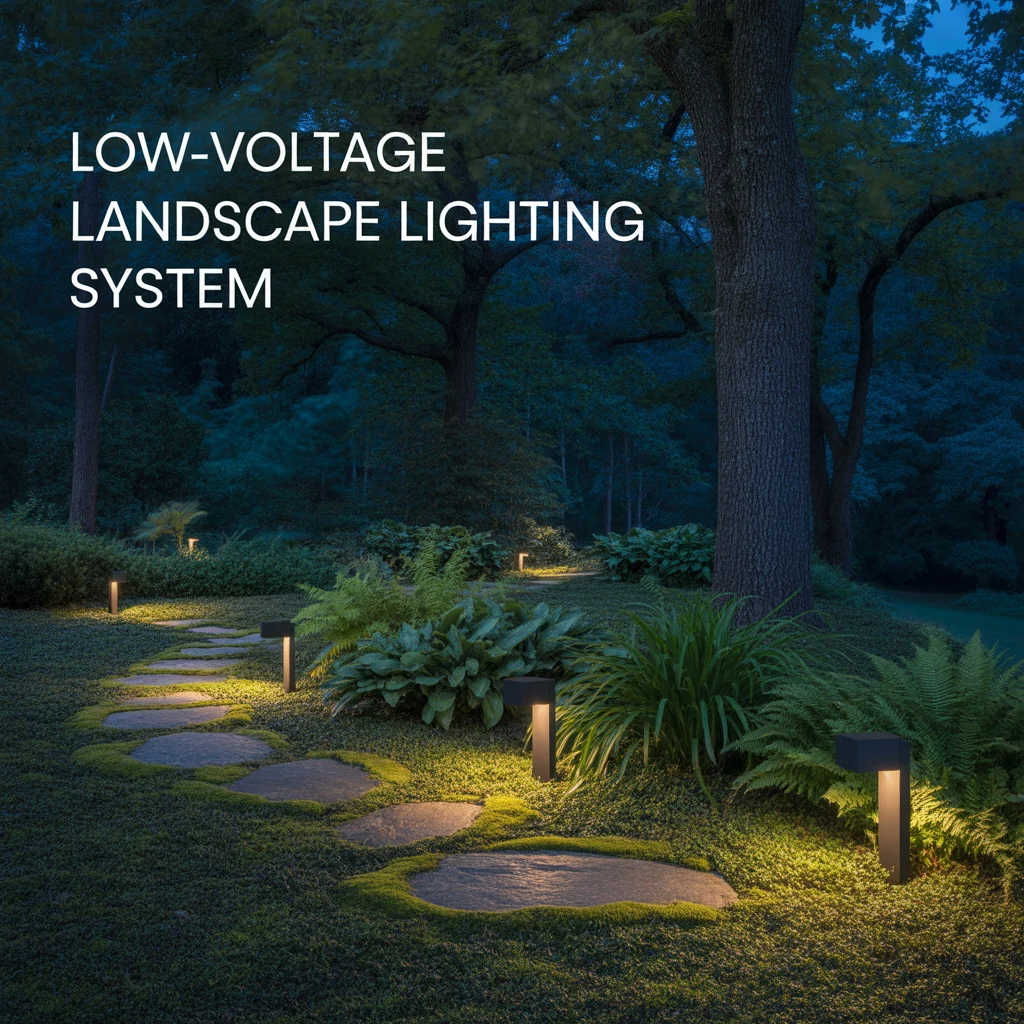
A low-voltage landscape lighting system is the professional foundation for a complete woodland garden lighting design, running multiple fixtures from a single 12V transformer on buried cable to provide reliable, controllable, all-night illumination with the flexibility to layer uplights, downlights, and path lights across the whole garden. I installed a low-voltage system for a homeowner who wanted to light an entire woodland garden, and the ability to run twenty coordinated fixtures from one controlled transformer produced a depth and consistency of lighting that no collection of individual solar lights could ever match.
Components of a Low-Voltage Woodland System
A 12V transformer, low-voltage buried cable, and warm-white LED fixtures are three core components of a woodland landscape lighting system. A 12V transformer rated to the total wattage of the fixtures, with a built-in photocell and timer, steps mains voltage down to a safe low voltage and switches the whole system on at dusk automatically. Low-voltage buried cable run a few inches below the soil or beneath the bark path carries power safely to each fixture without the trenching and certified electrical work that mains lighting requires. Warm-white LED fixtures throughout the system draw very little power, allowing many lights to run from a modest transformer for a fraction of the running cost of older halogen systems.
Designing the Layers of a Woodland System
Uplighting, path lighting, and accent lighting are three layers suited to a low-voltage woodland design. The uplighting layer of tree spots provides the dramatic vertical structure and is the backbone of the scheme. The path lighting layer of low spikes or downlights provides the practical navigation and the horizontal connecting thread through the garden. The accent layer of small spots on a specimen fern, a piece of stone, or a water feature provides the points of detail that reward closer attention. I balance the three layers so the garden has depth — bright focal trees, a guided path, and quiet pools of detail — rather than a flat, evenly lit space.
Safe Installation of Low-Voltage Lighting
Low-voltage woodland lighting is installed safely by keeping cable runs within the transformer’s rated distance, protecting cable where it crosses paths, and using waterproof IP65-rated connectors at every joint. I run cable along planting bed edges and beneath bark paths where it is protected and invisible, I sleeve any cable crossing an open area in conduit, and I make every connection with a proper waterproof connector rather than a taped joint, because reliable woodland lighting depends entirely on weatherproof connections in the damp conditions beneath a canopy.
Stone and Moss-Covered Lanterns
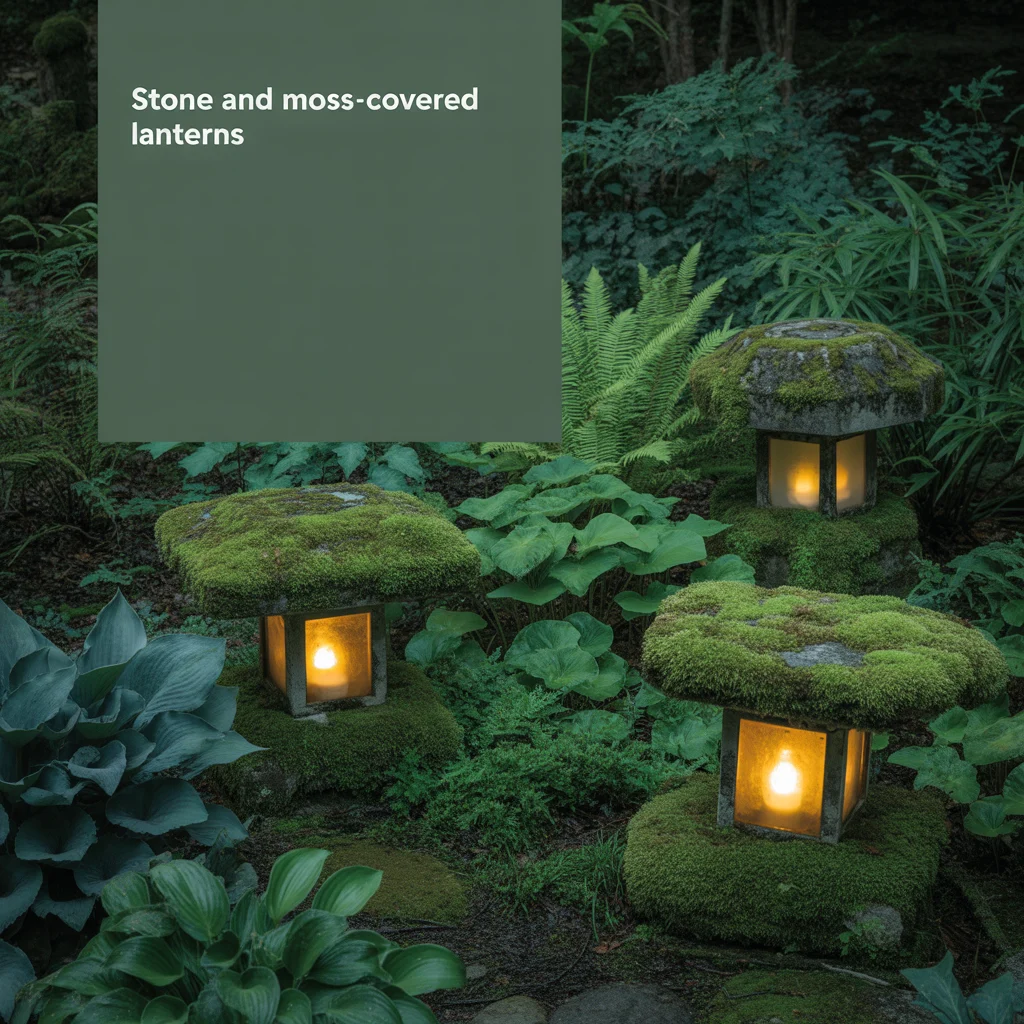
Stone and moss-covered lanterns set among the planting are a woodland garden lighting idea that combines a solid, permanent light source with the aged, naturalized appearance of an object the woodland has grown around, creating warm glows at ground and knee height that look as though they have always been there. I placed a heavy stone lantern beside a path bend and encouraged moss to grow over its base, and within two seasons the moss-softened lantern glowing warmly among the ferns had become the most established-looking and atmospheric feature on the entire route.
Lantern Types for a Naturalized Woodland Look
Carved stone lanterns, cast concrete lanterns, and rustic timber post lanterns are three types suited to a naturalized woodland setting. Carved stone lanterns in the Japanese tradition provide the most permanent and characterful ground-level light and develop moss and lichen naturally in the damp woodland shade, making them the most atmospheric naturalized lantern. Cast concrete lanterns provide a more affordable alternative that weathers and accepts moss almost as readily as natural stone. Rustic timber post lanterns mounted on a weathered oak post provide a warmer, woodland-appropriate alternative suited to a setting where stone would feel too formal.
Encouraging Moss on Stone Lanterns
Moss is encouraged on a stone lantern by siting it in deep shade, keeping the surface consistently moist, and applying a moss slurry to speed colonization. I position lanterns intended to naturalize in the most shaded, humid parts of the woodland garden where moss establishes readily, and I brush a slurry of blended moss and buttermilk onto the base and lower surfaces in spring to accelerate coverage. Within two to three seasons the lantern reads as a long-established woodland feature rather than a recently placed object.
Fire Pit and Flame Lighting in a Woodland Clearing
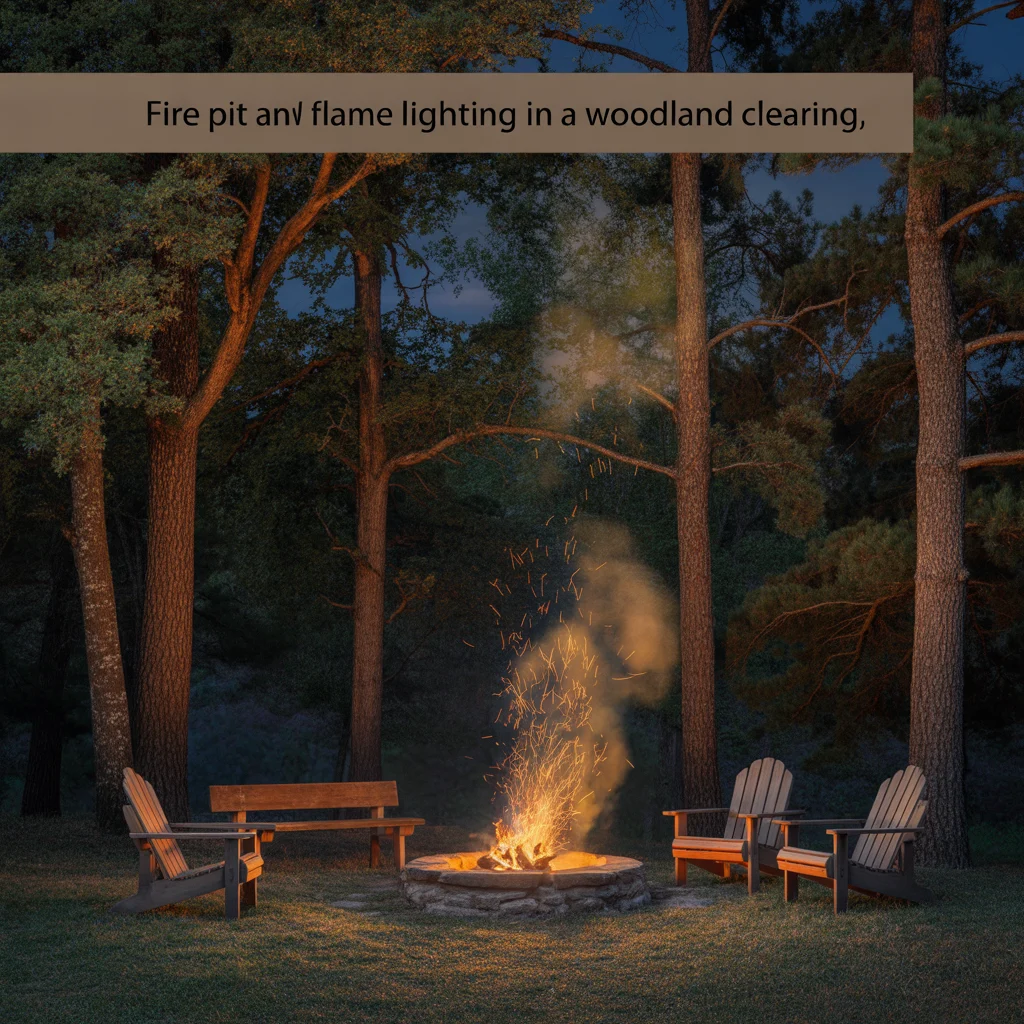
A fire pit or flame feature in a woodland clearing is a woodland garden lighting idea that provides the most primal and gathering-focused light of all, combining warmth, movement, and a natural focal point that draws people together in the heart of the woodland after dark. I built a simple stone-edged fire pit in a small clearing surrounded by woodland planting, and the flickering firelight on the surrounding trunks and the way it drew everyone into a circle made it the undisputed center of every evening gathering in that garden.
Fire Feature Types for a Woodland Clearing
A stone-edged wood fire pit, a gas fire bowl, and a bioethanol flame feature are three types suited to a woodland clearing. A stone-edged wood fire pit provides the most authentic crackling flame, scent, and warmth suited to a rustic woodland setting, though it requires a safe cleared zone and careful management near trees. A gas fire bowl provides instant, controllable flame with no sparks or smoke, making it the safest flame feature for a planted woodland clearing. A bioethanol flame feature provides a clean, smokeless flame in a compact unit suited to a smaller or more contained woodland seating area. For anyone gardening in a colder climate, a full comparison of cold-hardy plant choices and design approaches is covered in these woodland gardens for zone 5 shade design comparison.
Fire Safety in a Woodland Setting
Fire features in a woodland clearing are made safe by maintaining a generous cleared radius, siting the fire well away from overhanging branches, and keeping the surrounding planting from drying out. I site any open flame in a clearing with a minimum cleared and non-combustible radius around it, ensure no low branches or dry foliage overhang the fire, and keep a means of extinguishing it always to hand. In a woodland garden where dry leaf litter and overhanging canopy are everywhere, I lean toward contained gas or bioethanol features rather than open wood fires unless the clearing is genuinely large and well separated from the trees.
DIY Woodland Garden Lighting Ideas
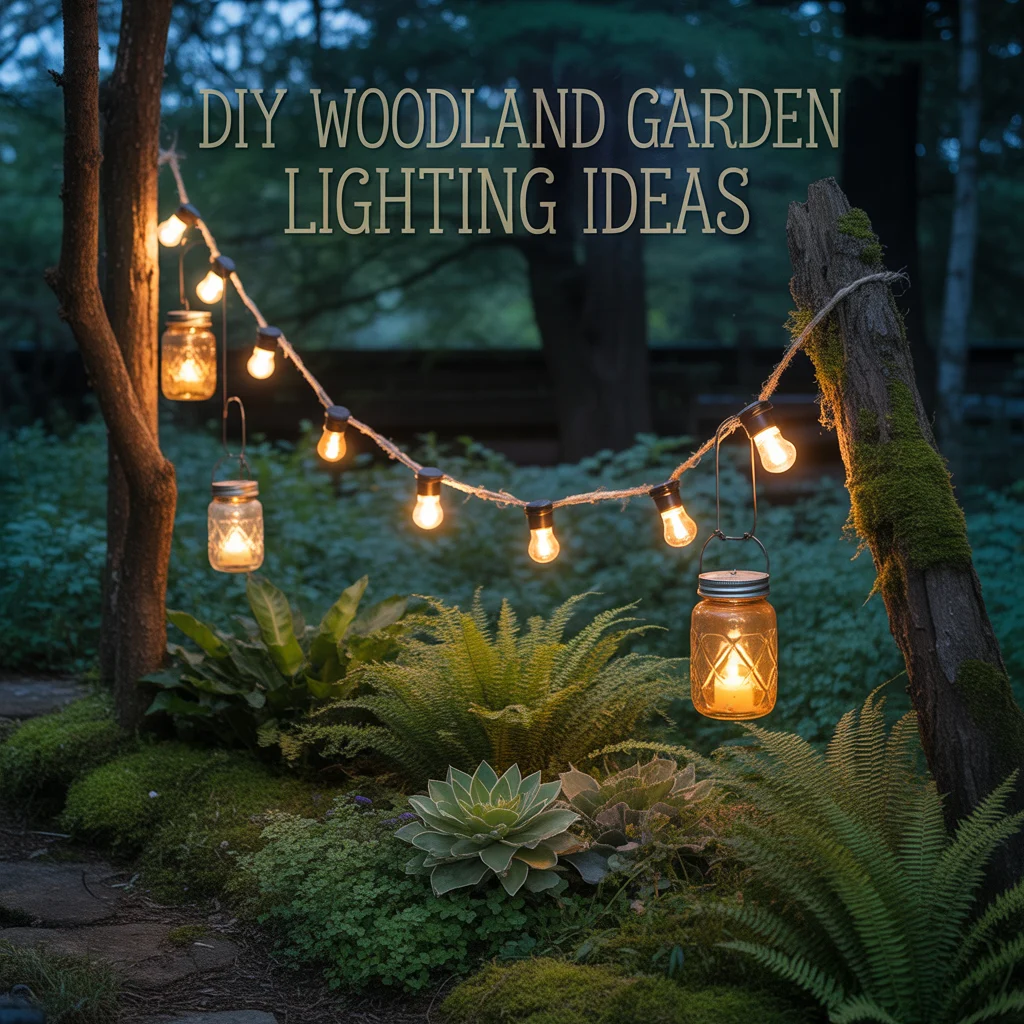
DIY woodland garden lighting ideas use simple, low-cost, self-installed fixtures and creative repurposed materials to create an atmospheric lit woodland on a modest budget without professional installation, proving that the magical effect of woodland lighting depends far more on placement than on expense. I created a complete DIY woodland lighting scheme for under the cost of a single professional fixture using solar lights, jam-jar lanterns, and battery fairy lights, and the result was genuinely atmospheric because the principles of warm light and careful placement matter more than the price of the hardware.
Easy DIY Woodland Lighting Projects
Jam-jar candle lanterns, battery-powered branch lights, and solar bottle lights are three DIY projects suited to a woodland garden. Jam-jar candle lanterns hung from branches with wire and filled with an LED tealight provide an almost-free hanging lantern with genuine rustic charm. Battery-powered fairy lights with a timer wound through a single accessible tree provide a magical canopy effect with no wiring and automatic nightly operation. Solar bottle lights using a solar stake pushed into a decorative bottle create characterful path markers from repurposed materials at no running cost.
DIY Placement Principles for Maximum Effect
Light one focal tree, mark the path turns, and keep every light warm-toned are three placement principles suited to DIY woodland lighting. Concentrating the budget on lighting one focal tree well creates far more impact than scattering weak lights evenly across the whole garden. Placing a light at each turn of the path provides both navigation and the sequence of discovery that makes a woodland path inviting. Keeping every light warm-toned rather than mixing in cheap blue-white units is the single most important DIY decision, because a consistent warm glow is what separates a magical scheme from a cluttered one regardless of budget.
Modern Minimalist Woodland Garden Lighting
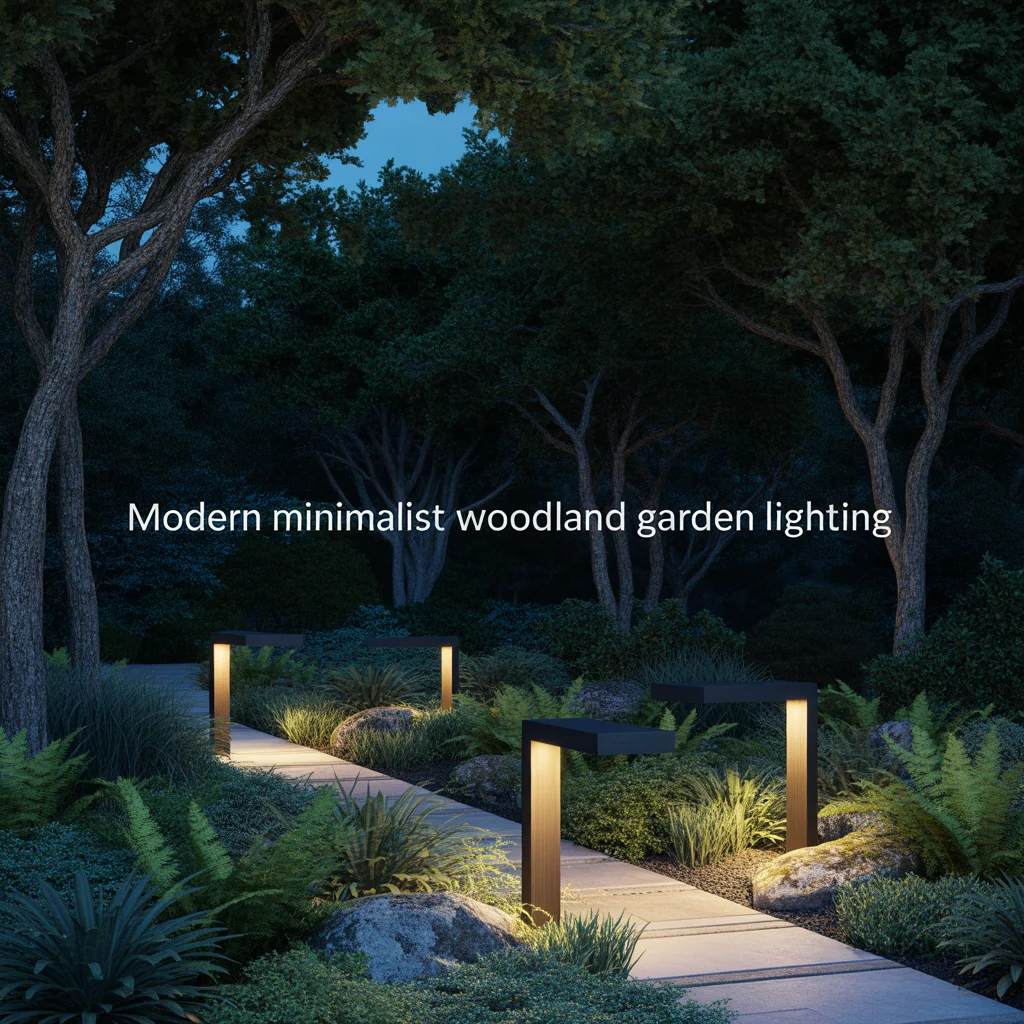
Modern woodland garden lighting ideas use a restrained palette of discreet, high-quality fixtures, clean warm light, and deliberate dark space to create a contemporary, architectural interpretation of the lit woodland that relies on contrast and precision rather than quantity of fixtures. I designed a modern woodland lighting scheme for a contemporary property using a small number of precisely aimed uplights and linear path washers with large areas left deliberately dark, and the restraint produced a sophisticated, gallery-like quality that a denser scheme could never achieve.
Modern Light Design Principles for a Woodland Garden
Restraint, precision aiming, and embracing darkness are three modern garden light design principles suited to a woodland setting. Restraint means using fewer, better fixtures and resisting the urge to light everything, allowing a small number of illuminated focal points to carry the whole scheme. Precision aiming means each fixture is carefully directed at a specific trunk, sculpture, or surface with no spill, creating clean pools of light against dark surroundings. Embracing darkness means treating the unlit areas as an active part of the design, because the contrast between light and dark is what gives a modern woodland scheme its drama and depth.
Modern Fixtures for a Contemporary Woodland
Discreet flush uplights, linear LED path washers, and architectural bollards are three fixture types suited to modern woodland lighting. Discreet flush in-ground uplights disappear by day and provide clean uplighting with no visible hardware, suiting the minimal aesthetic. Linear LED path washers mounted low and aimed across the path provide a contemporary grazing wash of light rather than individual points. Architectural bollards in a simple matte form provide a sculptural daytime presence and a controlled downward light suited to a modern entrance or terrace edge within the woodland garden.
Woodland Lighting for the Front of House
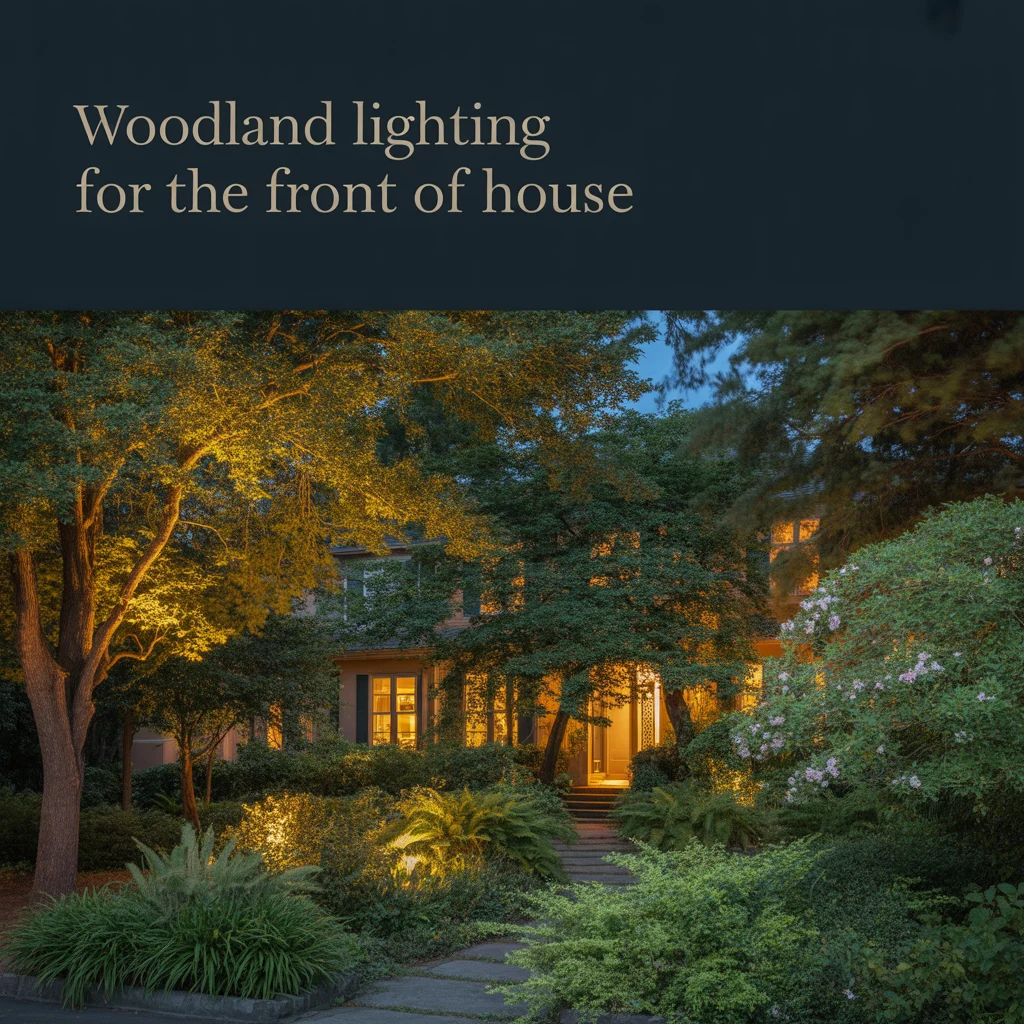
Woodland garden lighting ideas for the front of the house apply the atmospheric, tree-focused approach of woodland lighting to the entrance and approach, combining a welcoming, magical first impression with the practical navigation and security that front-of-house landscape lighting must provide. I lit the wooded front garden of a property with a tree-lined approach using uplit specimen trees, a softly lit path to the door, and a warm-lit entrance, and the result both welcomed visitors with genuine atmosphere and made the approach safe and clearly navigable after dark.
Front-of-House Woodland Lighting Layers
A lit approach path, uplit specimen trees, and entrance lighting are three layers suited to front-of-house woodland landscape lighting. A softly lit approach path using low path lights or recessed step lights guides visitors safely from the gate or drive to the door. Uplit specimen trees flanking the approach create the welcoming, dramatic structure that makes the arrival memorable. Entrance lighting at the door, in a warm tone consistent with the garden, completes the journey and provides the practical illumination needed at the threshold.
Balancing Atmosphere and Security at the Front
Warm consistent light, no dark blind spots on the path, and a timer or photocell are three considerations for balancing atmosphere and security. Keeping the front lighting warm and consistent maintains the magical woodland character rather than the harsh floodlit look of conventional security lighting. Ensuring the approach path has no dark blind spots provides genuine security and safe navigation without resorting to glaring floodlights. A photocell and timer ensure the front-of-house lighting comes on reliably at dusk and provides a lived-in, welcoming, and secure appearance throughout the evening.
Lighting a Woodland Stream or Water Feature
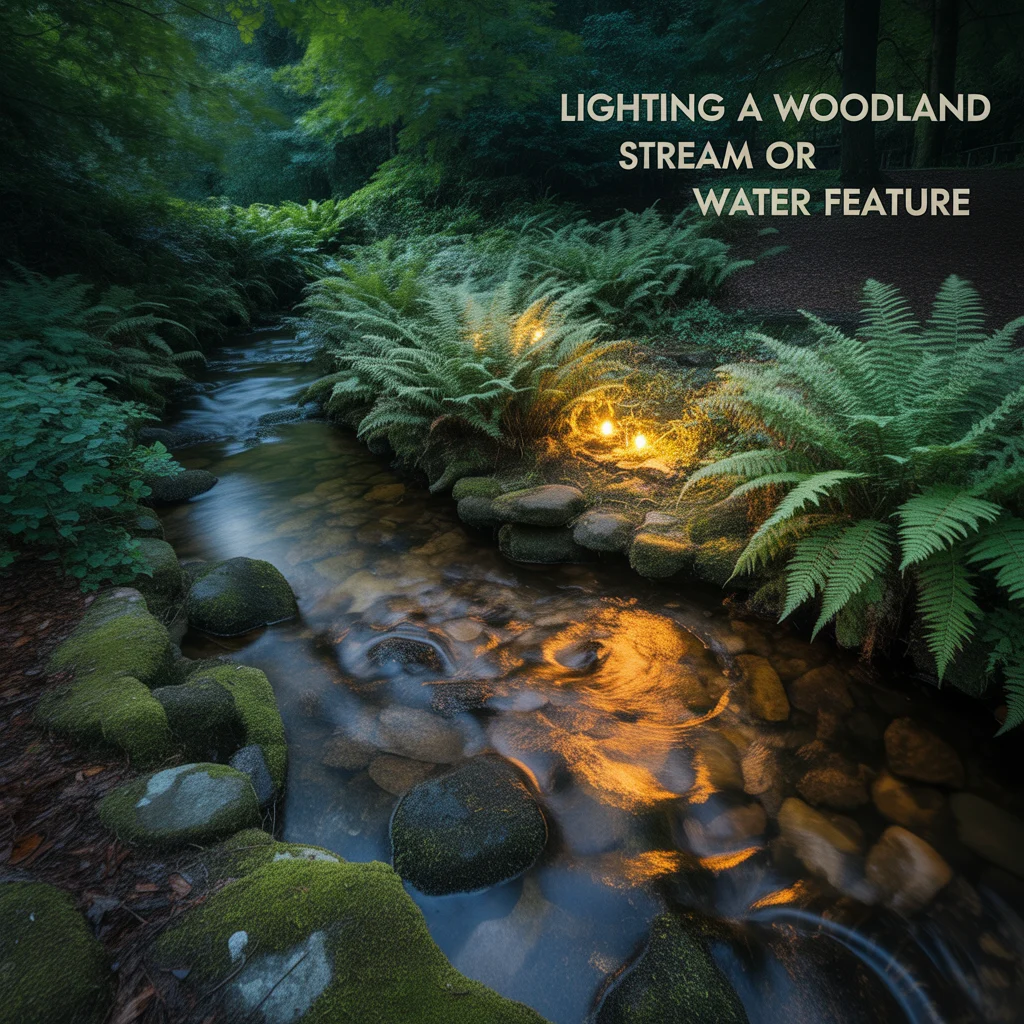
Lighting a woodland stream or water feature is a woodland garden lighting idea that uses submerged and grazing light to reveal the movement, reflection, and sound of water after dark, turning the most atmospheric daytime feature into an even more magical nighttime one. I lit a small woodland stream with a single submerged warm-white spot at a cascade and a low grazing light along the bank, and the way the light caught the moving water and reflected off the ripples made the lit stream the most enchanting feature in the night garden.
Lighting Techniques for Woodland Water
Submerged cascade lighting, grazing bank light, and reflected uplighting are three techniques suited to a woodland water feature. Submerged cascade lighting places a low-voltage waterproof spot beneath a small fall so the light shines up through the moving water, illuminating the cascade from within. Grazing bank light set low along the margin skims across the water surface to catch the ripples and reflections. Reflected uplighting of a tree or feature beside still water uses the water surface as a mirror to double the lit image, creating depth and a sense of stillness.
Safe Lighting Around Woodland Water
Lighting around woodland water is made safe by using fully waterproof IP68-rated submerged fixtures, keeping all connections above water and weatherproof, and running everything on low voltage. I use only fixtures rated for full submersion in any underwater position, I keep transformers and connectors well clear of the water and fully weatherproofed, and I run the entire water-feature circuit on safe 12V low voltage so that the combination of water and electricity carries no risk in the damp woodland environment.
Festoon Lighting for Woodland Entertaining
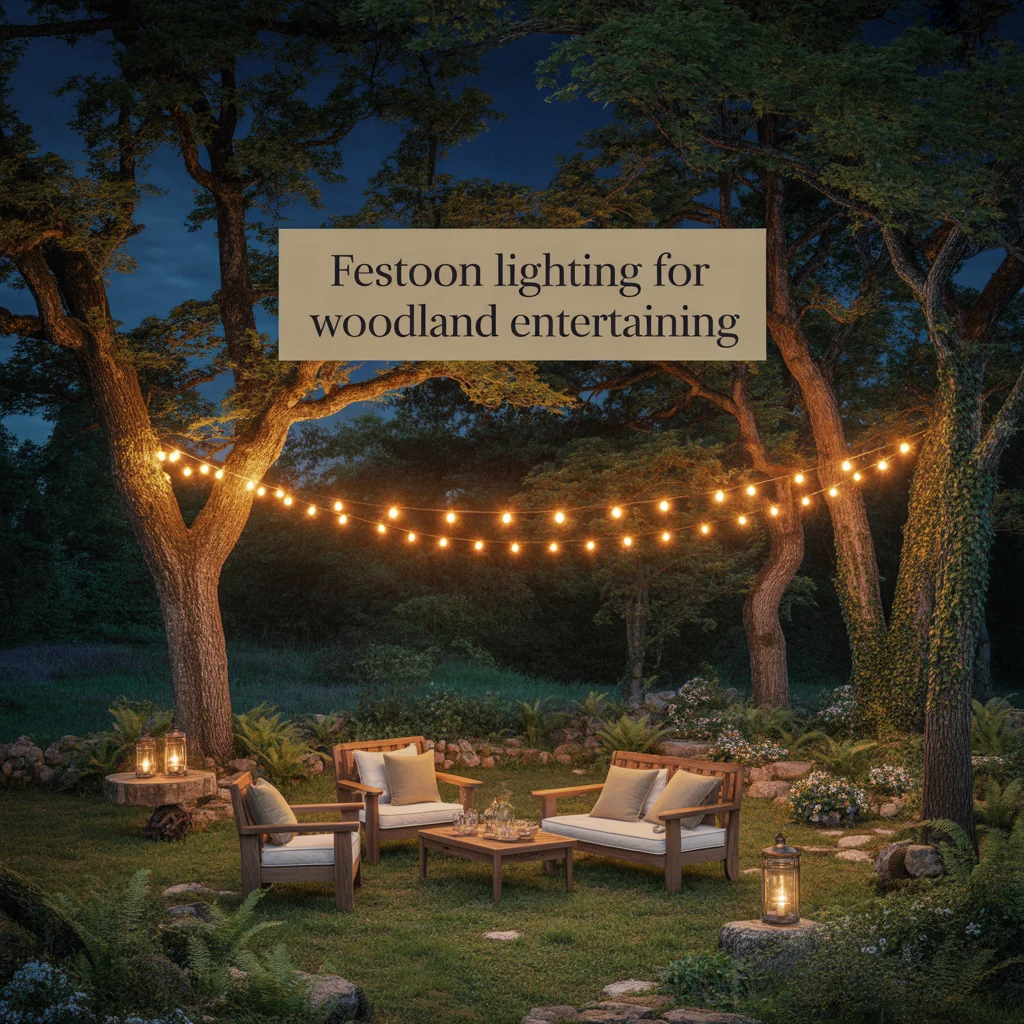
Festoon lighting strung above a woodland seating or dining area is a woodland garden lighting idea built for entertaining, draping a canopy of warm globe bulbs overhead to create a defined, convivial outdoor room beneath the trees for evening gatherings. I strung festoon lights between several trees over a woodland dining table, and the warm overhead canopy of bulbs created an intimate, party-ready ceiling of light that turned an open patch of woodland into the most-used entertaining space in the garden.
Festoon Types for a Woodland Canopy
Connectable LED festoon, solar festoon, and vintage-style filament festoon are three types suited to woodland entertaining. Connectable LED festoon run from a low-voltage or mains supply provides reliable, all-evening overhead light with the ability to link multiple spans across a seating area. Solar festoon provides a wireless overhead canopy suited to an area away from power, with the panel sited in a sunny gap. Vintage-style warm filament-effect LED festoon provides the warmest, most characterful glow suited to an intimate, atmospheric dining canopy.
Suspending Festoon Over a Seating Area
Festoon lighting is suspended over a woodland seating area by stringing the cable between tree trunks or posts using a tensioned support wire, hung at a height that creates an intimate ceiling without obstructing movement. I run a steel catenary support wire between fixing points and attach the festoon to it so the bulbs are carried securely without the cable sagging under its own weight, and I hang the canopy at 8 to 9 feet over a dining area so it feels enclosing and intimate while leaving clear standing room beneath.
Moonlighting and Downlighting From the Canopy
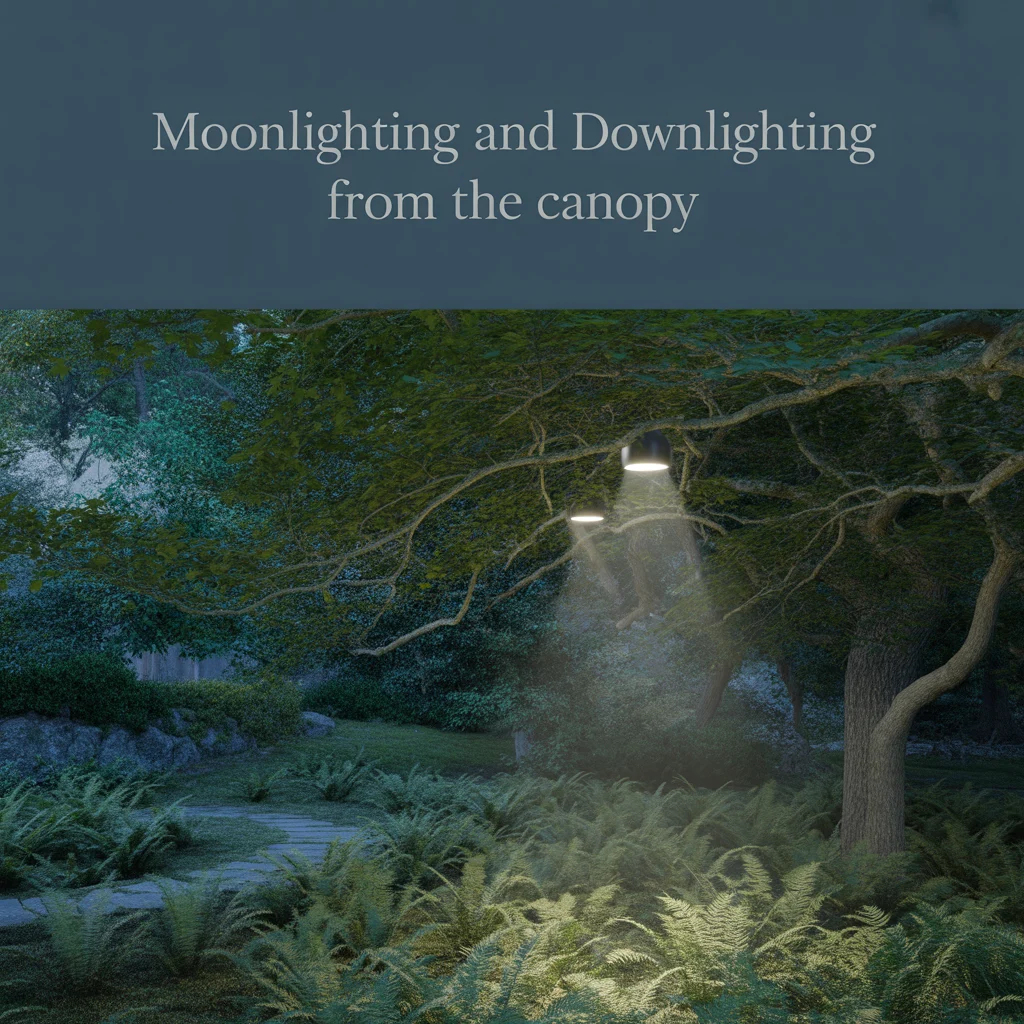
Moonlighting, or downlighting from high in the canopy, is a sophisticated woodland garden lighting idea that mounts fixtures high in a tree and aims them downward through the branches, casting a soft dappled light onto the ground below that mimics the effect of natural moonlight filtering through the leaves. I fitted downlights high in a spreading tree over a path and seating area, and the gentle pattern of light and leaf-shadow it cast across the ground was the most natural and subtle lighting effect I have ever achieved in a woodland garden.
Moonlighting Fixtures and Placement
A high-mounted tree downlight, a warm dimmed output, and a position above a key surface are three considerations suited to woodland moonlighting. A high-mounted tree downlight fixed 15 to 25 feet up the trunk and aimed down through the branches casts the broken, dappled pool of light that defines the moonlighting effect. A warm, gently dimmed output keeps the effect soft and natural rather than a harsh spotlight from above. Positioning the fixture above a key surface such as a path, table, or clearing ensures the dappled light falls where it is most appreciated.
Installing Lighting High in a Tree
Lighting is installed high in a tree by using tree-friendly fixings that allow for trunk growth, running cable loosely to accommodate movement, and choosing fully weatherproof fixtures. I use fixings designed to be adjusted as the tree grows rather than screws that the bark will eventually engulf, I leave slack in the cable so wind movement does not strain the connections, and I use IP65-rated fixtures throughout because canopy-mounted lights are fully exposed to weather. High canopy work on large trees is one area where I recommend a professional installer for safety.
Seasonal Autumn and Winter Woodland Lighting
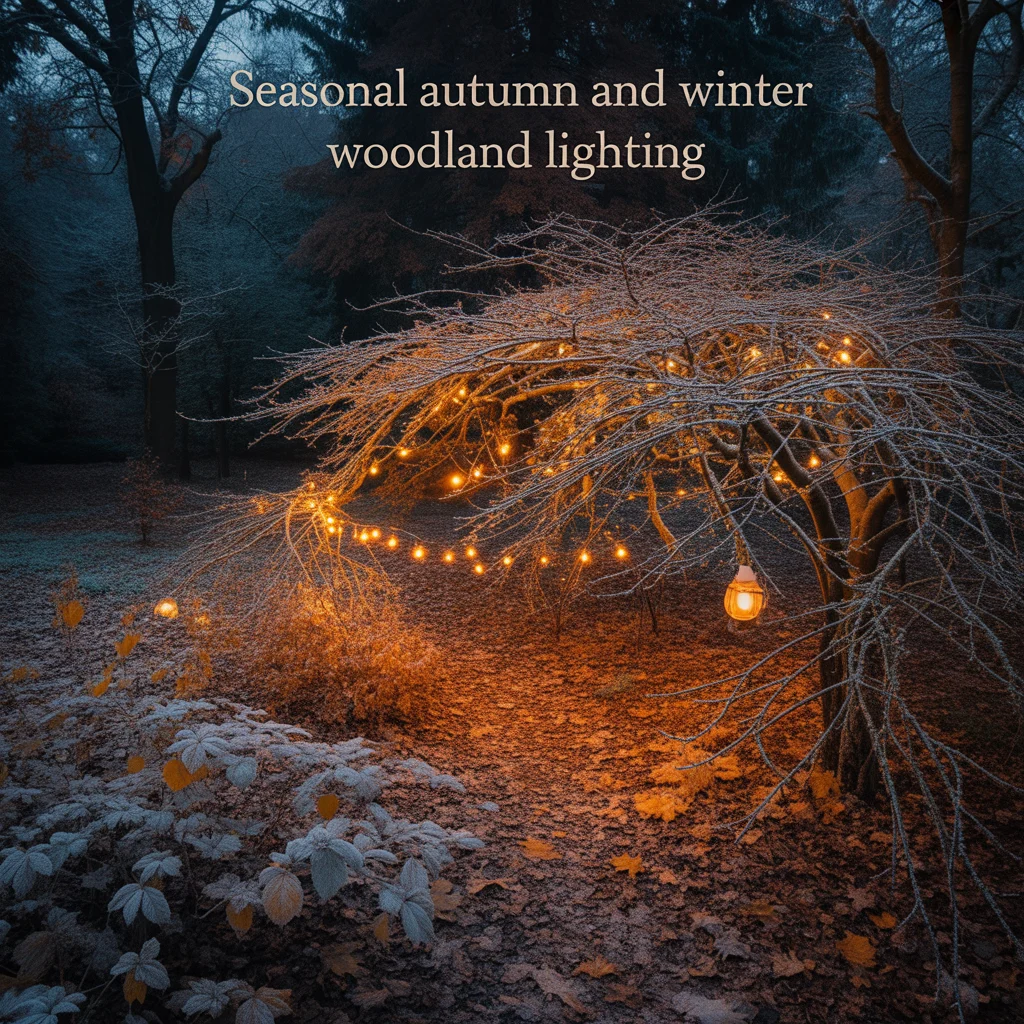
Seasonal woodland garden lighting ideas adapt the lighting scheme to make the most of the long, dark autumn and winter evenings when woodland lighting has its greatest impact, layering warm illumination that turns the coldest, darkest months into the most atmospheric time in the garden. I added a layer of seasonal lighting to a woodland garden for the autumn and winter, and the warm-lit bare-branched trees and glowing path on a frosty December evening produced a scene more beautiful than the garden ever achieved in summer, precisely because the long dark gave the lighting room to work.
Autumn Woodland Lighting Emphasis
Uplighting autumn foliage, lighting fallen-leaf paths, and warm canopy lighting are three emphases suited to autumn woodland lighting. Uplighting trees in their autumn color renders the oranges and reds of the foliage glowing and luminous against the dark, making autumn the single best season for tree uplighting. Lighting the path as the leaves fall keeps the route safe and beautiful as the surface changes through the season. Warm canopy fairy lighting fills the thinning branches with points of light as the leaves drop, maintaining magic as the canopy opens up.
Winter Woodland Lighting Emphasis
Lit bare branch structure, frost-and-light contrast, and extended timer hours are three emphases suited to winter woodland lighting. Lighting the bare branch structure of deciduous trees reveals the sculptural silhouette of the winter canopy, which is at its most dramatic when the leaves are gone. The contrast of warm light against frost and snow produces some of the most beautiful woodland garden lighting pictures of the entire year. Extending the timer hours through the long winter evenings makes the most of the season when the lit garden can be enjoyed from indoors as well as out, for the greatest part of the day.
Smart and App-Controlled Woodland Lighting
Smart woodland garden lighting ideas add app and voice control, scheduling, and adjustable scenes to a woodland lighting scheme, allowing the atmosphere to be tuned, scheduled, and changed for different occasions from a phone without touching a single fixture. I added smart control to a woodland lighting system for a homeowner who entertained frequently, and the ability to switch between a low, intimate everyday scene and a brighter, fuller entertaining scene at a tap transformed how often and how flexibly the garden was used after dark.
Smart Control Options for Woodland Lighting
A smart transformer or plug, app-based scene control, and integrated dimming are three smart options suited to woodland lighting. A smart transformer or smart plug brings an entire low-voltage system under app and schedule control, the simplest route to smart operation. App-based scene control allows multiple preset moods — quiet, dining, party — to be saved and recalled instantly. Integrated dimming allows the brightness of the whole scheme or individual zones to be tuned to the occasion and the season, which is the single most useful smart feature in a garden whose ideal light level changes constantly.
Scheduling and Scenes for a Woodland Garden
A dusk-to-time schedule, an everyday low scene, and an entertaining scene are three smart configurations suited to a woodland garden. A dusk-to-time schedule using a photocell to switch on at dusk and a timer to switch off late automates the everyday operation entirely. A saved everyday low scene provides a gentle, low-energy atmosphere for ordinary evenings and from-indoors enjoyment. A brighter entertaining scene that brings up the festoon, path, and accent layers prepares the whole garden for a gathering at a single tap, giving one lighting installation the flexibility to serve completely different occasions.
Related
Best ferns for zone 4 woodland garden shade planting
How to use boulders in a zone 4 woodland garden landscape
Woodland gardens with ground cover ideas for cold shade spots
Frequently Asked Questions
What is the best lighting for a woodland garden?
Warm-white low-voltage tree uplighting combined with subtle path lighting and a layer of fairy or canopy lighting is the best lighting for a woodland garden because tree uplighting provides the dramatic vertical structure that defines a lit woodland, path lighting provides safe navigation and the sense of guided discovery, and canopy lighting adds the scattered, magical points of light that make the scene enchanting. A warm 2700K to 3000K color temperature is essential throughout, because warm light renders bark and foliage with an inviting firelit glow while cool white light makes a woodland garden look harsh and clinical. The single most important decision is keeping every fixture warm-toned and restrained, because atmosphere in a woodland garden comes from contrast and warmth rather than from brightness or quantity of lights.
How do I light a woodland garden on a budget?
A woodland garden is lit on a budget by concentrating spending on lighting one or two focal trees well, using warm-white solar spike lights along the path, and adding battery or solar fairy lights to a single accessible tree, which together create a genuinely atmospheric scheme for a fraction of the cost of a professional installation. The magical effect of woodland lighting depends far more on warm color and careful placement than on expensive hardware, so a small number of well-aimed lights on a key tree will always outperform many weak lights scattered evenly. The most important budget rule is to keep every light warm-toned and avoid mixing in cheap blue-white units, because a consistent warm glow is what makes a low-cost scheme look intentional and magical rather than cluttered.
Are solar lights good enough for a woodland garden?
Solar lights can work well in a woodland garden provided the panels are sited in sunnier gaps rather than under the dense canopy, because the same shade that creates the daytime atmosphere also starves solar panels of the light they need to charge. Separate-panel solar fixtures that allow the panel to sit in the sun while the light unit glows beneath the trees are the most reliable solar option, and a larger battery capacity extends run time through the long winter evenings when woodland lighting matters most. For a small or simple scheme solar is an excellent low-cost, no-wiring choice, but for a larger garden needing many coordinated fixtures running reliably all evening, a low-voltage system on a single transformer provides far more consistent results.
What color temperature is best for woodland garden lighting?
A warm 2700K to 3000K color temperature is best for woodland garden lighting because it renders the natural browns of bark and the greens of foliage with the inviting, firelit warmth that makes a lit woodland feel magical, while cooler temperatures of 4000K and above render the same surfaces harsh, blue, and clinical. Keeping every fixture in the scheme within this warm range is one of the most important decisions in woodland lighting, because a single cool-white light among warm ones immediately breaks the atmosphere and draws the eye for the wrong reasons. The warm, slightly amber quality of light at 2700K most closely mimics candlelight and firelight, which is the natural reference point the enchanted-forest effect is built upon.
How do I light trees in a woodland garden?
Trees in a woodland garden are lit by setting a low-voltage spike spotlight 12 to 24 inches from the trunk base and angling the warm-white beam upward to graze across the bark and into the canopy, using a narrow beam for tall slender trunks and a wider beam for broad spreading canopies. Two opposing uplights on a larger specimen tree model the trunk from both sides and avoid a harsh single-direction shadow, and concealing each fixture behind low planting keeps the source invisible so the trunk appears to glow from within. A warm 2700K color temperature is essential, and the uplit trees should form the backbone of the scheme, providing the dramatic vertical structure around which the path and canopy lighting are layered.