
Natural Woodland Gardens with Native Plants

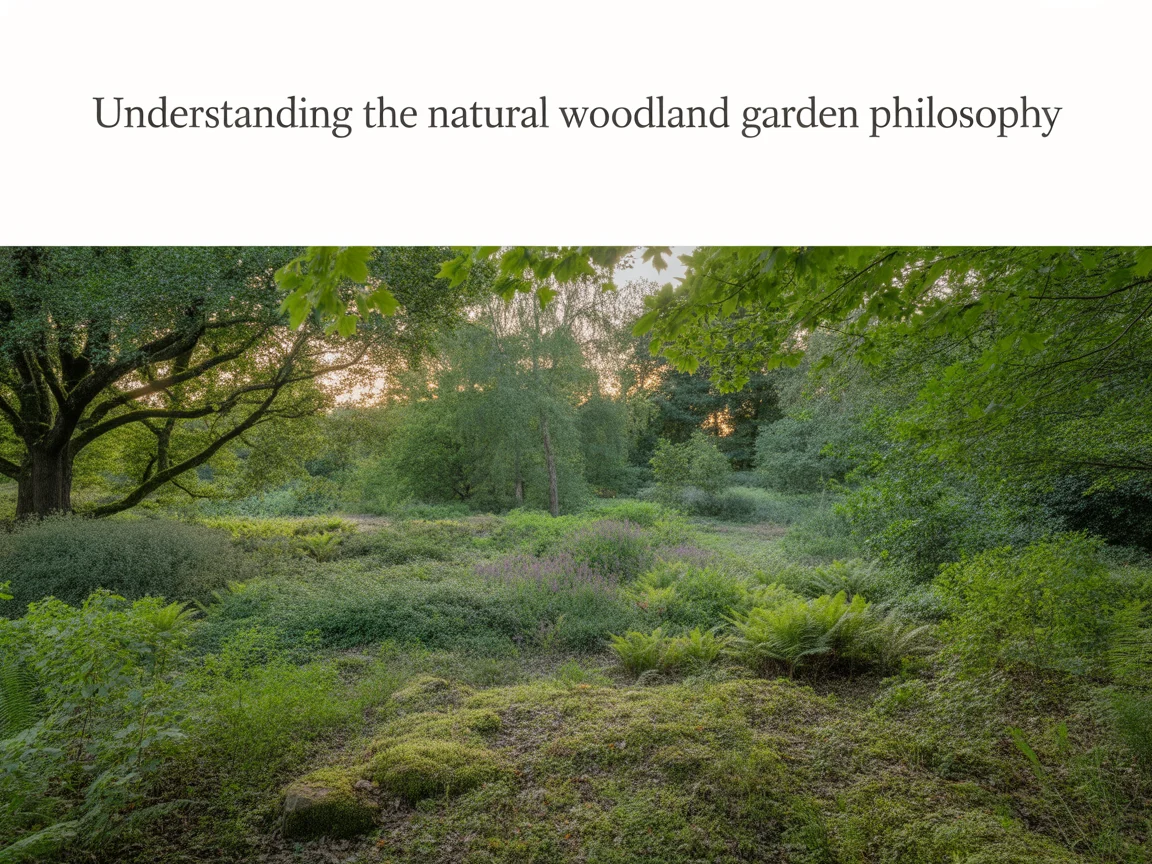
I spent the first ten years of my career fighting woodland gardens, and the next twenty learning to stop. In those early years I weeded, edged, mulched, and tidied a beautiful old tree-filled garden into submission every single week, and it never quite worked — the wild things kept pushing back, and the harder I imposed order, the more lifeless and effortful the place felt. Then one spring I was ill for two months and could not touch it. When I finally walked back into that garden, something had happened. Wild garlic had spread into a glossy green sheet beneath the trees, wood anemones had appeared where I had never planted them, and the whole place hummed with bees and birdsong in a way it never had under my anxious management. The garden had been quietly trying to become a natural woodland the entire time, and the moment I let it, it became more beautiful than anything I had forced. That accidental lesson reshaped how I work: a natural woodland garden is not built and maintained, it is established and allowed.
Natural woodland gardens are authentically naturalistic, low-intervention gardens that recreate the layered structure, native plant communities, and ecological function of a genuine woodland — canopy trees, understorey shrubs, a ground layer of ferns and woodland flowers, and habitat features like fallen logs — to create a beautiful, biodiverse, self-sustaining sanctuary that works with nature rather than against it. The natural woodland approach gives the garden ecological value, seasonal richness, and serene beauty with minimal maintenance, while the native plants, layered planting, and habitat features give it the authentic character and wildlife abundance of a real wild wood.
Since that spring of letting go, I have designed, established, and gently guided natural woodland gardens across sites ranging from small shaded backyards to large rural plots restored toward genuine woodland. I have seen a modest naturalistic planting transform a sterile garden into a living habitat, and I have also watched larger natural woodland gardens mature into spaces of extraordinary ecological richness. In this article I am sharing the best natural woodland garden ideas covering layout, planting, native species, layers, habitat, paths, and low-maintenance management.
[Image: natural woodland garden with native bluebells and ferns carpeting the ground beneath trees]
Understanding the Natural Woodland Garden Philosophy
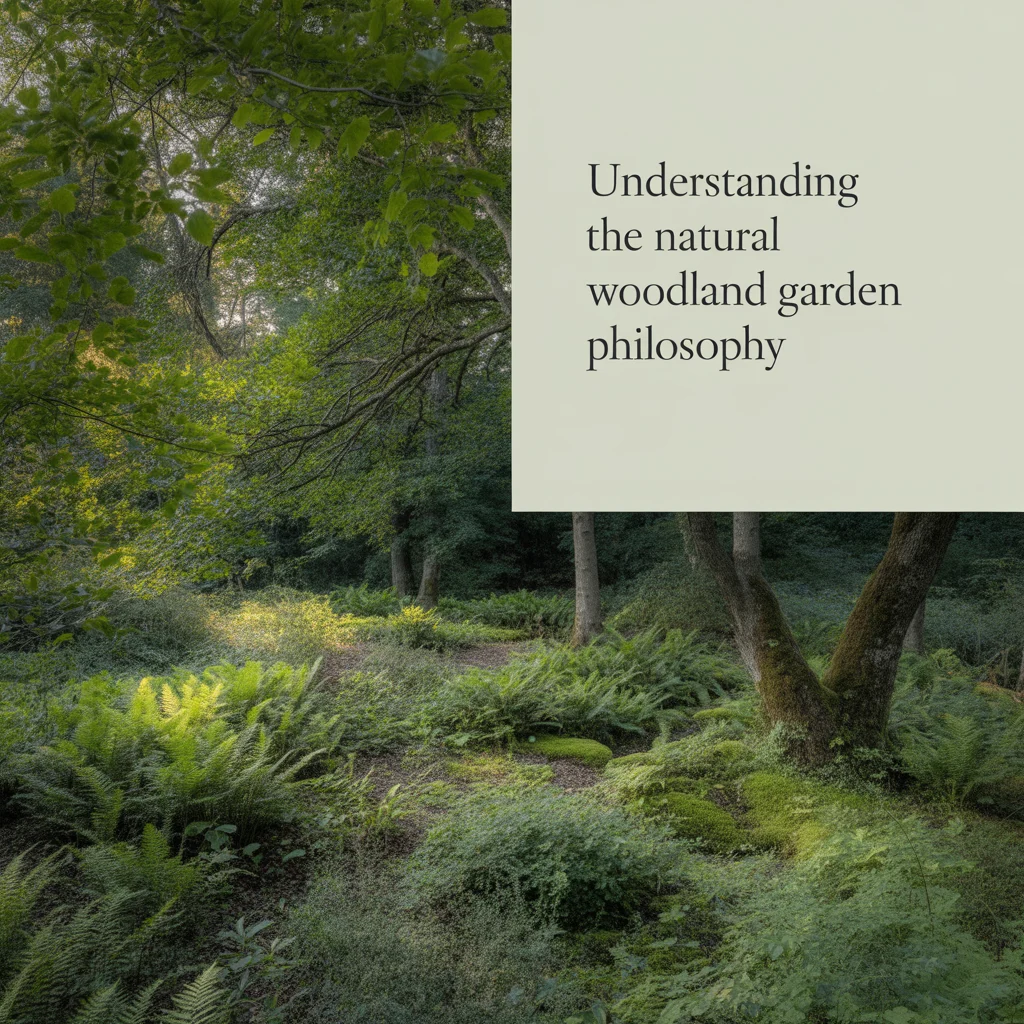
The natural woodland garden philosophy is the foundation of everything else, embracing a way of gardening that works with natural processes rather than imposing rigid control, allowing native plant communities to establish and self-sustain with minimal intervention. I always begin every natural woodland project by establishing this philosophy with the owner, because the single biggest factor in success is the willingness to let the garden be a little wild, to tolerate self-seeding and natural untidiness, and to intervene gently rather than control completely.
Core Principles of Natural Woodland Gardening
Working with nature, minimal intervention, and ecological function are three core principles of natural woodland gardening. Working with nature means choosing plants and approaches suited to the existing conditions rather than fighting them, letting the garden’s natural tendencies guide the design. Minimal intervention means stepping back from constant management and allowing natural processes like self-seeding and leaf fall to do much of the work. Ecological function means valuing the garden as a living habitat that supports wildlife and plant communities, not just as a visual display.
Shifting From Control to Guidance
Tolerating wildness, editing rather than imposing, and observing before acting are three shifts suited to natural woodland gardening. Tolerating a degree of wildness and natural untidiness is essential, since the beauty of a natural woodland lies partly in its organic informality. Editing rather than imposing means gently guiding what establishes, removing the unwanted and encouraging the desirable, rather than dictating everything. Observing before acting, watching what wants to grow and where wildlife gathers, lets the garden inform its own development.
Planning a Natural Woodland Garden Layout
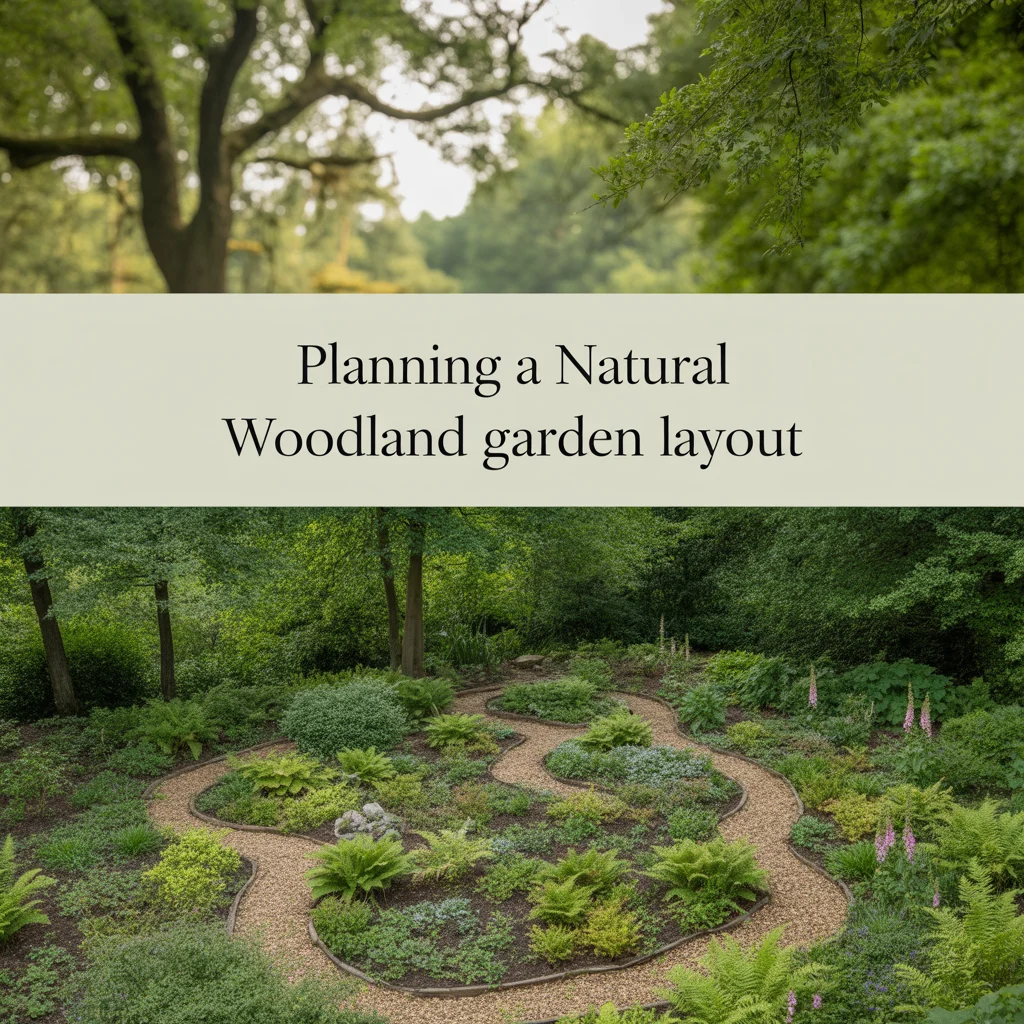
Planning a natural woodland garden layout establishes the informal, organic structure that distinguishes a natural woodland from a formal garden, using flowing shapes, naturalistic plant placement, and a layout that feels discovered rather than designed. I plan every natural woodland layout around the existing trees and the way a person will move through and experience the space, because a natural woodland garden layout should feel like a fragment of genuine wild wood, not a planted scheme arranged into beds.
Principles of a Natural Woodland Layout
Flowing organic shapes, layered planting structure, and a sense of journey are three principles suited to a natural woodland layout. Flowing organic shapes in clearings, planting drifts, and path routes read as natural rather than designed. Layered planting structure from canopy down to ground layer creates the depth of a real woodland. A sense of journey through the garden, with winding paths and gradual reveals, makes even a small natural woodland feel immersive and exploratory.
Working With Existing Features
Existing trees, natural contours, and established planting are three existing features suited to incorporation in a natural woodland layout. Existing trees form the canopy framework around which the whole natural woodland is built. Natural contours and slopes add interest and authenticity and should be worked with rather than levelled. Established planting worth keeping provides instant maturity and a head start toward the layered woodland structure.
The Layered Structure of a Natural Woodland
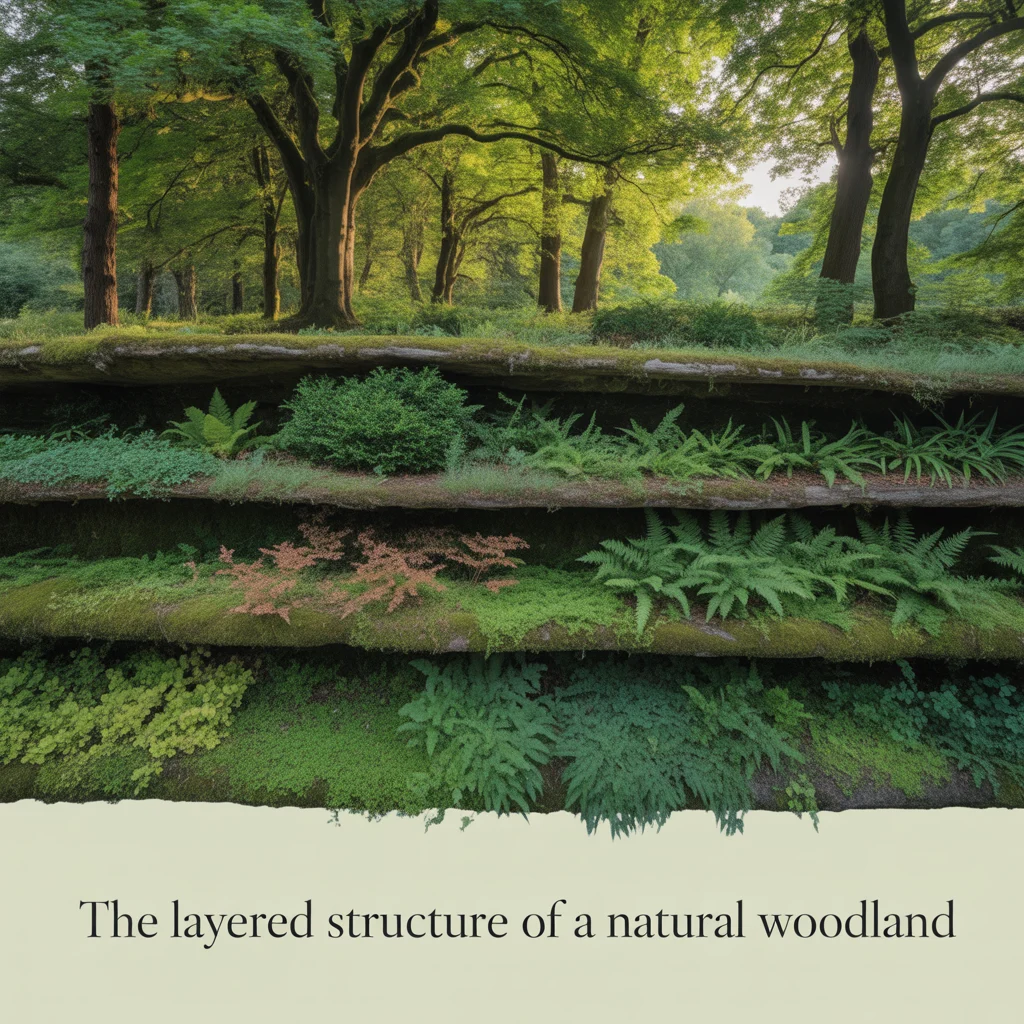
The layered structure of a natural woodland is what gives it ecological richness and authentic depth, replicating the canopy, understorey, shrub, ground, and bulb layers of a genuine wild wood so the garden functions as a complete habitat. I build every natural woodland garden as a layered community rather than a single level of planting, because it is the vertical layering of a real woodland that creates both its visual depth and the multitude of niches that support its remarkable biodiversity.
The Vertical Layers of a Woodland
The canopy layer, the understorey and shrub layer, and the ground and bulb layer are three vertical layers suited to a natural woodland. The canopy layer of trees provides the overhead structure, shade, and the defining woodland character. The understorey and shrub layer of smaller trees and shade-tolerant shrubs fills the middle level and provides cover and food for wildlife. The ground and bulb layer of ferns, woodland flowers, and spring bulbs carpets the floor and provides the seasonal displays the natural woodland is loved for.
Building Layers Over Time
Establishing the canopy first, adding the understorey, and developing the ground layer are three stages suited to building woodland layers. Establishing or working with the canopy first sets the framework and conditions for everything below. Adding the understorey of shrubs and small trees builds the middle layer once the canopy framework is in place. Developing the ground and bulb layer last fills the woodland floor beneath the established structure, completing the layered community over several seasons.
Native Plants for a Natural Woodland Garden
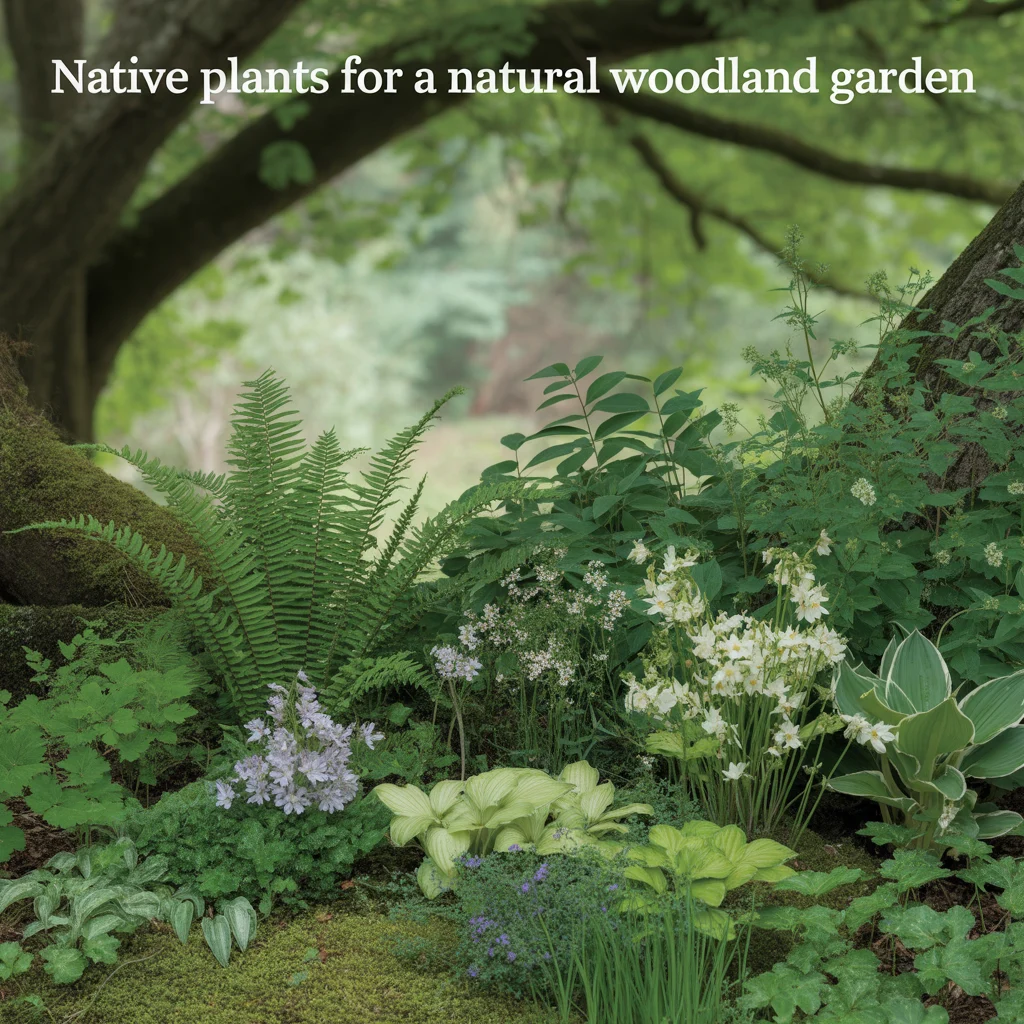
Native plants are the heart of an authentic natural woodland garden, because locally native species support the most wildlife, suit the conditions naturally, and create the genuine ecological community that defines the natural woodland approach. I prioritise native woodland plants in every natural woodland scheme, because native species have evolved alongside local wildlife and conditions, supporting more insects, birds, and biodiversity than ornamental alternatives while establishing and self-sustaining with the least intervention.
Native Ground Layer Plants
Hyacinthoides non-scripta, Anemone nemorosa, and Primula vulgaris are three native ground layer plants suited to a natural woodland garden. Hyacinthoides non-scripta, native bluebells, produce the iconic spring blue carpet and self-seed to colonize the woodland floor over time. Anemone nemorosa, wood anemone, produces early white spring flowers and spreads slowly into naturalistic drifts. Primula vulgaris, the native primrose, produces pale yellow spring flowers and is a classic ancient woodland indicator species.
Ancient Woodland Indicator Plants
Allium ursinum, Mercurialis perennis, and Hyacinthoides non-scripta are three ancient woodland indicator plants suited to a natural woodland garden. Allium ursinum, wild garlic, forms glossy green carpets with white spring flowers and an unmistakable scent, thriving in damp woodland shade. Mercurialis perennis, dog’s mercury, is a classic indicator of long-established woodland ground. Native bluebells in quantity also indicate and recreate the character of ancient woodland, lending authenticity to the natural woodland garden.
Ferns and Moss in a Natural Woodland Garden
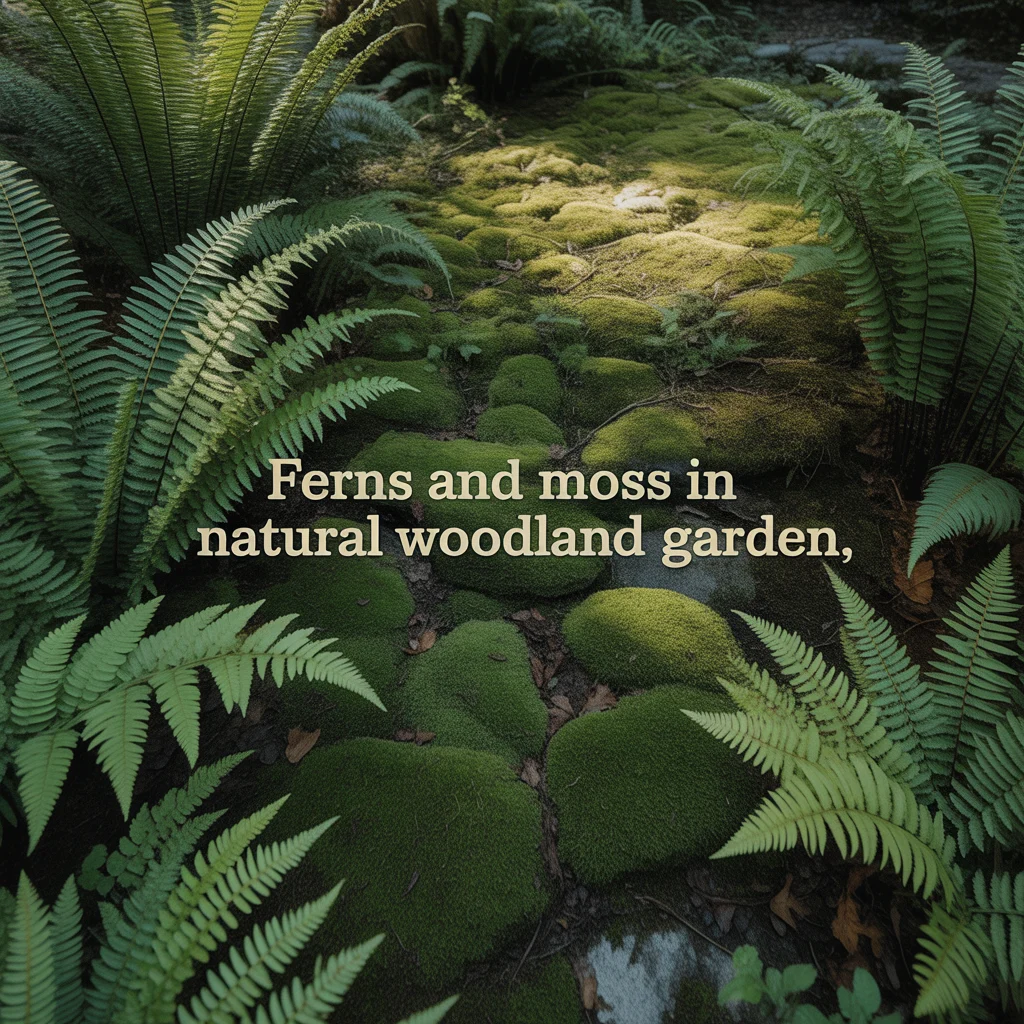
Ferns and moss are essential ground-layer components of a natural woodland garden, providing the lush green texture, year-round structure, and authentic woodland-floor character that define the naturalistic aesthetic. I plant ferns generously and encourage moss throughout every natural woodland garden, because together they create the deep, layered, green woodland floor that makes the garden feel like a genuine wild wood in every season.
Ferns for a Natural Woodland
Dryopteris filix-mas, Polystichum setiferum, and Athyrium filix-femina are three ferns suited to a natural woodland garden. Dryopteris filix-mas tolerates dry, competitive shade beneath tree canopy better than most ferns and provides robust structure. Polystichum setiferum is semi-evergreen and holds its fronds through winter for year-round structure. Athyrium filix-femina, the lady fern, provides delicate, finely divided fronds in moist, sheltered woodland positions.
Encouraging Moss and Ground Cover
Shade and moisture, undisturbed ground, and natural leaf litter are three conditions suited to encouraging moss and ground cover. Shade and consistent moisture provide the conditions moss needs to colonize the woodland floor naturally. Undisturbed ground, left unraked and unforked, allows moss and natural ground cover to establish without disruption. Natural leaf litter left to break down feeds the soil and supports the mosses and ground flora of the authentic woodland floor.
Spring Bulbs and Wildflower Carpets
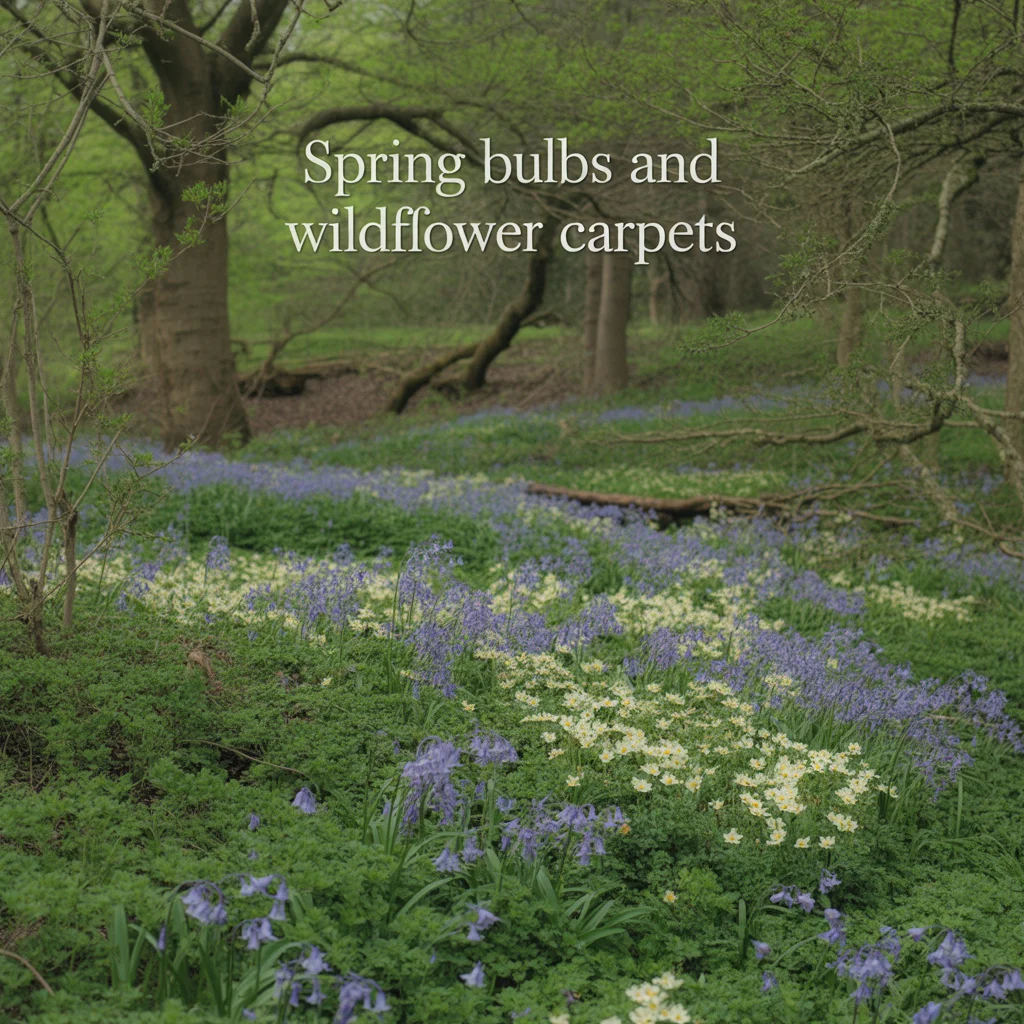
Spring bulbs and wildflower carpets create the spectacular seasonal displays for which natural woodland gardens are most loved, using naturalized native bulbs and woodland wildflowers to carpet the floor in colour before the canopy leafs out. I plant spring bulbs in generous naturalistic drifts in every natural woodland garden, because the sight of a woodland floor carpeted in bluebells, anemones, or wild garlic in spring is the single most magical moment of the natural woodland year.
Naturalizing Woodland Bulbs
Planting in drifts, allowing self-seeding, and choosing native species are three principles suited to naturalizing woodland bulbs. Planting in generous, irregular drifts rather than rows or clumps creates the natural carpet effect. Allowing the bulbs to self-seed and spread undisturbed lets the display expand and naturalize over the years. Choosing native species ensures the bulbs suit the conditions, support wildlife, and create an authentic woodland display.
Extending the Wildflower Season
Early spring flowers, late spring flowers, and summer woodland flowers are three phases suited to extending the wildflower season. Early spring flowers like wood anemone and primrose open before the canopy leafs out. Late spring flowers like bluebells and wild garlic follow to extend the display. Summer woodland flowers such as foxgloves carry colour into the shadier summer months, lengthening the natural woodland’s flowering season.
Self-Seeding and Natural Plant Communities
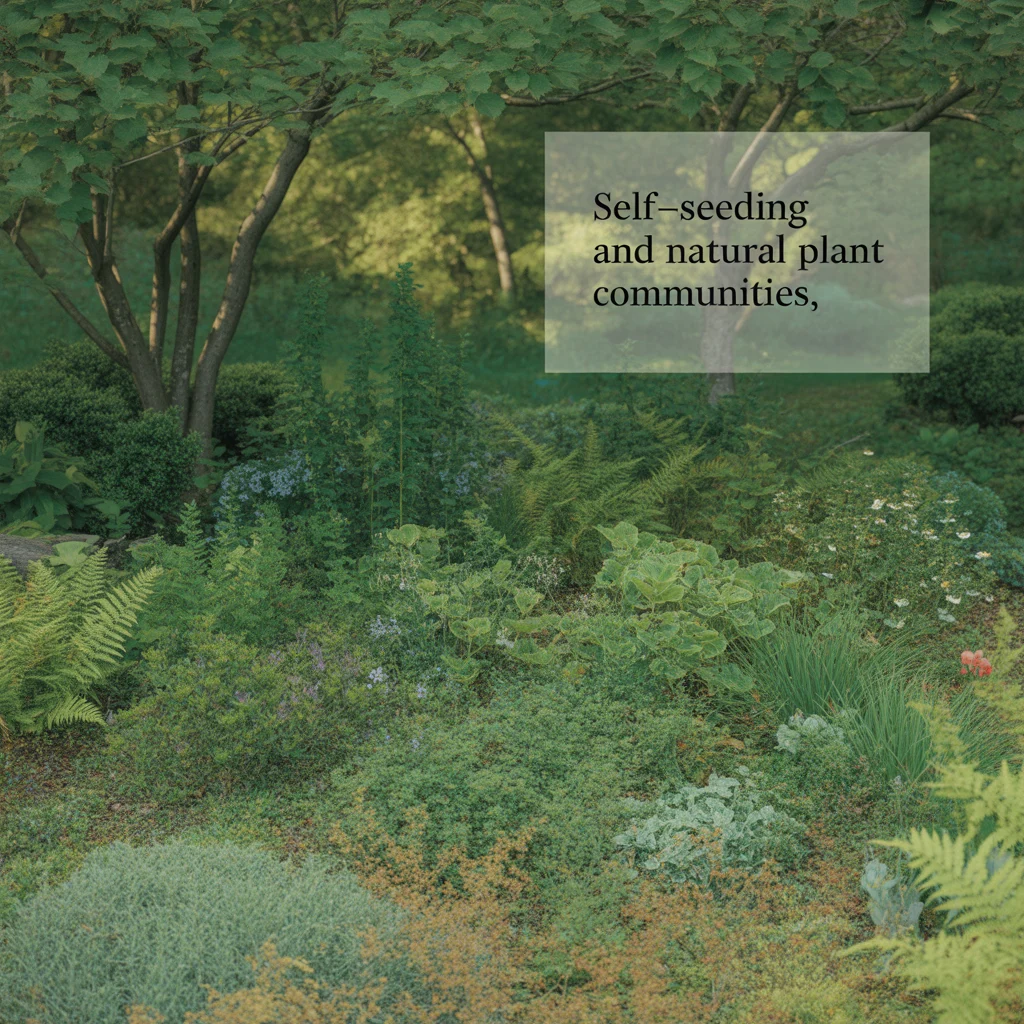
Self-seeding and natural plant communities are central to the low-intervention character of a natural woodland garden, allowing plants to spread, seed, and arrange themselves into authentic communities rather than being controlled and replanted. I actively encourage self-seeding in every natural woodland garden, because letting plants distribute themselves creates the naturalistic, ever-evolving plant communities that no deliberately planted scheme can replicate, and dramatically reduces the work of maintaining the garden.
Encouraging Beneficial Self-Seeding
Leaving seed heads, undisturbed soil, and selective editing are three practices suited to encouraging beneficial self-seeding. Leaving seed heads to ripen and scatter allows plants to distribute themselves naturally. Undisturbed soil, left unmulched and unforked in key areas, provides the open ground seedlings need to establish. Selective editing of the resulting seedlings, keeping the desirable and removing the unwanted, gently guides the self-seeding community.
Letting Communities Develop
Natural plant associations, gradual evolution, and tolerating change are three aspects suited to letting communities develop. Natural plant associations form as compatible species spread and intermingle into authentic woodland communities. Gradual evolution of the planting over the years, as some species spread and others recede, keeps the garden dynamic and alive. Tolerating this change, rather than freezing the garden in a fixed design, is essential to the natural woodland approach.
Habitat Features in a Natural Woodland Garden
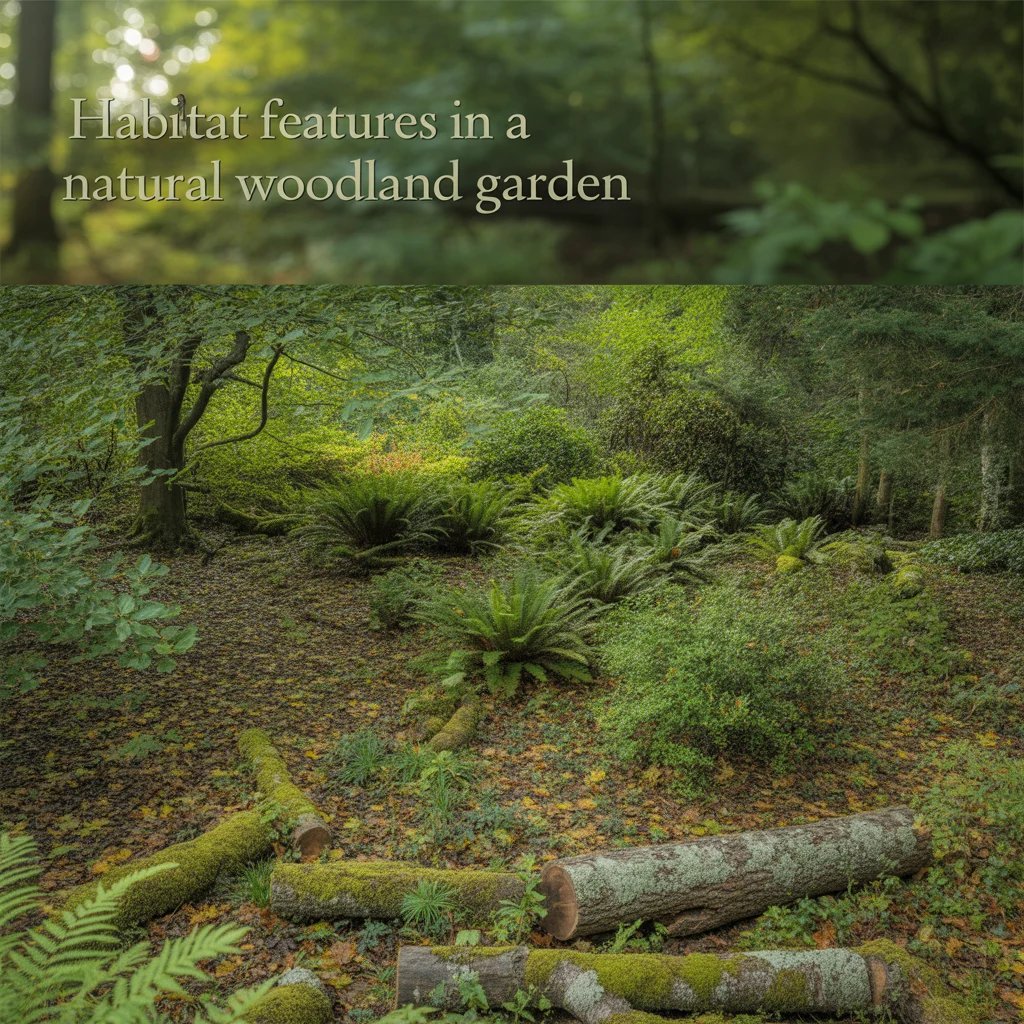
Habitat features are what make a natural woodland garden a genuine wildlife habitat, using fallen logs, leaf litter, deadwood, and natural debris as deliberate ecological components rather than untidiness to be cleared. I incorporate habitat features into every natural woodland garden, because the deadwood, log piles, and leaf litter that a tidy garden removes are precisely the elements that support the invertebrates, fungi, and wildlife at the base of a thriving woodland ecosystem.
Key Habitat Features for Wildlife
Fallen logs and deadwood, leaf litter, and log and brash piles are three habitat features suited to a natural woodland garden. Fallen logs and standing deadwood provide habitat for beetles, fungi, and countless invertebrates. Leaf litter left to break down feeds the soil ecosystem and shelters ground-dwelling wildlife. Log and brash piles in quiet corners provide refuge for hedgehogs, amphibians, and overwintering insects.
Supporting the Woodland Food Web
Invertebrate habitat, decomposer support, and predator shelter are three ways habitat features support the food web. Invertebrate habitat in deadwood and litter provides the foundation of the woodland food web. Decomposer support from fungi and detritivores breaking down organic matter recycles nutrients through the system. Predator shelter for birds, hedgehogs, and amphibians completes the food web, creating the balanced ecosystem of a genuine natural woodland.
Natural Woodland Garden Paths
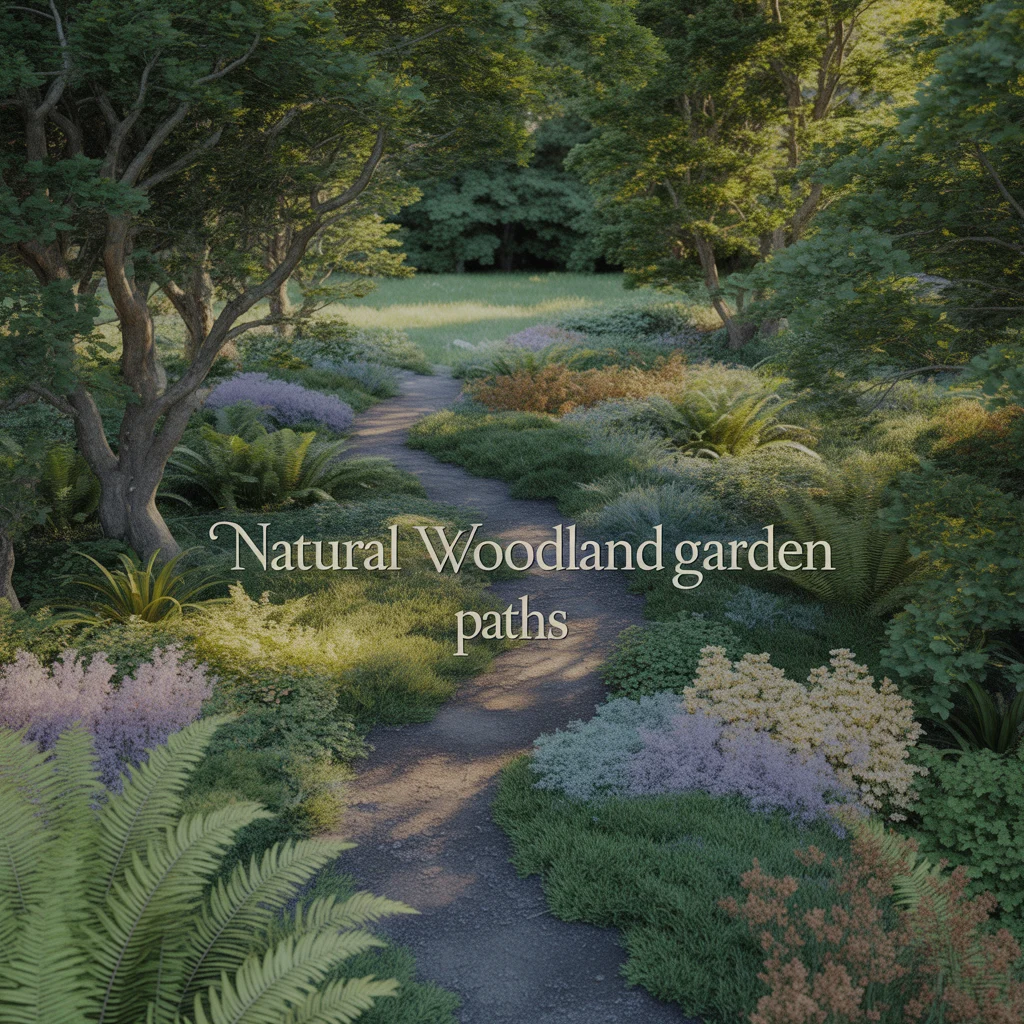
Natural woodland garden paths provide a way to move through and experience the garden using natural materials and winding routes that suit the informal, naturalistic character of the natural woodland. I design every natural woodland path to feel like a trail worn through genuine wild wood, using natural surfaces and curving routes, because a path through a natural woodland garden should invite gentle exploration and discovery rather than direct, formal passage.
Natural Path Materials
Bark chip, stepping stones, and natural earth are three path materials suited to a natural woodland garden. Bark chip provides a soft, natural surface that suits the woodland-floor aesthetic and breaks down to feed the soil over time. Stepping stones allow passage through planting while preserving the ground flora between them. Natural earth, compacted by use, provides the most naturalistic path that reads as a genuine woodland trail.
Designing Naturalistic Path Routes
Winding curves, gradual reveals, and minimal width are three principles suited to natural woodland path routes. Winding curves that conceal the path ahead create the sense of discovery essential to a natural woodland. Gradual reveals of the garden as the visitor moves along the path make the space feel immersive and larger. Minimal width that lets planting lean in from both sides creates the enclosed, intimate character of a genuine woodland trail.
Small Natural Woodland Garden Ideas
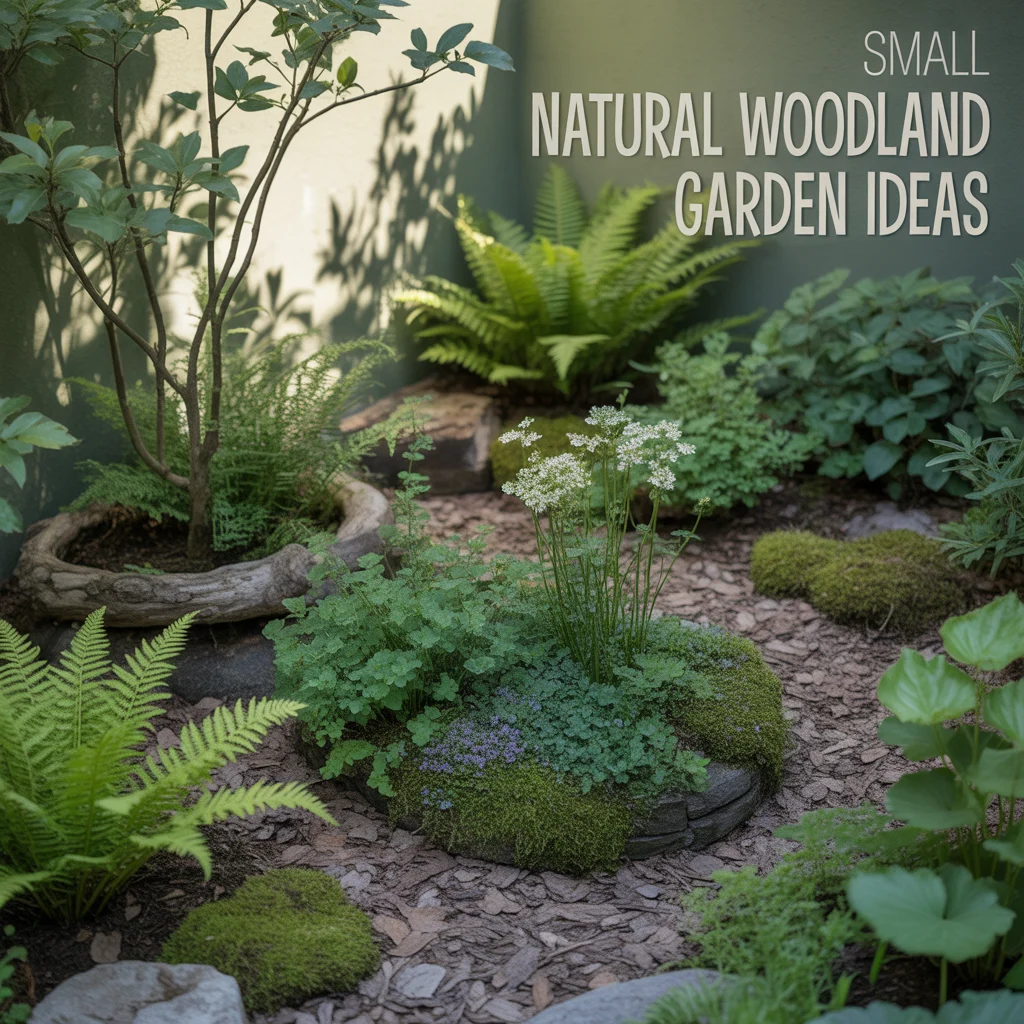
Small natural woodland garden ideas bring the authentic naturalistic woodland approach to compact spaces, proving that even a small shaded backyard can become a genuine layered woodland habitat. I have created natural woodland gardens in surprisingly small spaces, because the layered structure, native planting, and ecological richness of a natural woodland can be achieved at any scale, and a small natural woodland can feel as immersive and alive as a large one.
Creating Layers in a Small Space
A single canopy tree, a compact understorey, and a rich ground layer are three approaches suited to layering a small natural woodland. A single canopy tree or even a large multi-stem shrub provides the overhead woodland framework. A compact understorey of one or two shade-tolerant shrubs fills the middle layer. A rich ground layer of ferns, bulbs, and woodland flowers provides the seasonal displays and density that make a small natural woodland feel complete.
Maximizing a Small Natural Woodland
Vertical layering, a winding path, and dense planting are three techniques suited to maximizing a small natural woodland. Vertical layering makes full use of limited ground area by building upward through the woodland layers. A winding path that conceals parts of the garden makes a small space feel larger and more exploratory. Dense, layered planting that encloses the space creates the immersive woodland atmosphere that makes a small garden feel like a genuine wood.
Backyard Natural Woodland Garden
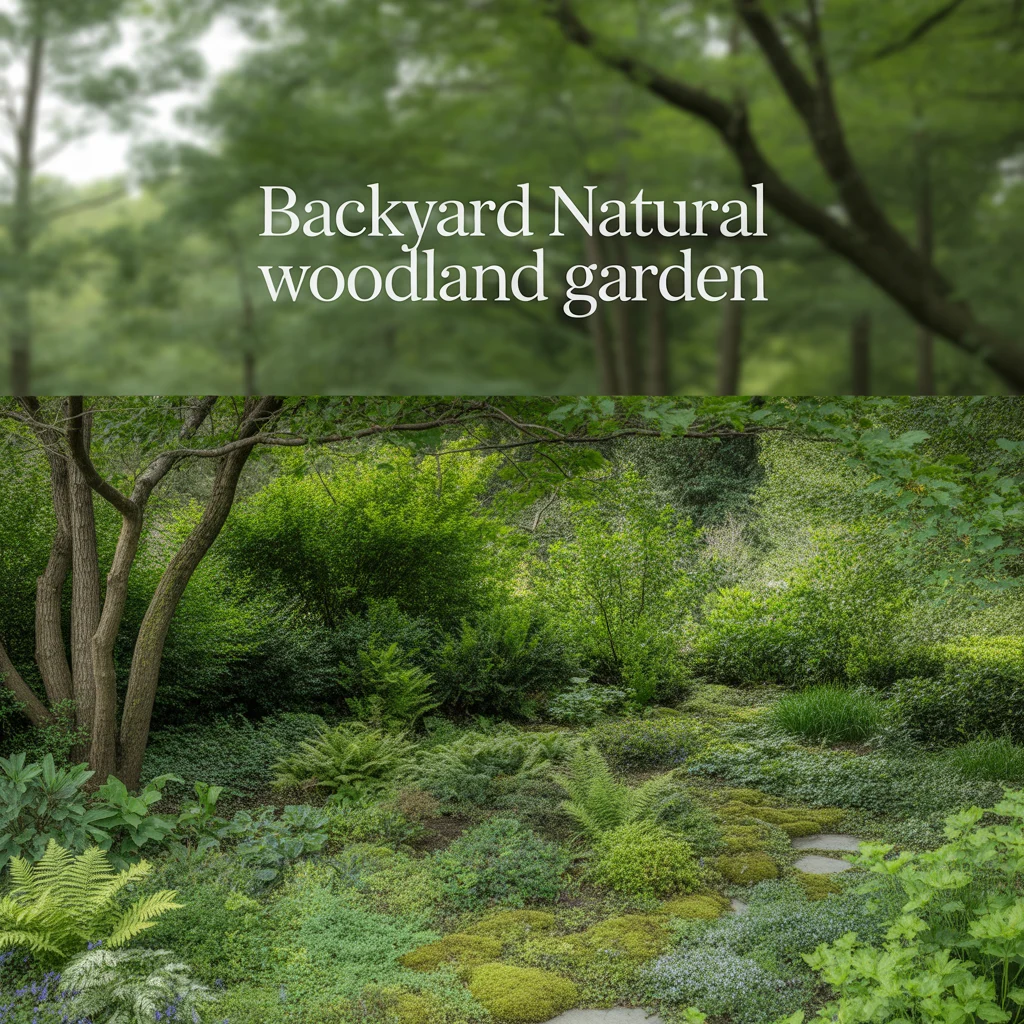
A backyard natural woodland garden transforms an ordinary suburban backyard into a naturalistic woodland habitat, bringing the ecological value and serene beauty of a wild wood to a domestic setting. I have converted conventional backyards into natural woodland gardens, because even a typical suburban plot can be reimagined as a layered, native, wildlife-rich woodland that provides far more beauty, biodiversity, and restorative value than a conventional lawn and border garden.
Converting a Backyard to Woodland
Reducing lawn, planting trees and shrubs, and building the ground layer are three steps suited to converting a backyard to woodland. Reducing or removing lawn frees space and resources for the layered woodland planting. Planting canopy trees and understorey shrubs establishes the vertical woodland framework. Building the ground layer of ferns, bulbs, and woodland flowers beneath completes the transformation from open backyard to layered woodland.
Balancing Wildness and Usability
A natural seating area, defined paths, and managed edges are three approaches suited to balancing wildness and usability. A natural seating area, a small clearing within the woodland, provides space to sit and enjoy the garden. Defined paths allow comfortable movement through the naturalistic planting. Managed edges, kept a little tidier where the woodland meets the house or neighbours, balance the wild character with the practical needs of a domestic backyard.
Low-Maintenance Natural Woodland Garden Design
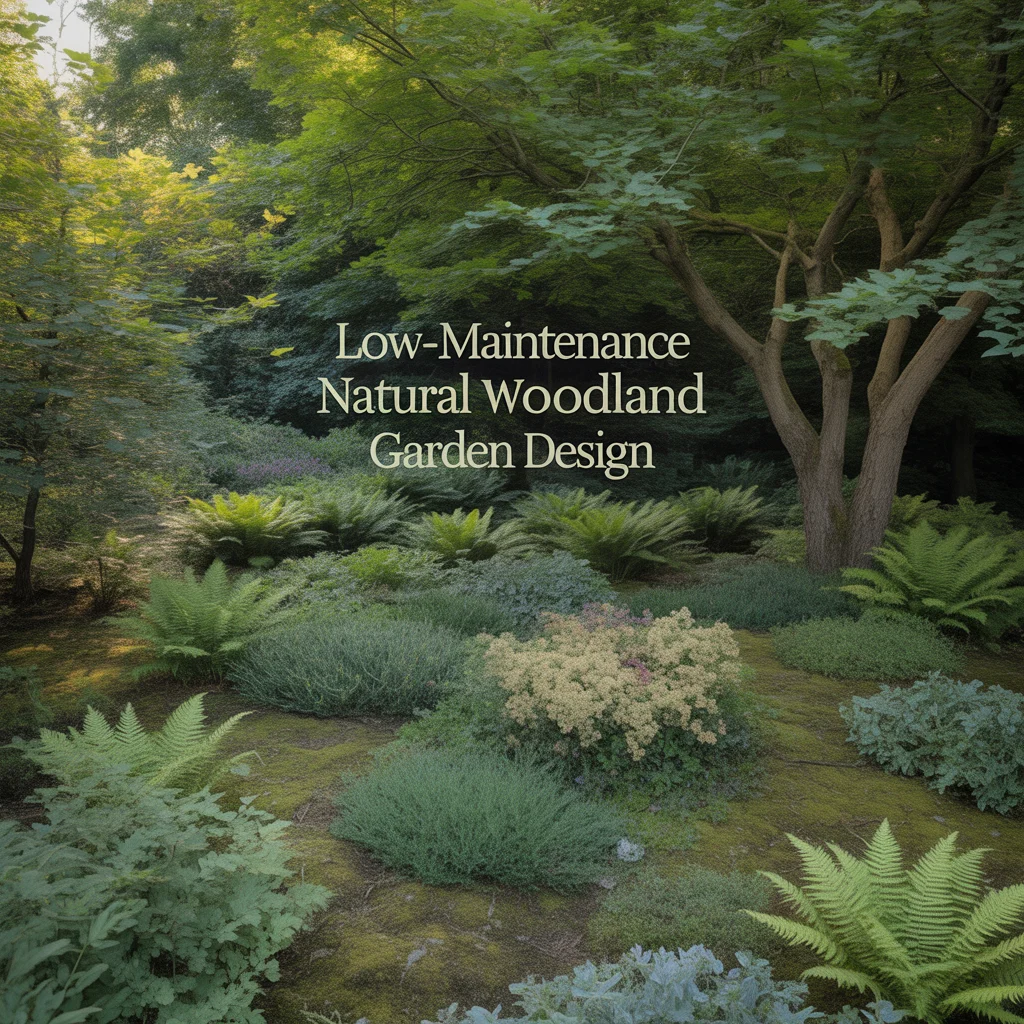
Low-maintenance natural woodland garden design is one of the greatest appeals of the natural woodland approach, using native planting, self-sustaining communities, and minimal intervention to create a beautiful garden that requires far less work than conventional gardening. I design every natural woodland garden for low maintenance, because the whole philosophy of working with nature means the established garden largely looks after itself, with natural processes doing the work that intensive gardening demands elsewhere.
Why Natural Woodland Gardens Are Low-Maintenance
Self-sustaining planting, natural mulching, and reduced intervention are three reasons natural woodland gardens are low-maintenance. Self-sustaining native planting, suited to the conditions, needs little watering, feeding, or replacement once established. Natural mulching from fallen leaves feeds the soil and suppresses weeds without the work of applied mulch. Reduced intervention, with no constant weeding, edging, or tidying, dramatically cuts the maintenance the garden requires.
Essential Minimal Maintenance Tasks
Seasonal leaf management, gentle editing, and occasional path care are three essential minimal maintenance tasks. Seasonal leaf management, mostly leaving leaves to break down but clearing paths and ground flora, is the main autumn task. Gentle editing of self-seeded plants, removing the unwanted and thinning the overvigorous, guides the garden a few times a year. Occasional path care keeps routes clear and usable, completing the modest maintenance a natural woodland garden needs.
Wildlife and Biodiversity in Natural Woodland Gardens
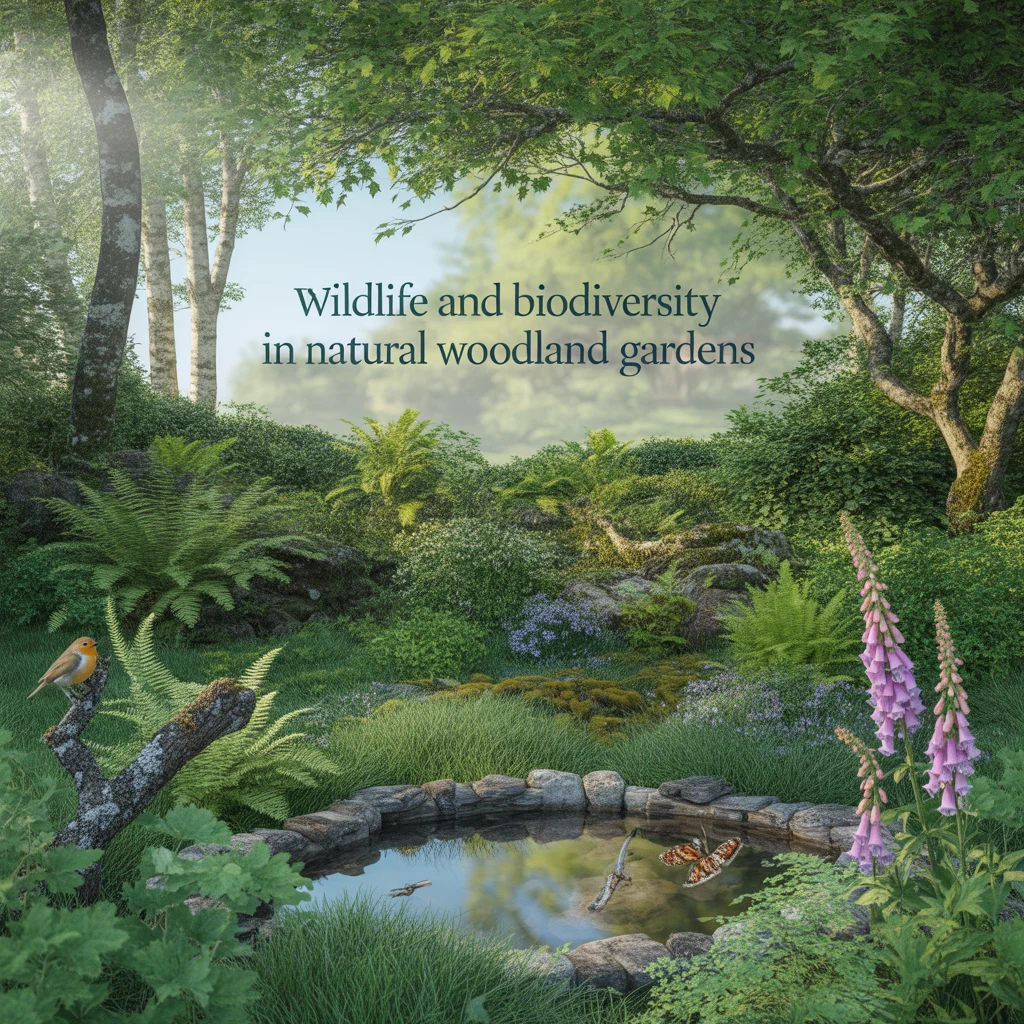
Wildlife and biodiversity are the defining purpose and reward of a natural woodland garden, which functions as a genuine habitat supporting a rich community of birds, insects, amphibians, and other wildlife. I measure the success of every natural woodland garden by the life it supports, because a thriving natural woodland garden becomes a living ecosystem of remarkable richness, bringing the movement, sound, and abundance of wildlife that conventional gardens rarely achieve.
Wildlife Supported by Natural Woodland
Birds, insects and pollinators, and amphibians and mammals are three groups of wildlife supported by a natural woodland garden. Birds find food, cover, and nesting sites throughout the layered woodland structure. Insects and pollinators thrive on the native flowering plants and the deadwood and litter habitat. Amphibians and mammals, from frogs to hedgehogs, shelter in the log piles, leaf litter, and dense ground cover of the natural woodland.
Enhancing Garden Biodiversity
Native planting, varied habitat, and water provision are three approaches suited to enhancing biodiversity. Native planting supports the local wildlife that has evolved alongside it, maximizing the food web. Varied habitat across the woodland layers and features provides niches for many different species. Water provision, even a simple bird bath or small pool, dramatically increases the wildlife the natural woodland garden can support.
Seasonal Change in a Natural Woodland Garden
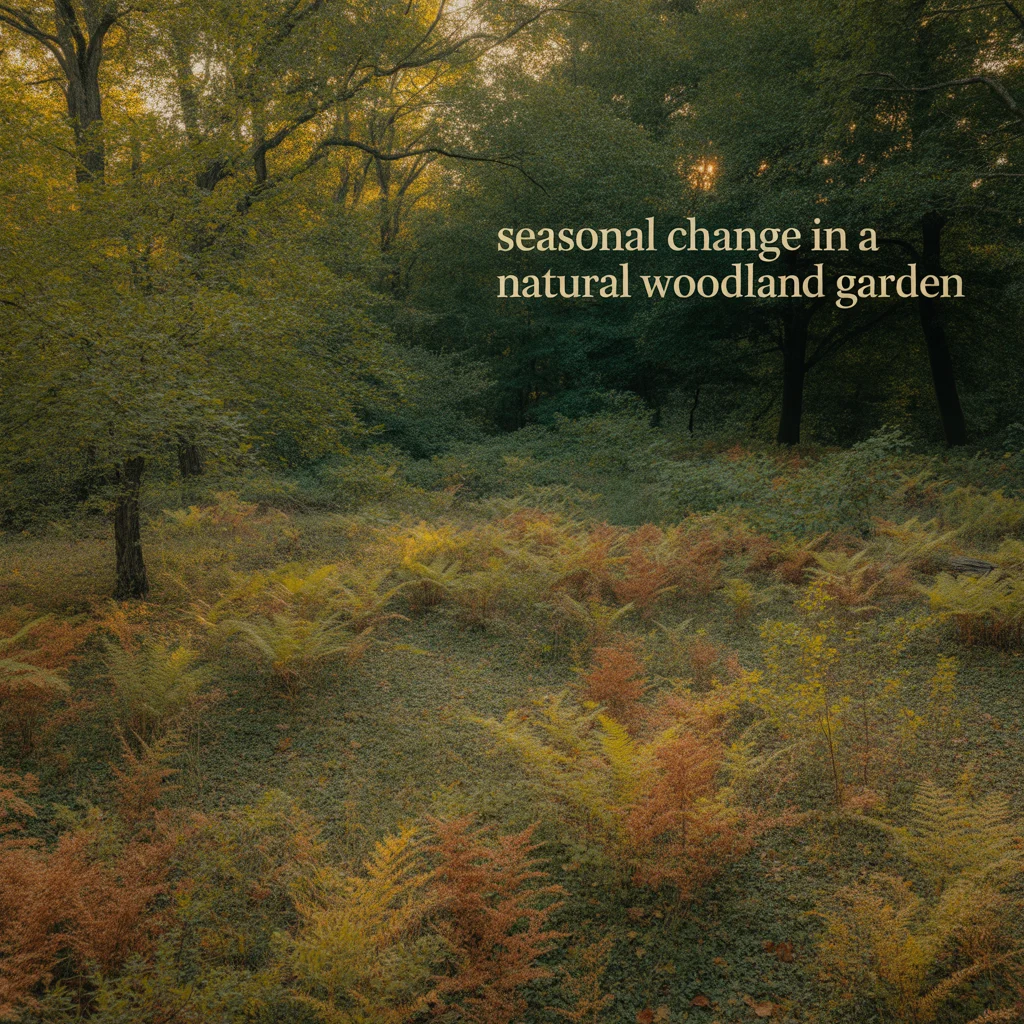
Seasonal change is one of the great joys of a natural woodland garden, which transforms dramatically through the year from spring flower carpets to summer green, autumn colour, and winter structure. I design natural woodland gardens to celebrate this seasonal rhythm, because the natural woodland’s changing displays through the year, each season distinct and beautiful in its own way, provide a deep and restorative connection to the cycles of the natural world.
The Woodland Through the Seasons
Spring flower displays, summer green canopy, and autumn colour are three seasonal highlights of a natural woodland garden. Spring flower displays of bluebells, anemones, and wild garlic carpet the floor before the canopy closes. The summer green canopy creates the deep, shaded, lush woodland enclosure of the warmer months. Autumn colour from the changing foliage of trees and ferns provides a spectacular seasonal display before winter.
Winter in a Natural Woodland Garden
Bare canopy structure, evergreen ground cover, and habitat value are three qualities of a natural woodland garden in winter. The bare canopy structure reveals the sculptural form of the trees and the layered woodland framework. Evergreen ferns and ground cover maintain green structure on the winter woodland floor. The habitat value of winter deadwood, leaf litter, and cover supports overwintering wildlife, keeping the natural woodland alive and valuable even in the coldest, quietest season.
Establishing and Managing a Natural Woodland Garden Over Time
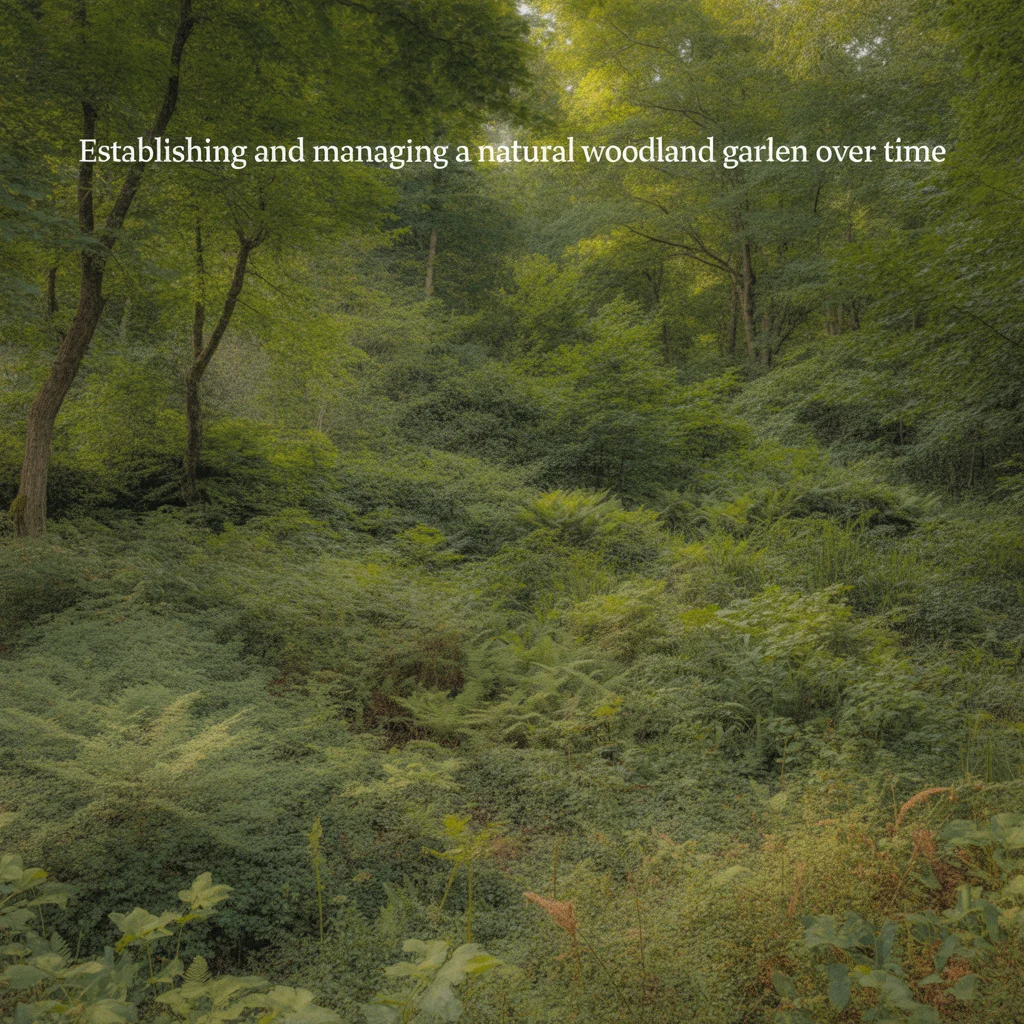
Establishing and managing a natural woodland garden over time is a gradual, evolving process rather than a one-off installation, as the garden develops, matures, and changes over the years toward a self-sustaining woodland community. I always set the expectation that a natural woodland garden is a long-term, evolving project, because the layered communities, naturalized bulbs, and ecological richness of a genuine natural woodland develop over many seasons and reward patience with ever-increasing beauty and biodiversity.
Stages of Establishing a Natural Woodland
Initial structure, ground layer establishment, and natural maturation are three stages suited to establishing a natural woodland. Initial structure of canopy and understorey planting sets the framework in the early years. Ground layer establishment of ferns, bulbs, and woodland flowers fills the floor over the following seasons. Natural maturation, as plants spread, self-seed, and form communities, develops the garden toward a self-sustaining woodland over the longer term.
Guiding a Natural Woodland Over Time
Observing and responding, gentle editing, and patient tolerance are three approaches suited to guiding a natural woodland over time. Observing and responding to how the garden develops lets you work with its natural tendencies. Gentle editing guides the evolving communities without imposing rigid control. Patient tolerance of the time and the natural untidiness the process involves is essential, since the greatest rewards of a natural woodland garden come to those who allow it to become what it naturally wants to be.
Frequently Asked Questions
What is a natural woodland garden?
A natural woodland garden is an authentically naturalistic, low-intervention garden that recreates the layered structure, native plant communities, and ecological function of a genuine woodland, with canopy trees, understorey shrubs, a ground layer of ferns and woodland flowers, and habitat features like fallen logs. Unlike a formally managed garden, it works with natural processes rather than against them, allowing plants to self-seed and arrange themselves into authentic communities while requiring minimal maintenance once established. The natural woodland approach reflects a gardening philosophy connected to rewilding and ecological restoration, valuing the garden as a living habitat that supports biodiversity and provides a serene, restorative connection to nature, rather than as a formal display of controlled planting.
How do I start a natural woodland garden?
You start a natural woodland garden by working with your existing trees and conditions, establishing the layered structure from canopy down to ground layer, and prioritizing native woodland plants suited to your local area. Begin by assessing what you already have, since existing trees form the canopy framework and any established planting gives a head start, then build the understorey of shade-tolerant shrubs and the ground layer of ferns, bulbs, and woodland flowers over the following seasons. The most important shift is embracing the natural woodland philosophy of minimal intervention, allowing self-seeding, tolerating a degree of wildness, and intervening gently rather than controlling completely, because a natural woodland garden is established and guided over time rather than built and rigidly maintained.
What plants are best for a natural woodland garden?
The best plants for a natural woodland garden are locally native woodland species that support wildlife, suit the conditions naturally, and create authentic plant communities, including native bluebells, wood anemone, primrose, wild garlic, and woodland ferns. Native ground-layer plants and ancient woodland indicator species like wild garlic and dog’s mercury create the genuine character and ecological value of a real wood, while ferns such as Dryopteris filix-mas and Polystichum setiferum provide year-round structure and the lush woodland-floor texture. Choosing native species over ornamental alternatives is central to the natural woodland approach, because native plants have evolved alongside local wildlife and conditions, supporting far more insects, birds, and biodiversity while establishing and self-sustaining with the least intervention.
Are natural woodland gardens low-maintenance?
Natural woodland gardens are genuinely low-maintenance once established, because the native, self-sustaining planting suits the conditions and needs little watering, feeding, or replacement, while natural processes do much of the work that intensive gardening demands elsewhere. Fallen leaves provide natural mulch that feeds the soil and suppresses weeds, self-seeding plants renew and spread the planting without replanting, and the absence of constant weeding, edging, and tidying dramatically reduces the workload. The main minimal tasks are seasonal leaf management on paths and ground flora, gentle editing of self-seeded plants a few times a year, and occasional path care, making the natural woodland garden one of the most rewarding low-maintenance approaches for anyone willing to embrace a degree of natural wildness.
How long does it take to establish a natural woodland garden?
Establishing a natural woodland garden is a gradual process that develops over several years and continues to mature for many more, since the layered communities, naturalized bulbs, and ecological richness of a genuine woodland take time to develop. The initial structure of canopy and understorey planting can be set in the first year, the ground layer of ferns, bulbs, and woodland flowers fills in over the following seasons, and the natural maturation, as plants spread, self-seed, and form authentic communities, develops over the longer term. This patience is part of the reward, because a natural woodland garden becomes more beautiful and more biodiverse with every passing year as it moves toward a self-sustaining woodland community, making it a deeply satisfying long-term project rather than an instant transformation.
I spent the first ten years of my career fighting woodland gardens, and the next twenty learning to stop. In those early years I weeded, edged, mulched, and tidied a beautiful old tree-filled garden into submission every single week, and it never quite worked — the wild things kept pushing back, and the harder I imposed order, the more lifeless and effortful the place felt. Then one spring I was ill for two months and could not touch it. When I finally walked back into that garden, something had happened. Wild garlic had spread into a glossy green sheet beneath the trees, wood anemones had appeared where I had never planted them, and the whole place hummed with bees and birdsong in a way it never had under my anxious management. The garden had been quietly trying to become a natural woodland the entire time, and the moment I let it, it became more beautiful than anything I had forced. That accidental lesson reshaped how I work: a natural woodland garden is not built and maintained, it is established and allowed.
Natural woodland gardens are authentically naturalistic, low-intervention gardens that recreate the layered structure, native plant communities, and ecological function of a genuine woodland — canopy trees, understorey shrubs, a ground layer of ferns and woodland flowers, and habitat features like fallen logs — to create a beautiful, biodiverse, self-sustaining sanctuary that works with nature rather than against it. The natural woodland approach gives the garden ecological value, seasonal richness, and serene beauty with minimal maintenance, while the native plants, layered planting, and habitat features give it the authentic character and wildlife abundance of a real wild wood.
Since that spring of letting go, I have designed, established, and gently guided natural woodland gardens across sites ranging from small shaded backyards to large rural plots restored toward genuine woodland. I have seen a modest naturalistic planting transform a sterile garden into a living habitat, and I have also watched larger natural woodland gardens mature into spaces of extraordinary ecological richness. In this article I am sharing the best natural woodland garden ideas covering layout, planting, native species, layers, habitat, paths, and low-maintenance management.
[Image: natural woodland garden with native bluebells and ferns carpeting the ground beneath trees]
1. Understanding the Natural Woodland Garden Philosophy
The natural woodland garden philosophy is the foundation of everything else, embracing a way of gardening that works with natural processes rather than imposing rigid control, allowing native plant communities to establish and self-sustain with minimal intervention. I always begin every natural woodland project by establishing this philosophy with the owner, because the single biggest factor in success is the willingness to let the garden be a little wild, to tolerate self-seeding and natural untidiness, and to intervene gently rather than control completely.
Core Principles of Natural Woodland Gardening
Working with nature, minimal intervention, and ecological function are three core principles of natural woodland gardening. Working with nature means choosing plants and approaches suited to the existing conditions rather than fighting them, letting the garden’s natural tendencies guide the design. Minimal intervention means stepping back from constant management and allowing natural processes like self-seeding and leaf fall to do much of the work. Ecological function means valuing the garden as a living habitat that supports wildlife and plant communities, not just as a visual display.
Shifting From Control to Guidance
Tolerating wildness, editing rather than imposing, and observing before acting are three shifts suited to natural woodland gardening. Tolerating a degree of wildness and natural untidiness is essential, since the beauty of a natural woodland lies partly in its organic informality. Editing rather than imposing means gently guiding what establishes, removing the unwanted and encouraging the desirable, rather than dictating everything. Observing before acting, watching what wants to grow and where wildlife gathers, lets the garden inform its own development.
2. Planning a Natural Woodland Garden Layout
Planning a natural woodland garden layout establishes the informal, organic structure that distinguishes a natural woodland from a formal garden, using flowing shapes, naturalistic plant placement, and a layout that feels discovered rather than designed. I plan every natural woodland layout around the existing trees and the way a person will move through and experience the space, because a natural woodland garden layout should feel like a fragment of genuine wild wood, not a planted scheme arranged into beds.
Principles of a Natural Woodland Layout
Flowing organic shapes, layered planting structure, and a sense of journey are three principles suited to a natural woodland layout. Flowing organic shapes in clearings, planting drifts, and path routes read as natural rather than designed. Layered planting structure from canopy down to ground layer creates the depth of a real woodland. A sense of journey through the garden, with winding paths and gradual reveals, makes even a small natural woodland feel immersive and exploratory.
Working With Existing Features
Existing trees, natural contours, and established planting are three existing features suited to incorporation in a natural woodland layout. Existing trees form the canopy framework around which the whole natural woodland is built. Natural contours and slopes add interest and authenticity and should be worked with rather than levelled. Established planting worth keeping provides instant maturity and a head start toward the layered woodland structure.
3. The Layered Structure of a Natural Woodland
The layered structure of a natural woodland is what gives it ecological richness and authentic depth, replicating the canopy, understorey, shrub, ground, and bulb layers of a genuine wild wood so the garden functions as a complete habitat. I build every natural woodland garden as a layered community rather than a single level of planting, because it is the vertical layering of a real woodland that creates both its visual depth and the multitude of niches that support its remarkable biodiversity.
The Vertical Layers of a Woodland
The canopy layer, the understorey and shrub layer, and the ground and bulb layer are three vertical layers suited to a natural woodland. The canopy layer of trees provides the overhead structure, shade, and the defining woodland character. The understorey and shrub layer of smaller trees and shade-tolerant shrubs fills the middle level and provides cover and food for wildlife. The ground and bulb layer of ferns, woodland flowers, and spring bulbs carpets the floor and provides the seasonal displays the natural woodland is loved for.
Building Layers Over Time
Establishing the canopy first, adding the understorey, and developing the ground layer are three stages suited to building woodland layers. Establishing or working with the canopy first sets the framework and conditions for everything below. Adding the understorey of shrubs and small trees builds the middle layer once the canopy framework is in place. Developing the ground and bulb layer last fills the woodland floor beneath the established structure, completing the layered community over several seasons.
4. Native Plants for a Natural Woodland Garden
Native plants are the heart of an authentic natural woodland garden, because locally native species support the most wildlife, suit the conditions naturally, and create the genuine ecological community that defines the natural woodland approach. I prioritise native woodland plants in every natural woodland scheme, because native species have evolved alongside local wildlife and conditions, supporting more insects, birds, and biodiversity than ornamental alternatives while establishing and self-sustaining with the least intervention.
Native Ground Layer Plants
Hyacinthoides non-scripta, Anemone nemorosa, and Primula vulgaris are three native ground layer plants suited to a natural woodland garden. Hyacinthoides non-scripta, native bluebells, produce the iconic spring blue carpet and self-seed to colonize the woodland floor over time. Anemone nemorosa, wood anemone, produces early white spring flowers and spreads slowly into naturalistic drifts. Primula vulgaris, the native primrose, produces pale yellow spring flowers and is a classic ancient woodland indicator species.
Ancient Woodland Indicator Plants
Allium ursinum, Mercurialis perennis, and Hyacinthoides non-scripta are three ancient woodland indicator plants suited to a natural woodland garden. Allium ursinum, wild garlic, forms glossy green carpets with white spring flowers and an unmistakable scent, thriving in damp woodland shade. Mercurialis perennis, dog’s mercury, is a classic indicator of long-established woodland ground. Native bluebells in quantity also indicate and recreate the character of ancient woodland, lending authenticity to the natural woodland garden.
5. Ferns and Moss in a Natural Woodland Garden
Ferns and moss are essential ground-layer components of a natural woodland garden, providing the lush green texture, year-round structure, and authentic woodland-floor character that define the naturalistic aesthetic. I plant ferns generously and encourage moss throughout every natural woodland garden, because together they create the deep, layered, green woodland floor that makes the garden feel like a genuine wild wood in every season.
Ferns for a Natural Woodland
Dryopteris filix-mas, Polystichum setiferum, and Athyrium filix-femina are three ferns suited to a natural woodland garden. Dryopteris filix-mas tolerates dry, competitive shade beneath tree canopy better than most ferns and provides robust structure. Polystichum setiferum is semi-evergreen and holds its fronds through winter for year-round structure. Athyrium filix-femina, the lady fern, provides delicate, finely divided fronds in moist, sheltered woodland positions.
Encouraging Moss and Ground Cover
Shade and moisture, undisturbed ground, and natural leaf litter are three conditions suited to encouraging moss and ground cover. Shade and consistent moisture provide the conditions moss needs to colonize the woodland floor naturally. Undisturbed ground, left unraked and unforked, allows moss and natural ground cover to establish without disruption. Natural leaf litter left to break down feeds the soil and supports the mosses and ground flora of the authentic woodland floor.
6. Spring Bulbs and Wildflower Carpets
Spring bulbs and wildflower carpets create the spectacular seasonal displays for which natural woodland gardens are most loved, using naturalized native bulbs and woodland wildflowers to carpet the floor in colour before the canopy leafs out. I plant spring bulbs in generous naturalistic drifts in every natural woodland garden, because the sight of a woodland floor carpeted in bluebells, anemones, or wild garlic in spring is the single most magical moment of the natural woodland year.
Naturalizing Woodland Bulbs
Planting in drifts, allowing self-seeding, and choosing native species are three principles suited to naturalizing woodland bulbs. Planting in generous, irregular drifts rather than rows or clumps creates the natural carpet effect. Allowing the bulbs to self-seed and spread undisturbed lets the display expand and naturalize over the years. Choosing native species ensures the bulbs suit the conditions, support wildlife, and create an authentic woodland display.
Extending the Wildflower Season
Early spring flowers, late spring flowers, and summer woodland flowers are three phases suited to extending the wildflower season. Early spring flowers like wood anemone and primrose open before the canopy leafs out. Late spring flowers like bluebells and wild garlic follow to extend the display. Summer woodland flowers such as foxgloves carry colour into the shadier summer months, lengthening the natural woodland’s flowering season.
7. Self-Seeding and Natural Plant Communities
Self-seeding and natural plant communities are central to the low-intervention character of a natural woodland garden, allowing plants to spread, seed, and arrange themselves into authentic communities rather than being controlled and replanted. I actively encourage self-seeding in every natural woodland garden, because letting plants distribute themselves creates the naturalistic, ever-evolving plant communities that no deliberately planted scheme can replicate, and dramatically reduces the work of maintaining the garden.
Encouraging Beneficial Self-Seeding
Leaving seed heads, undisturbed soil, and selective editing are three practices suited to encouraging beneficial self-seeding. Leaving seed heads to ripen and scatter allows plants to distribute themselves naturally. Undisturbed soil, left unmulched and unforked in key areas, provides the open ground seedlings need to establish. Selective editing of the resulting seedlings, keeping the desirable and removing the unwanted, gently guides the self-seeding community.
Letting Communities Develop
Natural plant associations, gradual evolution, and tolerating change are three aspects suited to letting communities develop. Natural plant associations form as compatible species spread and intermingle into authentic woodland communities. Gradual evolution of the planting over the years, as some species spread and others recede, keeps the garden dynamic and alive. Tolerating this change, rather than freezing the garden in a fixed design, is essential to the natural woodland approach.
8. Habitat Features in a Natural Woodland Garden
Habitat features are what make a natural woodland garden a genuine wildlife habitat, using fallen logs, leaf litter, deadwood, and natural debris as deliberate ecological components rather than untidiness to be cleared. I incorporate habitat features into every natural woodland garden, because the deadwood, log piles, and leaf litter that a tidy garden removes are precisely the elements that support the invertebrates, fungi, and wildlife at the base of a thriving woodland ecosystem.
Key Habitat Features for Wildlife
Fallen logs and deadwood, leaf litter, and log and brash piles are three habitat features suited to a natural woodland garden. Fallen logs and standing deadwood provide habitat for beetles, fungi, and countless invertebrates. Leaf litter left to break down feeds the soil ecosystem and shelters ground-dwelling wildlife. Log and brash piles in quiet corners provide refuge for hedgehogs, amphibians, and overwintering insects.
Supporting the Woodland Food Web
Invertebrate habitat, decomposer support, and predator shelter are three ways habitat features support the food web. Invertebrate habitat in deadwood and litter provides the foundation of the woodland food web. Decomposer support from fungi and detritivores breaking down organic matter recycles nutrients through the system. Predator shelter for birds, hedgehogs, and amphibians completes the food web, creating the balanced ecosystem of a genuine natural woodland.
9. Natural Woodland Garden Paths
Natural woodland garden paths provide a way to move through and experience the garden using natural materials and winding routes that suit the informal, naturalistic character of the natural woodland. I design every natural woodland path to feel like a trail worn through genuine wild wood, using natural surfaces and curving routes, because a path through a natural woodland garden should invite gentle exploration and discovery rather than direct, formal passage.
Natural Path Materials
Bark chip, stepping stones, and natural earth are three path materials suited to a natural woodland garden. Bark chip provides a soft, natural surface that suits the woodland-floor aesthetic and breaks down to feed the soil over time. Stepping stones allow passage through planting while preserving the ground flora between them. Natural earth, compacted by use, provides the most naturalistic path that reads as a genuine woodland trail.
Designing Naturalistic Path Routes
Winding curves, gradual reveals, and minimal width are three principles suited to natural woodland path routes. Winding curves that conceal the path ahead create the sense of discovery essential to a natural woodland. Gradual reveals of the garden as the visitor moves along the path make the space feel immersive and larger. Minimal width that lets planting lean in from both sides creates the enclosed, intimate character of a genuine woodland trail.
10. Small Natural Woodland Garden Ideas
Small natural woodland garden ideas bring the authentic naturalistic woodland approach to compact spaces, proving that even a small shaded backyard can become a genuine layered woodland habitat. I have created natural woodland gardens in surprisingly small spaces, because the layered structure, native planting, and ecological richness of a natural woodland can be achieved at any scale, and a small natural woodland can feel as immersive and alive as a large one.
Creating Layers in a Small Space
A single canopy tree, a compact understorey, and a rich ground layer are three approaches suited to layering a small natural woodland. A single canopy tree or even a large multi-stem shrub provides the overhead woodland framework. A compact understorey of one or two shade-tolerant shrubs fills the middle layer. A rich ground layer of ferns, bulbs, and woodland flowers provides the seasonal displays and density that make a small natural woodland feel complete.
Maximizing a Small Natural Woodland
Vertical layering, a winding path, and dense planting are three techniques suited to maximizing a small natural woodland. Vertical layering makes full use of limited ground area by building upward through the woodland layers. A winding path that conceals parts of the garden makes a small space feel larger and more exploratory. Dense, layered planting that encloses the space creates the immersive woodland atmosphere that makes a small garden feel like a genuine wood.
11. Backyard Natural Woodland Garden
A backyard natural woodland garden transforms an ordinary suburban backyard into a naturalistic woodland habitat, bringing the ecological value and serene beauty of a wild wood to a domestic setting. I have converted conventional backyards into natural woodland gardens, because even a typical suburban plot can be reimagined as a layered, native, wildlife-rich woodland that provides far more beauty, biodiversity, and restorative value than a conventional lawn and border garden.
Converting a Backyard to Woodland
Reducing lawn, planting trees and shrubs, and building the ground layer are three steps suited to converting a backyard to woodland. Reducing or removing lawn frees space and resources for the layered woodland planting. Planting canopy trees and understorey shrubs establishes the vertical woodland framework. Building the ground layer of ferns, bulbs, and woodland flowers beneath completes the transformation from open backyard to layered woodland.
Balancing Wildness and Usability
A natural seating area, defined paths, and managed edges are three approaches suited to balancing wildness and usability. A natural seating area, a small clearing within the woodland, provides space to sit and enjoy the garden. Defined paths allow comfortable movement through the naturalistic planting. Managed edges, kept a little tidier where the woodland meets the house or neighbours, balance the wild character with the practical needs of a domestic backyard.
12. Low-Maintenance Natural Woodland Garden Design
Low-maintenance natural woodland garden design is one of the greatest appeals of the natural woodland approach, using native planting, self-sustaining communities, and minimal intervention to create a beautiful garden that requires far less work than conventional gardening. I design every natural woodland garden for low maintenance, because the whole philosophy of working with nature means the established garden largely looks after itself, with natural processes doing the work that intensive gardening demands elsewhere.
Why Natural Woodland Gardens Are Low-Maintenance
Self-sustaining planting, natural mulching, and reduced intervention are three reasons natural woodland gardens are low-maintenance. Self-sustaining native planting, suited to the conditions, needs little watering, feeding, or replacement once established. Natural mulching from fallen leaves feeds the soil and suppresses weeds without the work of applied mulch. Reduced intervention, with no constant weeding, edging, or tidying, dramatically cuts the maintenance the garden requires.
Essential Minimal Maintenance Tasks
Seasonal leaf management, gentle editing, and occasional path care are three essential minimal maintenance tasks. Seasonal leaf management, mostly leaving leaves to break down but clearing paths and ground flora, is the main autumn task. Gentle editing of self-seeded plants, removing the unwanted and thinning the overvigorous, guides the garden a few times a year. Occasional path care keeps routes clear and usable, completing the modest maintenance a natural woodland garden needs.
13. Wildlife and Biodiversity in Natural Woodland Gardens
Wildlife and biodiversity are the defining purpose and reward of a natural woodland garden, which functions as a genuine habitat supporting a rich community of birds, insects, amphibians, and other wildlife. I measure the success of every natural woodland garden by the life it supports, because a thriving natural woodland garden becomes a living ecosystem of remarkable richness, bringing the movement, sound, and abundance of wildlife that conventional gardens rarely achieve.
Wildlife Supported by Natural Woodland
Birds, insects and pollinators, and amphibians and mammals are three groups of wildlife supported by a natural woodland garden. Birds find food, cover, and nesting sites throughout the layered woodland structure. Insects and pollinators thrive on the native flowering plants and the deadwood and litter habitat. Amphibians and mammals, from frogs to hedgehogs, shelter in the log piles, leaf litter, and dense ground cover of the natural woodland.
Enhancing Garden Biodiversity
Native planting, varied habitat, and water provision are three approaches suited to enhancing biodiversity. Native planting supports the local wildlife that has evolved alongside it, maximizing the food web. Varied habitat across the woodland layers and features provides niches for many different species. Water provision, even a simple bird bath or small pool, dramatically increases the wildlife the natural woodland garden can support.
14. Seasonal Change in a Natural Woodland Garden
Seasonal change is one of the great joys of a natural woodland garden, which transforms dramatically through the year from spring flower carpets to summer green, autumn colour, and winter structure. I design natural woodland gardens to celebrate this seasonal rhythm, because the natural woodland’s changing displays through the year, each season distinct and beautiful in its own way, provide a deep and restorative connection to the cycles of the natural world.
The Woodland Through the Seasons
Spring flower displays, summer green canopy, and autumn colour are three seasonal highlights of a natural woodland garden. Spring flower displays of bluebells, anemones, and wild garlic carpet the floor before the canopy closes. The summer green canopy creates the deep, shaded, lush woodland enclosure of the warmer months. Autumn colour from the changing foliage of trees and ferns provides a spectacular seasonal display before winter.
Winter in a Natural Woodland Garden
Bare canopy structure, evergreen ground cover, and habitat value are three qualities of a natural woodland garden in winter. The bare canopy structure reveals the sculptural form of the trees and the layered woodland framework. Evergreen ferns and ground cover maintain green structure on the winter woodland floor. The habitat value of winter deadwood, leaf litter, and cover supports overwintering wildlife, keeping the natural woodland alive and valuable even in the coldest, quietest season.
15. Establishing and Managing a Natural Woodland Garden Over Time
Establishing and managing a natural woodland garden over time is a gradual, evolving process rather than a one-off installation, as the garden develops, matures, and changes over the years toward a self-sustaining woodland community. I always set the expectation that a natural woodland garden is a long-term, evolving project, because the layered communities, naturalized bulbs, and ecological richness of a genuine natural woodland develop over many seasons and reward patience with ever-increasing beauty and biodiversity.
Stages of Establishing a Natural Woodland
Initial structure, ground layer establishment, and natural maturation are three stages suited to establishing a natural woodland. Initial structure of canopy and understorey planting sets the framework in the early years. Ground layer establishment of ferns, bulbs, and woodland flowers fills the floor over the following seasons. Natural maturation, as plants spread, self-seed, and form communities, develops the garden toward a self-sustaining woodland over the longer term.
Guiding a Natural Woodland Over Time
Observing and responding, gentle editing, and patient tolerance are three approaches suited to guiding a natural woodland over time. Observing and responding to how the garden develops lets you work with its natural tendencies. Gentle editing guides the evolving communities without imposing rigid control. Patient tolerance of the time and the natural untidiness the process involves is essential, since the greatest rewards of a natural woodland garden come to those who allow it to become what it naturally wants to be.
Frequently Asked Questions
What is a natural woodland garden?
A natural woodland garden is an authentically naturalistic, low-intervention garden that recreates the layered structure, native plant communities, and ecological function of a genuine woodland, with canopy trees, understorey shrubs, a ground layer of ferns and woodland flowers, and habitat features like fallen logs. Unlike a formally managed garden, it works with natural processes rather than against them, allowing plants to self-seed and arrange themselves into authentic communities while requiring minimal maintenance once established. The natural woodland approach reflects a gardening philosophy connected to rewilding and ecological restoration, valuing the garden as a living habitat that supports biodiversity and provides a serene, restorative connection to nature, rather than as a formal display of controlled planting.
How do I start a natural woodland garden?
You start a natural woodland garden by working with your existing trees and conditions, establishing the layered structure from canopy down to ground layer, and prioritizing native woodland plants suited to your local area. Begin by assessing what you already have, since existing trees form the canopy framework and any established planting gives a head start, then build the understorey of shade-tolerant shrubs and the ground layer of ferns, bulbs, and woodland flowers over the following seasons. The most important shift is embracing the natural woodland philosophy of minimal intervention, allowing self-seeding, tolerating a degree of wildness, and intervening gently rather than controlling completely, because a natural woodland garden is established and guided over time rather than built and rigidly maintained.
What plants are best for a natural woodland garden?
The best plants for a natural woodland garden are locally native woodland species that support wildlife, suit the conditions naturally, and create authentic plant communities, including native bluebells, wood anemone, primrose, wild garlic, and woodland ferns. Native ground-layer plants and ancient woodland indicator species like wild garlic and dog’s mercury create the genuine character and ecological value of a real wood, while ferns such as Dryopteris filix-mas and Polystichum setiferum provide year-round structure and the lush woodland-floor texture. Choosing native species over ornamental alternatives is central to the natural woodland approach, because native plants have evolved alongside local wildlife and conditions, supporting far more insects, birds, and biodiversity while establishing and self-sustaining with the least intervention.
Are natural woodland gardens low-maintenance?
Natural woodland gardens are genuinely low-maintenance once established, because the native, self-sustaining planting suits the conditions and needs little watering, feeding, or replacement, while natural processes do much of the work that intensive gardening demands elsewhere. Fallen leaves provide natural mulch that feeds the soil and suppresses weeds, self-seeding plants renew and spread the planting without replanting, and the absence of constant weeding, edging, and tidying dramatically reduces the workload. The main minimal tasks are seasonal leaf management on paths and ground flora, gentle editing of self-seeded plants a few times a year, and occasional path care, making the natural woodland garden one of the most rewarding low-maintenance approaches for anyone willing to embrace a degree of natural wildness.
How long does it take to establish a natural woodland garden?
Establishing a natural woodland garden is a gradual process that develops over several years and continues to mature for many more, since the layered communities, naturalized bulbs, and ecological richness of a genuine woodland take time to develop. The initial structure of canopy and understorey planting can be set in the first year, the ground layer of ferns, bulbs, and woodland flowers fills in over the following seasons, and the natural maturation, as plants spread, self-seed, and form authentic communities, develops over the longer term. This patience is part of the reward, because a natural woodland garden becomes more beautiful and more biodiverse with every passing year as it moves toward a self-sustaining woodland community, making it a deeply satisfying long-term project rather than an instant transformation.