
Woodland Gardens With Lawns For Shade Lovers: Practical Ideas

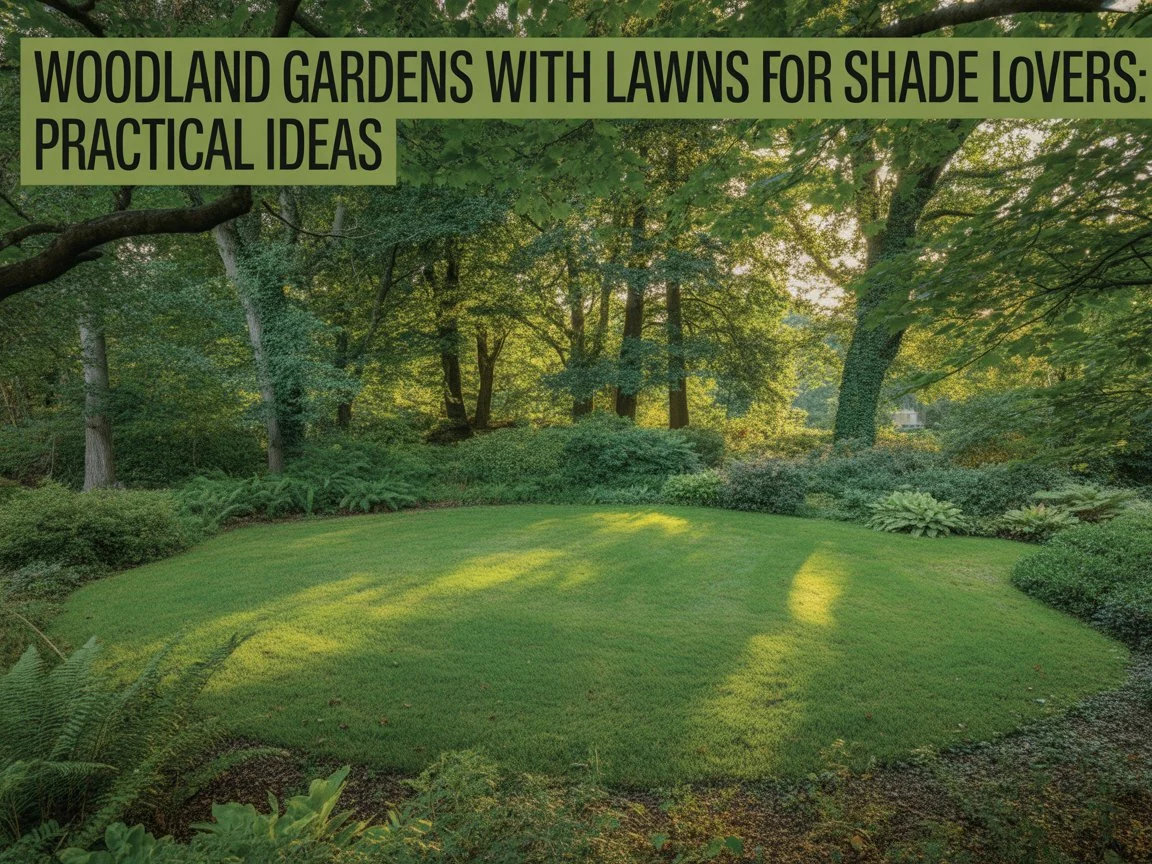
The phone call I remember most on this subject was from a man who introduced himself, only half-joking, as “a recovering perfect-lawn addict.” He had spent fifteen years and a small fortune trying to grow a flawless emerald lawn beneath three big maples, and every year it failed in exactly the same way — thin, patchy, mossy, and bald under the densest shade, no matter what seed, feed, or expensive product he threw at it. He wanted to know what he was doing wrong. I told him the honest answer: nothing, except fighting a battle that cannot be won. A conventional sun-lawn will never thrive in deep tree shade, and the harder you push it, the worse it looks. But that did not mean he could not have lawn — it meant he needed a different kind of lawn, one that actually loves the shade he was cursing. We re-sowed the clearings with fine fescue, let the deepest shade become a soft moss lawn, and edged it all with woodland planting. A year later he sent me a photo of a green, healthy, naturalistic woodland lawn and a message that simply said “I stopped fighting and started gardening.” That conversation captures the whole truth of this subject: a lawn can absolutely have a place in a shaded woodland garden, but only once you stop demanding a sun-lawn from a shade-loving space.
Woodland gardens with lawns for shade lovers combine open, naturalistic lawn areas — sown with shade-tolerant grasses, or replaced in deep shade with moss and lawn-alternative ground covers — with the surrounding trees and shade planting of a woodland garden, creating restful green clearings that work with the shaded conditions rather than against them. The lawn gives the woodland garden open space, restful contrast, and a place to walk and gather, while the woodland setting and the right shade-tolerant grasses give the lawn the dappled light and naturalistic character it needs to thrive where a conventional lawn would fail.
Over the years I have established, restored, and reimagined lawns in woodland gardens across sites ranging from small shaded backyards to large gardens beneath mature tree canopy. I have helped countless frustrated homeowners stop fighting an impossible sun-lawn and embrace a thriving shade lawn instead, and I have also created naturalistic moss lawns and meadow-style clearings of real beauty. In this article I am sharing the best woodland garden lawn ideas for shade lovers covering grass selection, establishment, moss lawns, alternatives, design, and low-maintenance care.
Understanding the Shade Lawn Challenge
Understanding the shade lawn challenge is the essential starting point, because growing a healthy lawn in the shaded conditions of a woodland garden requires recognizing why conventional lawns fail in shade and working with the conditions instead. I always begin by helping shade lovers understand this challenge, because the frustration of a failing shade lawn comes from trying to grow a sun-loving lawn in unsuitable conditions, and recognizing why this fails is the key to the successful, realistic approaches that actually work in a woodland garden.
Why Conventional Lawns Fail in Shade
Insufficient light, root competition, and damp conditions are three reasons conventional lawns fail in shade. Insufficient light beneath a tree canopy starves sun-loving grass of the energy it needs to grow densely. Root competition from the trees draws moisture and nutrients away from the grass. Damp, poorly drying conditions in shade encourage the moss and thinning that plague a conventional shade lawn.
Working With Shaded Conditions
Realistic expectations, shade-tolerant species, and embracing alternatives are three approaches suited to working with shaded conditions. Realistic expectations, accepting a naturalistic rather than a flawless lawn, set the right goal. Shade-tolerant species suited to low light give the best chance of a healthy lawn. Embracing alternatives where shade is too deep for grass, such as moss or ground cover, provides a thriving solution where grass cannot succeed.
Shade-Tolerant Grass Species for Woodland Lawns
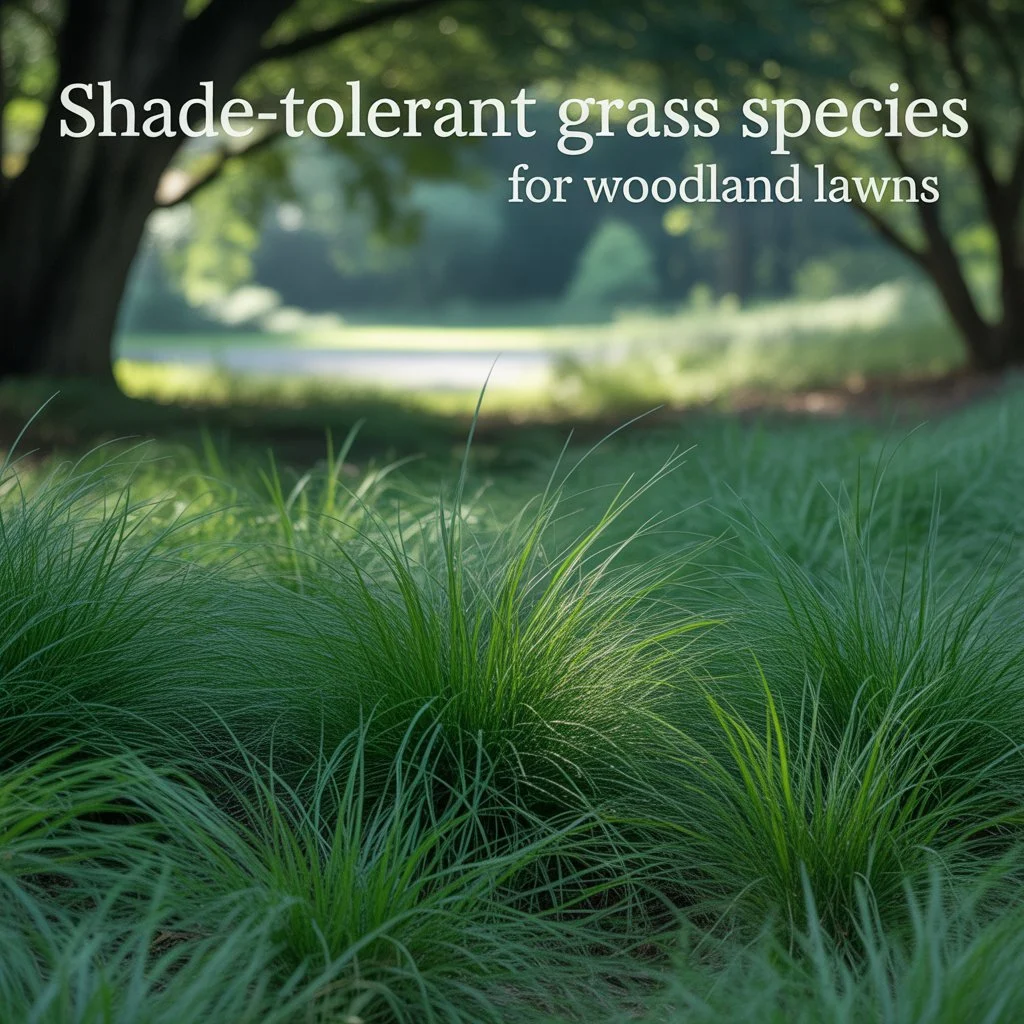
Shade-tolerant grass species for woodland lawns are the foundation of a successful shade lawn, using grass varieties specifically adapted to low light that establish and persist where conventional lawn grasses fail. I always specify shade-tolerant grass species for woodland lawns, because the single most important factor in a healthy shade lawn is choosing grasses genuinely adapted to low light, particularly the fine fescues that tolerate shade far better than the ryegrass and bluegrass of conventional lawns.
Best Grasses for a Shade Lawn
Fine fescue, creeping red fescue, and shade-tolerant grass mixes are three grass options suited to a woodland lawn. Fine fescue is the most shade-tolerant lawn grass, persisting in dappled shade where other grasses thin and fail. Creeping red fescue spreads to form cover and tolerates the shaded, drier conditions beneath trees. Shade-tolerant grass mixes blending fine fescues provide the best overall performance for a woodland lawn in varied light.
Choosing the Right Grass Mix
Light level matching, a fescue-based mix, and quality seed are three considerations suited to choosing a grass mix. Light level matching, selecting the mix to the degree of shade, gives the best results. A fescue-based mix, prioritizing the most shade-tolerant grasses, suits woodland conditions. Quality seed from a reputable shade lawn mix ensures the grasses are genuinely suited to the low-light conditions of the woodland garden.
Establishing a Lawn Beneath Tree Canopy
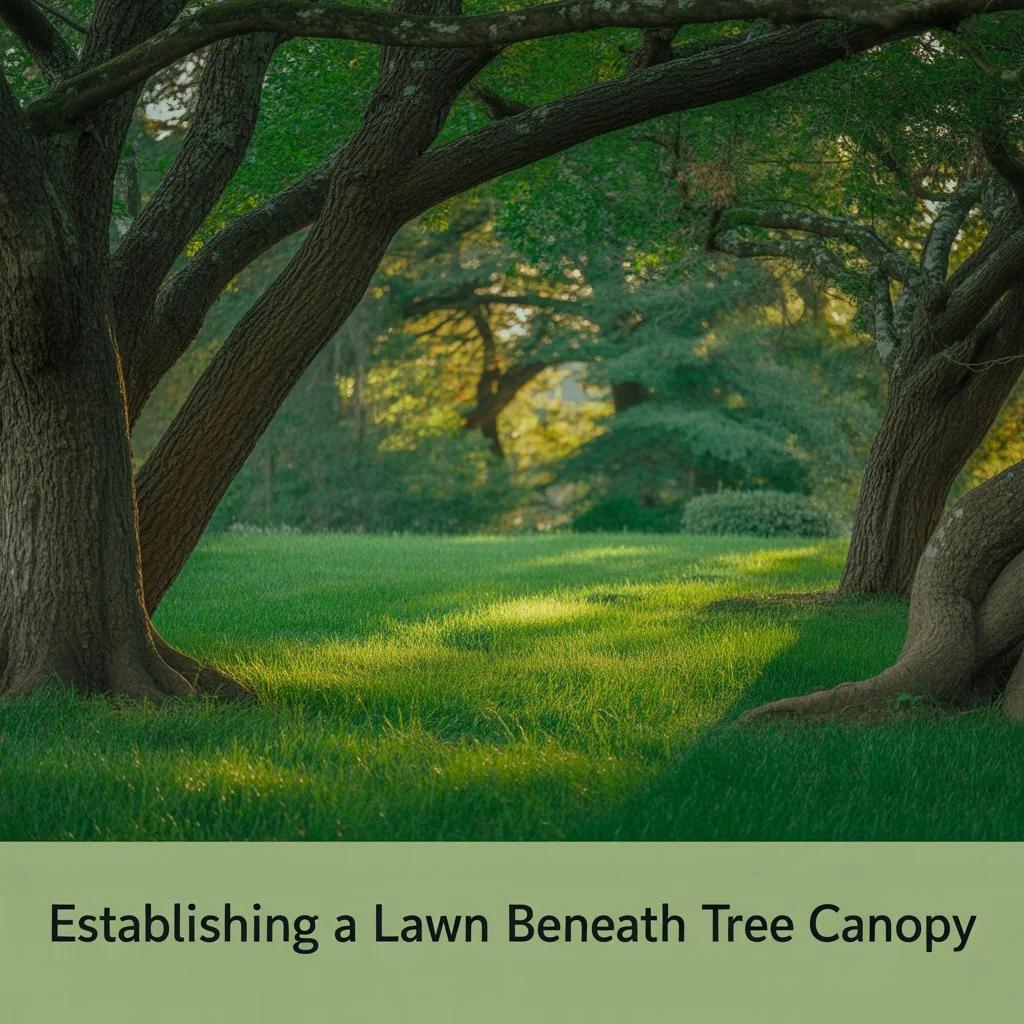
Establishing a lawn beneath tree canopy requires specific techniques to give shade-tolerant grass the best chance against the challenging conditions of low light, root competition, and falling leaves. I take particular care establishing lawns beneath trees, because the difficult conditions under a canopy demand both the right grass and careful establishment, giving the new shade lawn every advantage to establish before it must cope with the full challenge of the shaded woodland conditions.
Establishing a Shade Lawn Successfully
Good seedbed preparation, appropriate sowing timing, and careful establishment care are three practices suited to establishing a shade lawn. Good seedbed preparation, improving the soil where possible, gives the grass a strong start. Appropriate sowing timing, when conditions favour germination, maximizes establishment. Careful establishment care, including watering and protection while the grass establishes, helps the shade lawn take hold.
Managing Tree Canopy for Lawn Health
Canopy thinning, leaf management, and light improvement are three approaches suited to managing the canopy for lawn health. Canopy thinning, raising or thinning the tree canopy where appropriate, increases the light reaching the lawn. Leaf management, clearing fallen leaves promptly, prevents them smothering the grass. Light improvement through careful canopy management gives the shade lawn the additional light that can make the difference between thriving and struggling.
Dappled Light Lawn Clearings
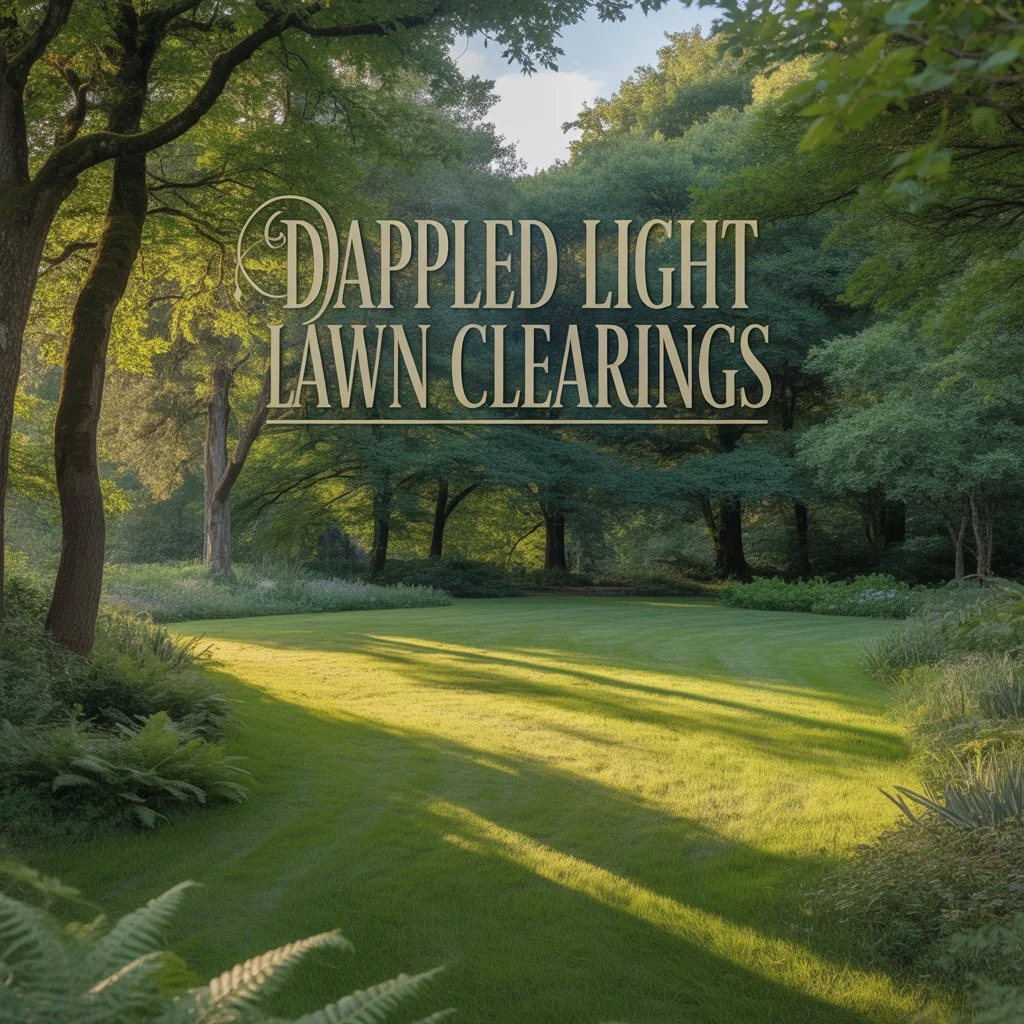
Dappled light lawn clearings create open, restful green spaces within the woodland garden where the canopy is light enough to support grass, providing the naturalistic open clearings that contrast beautifully with the surrounding planting. I design lawns as dappled light clearings within woodland gardens, because an open lawn clearing where dappled light reaches the ground provides both a healthy growing position for shade grass and the restful open contrast that makes a woodland garden feel balanced and complete.
Designing a Lawn Clearing
A naturally lit position, an organic shape, and soft planted edges are three principles suited to a lawn clearing. A naturally lit position where the canopy is lighter provides the conditions for healthy grass. An organic, irregular shape reads as a natural woodland clearing rather than a formal lawn. Soft planted edges of ferns and woodland planting blend the clearing into the surrounding woodland.
The Value of Open Clearings
Restful contrast, usable space, and light and air are three values of an open lawn clearing. Restful contrast between the open lawn and the dense surrounding planting creates visual balance. Usable open space provides somewhere to walk, sit, or gather within the woodland. Light and air in the clearing bring openness and brightness to the shaded woodland garden, enhancing the whole space.
Moss Lawns for Deep Shade
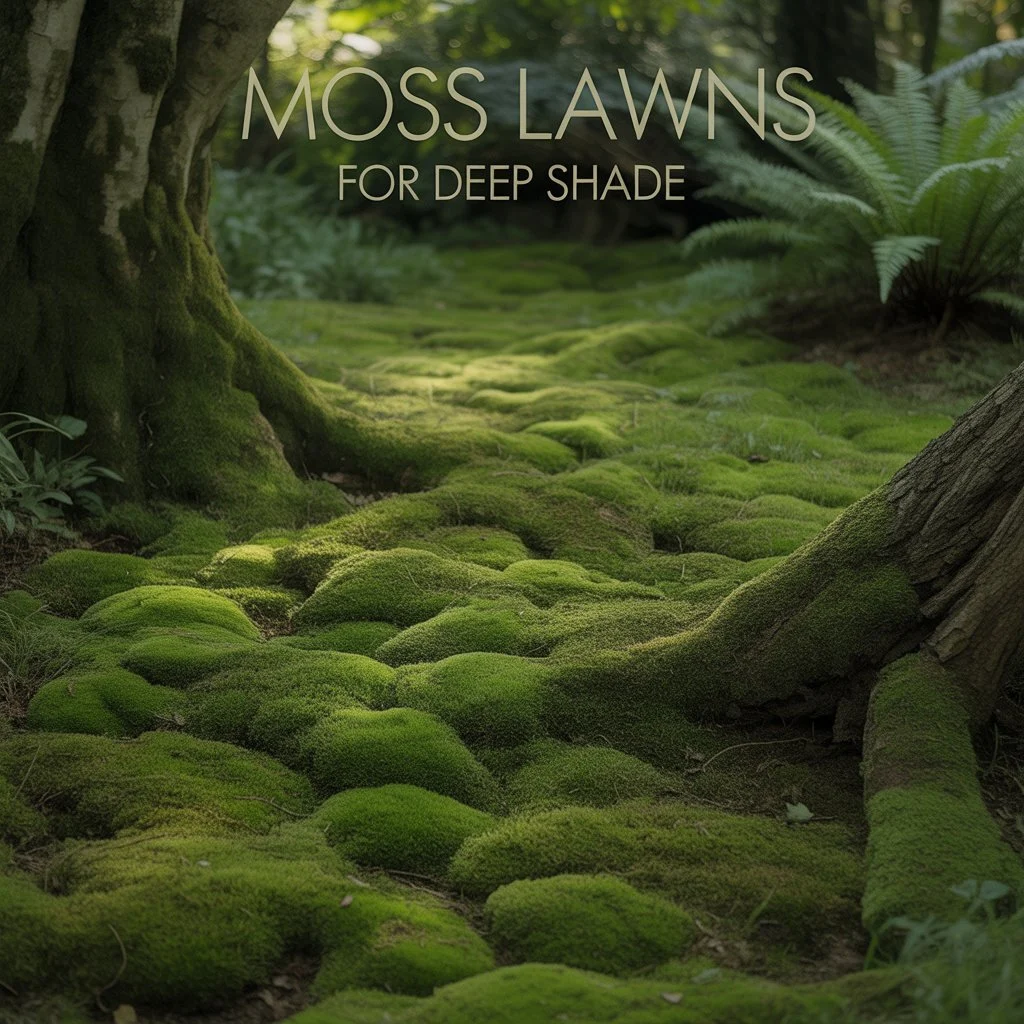
Moss lawns for deep shade provide a thriving green alternative where grass cannot succeed, embracing the moss that colonizes deep shade as a beautiful, soft, naturalistic lawn rather than fighting it. I recommend moss lawns for the deepest shade, because where the canopy is too dense for any grass to thrive, moss flourishes naturally into a lush green carpet, and embracing a moss lawn turns the deepest, most difficult shade into one of the most beautiful and tranquil features of a woodland garden.
Why Moss Suits Deep Shade
Deep shade tolerance, lush green cover, and natural establishment are three reasons moss suits deep shade. Deep shade tolerance allows moss to thrive in the densest shade where grass fails completely. Lush green cover from moss provides a soft, beautiful carpet that needs no mowing. Natural establishment occurs as moss colonizes suitable shaded, moist conditions on its own, often where grass has already given up.
Establishing a Moss Lawn
Suitable conditions, encouraging existing moss, and a moss slurry are three approaches suited to establishing a moss lawn. Suitable conditions of shade, moisture, and the right soil favour moss establishment. Encouraging existing moss, by removing competing grass and keeping the area moist, lets the moss spread. A moss slurry of blended moss applied to bare areas speeds the establishment of a continuous moss lawn.
Lawn Alternative Ground Covers for Shade
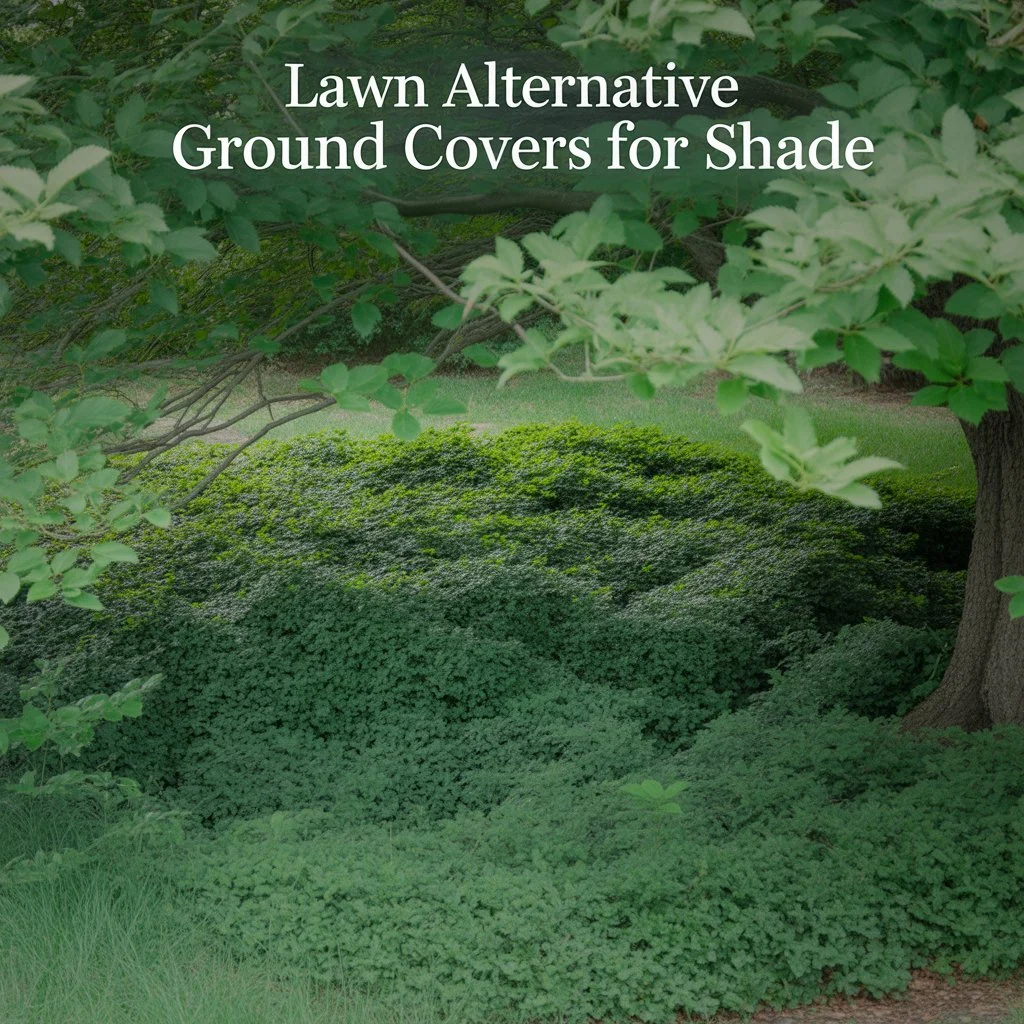
Lawn alternative ground covers for shade provide low-growing, walkable, or carpeting plants that replace grass in shaded areas, offering a green lawn-like surface where conventional grass cannot thrive. I often use lawn alternative ground covers in shaded woodland gardens, because a range of low-growing shade-tolerant plants can provide the green, carpeting effect of a lawn without the struggle of growing grass in shade, offering a thriving and beautiful alternative.
Ground Cover Lawn Alternatives
Creeping ground cover, low woodland plants, and tapestry planting are three lawn alternatives suited to shade. Creeping ground cover plants provide a low, spreading green carpet in place of grass. Low woodland plants suited to the conditions create a naturalistic green floor. Tapestry planting of mixed low ground covers provides a richly textured lawn alternative that thrives in shade.
Choosing a Lawn Alternative
Walkability needs, the degree of shade, and the desired look are three considerations suited to choosing a lawn alternative. Walkability needs determine whether a tough walkable cover or a purely visual carpet suits the area. The degree of shade guides which shade-tolerant species will thrive. The desired look, from uniform carpet to naturalistic tapestry, shapes the choice of lawn alternative for the woodland garden.
Meadow-Style Shade Lawns
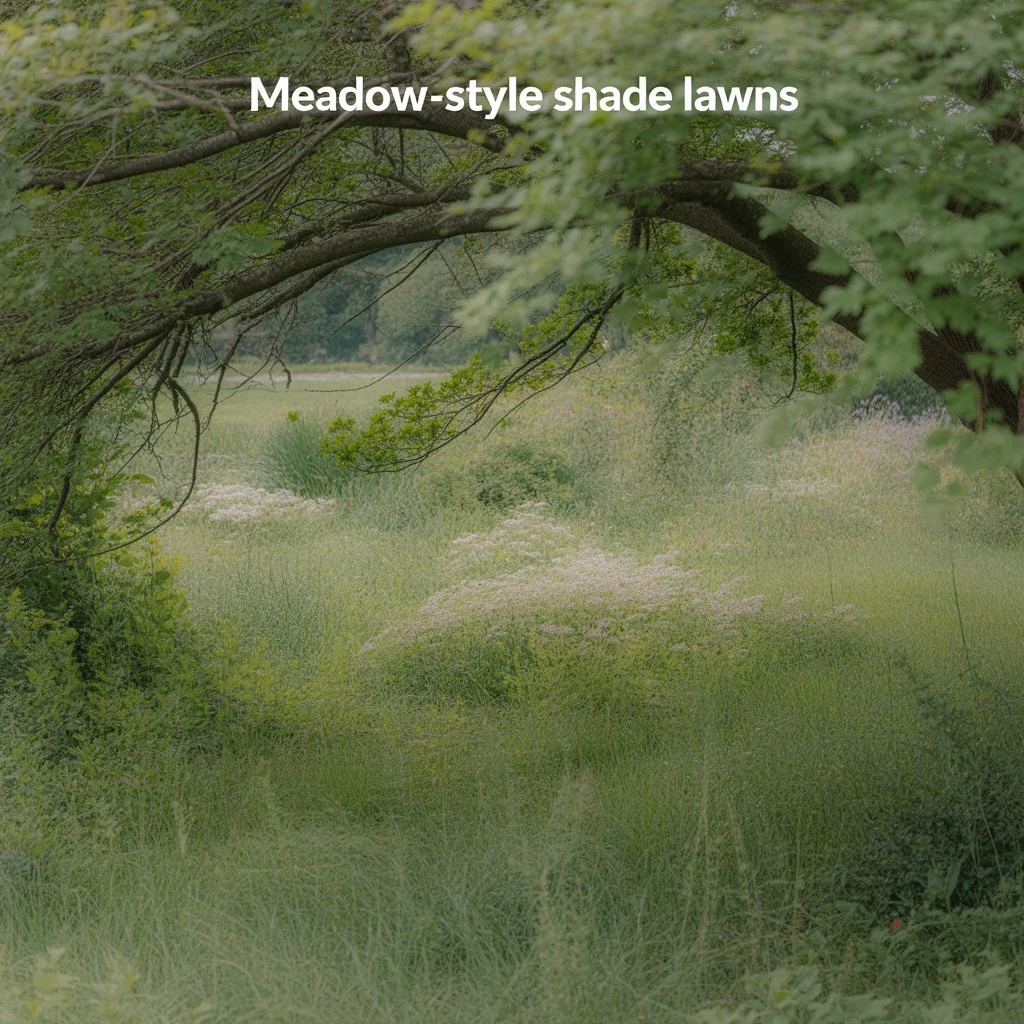
Meadow-style shade lawns combine shade-tolerant grasses with shade-loving wildflowers to create a naturalistic, informal, meadow-like lawn area that suits the woodland setting and supports wildlife. I create meadow-style shade lawns in woodland gardens, because combining shade-tolerant grasses with woodland wildflowers creates a naturalistic, informal lawn that suits the woodland aesthetic far better than a manicured lawn while supporting wildlife and reducing maintenance.
Creating a Shade Meadow
Shade-tolerant grasses, woodland wildflowers, and relaxed mowing are three elements suited to a shade meadow. Shade-tolerant grasses provide the meadow base in dappled light. Woodland wildflowers add seasonal flower and naturalistic character. Relaxed mowing, cutting less often than a conventional lawn, allows the meadow character to develop and the wildflowers to flourish.
Benefits of a Shade Meadow
Naturalistic beauty, wildlife support, and reduced maintenance are three benefits of a shade meadow. Naturalistic beauty from the informal grass and wildflower mix suits the woodland setting. Wildlife support from the flowers and longer grass enriches the garden’s biodiversity. Reduced maintenance from less frequent mowing makes the meadow-style lawn both beautiful and practical in a woodland garden.
Small Woodland Garden Lawns
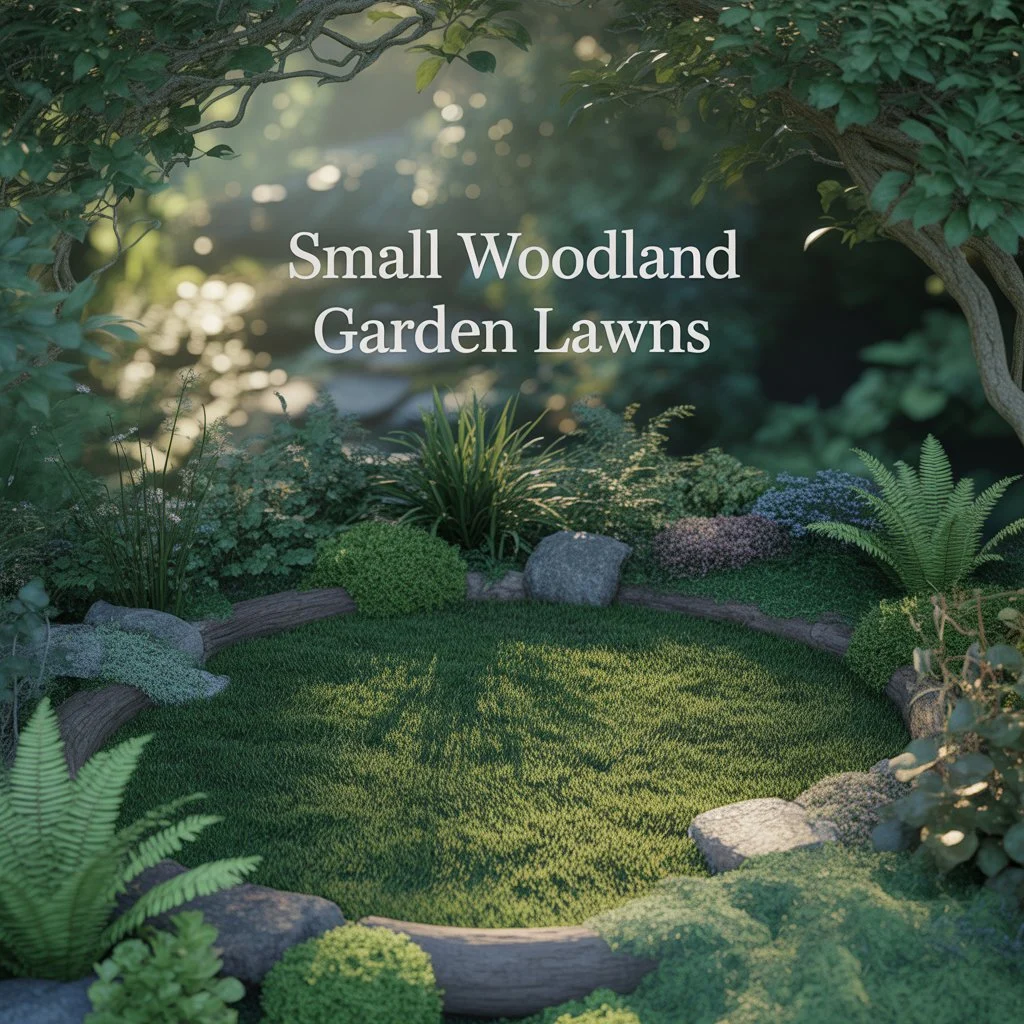
Small woodland garden lawns bring a restful patch of green to compact shaded gardens, using a small, well-chosen lawn or lawn alternative to provide open space without overwhelming a limited woodland setting. I create small lawns in compact woodland gardens, because even a small patch of green provides valuable restful contrast and open space, and a carefully chosen shade-tolerant grass or lawn alternative can give a small woodland garden a usable, beautiful green clearing.
Designing a Small Shade Lawn
A compact clearing, the right surface, and soft edges are three approaches suited to a small shade lawn. A compact clearing in the lightest available position provides the best conditions for a small lawn. The right surface, whether shade grass, moss, or ground cover, suits the specific conditions. Soft planted edges integrate the small lawn into the surrounding woodland planting.
Maximizing a Small Lawn Area
Realistic surface choice, quality over size, and integration are three principles suited to maximizing a small lawn. A realistic surface choice matched to the shade ensures the small lawn thrives. Quality over size, focusing on a small healthy area rather than a larger struggling one, delivers the best result. Integration with the woodland planting makes the small lawn feel like a natural clearing within the garden.
Lawn Edges and Transitions to Woodland Planting
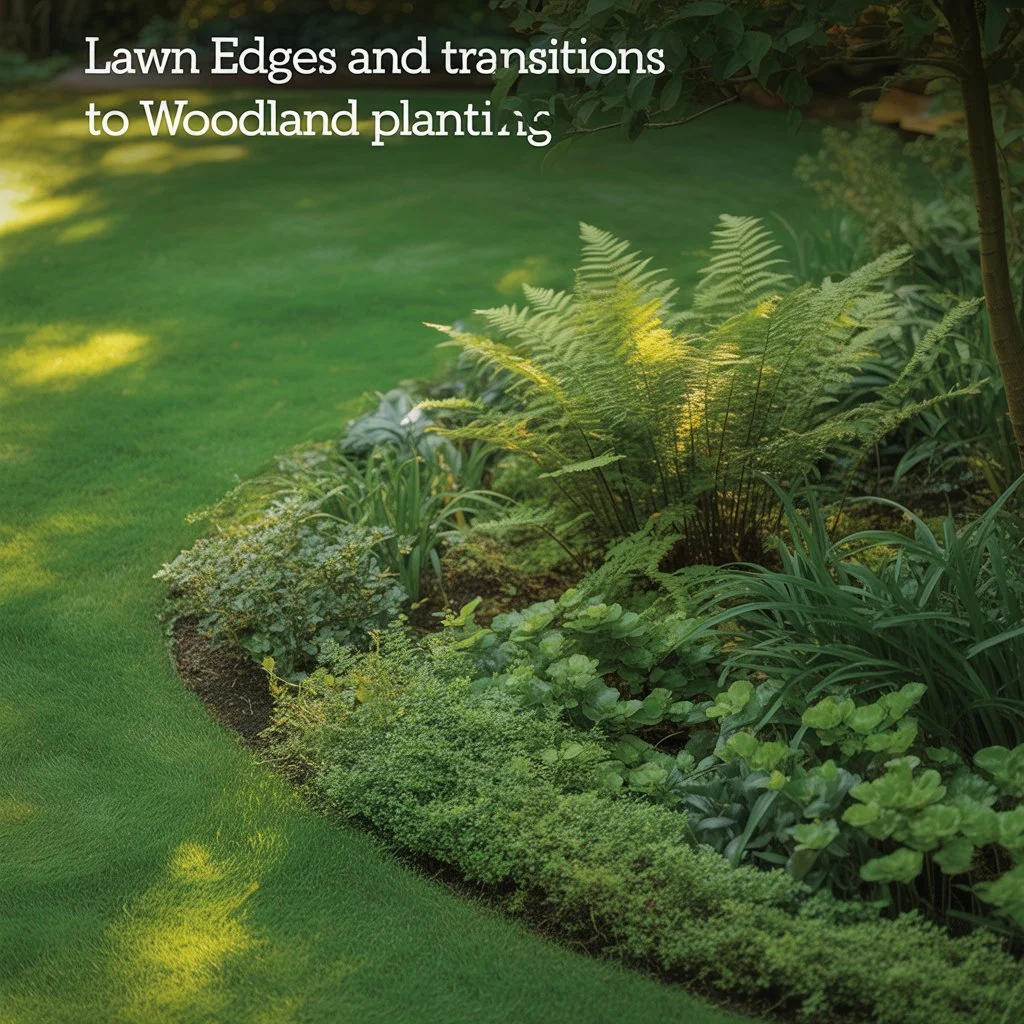
Lawn edges and transitions to woodland planting define how the open lawn meets the surrounding woodland, creating naturalistic, soft transitions that integrate the lawn into the woodland garden. I pay careful attention to lawn edges in woodland gardens, because the transition from open lawn to woodland planting is what makes the lawn feel like a natural clearing rather than a formal feature, and soft, naturalistic edges are key to a cohesive woodland garden.
Creating Naturalistic Lawn Edges
Flowing edge shapes, planting that spills over, and a graded transition are three approaches suited to naturalistic lawn edges. Flowing, curving edge shapes read as natural clearings. Planting that spills over the lawn edge softens the boundary. A graded transition from lawn through low planting to taller woodland creates a natural progression from open to enclosed.
Transitioning From Lawn to Woodland
A low planting margin, a fern and ground cover layer, and a gradual height increase are three elements suited to the transition. A low planting margin at the lawn edge softens the boundary. A fern and ground cover layer provides the woodland floor character beside the lawn. A gradual height increase from lawn to canopy creates the layered transition of a natural woodland clearing.
Managing Leaves and Lawn Care in Shade
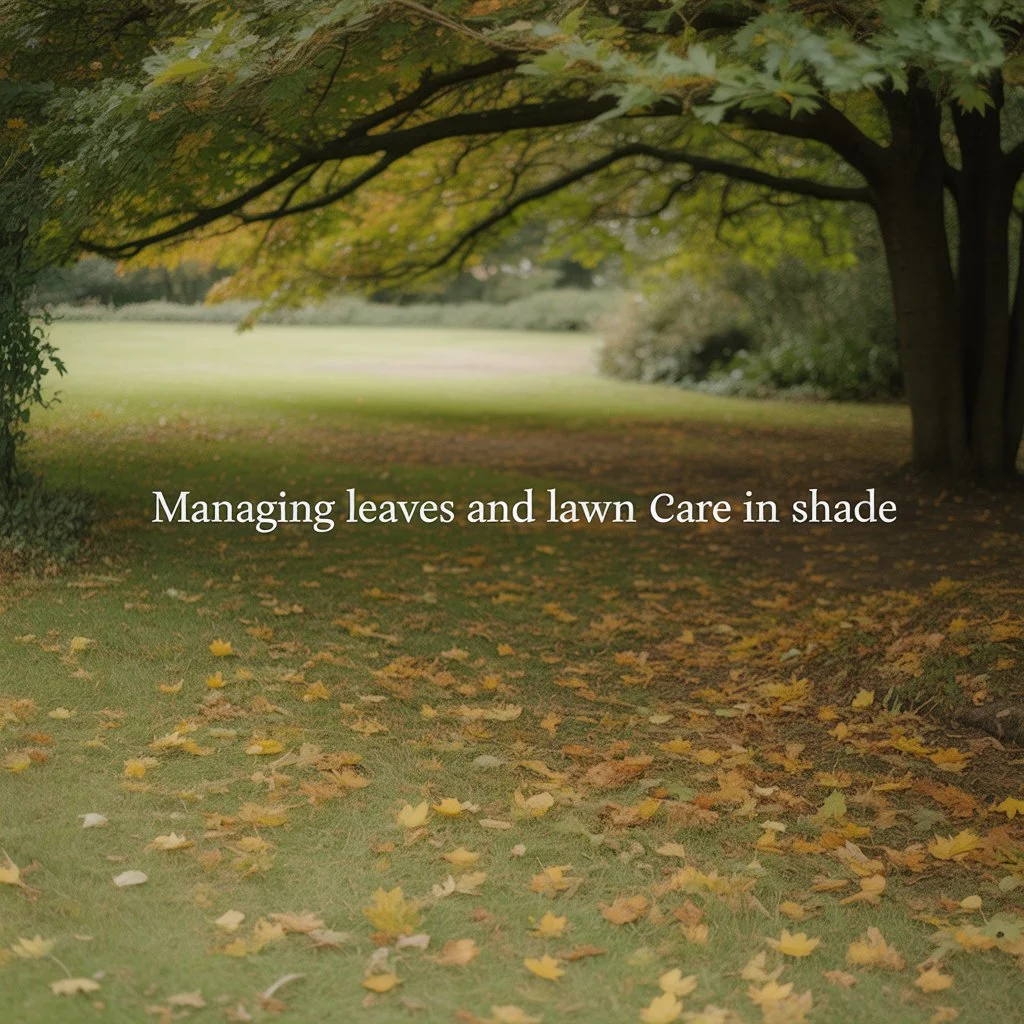
Managing leaves and lawn care in shade addresses the specific maintenance challenges of a woodland lawn, from clearing fallen leaves to caring for grass in the demanding conditions beneath trees. I follow a shade-specific lawn care approach in woodland gardens, because a lawn beneath trees faces particular challenges, especially heavy leaf fall and the stresses of shade, and managing these specific issues is essential to keeping a woodland lawn healthy.
Leaf Management for a Woodland Lawn
Prompt leaf clearing, regular autumn care, and using cleared leaves are three practices suited to leaf management. Prompt leaf clearing prevents fallen leaves smothering and killing the grass beneath. Regular autumn care, clearing leaves as they fall through the season, protects the lawn. Using cleared leaves for leaf mould elsewhere in the garden turns the chore into a resource.
Caring for a Shade Lawn
Higher mowing, careful feeding, and reduced wear are three practices suited to caring for a shade lawn. Higher mowing, leaving the grass longer than a sun lawn, helps shade grass capture more light. Careful feeding suited to shade supports the grass without encouraging weak growth. Reduced wear, avoiding heavy foot traffic on the more delicate shade grass, helps the woodland lawn stay healthy.
Low-Maintenance Woodland Lawn Design
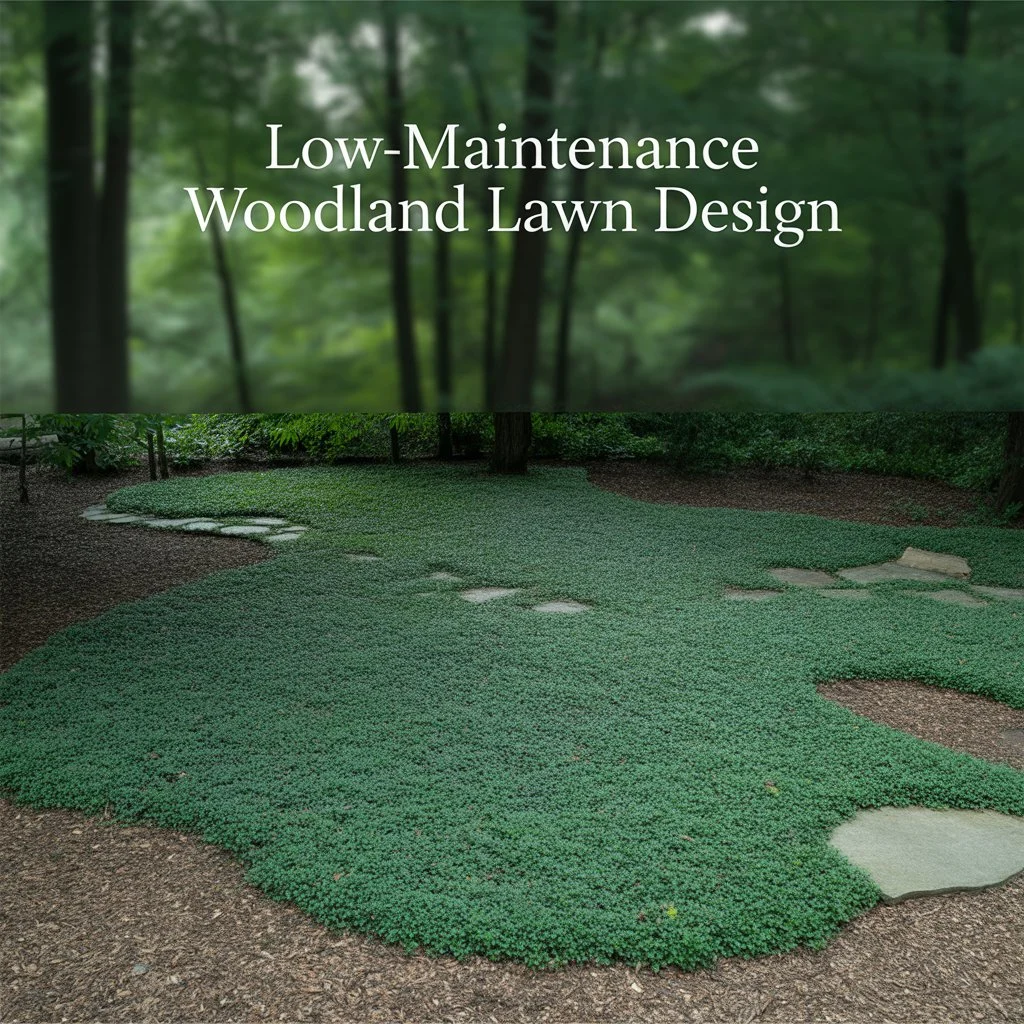
Low-maintenance woodland lawn design uses naturalistic approaches, the right surfaces, and relaxed care to create a green woodland lawn area that needs less work than a conventional manicured lawn. I design woodland lawns for low maintenance, because a naturalistic shade lawn, moss lawn, or meadow area worked with the conditions needs far less intervention than the constant battle of a conventional lawn in shade, providing green space with realistic, manageable care.
Why a Naturalistic Lawn Is Low-Maintenance
Suited surfaces, relaxed standards, and reduced mowing are three reasons a naturalistic lawn is low-maintenance. Suited surfaces matched to the shade thrive with less intervention than struggling grass. Relaxed standards, accepting a naturalistic rather than perfect lawn, remove the pressure of constant correction. Reduced mowing, especially with meadow or moss areas, cuts the regular workload.
Low-Maintenance Lawn Choices
Moss lawns, meadow-style areas, and ground cover alternatives are three low-maintenance choices suited to a woodland garden. Moss lawns need no mowing and thrive in deep shade with minimal care. Meadow-style areas need only occasional cutting and support wildlife. Ground cover alternatives provide green cover without the demands of grass, together offering the most practical low-maintenance options for a shaded woodland garden.
Combining Lawn With Woodland Planting
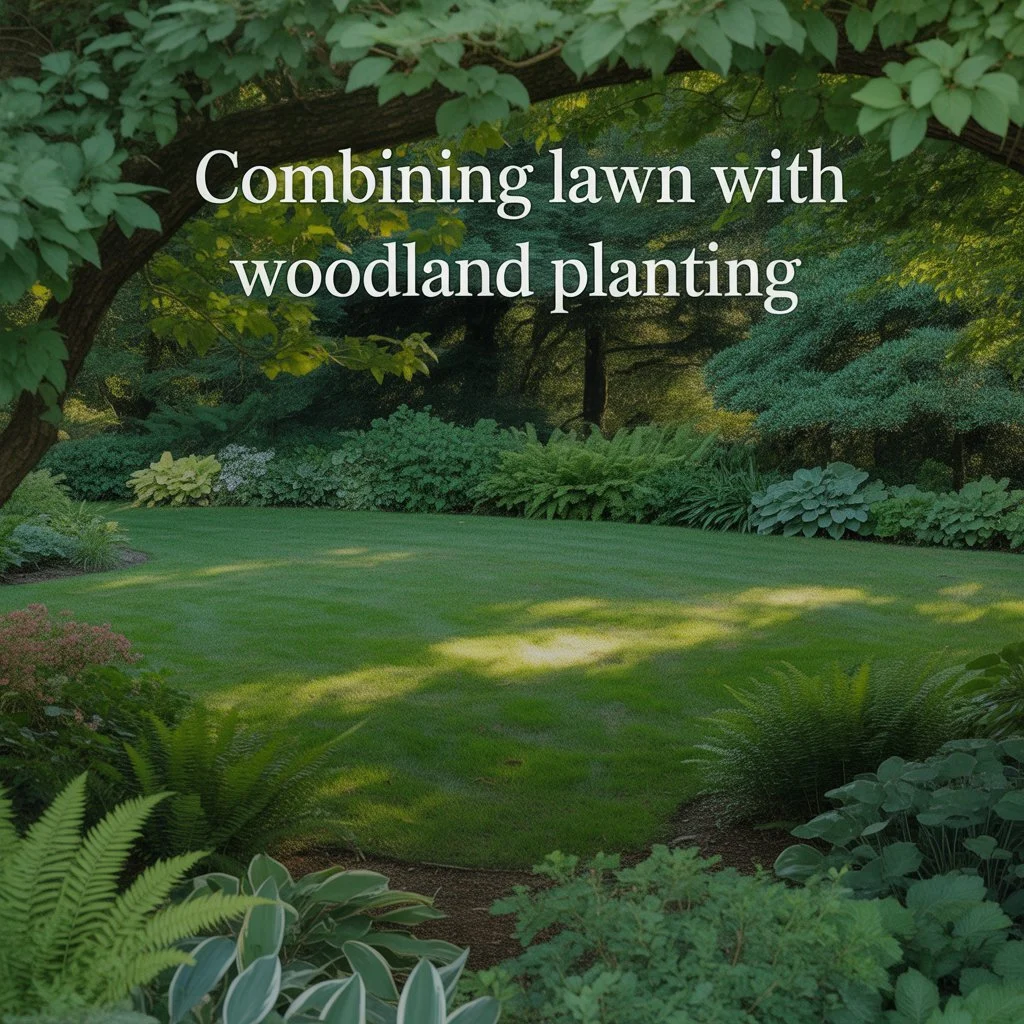
Combining lawn with woodland planting integrates the open lawn into a complete woodland garden composition, balancing open green space with the layered planting that defines the woodland setting. I design lawns as part of the whole woodland garden composition, because an open lawn works best when balanced with surrounding woodland planting, the open space and the layered planting together creating the restful, varied, complete woodland garden that shade lovers seek.
Balancing Open and Planted Space
A central open lawn, surrounding planted layers, and a balanced ratio are three approaches suited to balancing open and planted space. A central open lawn provides the restful clearing. Surrounding planted layers of trees, shrubs, and ground cover provide the woodland enclosure. A balanced ratio of open lawn to dense planting creates the varied, complete woodland garden composition.
Creating a Cohesive Composition
Connected sightlines, a unified style, and natural transitions are three principles suited to a cohesive composition. Connected sightlines across the lawn and through the planting create a unified garden. A unified naturalistic style ties the lawn and woodland together. Natural transitions between open and planted areas create the seamless, cohesive woodland garden that integrates the lawn beautifully.
Lawns for Walking and Gathering in Woodland
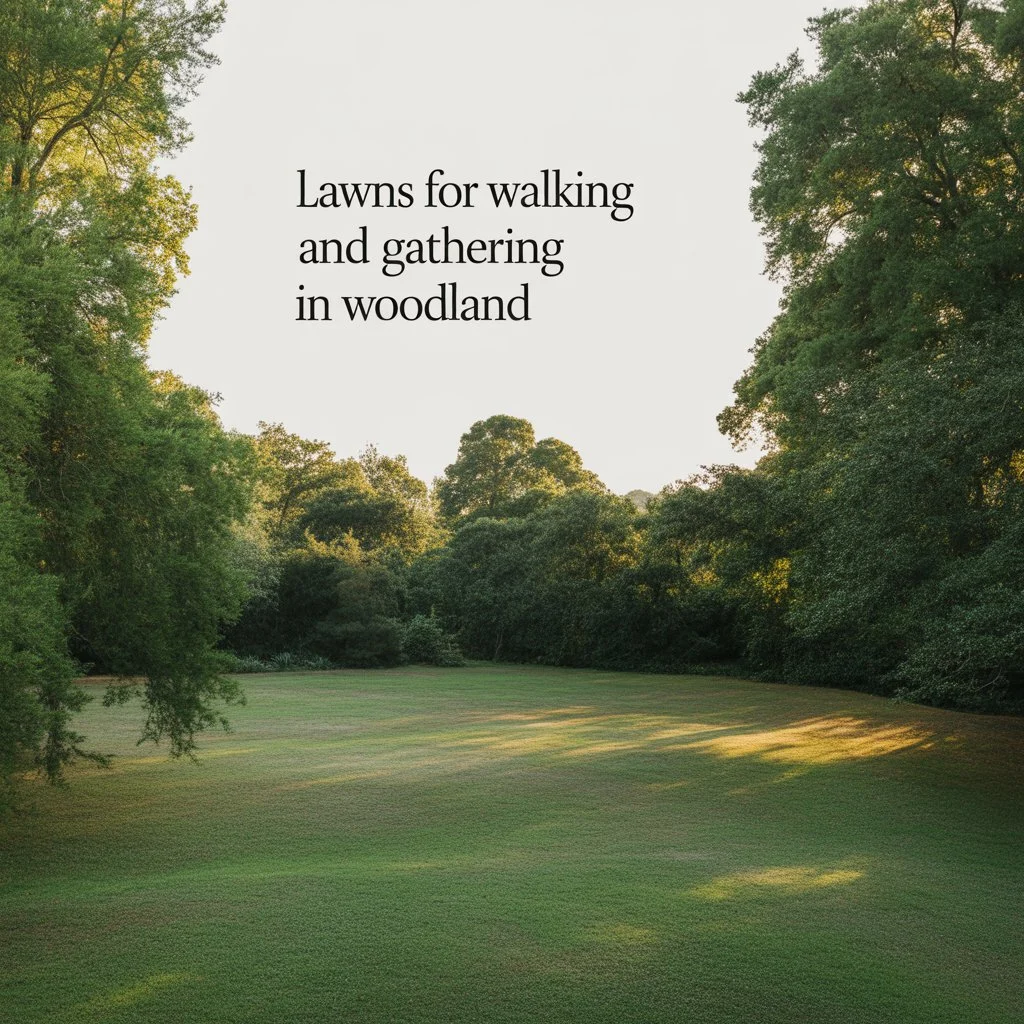
Lawns for walking and gathering in woodland provide the practical usable open space that makes a woodland garden a place to move through and spend time in, offering a soft green surface for walking, sitting, and gathering. I value woodland lawns for their practical usability, because an open lawn area provides the walkable, usable green space that allows a woodland garden to be actively enjoyed, giving somewhere to walk, play, sit, and gather within the beauty of the woodland setting.
Practical Uses of a Woodland Lawn
A walking surface, a gathering space, and a play area are three practical uses suited to a woodland lawn. A soft walking surface invites movement through the woodland garden. A gathering space provides somewhere to sit and spend time with others. A play area gives a usable open space for activity within the garden.
Designing a Usable Lawn
Adequate open size, a durable enough surface, and good access are three considerations suited to a usable woodland lawn. Adequate open size provides genuine usable space for the intended activities. A durable enough surface, choosing the toughest suitable shade grass or surface, withstands use. Good access connecting the lawn to paths and the house makes the usable space easy to reach and enjoy.
Seasonal Care of a Woodland Lawn
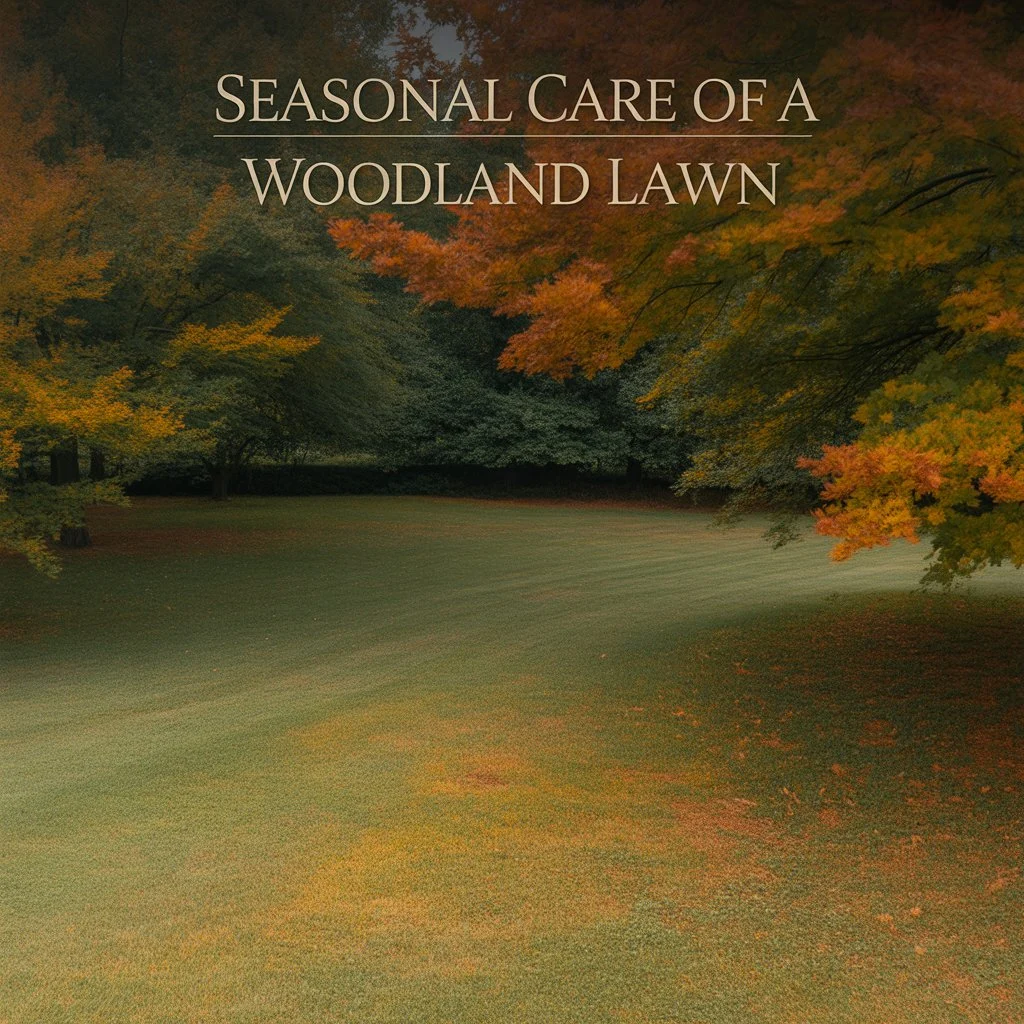
Seasonal care of a woodland lawn follows the year-round rhythm of looking after a lawn in shaded woodland conditions, adapting care to the seasons and the specific demands of the woodland setting. I follow a seasonal care routine for woodland lawns, because a shade lawn benefits from care timed to the seasons, particularly managing leaf fall in autumn and supporting the grass through the demanding conditions, keeping the woodland lawn healthy across the year.
Seasonal Woodland Lawn Tasks
Spring renewal, summer light care, and autumn leaf management are three seasonal tasks suited to a woodland lawn. Spring renewal, including over-seeding any thin areas, refreshes the lawn for the growing season. Summer light care, with higher mowing and appropriate watering, supports the grass through the season. Autumn leaf management, clearing fallen leaves promptly, protects the lawn through the heaviest leaf fall.
Year-Round Woodland Lawn Health
Adapting to the seasons, monitoring shade changes, and responsive care are three approaches suited to year-round lawn health. Adapting care to the seasons keeps the lawn supported throughout the year. Monitoring shade changes as the canopy leafs out and falls helps anticipate the lawn’s needs. Responsive care, addressing any thinning or problems promptly, maintains the health of the woodland lawn over time.
Embracing the Shade Garden Lifestyle
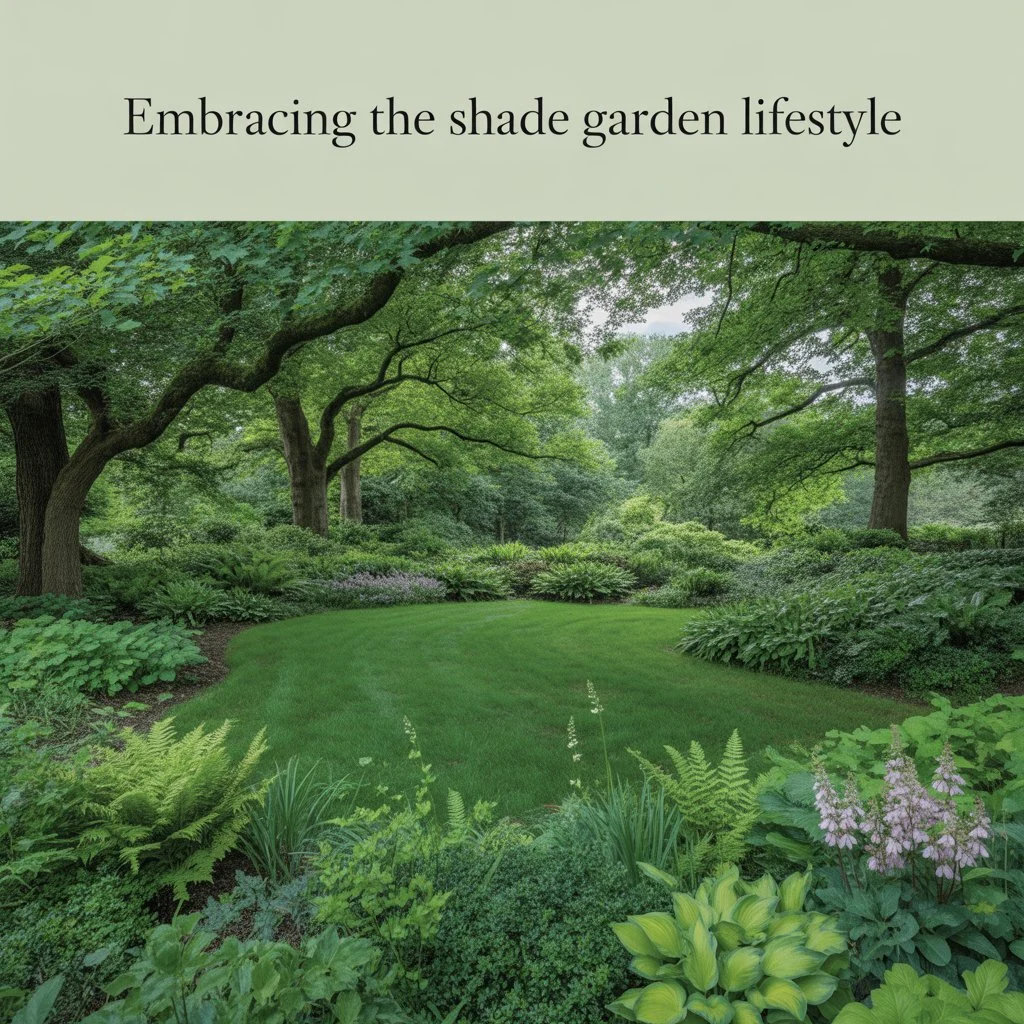
Embracing the shade garden lifestyle is the mindset that transforms the challenge of shaded conditions into the joy of shade gardening, celebrating the unique beauty and rewards of a woodland garden rather than fighting its shade. I encourage shade lovers to embrace this lifestyle fully, because the most rewarding woodland gardens come from celebrating and working with the shade rather than fighting it, and embracing the shade garden lifestyle turns a difficult condition into a passion for one of gardening’s most beautiful and rewarding styles.
The Joys of Shade Gardening
Unique beauty, a passionate community, and rewarding challenges are three joys suited to the shade garden lifestyle. Unique beauty in the lush, green, tranquil character of a shaded garden is unlike any sunny garden. A passionate community of shade gardeners shares knowledge and enthusiasm. Rewarding challenges, in mastering the conditions and finding the right plants and surfaces, make shade gardening deeply satisfying.
Celebrating Shade in the Garden
Working with conditions, choosing suited plants, and finding beauty in shade are three approaches suited to celebrating shade. Working with the shaded conditions rather than against them brings success and satisfaction. Choosing plants and surfaces suited to shade ensures a thriving garden. Finding beauty in the unique qualities of a shaded woodland garden, including its lawns and clearings, is the heart of the rewarding shade garden lifestyle.
Frequently Asked Questions
Can you grow a lawn in a shady woodland garden?
You can grow a lawn in a shady woodland garden, but success depends on choosing shade-tolerant grasses, working with the conditions, and having realistic expectations rather than demanding a flawless sun-lawn. Fine fescues and creeping red fescue are far more shade-tolerant than conventional lawn grasses and can establish a healthy naturalistic lawn in dappled light, particularly in lighter clearings where some light reaches the ground, though they will never produce the dense emerald perfection of a sun-lawn. Where the shade is too deep for any grass to thrive, the better approach is to embrace alternatives such as a moss lawn or lawn-alternative ground covers, which flourish in conditions where grass fails, so a shaded woodland garden can absolutely have beautiful green lawn areas as long as the surface is matched to the actual light conditions.
What grass grows best in shade under trees?
The grass that grows best in shade under trees is fine fescue, including creeping red fescue and other fine fescue varieties, which tolerate low light, root competition, and the drier conditions beneath a canopy far better than the ryegrass and bluegrass used in conventional lawns. A quality shade-tolerant grass mix based on fine fescues gives the best results for a woodland lawn, and matching the mix to the actual degree of shade improves the chances of success, since even the most shade-tolerant grass needs some dappled light to thrive. For the best results beneath trees, the grass choice should be combined with good establishment care, higher mowing to help the grass capture more light, prompt leaf clearing, and where appropriate some careful canopy thinning to increase the light reaching the lawn.
What can I use instead of grass in deep shade?
In deep shade where grass cannot thrive, the best alternatives are a moss lawn or low-growing shade-tolerant ground cover plants, both of which flourish in conditions that defeat conventional grass. A moss lawn embraces the moss that naturally colonizes deep, moist shade, creating a lush, soft, green carpet that needs no mowing and turns the most difficult shade into a beautiful, tranquil feature, while lawn-alternative ground covers provide a green, carpeting surface using plants genuinely suited to low light. The choice depends on whether the area needs to be walkable and on the look you want, from a uniform moss carpet to a richly textured tapestry of mixed ground covers, but both approaches succeed by working with the deep shade rather than fighting it, providing thriving green cover where grass would only struggle and fail.
How do I look after a lawn under trees?
You look after a lawn under trees by managing leaf fall promptly, mowing higher than a conventional lawn, feeding carefully, and reducing wear on the more delicate shade grass. Clearing fallen leaves quickly through autumn is the single most important task, since a layer of leaves will smother and kill the grass beneath, while mowing the grass higher than a sun-lawn helps it capture more of the limited light it receives. Careful feeding suited to shade supports the grass without forcing weak growth, avoiding heavy foot traffic protects the more delicate shade grass from wear, and where appropriate some thinning or raising of the tree canopy increases the light reaching the lawn, all of which combine to keep a woodland lawn as healthy as possible in the demanding conditions beneath trees.
Is a moss lawn a good idea in a woodland garden?
A moss lawn is an excellent idea in a woodland garden, particularly in the deep shade where grass cannot thrive, because moss flourishes naturally in the shaded, moist conditions that defeat conventional lawns and creates a lush, soft, beautiful green carpet. A moss lawn needs no mowing, suits the naturalistic woodland aesthetic perfectly, and turns the most difficult deep-shade areas into one of the most tranquil and attractive features of the garden, making it a genuinely rewarding choice for shade lovers rather than a compromise. Establishing a moss lawn involves providing the shaded, moist conditions moss prefers, removing competing grass, and encouraging existing moss or applying a moss slurry to bare areas, after which the moss spreads into a continuous carpet that thrives with minimal maintenance, embracing the shade rather than fighting it.