
Woodland Rockery Gardens For Shady Spots: Creative Ideas

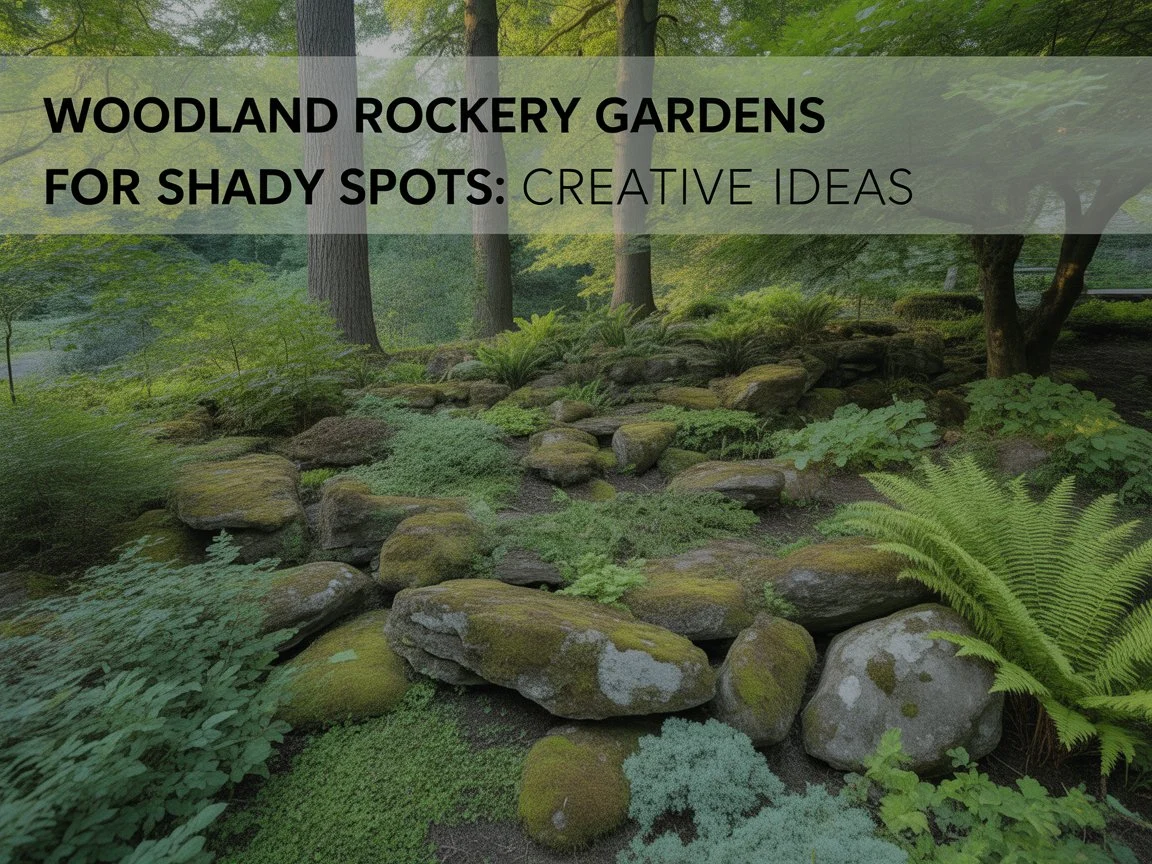
For most of my career, I was taught the same rule everyone is taught: rockeries are for sun. Alpines need light, stone holds heat, and a shaded rockery was considered a contradiction in terms — a feature in the wrong place. Then I visited an old garden where a previous owner had, in apparent ignorance of the rule, built a rockery in deep shade beneath a stand of beech, and left it for thirty years. It was the most beautiful rock garden I had ever seen. The stones had vanished beneath velvet moss and grey-green lichen, ferns unfurled from every crevice, wild ginger and violets pooled between the boulders, and the whole thing glowed with a soft, ancient, green light that no sunny alpine rockery could ever produce. The “rule” was simply wrong. A shaded rockery is not a failed sun rockery; it is an entirely different and arguably more enchanting thing: a woodland rockery, where the stone becomes a stage for the lush mosses, ferns, and shade plants that could never grow in a hot, dry alpine bed. That garden completely rewrote my thinking, and I have been building woodland rockeries in shady spots ever since.
Woodland rockery gardens for shady spots combine naturalistic arrangements of moss-covered, lichen-encrusted stone with shade-tolerant woodland planting — ferns, mosses, epimedium, wild ginger, and woodland wildflowers — to transform difficult shaded garden areas into beautiful, characterful, habitat-rich rock features beneath a tree canopy. The rockery gives the shaded spot structure, drainage, microclimate, and dramatic form, while the woodland planting and the cool, damp shade give the stone the moss, lichen, and lush green character that make a shaded rockery so distinctively enchanting.
Over the years I have designed, built, and planted woodland rockeries in shady spots ranging from small dark corners to large shaded banks beneath mature trees. I have seen a well-built shaded rockery transform the most difficult, lifeless garden corner into a feature of real beauty, and I have also created habitat-rich stone arrangements of genuine ecological value. In this article I am sharing the best woodland rockery ideas for shady spots covering stone, construction, shade planting, moss, wildlife, and low-maintenance design.
[Image: shady woodland rockery garden with moss-covered stones and ferns growing between the rocks]
Rethinking the Rockery for Shade
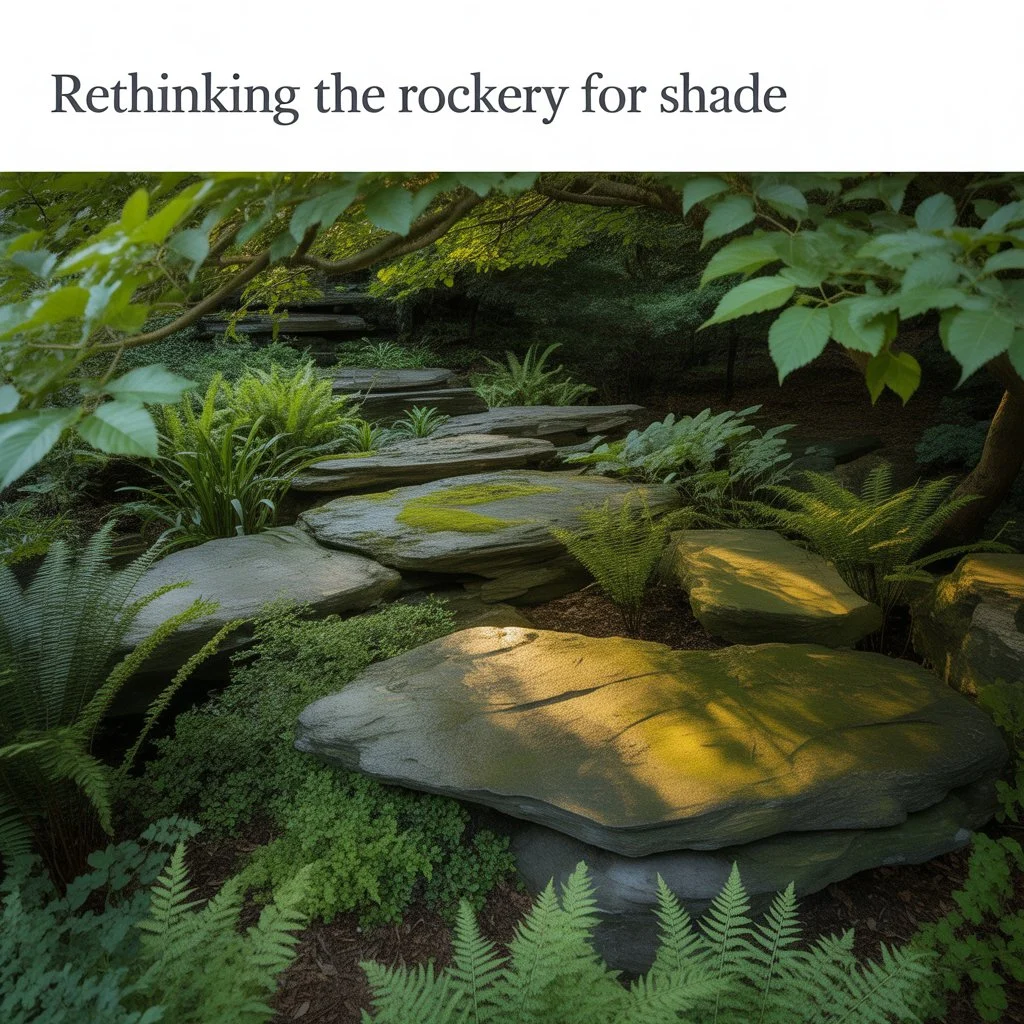
Rethinking the rockery for shade is the essential mindset shift, because a shaded rockery is not a compromised sun rockery but a distinct and beautiful feature suited to its own conditions and planting. I always begin a shaded rockery by overturning the assumption that rockeries need sun, because once you understand that a woodland rockery is its own distinct feature, designed around moss, ferns, and shade plants rather than sun-loving alpines, the shaded spot transforms from a problem into a perfect opportunity.
Why a Shaded Rockery Works
A distinct feature, suited planting, and natural character are three reasons a shaded rockery works. A distinct feature, designed for shade rather than sun, succeeds on its own terms. Suited planting of ferns, mosses, and shade plants thrives where alpines would fail. Natural character from the moss and lichen that colonize shaded stone creates a beauty unique to the woodland rockery.
The Woodland Rockery Difference
Moss over alpines, lush over arid, and shade over sun are three differences that define a woodland rockery. Moss over alpines means the shaded rockery embraces moss and ferns rather than sun-loving alpine plants. Lush over arid means the planting is green and lush rather than the dry character of a sun rockery. Shade over sun means the whole feature is designed around the shaded conditions, creating its distinctive woodland character.
Choosing Stone for a Woodland Rockery
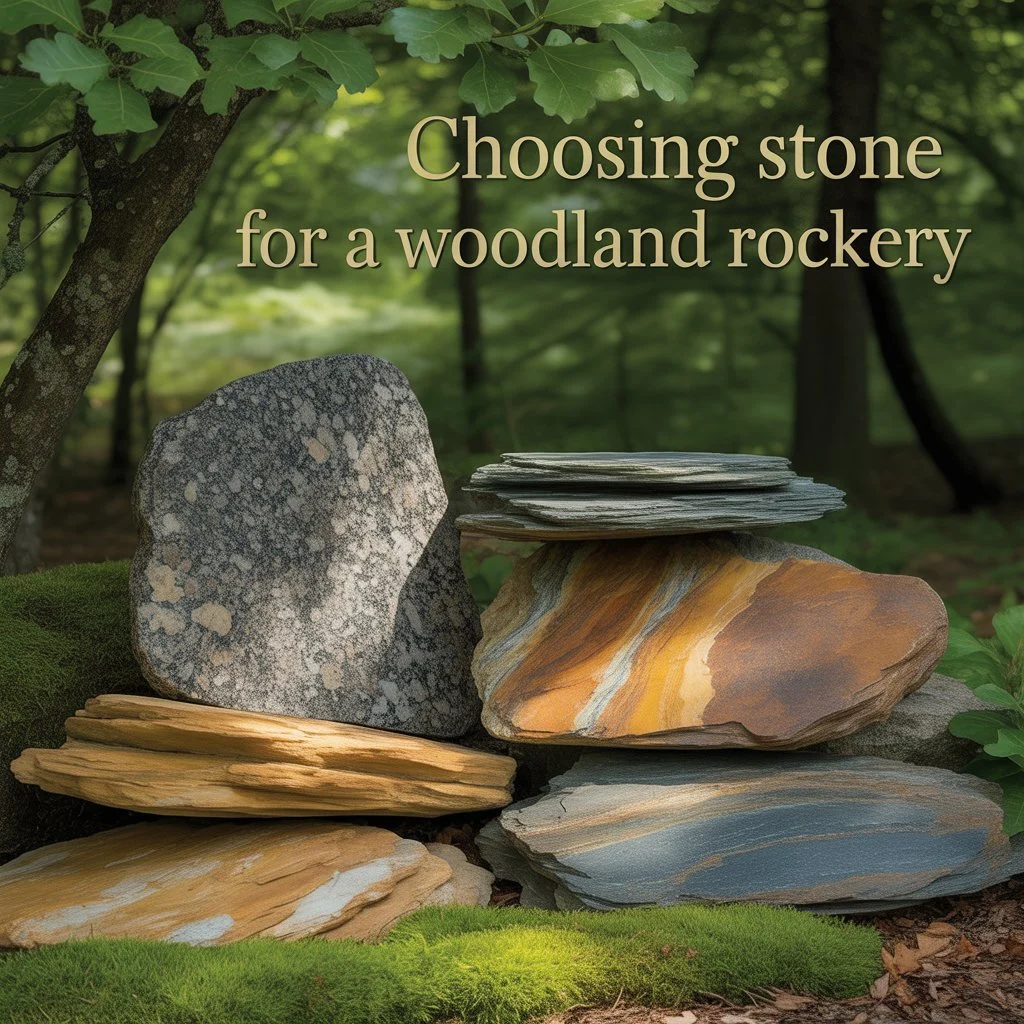
Choosing stone for a woodland rockery is fundamental to its character, because the right stone — porous, weathered, and naturalistic — both suits the woodland aesthetic and provides the surfaces that moss and lichen colonize. I choose stone carefully for every woodland rockery, because the type and character of the stone determine how naturalistic the feature looks and how readily it develops the moss and lichen that give a shaded rockery its distinctive aged, woodland beauty.
Stone Types for a Woodland Rockery
Weathered sandstone, limestone, and local fieldstone are three stone types suited to a woodland rockery. Weathered sandstone provides a porous, characterful stone that develops moss readily in shade. Limestone provides a pale stone that supports lichen colonization and brightens the shaded feature. Local fieldstone provides the most contextually authentic stone, matching the regional geology for a naturalistic woodland rockery.
Stone That Encourages Moss
Porous surfaces, weathered character, and shaded positioning are three qualities of stone that encourages moss. Porous surfaces hold the moisture that moss needs to colonize. Weathered, textured character provides the rough surfaces moss establishes on. Shaded positioning in the cool, damp conditions of the woodland encourages the moss and lichen that age the stone beautifully.
Constructing a Naturalistic Woodland Rockery
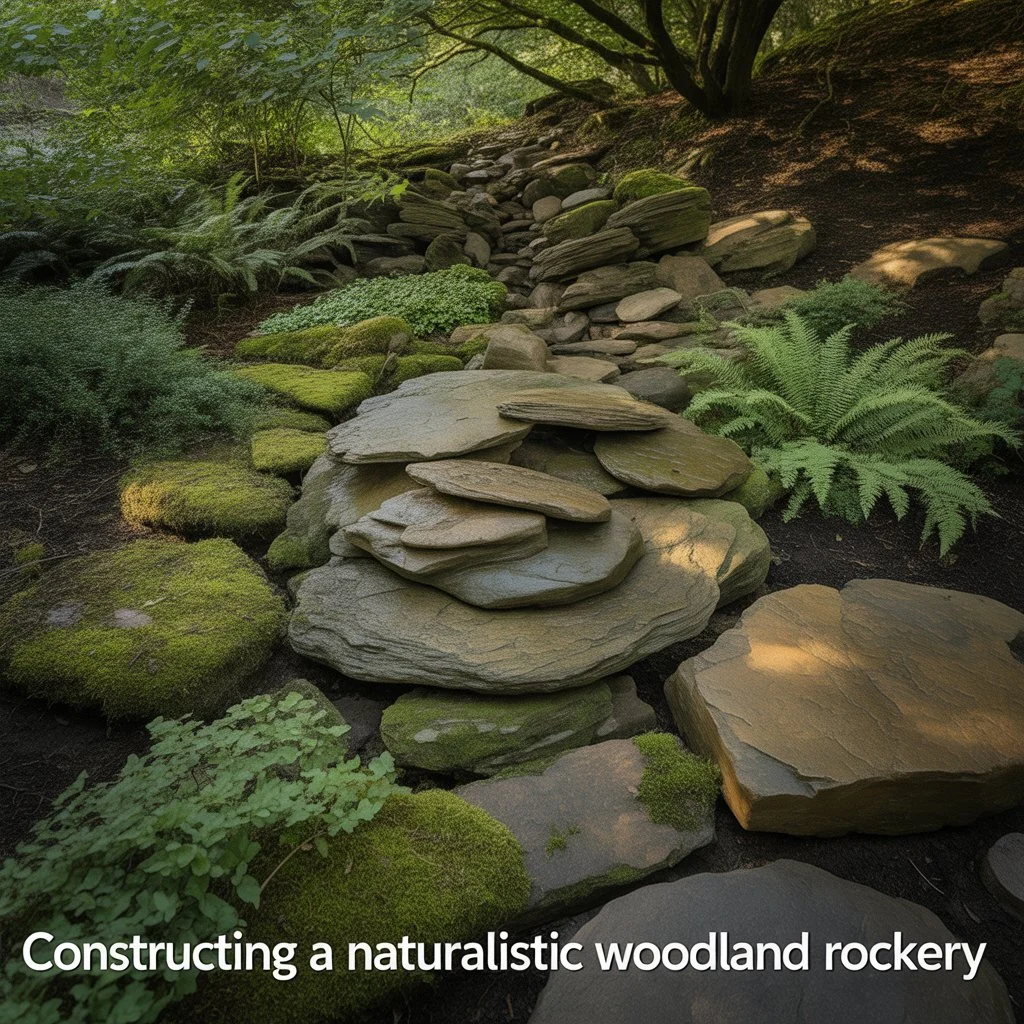
Constructing a naturalistic woodland rockery arranges the stone to look like a natural rock outcrop in a woodland setting, using the principles of natural stone placement to create an authentic, convincing feature. I construct woodland rockeries to look as though the stone has always been there, because the difference between a convincing naturalistic rockery and an artificial pile of rocks comes down to following the principles of natural stone arrangement in the placement and setting of every stone.
Principles of Natural Rockery Construction
Partial burial, consistent grain, and grouped arrangement are three principles suited to naturalistic rockery construction. Partial burial of each stone makes it appear to emerge from the ground rather than sit on it. Consistent grain orientation, with the strata of all stones running the same way, reads as natural geology. Grouped arrangement in naturalistic clusters rather than even spacing creates the convincing outcrop effect.
Building a Stable Rockery
Firm foundations, secure setting, and good drainage are three essentials suited to building a stable rockery. Firm foundations ensure the stones cannot shift or settle. Secure setting of each stone, bedded firmly into the ground, keeps the rockery safe and stable. Good drainage built into the structure suits the planting and prevents waterlogging, completing a sound and naturalistic woodland rockery.
Ferns for a Shady Rockery
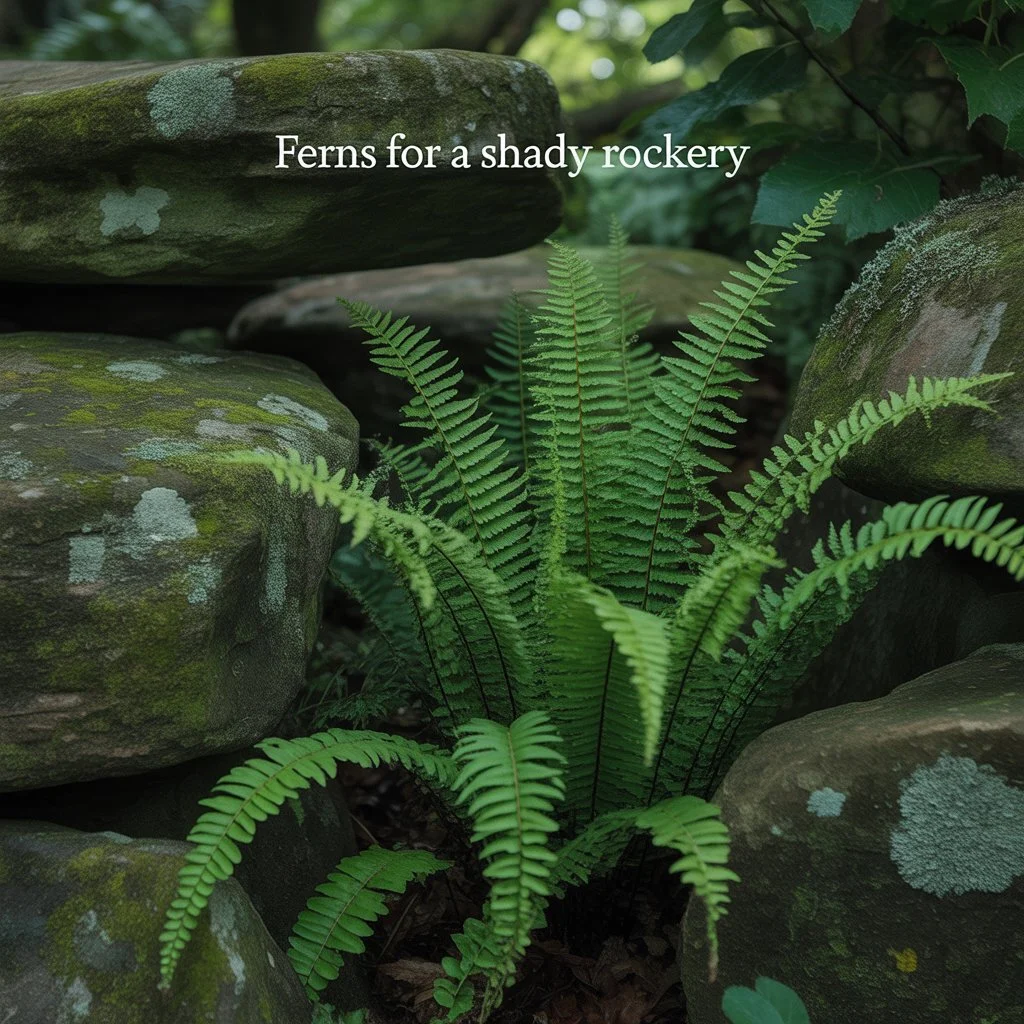
Ferns for a shady rockery are among the most essential plants, their fronds unfurling from crevices and softening the stone with the quintessential texture of a woodland floor. I plant ferns throughout every woodland rockery, because their fronds emerging from between and on top of the stones create the most beautiful and naturalistic effect, softening the rock and providing the lush green texture that defines the shaded rockery.
Ferns for Rockery Crevices
Asplenium scolopendrium, Polypodium, and Asplenium trichomanes are three ferns suited to rockery crevices. Asplenium scolopendrium, the hart’s tongue fern, emerges dramatically from crevices with glossy evergreen fronds. Polypodium, the polypody fern, thrives on and between stones and tolerates drier crevice conditions. Asplenium trichomanes, maidenhair spleenwort, is a small fern perfect for tucking into narrow rockery gaps.
Planting Ferns in a Rockery
Crevice planting, base planting, and varied placement are three approaches suited to planting ferns in a rockery. Crevice planting tucks small ferns into the gaps between stones so they appear to grow from the rock. Base planting of larger ferns at the foot of the stones softens the rockery edges. Varied placement of ferns throughout the feature creates the natural, colonized appearance of a woodland rockery.
Moss for an Aged Woodland Rockery
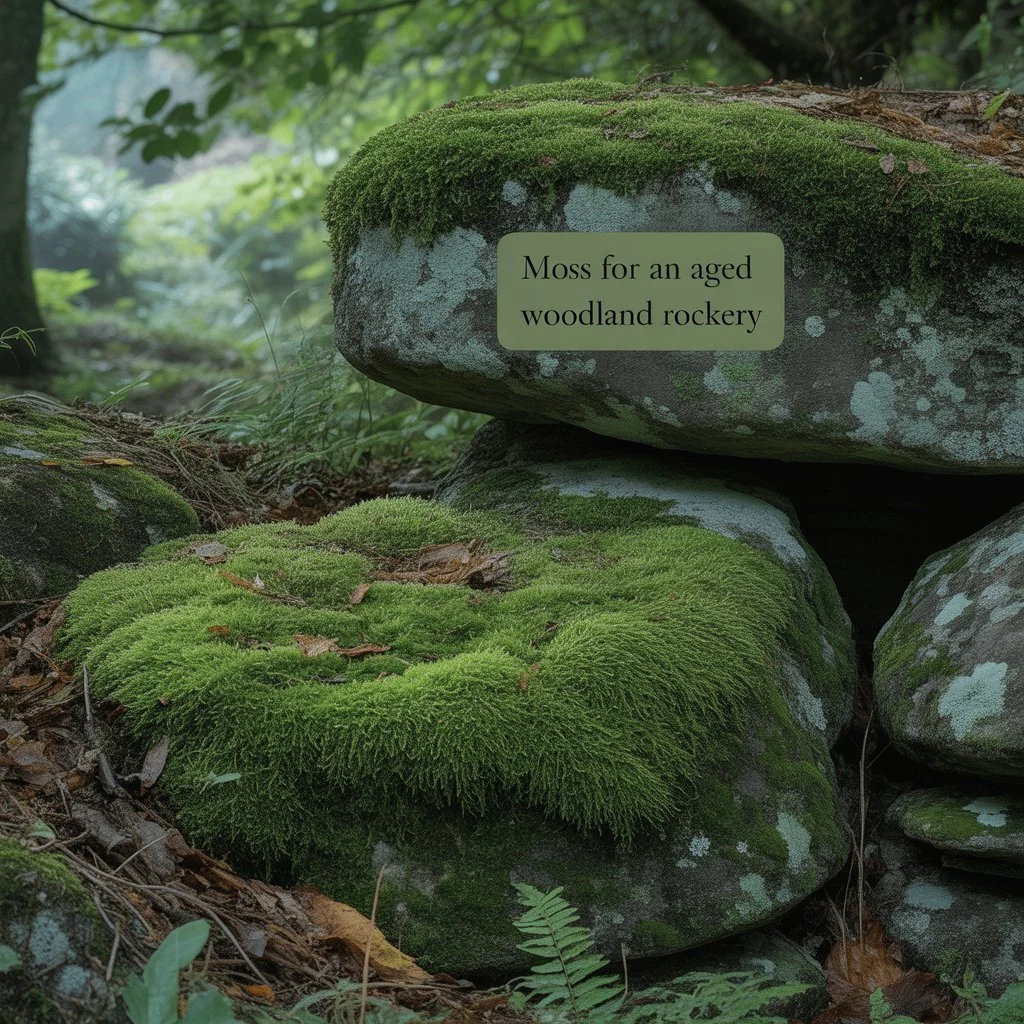
Moss for an aged woodland rockery is what gives the feature its most distinctive and enchanting quality, the velvet green covering that makes the stone look ancient and establishes the woodland character. I encourage moss on every woodland rockery, because the soft green moss colonizing the stones is what transforms a new rockery into an ancient-looking woodland feature, creating the magical, established character that is the great reward of a shaded rockery.
Encouraging Moss on Rockery Stones
Shaded moist conditions, porous stone, and a moss slurry are three factors suited to encouraging moss. Shaded, moist conditions provide the environment moss needs to thrive on the stones. Porous, textured stone holds the moisture and provides the surface moss colonizes. A moss slurry of blended moss and buttermilk brushed onto the stones speeds the establishment of the moss covering.
The Beauty of a Mossy Rockery
Aged appearance, soft texture, and woodland atmosphere are three qualities of a mossy rockery. Aged appearance from the moss makes the rockery look long-established. Soft texture from the velvet moss contrasts beautifully with the hard stone. Woodland atmosphere from the green moss covering creates the enchanting, ancient character unique to a shaded woodland rockery.
Shade-Tolerant Ground Cover Between Stones
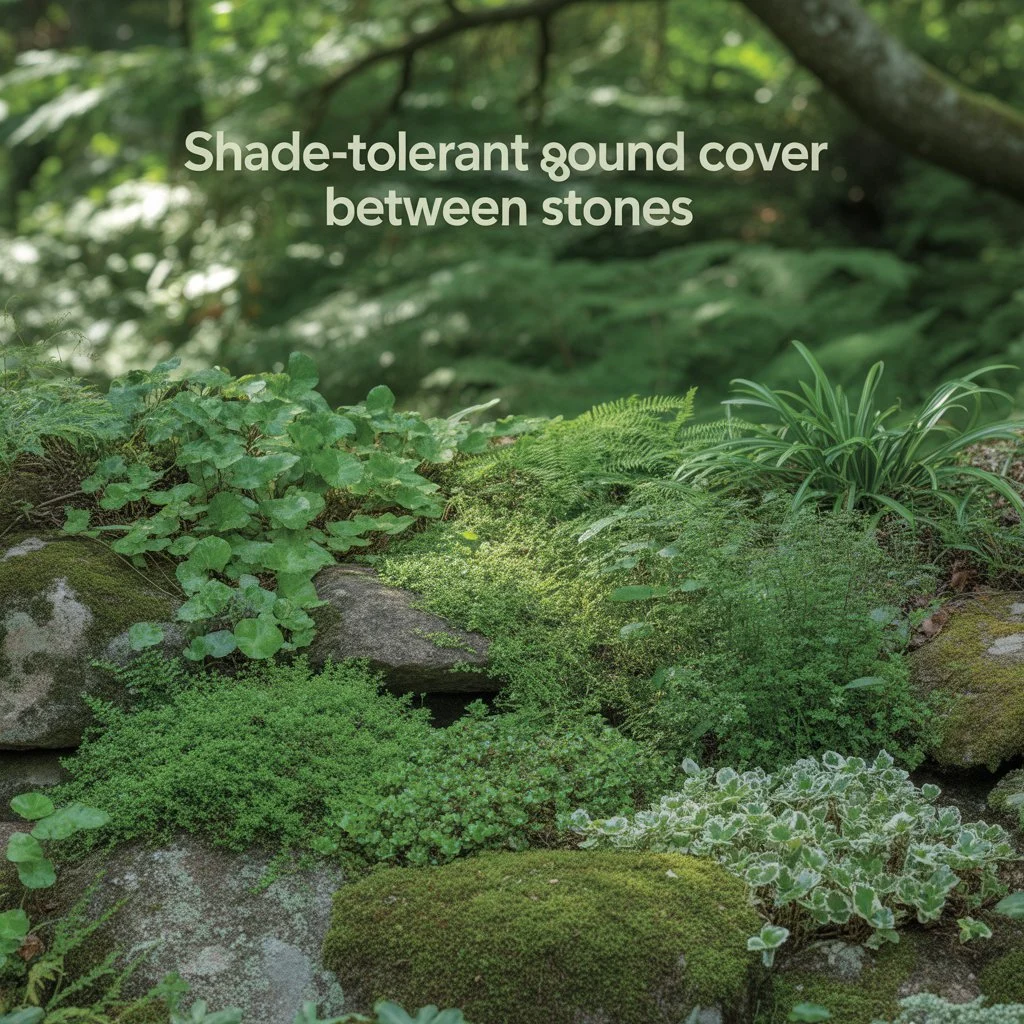
Shade-tolerant ground cover between stones softens the rockery and knits the stones into a cohesive planting, using low spreading shade plants to flow between and around the rocks. I plant shade-tolerant ground cover throughout every woodland rockery, because low spreading plants flowing between the stones soften the hard edges, knit the feature together, and create the lush, planted, naturalistic character that makes a shaded rockery beautiful rather than bare.
Ground Cover for a Shady Rockery
Epimedium, Lysimachia nummularia, and wild ginger are three ground covers suited to a shady rockery. Epimedium spreads to soften the stones with its foliage and delicate spring flowers. Lysimachia nummularia, creeping jenny, trails between and over the stones with its bright foliage. Wild ginger spreads its heart-shaped leaves across the rockery floor between the stones.
Using Ground Cover in a Rockery
Flowing between stones, softening edges, and filling gaps are three approaches suited to using ground cover. Flowing ground cover between the stones creates the planted, naturalistic effect. Softening the hard edges of the stones integrates them into the planting. Filling the gaps between rocks with spreading ground cover knits the whole rockery into a cohesive woodland feature.
Woodland Wildflowers for a Shady Rockery
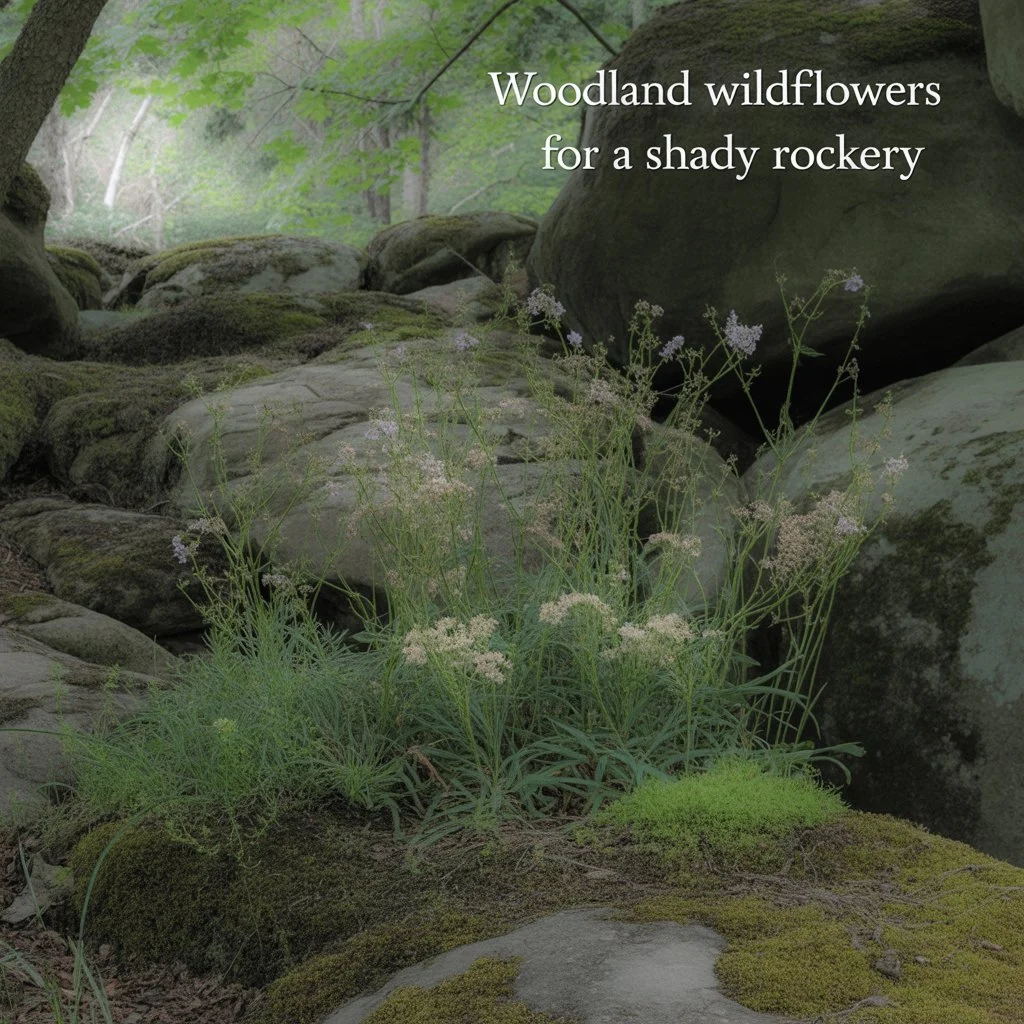
Woodland wildflowers for a shady rockery add delicate seasonal flower to the stone feature, using native and naturalistic shade-loving flowers that nestle among the rocks for charm and ecological value. I add woodland wildflowers to every woodland rockery, because their delicate flowers nestling among the stones provide seasonal colour and naturalistic charm, softening the feature with the authentic beauty of the native woodland floor.
Wildflowers for a Shady Rockery
Native violets, Primula vulgaris, and Anemone nemorosa are three wildflowers suited to a shady rockery. Native violets produce delicate flowers that nestle charmingly between the rockery stones. Primula vulgaris, the primrose, produces pale spring flowers at the base of the stones. Anemone nemorosa, wood anemone, produces white spring flowers that spread between the rocks.
Naturalizing Wildflowers in a Rockery
Crevice and pocket planting, allowing self-seeding, and naturalistic drifts are three approaches suited to naturalizing wildflowers. Crevice and pocket planting tucks wildflowers into the gaps and soil pockets of the rockery. Allowing self-seeding lets the flowers spread naturally through the feature. Naturalistic drifts of wildflowers create the spontaneous, colonized character of a woodland rockery.
Creating Microclimates With Rockery Stone
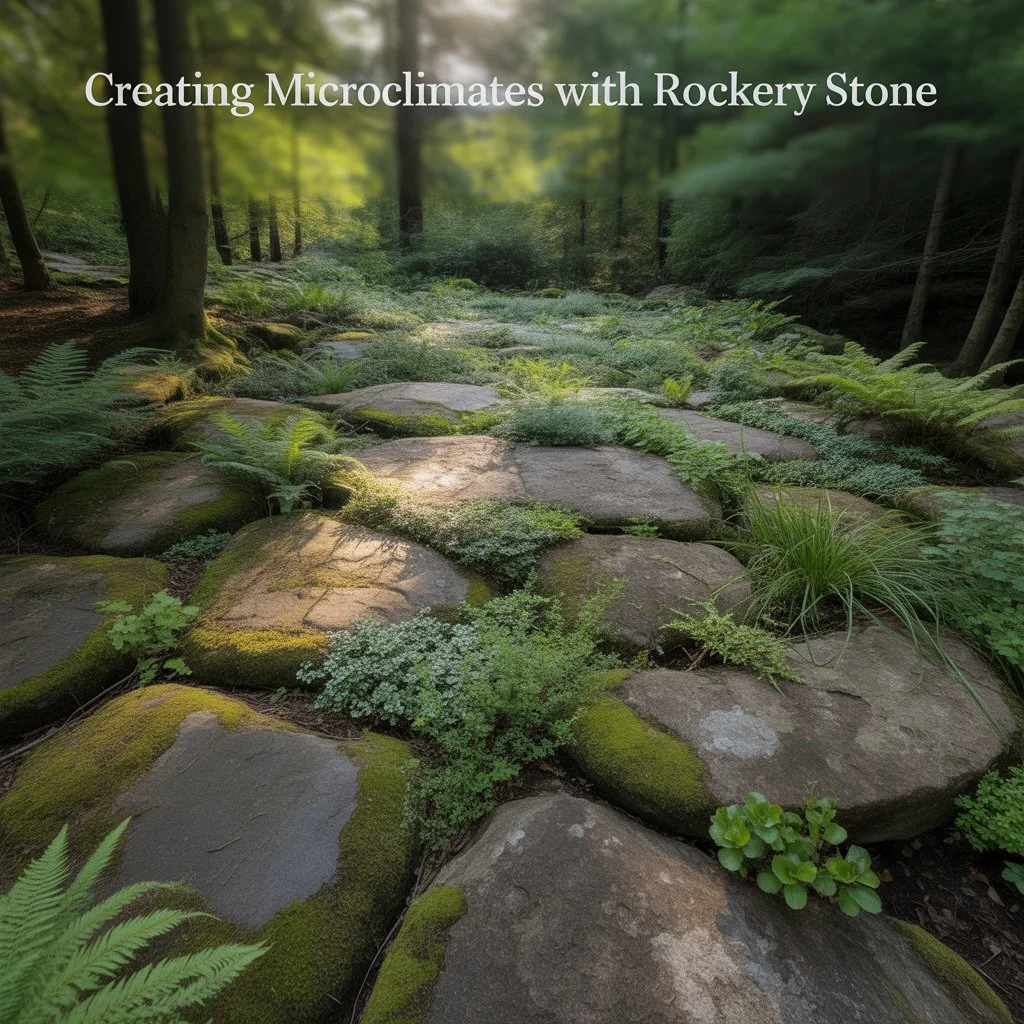
Creating microclimates with rockery stone uses the thermal mass and moisture-retaining qualities of the stone to create beneficial growing conditions for shade plants, one of the practical advantages of a rockery. I value the microclimates a woodland rockery creates, because the stone moderates temperature and retains moisture in its crevices, creating sheltered, favourable conditions for shade plants that benefit the planting beyond what open ground provides.
How Rockery Stone Helps Plants
Moisture retention, temperature moderation, and root shelter are three ways rockery stone helps plants. Moisture retention in the cool crevices between stones provides the damp conditions shade plants appreciate. Temperature moderation from the thermal mass of the stone buffers extremes. Root shelter in the protected pockets between stones provides favourable conditions for plant roots.
Using Microclimates in Planting
Crevice planting, sheltered pockets, and moisture-retentive positions are three approaches suited to using rockery microclimates. Crevice planting places plants in the favourable conditions between stones. Sheltered pockets provide protected positions for more delicate plants. Moisture-retentive positions in the cool shade of the stones suit the moisture-loving woodland plants, making the most of the rockery’s microclimates.
Wildlife Habitat in a Woodland Rockery
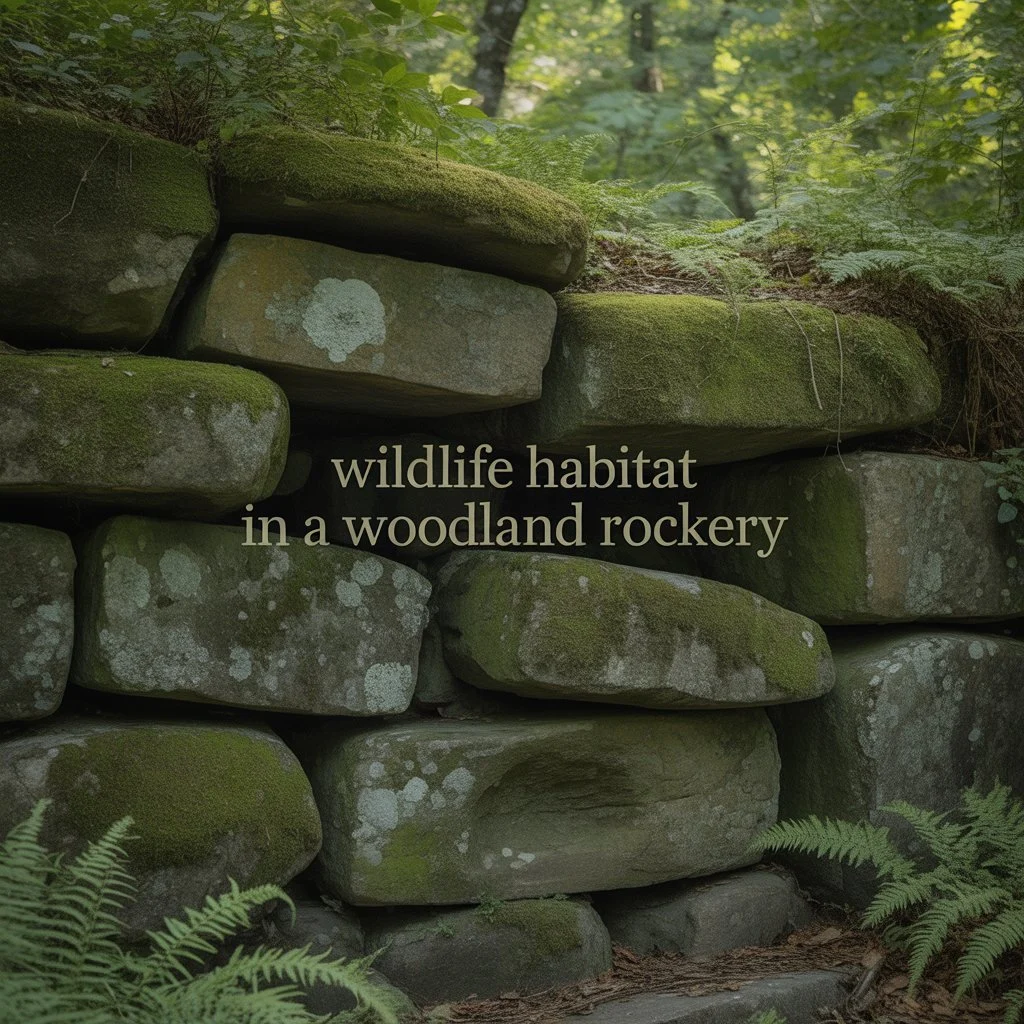
Wildlife habitat in a woodland rockery uses the crevices, shelter, and microclimates of the stone arrangement to support woodland wildlife, making the feature ecologically valuable as well as beautiful. I design woodland rockeries with wildlife in mind, because the gaps and shelter between the stones provide valuable habitat for invertebrates, amphibians, and small creatures, adding genuine ecological value to the beauty of the shaded rockery.
Wildlife Supported by a Rockery
Invertebrate shelter, amphibian refuge, and small creature habitat are three forms of wildlife support provided by a rockery. Invertebrate shelter in the crevices between stones provides habitat for beetles and other insects. Amphibian refuge in the cool, damp gaps shelters frogs and newts. Small creature habitat in the sheltered stone arrangement supports the wildlife of the woodland floor.
Enhancing Rockery Wildlife Value
Leaving crevices open, damp shaded gaps, and surrounding planting are three approaches suited to enhancing rockery wildlife value. Leaving crevices open rather than mortared provides the gaps wildlife uses. Damp shaded gaps suit the amphibians and invertebrates that shelter there. Surrounding planting of ferns and ground cover extends the habitat around the rockery, maximizing its wildlife value.
Woodland Rockery for a Small Shady Spot
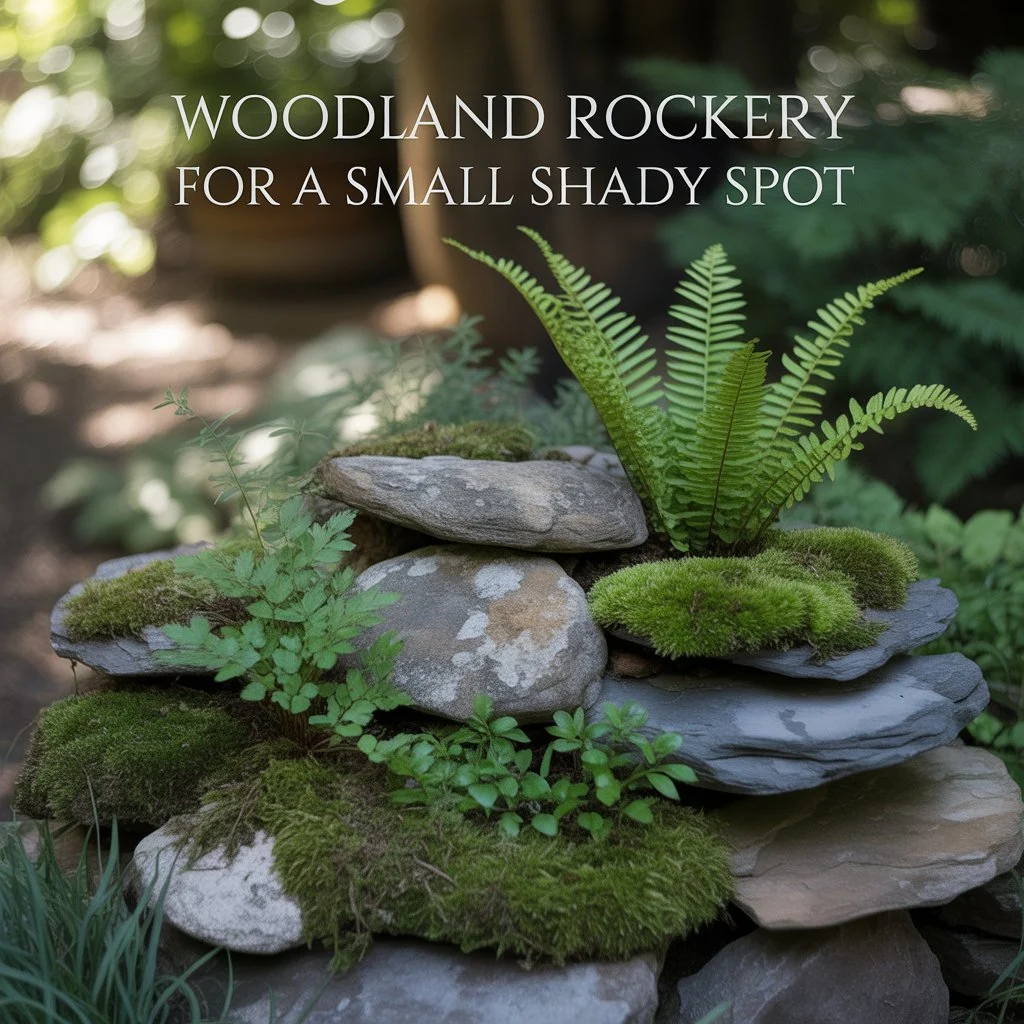
A woodland rockery for a small shady spot brings the distinctive beauty of a shaded rockery to a compact difficult corner, transforming even a small dark space into a characterful stone feature. I create woodland rockeries in small shady spots, because even a compact dark corner can become a beautiful, characterful feature with a few well-placed stones and shade planting, turning the most difficult small space into an enchanting woodland rockery.
Designing a Small Rockery
A few key stones, compact planting, and crevice detail are three approaches suited to a small woodland rockery. A few well-chosen and well-placed stones provide the structure in a compact space. Compact shade planting of small ferns and ground cover clothes the small rockery. Crevice detail with tiny ferns and wildflowers rewards close viewing in the small feature.
Maximizing a Small Shady Rockery
Vertical interest, dense planting, and fine detail are three techniques suited to maximizing a small shady rockery. Vertical interest from stacked or banked stones adds presence in a limited space. Dense planting that clothes the stones creates a lush effect. Fine detail in the crevice planting and moss makes the small rockery captivating up close.
Combining Rockery With a Woodland Path
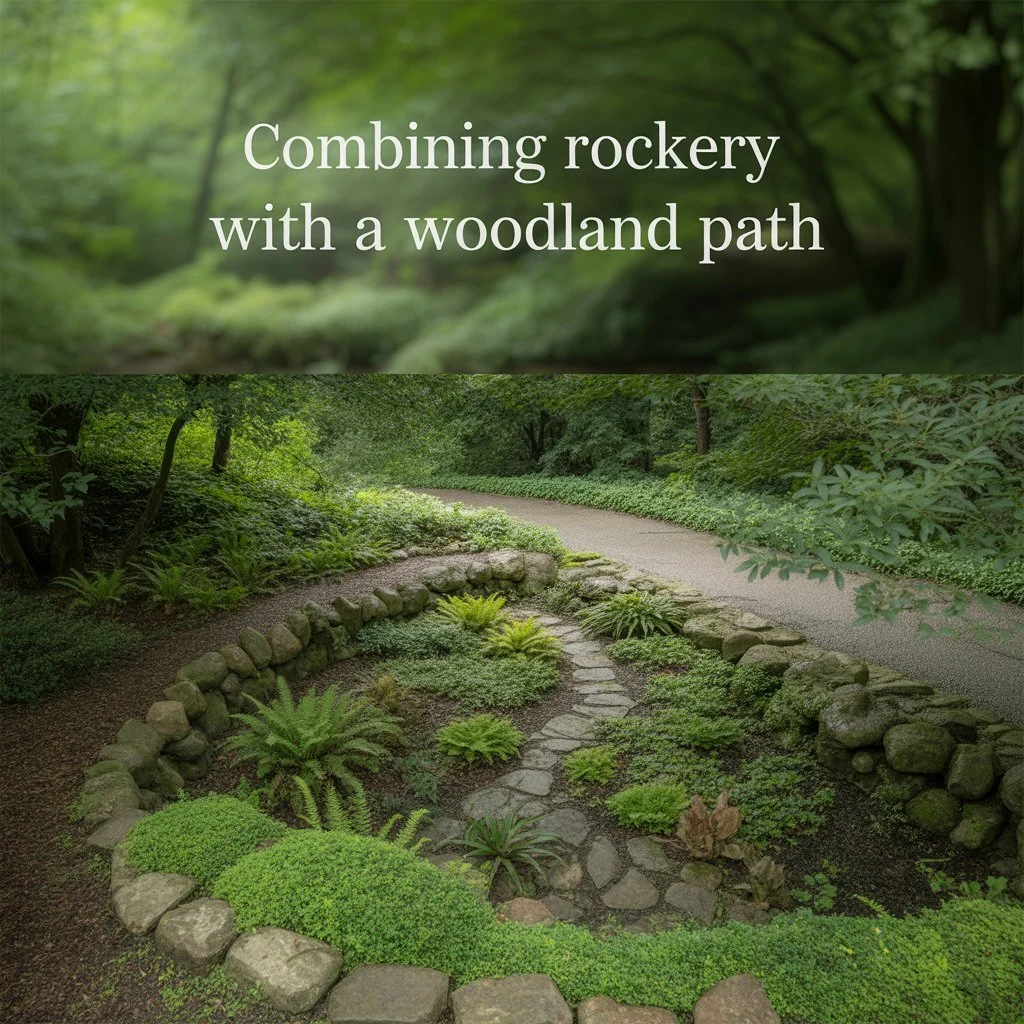
Combining rockery with a woodland path integrates the stone feature into the journey through the garden, using the rockery to line, frame, or punctuate a path through the shaded woodland. I often combine woodland rockeries with paths, because positioning the rockery alongside or around a path both displays the feature at close range and creates a more immersive, characterful woodland journey through the shaded garden.
Integrating Rockery and Path
Path-side rockery, a rockery passage, and framing stones are three ways to integrate rockery and path. A path-side rockery lines the route with the stone feature for close viewing. A rockery passage where the path runs between banked stones creates an immersive experience. Framing stones at a path entrance or turn use the rockery to punctuate the journey.
Designing the Combined Feature
Close-view planting, a winding route, and naturalistic transitions are three approaches suited to the combined feature. Close-view planting of detailed ferns and wildflowers rewards the path user. A winding route through or alongside the rockery creates discovery. Naturalistic transitions between path, rockery, and surrounding planting integrate the feature into the woodland garden.
Full Shade Rockery Plants
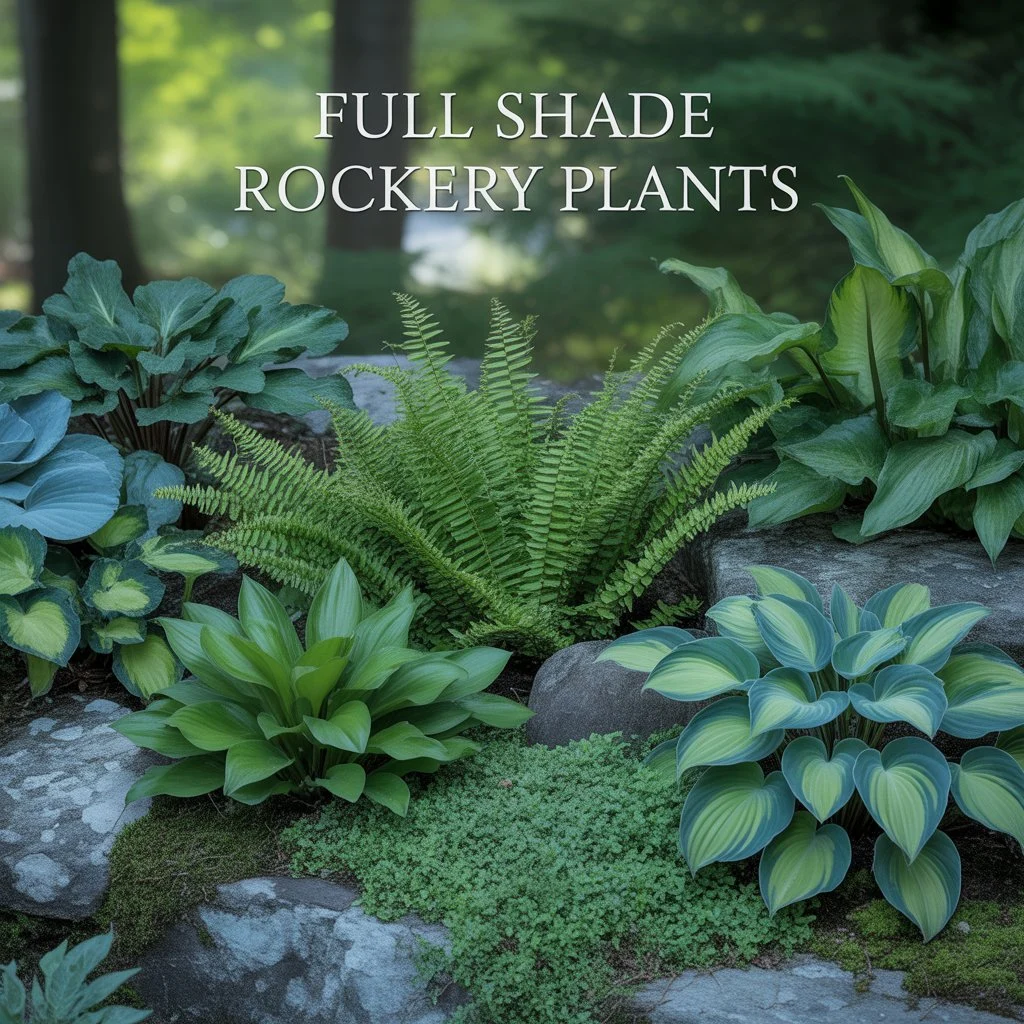
Full shade rockery plants address the most challenging deep-shade positions, using the toughest shade-tolerant plants that thrive in full shade between the rockery stones. I select full shade plants for the deepest-shaded rockeries, because where even dappled light is scarce, only the most shade-tolerant plants will thrive, and choosing these tough species ensures the rockery flourishes even in full shade.
Plants for a Full Shade Rockery
Ferns, moss, and wild ginger are three plant types suited to a full shade rockery. Ferns such as hart’s tongue and polypody tolerate the deep shade between stones. Moss flourishes in full shade, covering the stones in green. Wild ginger spreads its foliage across the floor of a full-shade rockery, together providing reliable cover in the darkest conditions.
Succeeding in Full Shade
Shade-tolerant selection, moisture provision, and embracing green are three approaches suited to succeeding in full shade. Shade-tolerant selection of the toughest plants ensures success in full shade. Moisture provision supports the planting in the often dry full-shade conditions beneath trees. Embracing a green, foliage-led palette rather than expecting abundant flower creates a beautiful full-shade rockery suited to its conditions.
Lichen and Aged Stone Character
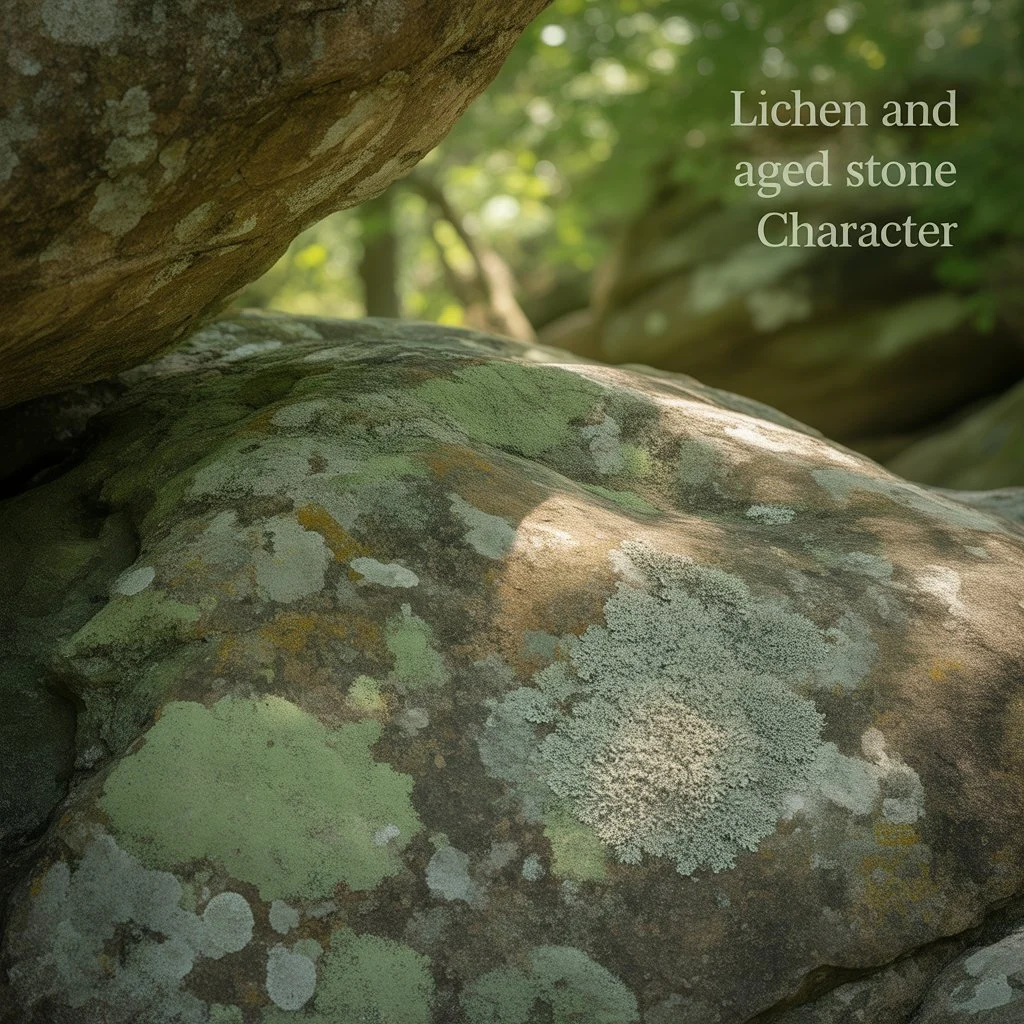
Lichen and aged stone character add to the ancient, weathered beauty of a woodland rockery, the lichen colonizing the stone over time to enhance its naturalistic, established appearance. I value the lichen that develops on a woodland rockery, because the grey-green and pale crusts of lichen colonizing the stone over time add to the aged, weathered character that makes a shaded rockery look as though it has stood in the woodland for generations.
Encouraging Lichen on Rockery Stone
Suitable stone, clean air, and patience are three factors suited to encouraging lichen. Suitable stone, particularly porous and limestone surfaces, supports lichen colonization. Clean air, since lichen is sensitive to pollution, favours its establishment. Patience is essential, as lichen colonizes slowly over years, gradually aging the stone naturally.
The Character of Aged Stone
Weathered patina, naturalistic age, and woodland authenticity are three qualities of aged rockery stone. Weathered patina from lichen and weathering gives the stone character. Naturalistic age makes the rockery look long-established. Woodland authenticity from the aged, colonized stone creates the genuine character of a natural woodland rock outcrop.
Low-Maintenance Woodland Rockery Design
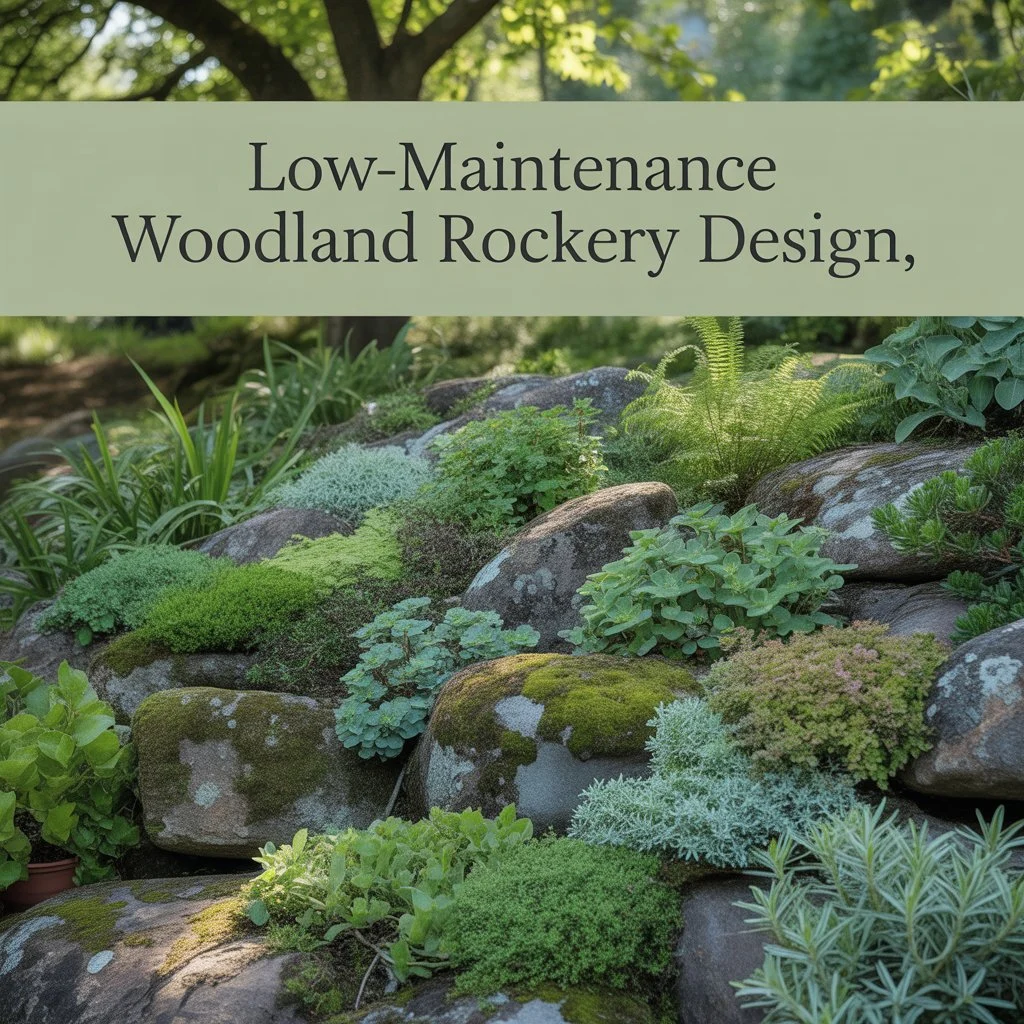
Low-maintenance woodland rockery design combines durable stone with self-sustaining shade planting to create a feature that needs minimal intervention once established. I design woodland rockeries for low maintenance, because the permanent stone structure and the tough self-sustaining shade plants between it create a feature that largely looks after itself, with the moss and ground cover suppressing weeds and the planting needing little care.
Why a Woodland Rockery Is Low-Maintenance
Permanent stone structure, self-sustaining planting, and natural weed suppression are three reasons a woodland rockery is low-maintenance. Permanent stone structure needs no maintenance once built. Self-sustaining shade planting thrives with little intervention. Natural weed suppression from the moss and ground cover between the stones reduces weeding.
Simple Rockery Maintenance
Occasional weeding, plant management, and leaf clearing are three simple maintenance tasks suited to a woodland rockery. Occasional weeding of any weeds in the crevices keeps the feature tidy. Plant management, trimming and dividing the spreading plants occasionally, maintains the planting. Leaf clearing of excess fallen leaves prevents them smothering the moss and small plants, completing the modest care a woodland rockery needs.
Establishing a Woodland Rockery Over Time
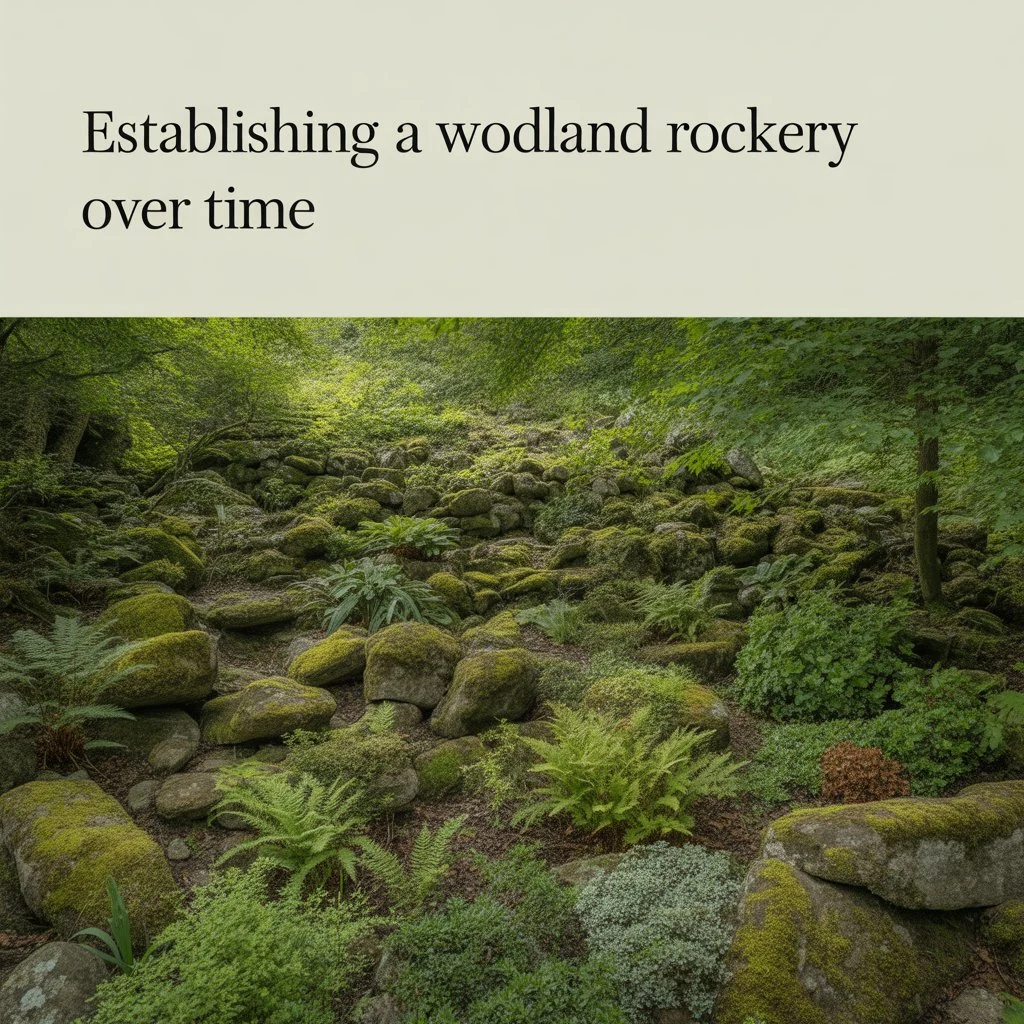
Establishing a woodland rockery over time recognizes that the feature develops its full beauty gradually, as the moss colonizes, the plants spread, and the stone weathers into an established woodland rockery. I set realistic expectations for establishing a woodland rockery, because the moss covering, the lichen, and the naturalized planting all develop over the seasons, rewarding patience with an increasingly beautiful and authentic woodland rockery.
Stages of Establishment
Initial construction and planting, moss and plant establishment, and natural maturation are three stages suited to establishing a woodland rockery. Initial construction and planting sets the stone structure and the planting. Moss and plant establishment over the following seasons begins to clothe and age the feature. Natural maturation, as the moss covers the stones and the plants naturalize, develops the full woodland rockery over time.
Helping the Rockery Mature
Encouraging moss, allowing spread, and patient development are three approaches suited to helping the rockery mature. Encouraging moss through moisture and slurry speeds the aging of the stone. Allowing the plants to spread and self-seed naturalizes the feature. Patient development, giving the rockery time to mature, achieves the established, enchanting woodland rockery that makes the feature so rewarding.
Frequently Asked Questions
Can you have a rockery in a shady spot?
You can absolutely have a beautiful rockery in a shady spot, and contrary to the common belief that rockeries need full sun, a shaded rockery is a distinct and arguably more enchanting feature designed around shade-loving plants rather than sun-loving alpines. A woodland rockery in shade embraces the moss, lichen, ferns, and shade-tolerant woodland plants that thrive in cool, damp, low-light conditions, creating a lush green feature with an ancient, established character that a hot, dry alpine rockery could never achieve. The key is to design the rockery for its actual conditions, choosing porous stone that develops moss readily, planting ferns, ground covers, and woodland wildflowers suited to shade, and embracing the green, foliage-led beauty that makes a shaded woodland rockery one of the most distinctive and rewarding solutions for a difficult dark corner.
What plants grow in a shady rockery?
The best plants for a shady rockery are shade-tolerant woodland species that thrive between and on the stones, including ferns, moss, epimedium, wild ginger, creeping jenny, and woodland wildflowers like violets and primroses. Ferns such as hart’s tongue, polypody, and maidenhair spleenwort emerge beautifully from crevices, moss colonizes the stones to create the aged woodland character, and spreading ground covers like epimedium and wild ginger flow between the rocks to soften and unify the feature, while woodland wildflowers add delicate seasonal colour. For the deepest full-shade rockeries, the toughest shade-tolerant ferns, moss, and wild ginger provide reliable cover, and the overall approach favours a lush, green, foliage-led palette rather than the flowering alpines of a sun rockery, embracing the planting that genuinely thrives in the shaded conditions.
How do I build a woodland rockery?
You build a woodland rockery by arranging porous, weathered stone to look like a natural rock outcrop, partially burying each stone, orienting the grain consistently, and grouping the stones in naturalistic clusters, then planting shade-tolerant ferns, ground cover, and wildflowers between them. Begin by choosing characterful stone that develops moss readily, such as weathered sandstone or limestone, and set each stone firmly into the ground on stable foundations so it appears to emerge naturally rather than sit on the surface, with good drainage built into the structure. Plant ferns in the crevices, ground covers flowing between the stones, and wildflowers in the soil pockets, then encourage moss with a moss slurry and moist shaded conditions, after which the feature develops its full beauty over the following seasons as the moss colonizes the stone and the planting naturalizes into an established woodland rockery.
How do I get moss to grow on rockery stones?
You get moss to grow on rockery stones by providing the shaded, moist conditions moss needs, choosing porous textured stone that holds moisture, and applying a moss slurry to speed colonization. Moss thrives in cool, damp, low-light conditions, so a shaded woodland position is ideal, and porous stone such as sandstone or limestone provides the rough, moisture-retaining surface moss establishes on far more readily than smooth or dense rock. To accelerate the process, you can brush a slurry of blended fresh moss and buttermilk onto the shaded faces of the stones and keep the surfaces consistently moist while the moss establishes, after which the moss spreads naturally over the seasons to create the soft green covering that gives a woodland rockery its distinctive aged, ancient, and enchanting character.
Is a woodland rockery low-maintenance?
A woodland rockery is genuinely low-maintenance once established, because the permanent stone structure needs no upkeep and the tough, self-sustaining shade plants between the stones thrive with little intervention. The moss and ground cover that colonize the feature suppress weeds naturally, the shade-tolerant ferns and woodland plants are well adapted to the conditions and need minimal care, and the stone provides beneficial microclimates that support the planting, so the rockery largely looks after itself. The modest maintenance it does need includes occasional weeding of any weeds that appear in the crevices, trimming and dividing the spreading plants from time to time, and clearing excess fallen leaves so they do not smother the moss and small plants, making a woodland rockery one of the most durable and low-maintenance ways to transform a difficult shaded spot into a beautiful and characterful garden feature.