
Best Border Flowers: Top Plants for a Colourful Garden

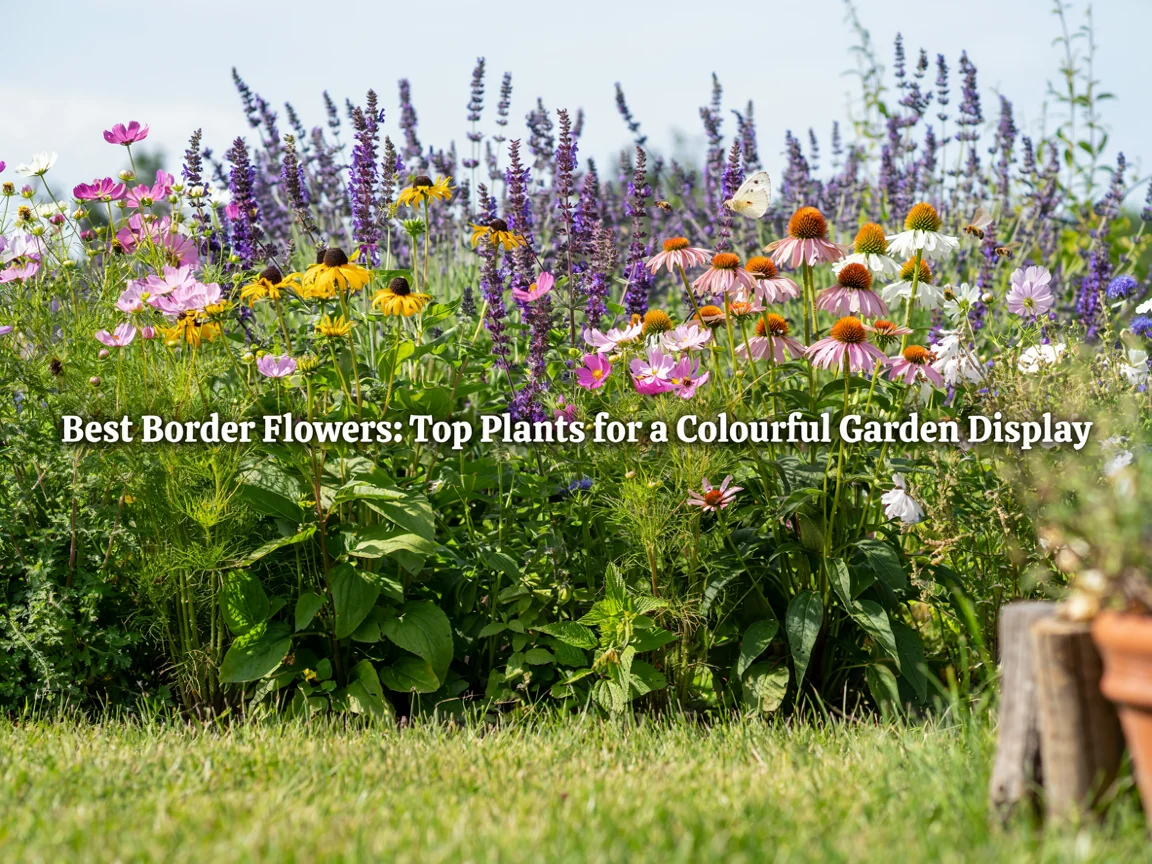
The most useful thing I ever learned about border flowers, I learned from failure. In my second year as a gardener I planted what I thought would be a spectacular border — a dozen different flowers I loved, one or two of each, crammed in wherever there was space. It looked, when it finally bloomed, like a jumble sale. Every plant was doing its own thing at its own time, nothing related to anything else, and the whole thing read as busy, restless, and strangely lifeless despite all that colour. An old head gardener took pity on me. “You’ve bought a shopping list,” he said, “not a border.” He taught me to plant fewer kinds in bigger groups, to think about what flowers next to what and after what, and to build the border around a handful of reliable, long-performing plants rather than a crowd of one-offs. The next year, with a third of the variety and three times the impact, I finally had a border people stopped to look at. That lesson underpins everything in this article: the best border flowers are not just beautiful plants, they are reliable performers that work together to create a display far greater than the sum of its parts.
Best border flowers are the reliable, long-flowering, and beautiful annual, perennial, and biennial plants — lavender, salvia, rudbeckia, echinacea, geranium, achillea, cosmos, and many more — that form the backbone of a colourful, well-designed garden border across the seasons. The best border flowers give the garden its colour, structure, and succession of bloom, while thoughtful selection and combination give the border the cohesion, long season, and reliable performance that turn a collection of plants into a genuinely beautiful display.
Over the years I have designed, planted, and refined borders across gardens ranging from small cottage plots to large formal schemes, and I have learned through countless plantings which flowers reliably perform and which disappoint. In this article I am sharing the best border flowers to grow, covering hardy perennials, annuals, colour, all-year interest, low-maintenance choices, and design, so you can build a border that performs beautifully season after season.
What Makes a Great Border Flower
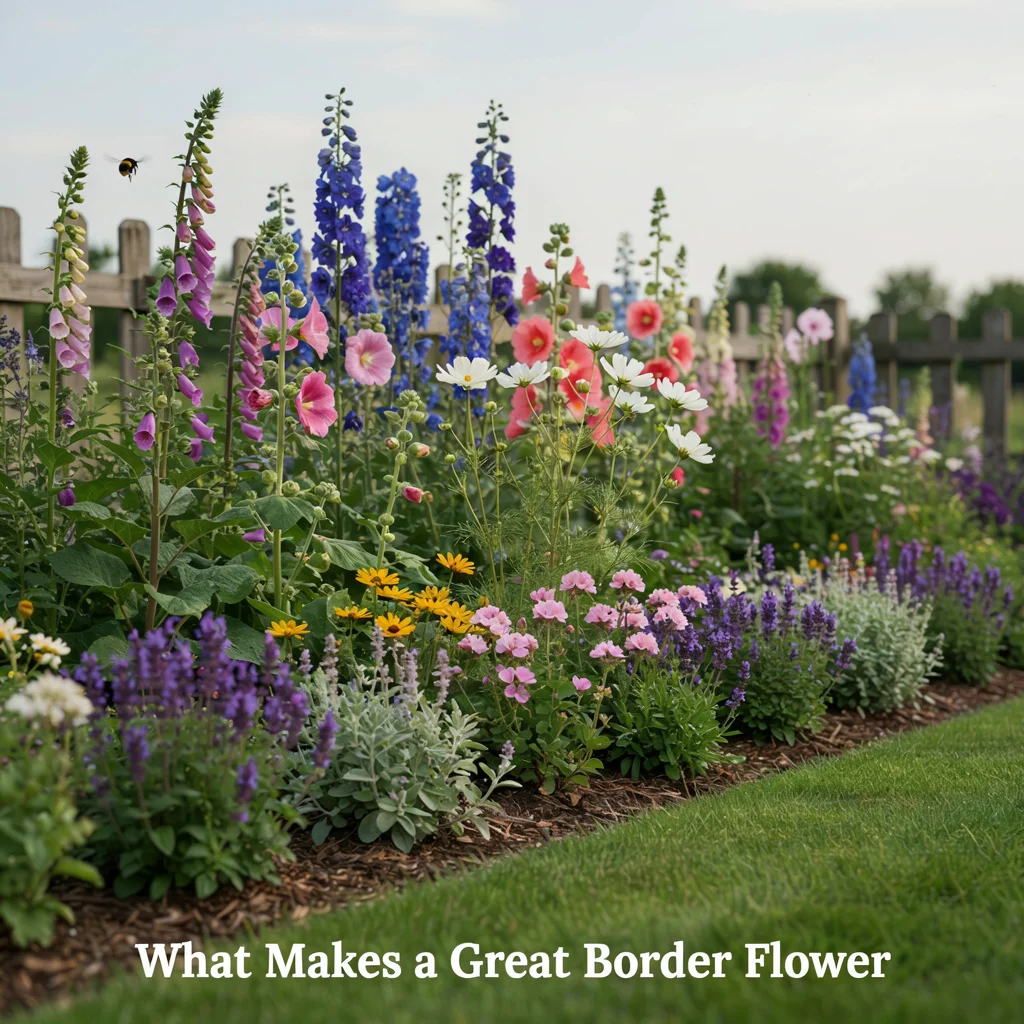
What makes a great border flower is the foundation of choosing well, because the best border plants combine reliable performance, long flowering, and good form rather than just a pretty bloom. I always judge a border flower by these qualities rather than looks alone, because a plant that flowers briefly, flops, or sulks will disappoint no matter how beautiful its flower, while a reliable long-performing plant with good form earns its place in the border year after year.
Qualities of a Great Border Flower
Reliable performance, a long flowering season, and good form are three qualities that make a great border flower. Reliable performance means the plant thrives dependably without constant care. A long flowering season provides colour over months rather than weeks. Good form and foliage give the plant value even when not in flower.
Choosing Flowers for Your Border
Suitable conditions, a long season, and reliable habit are three considerations suited to choosing border flowers. Suitable conditions, matching the plant to your soil and light, ensure it thrives. A long season of flower or interest maximizes the plant’s value. Reliable habit, choosing plants that stand well without flopping, keeps the border looking good with less work.
Lavender for Fragrance and Structure
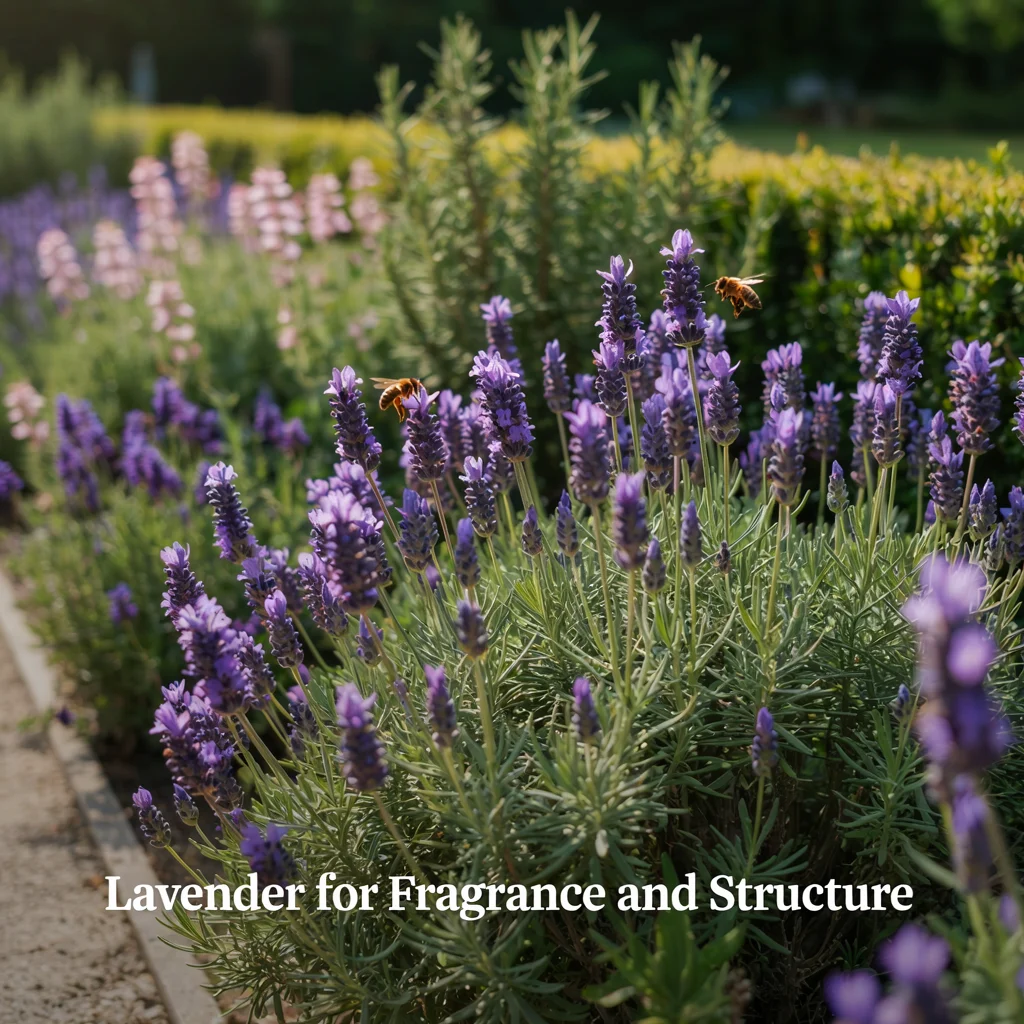
Lavender is one of the best-loved border flowers, providing fragrant flowers, silvery foliage, and a neat structural form that suits both cottage and formal borders. I use lavender in many borders, because it combines beautiful fragrant flowers with evergreen silvery foliage and a tidy mounded form, providing structure and scent through summer while thriving in the sunny, well-drained conditions many borders offer.
Why Lavender Excels in Borders
Fragrant flowers, silvery evergreen foliage, and a neat form are three qualities that make lavender excel. Fragrant purple-blue flowers provide colour and scent through summer. Silvery evergreen foliage gives structure and interest year-round. A neat mounded form suits edging, structure, and formal or cottage planting.
Growing Lavender in a Border
Full sun, well-drained soil, and annual pruning are three requirements suited to lavender. Full sun provides the conditions lavender needs to flower well. Well-drained soil is essential, since lavender dislikes wet feet. Annual pruning after flowering keeps the plant compact and prevents it becoming woody and leggy.
Salvia for Long-Lasting Colour
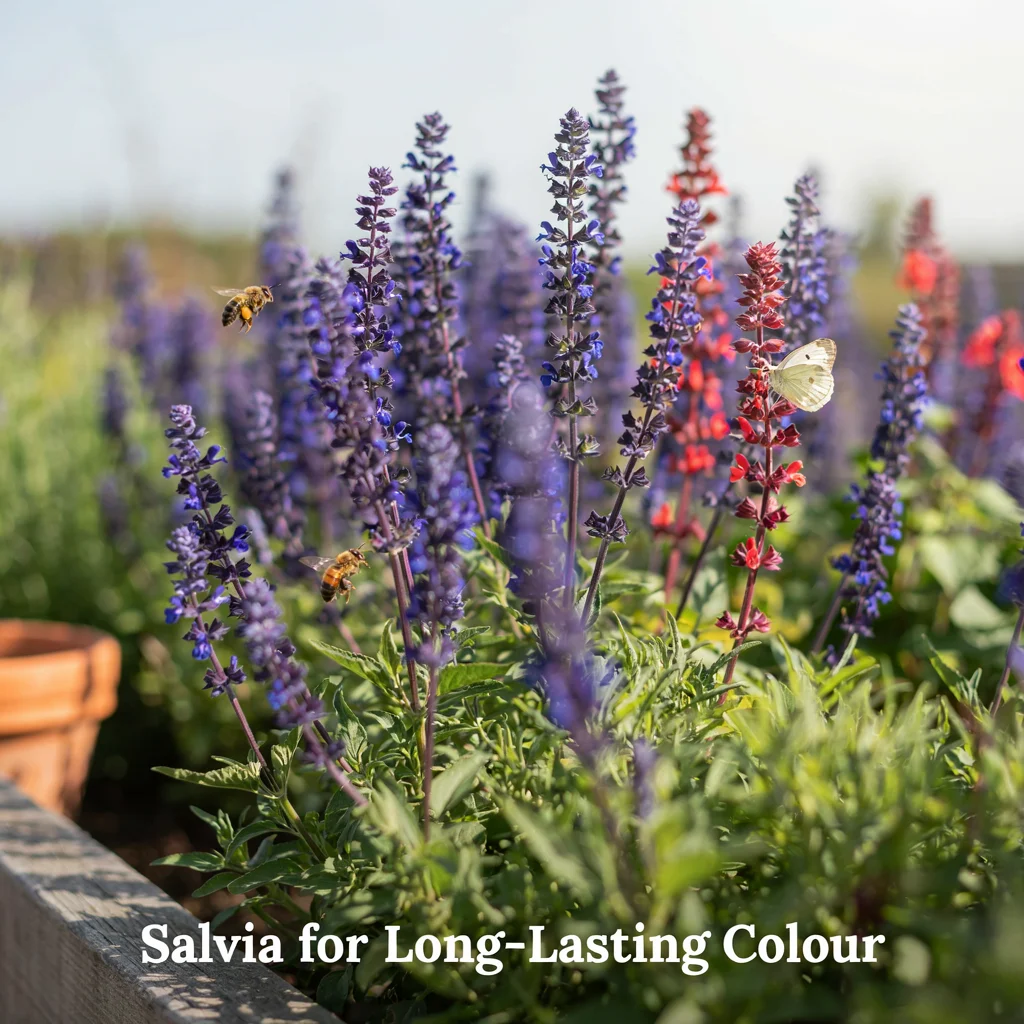
Salvia is among the best border flowers for long-lasting colour, its spikes of blue, purple, pink, and red flowering for months and attracting pollinators throughout the season. I rely on salvia in many borders, because few plants flower as long or as reliably, with the upright flower spikes providing vertical colour and structure from early summer well into autumn while drawing bees and other pollinators.
Why Salvia Is a Top Border Flower
Long flowering, vertical structure, and pollinator appeal are three qualities that make salvia a top border flower. Long flowering from early summer into autumn provides months of colour. Vertical flower spikes add structure and contrast to mounded plants. Pollinator appeal draws bees and beneficial insects to the border.
Growing Salvia in a Border
Sun, well-drained soil, and deadheading are three requirements suited to salvia. Sun provides the conditions for the best flowering. Well-drained soil suits the many salvias that dislike winter wet. Deadheading spent spikes encourages repeat flowering, extending the long salvia season further.
Rudbeckia for Late-Season Gold
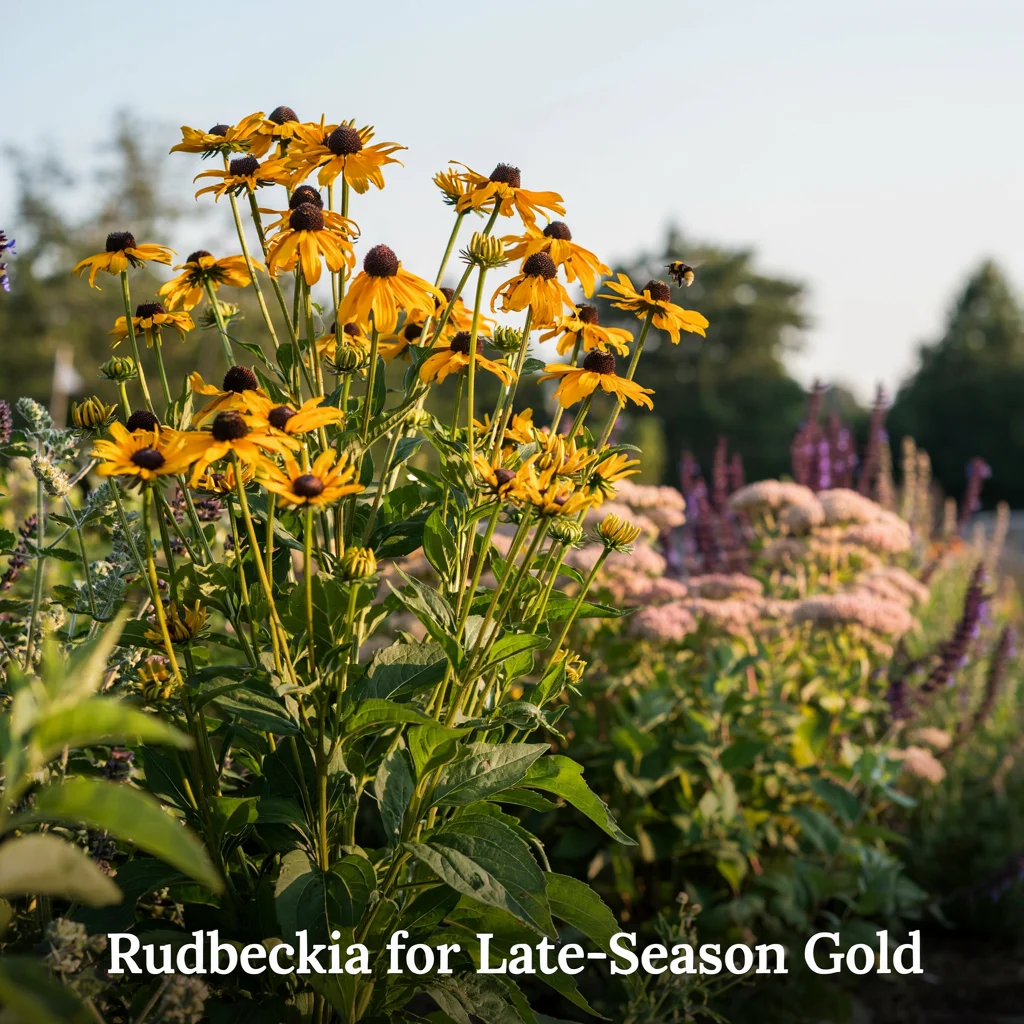
Rudbeckia is one of the best border flowers for late-season colour, its golden daisy flowers with dark centres lighting up the border from late summer into autumn. I plant rudbeckia for reliable late colour, because its cheerful golden flowers provide a warm, long-lasting display when many summer flowers are fading, extending the border season into autumn while attracting pollinators and providing seed for birds.
Why Rudbeckia Shines in Borders
Late-season flowering, golden colour, and reliable performance are three qualities that make rudbeckia shine. Late-season flowering from late summer into autumn extends the border display. Golden daisy flowers with dark centres provide warm, cheerful colour. Reliable performance makes rudbeckia a dependable border plant.
Growing Rudbeckia in a Border
Sun to part shade, moist soil, and deadheading are three requirements suited to rudbeckia. Sun to part shade suits rudbeckia’s flexible tolerance. Moist, fertile soil supports strong flowering. Deadheading extends the display, though leaving some seed heads provides food for birds and winter structure.
Echinacea for Bold Cottage Colour
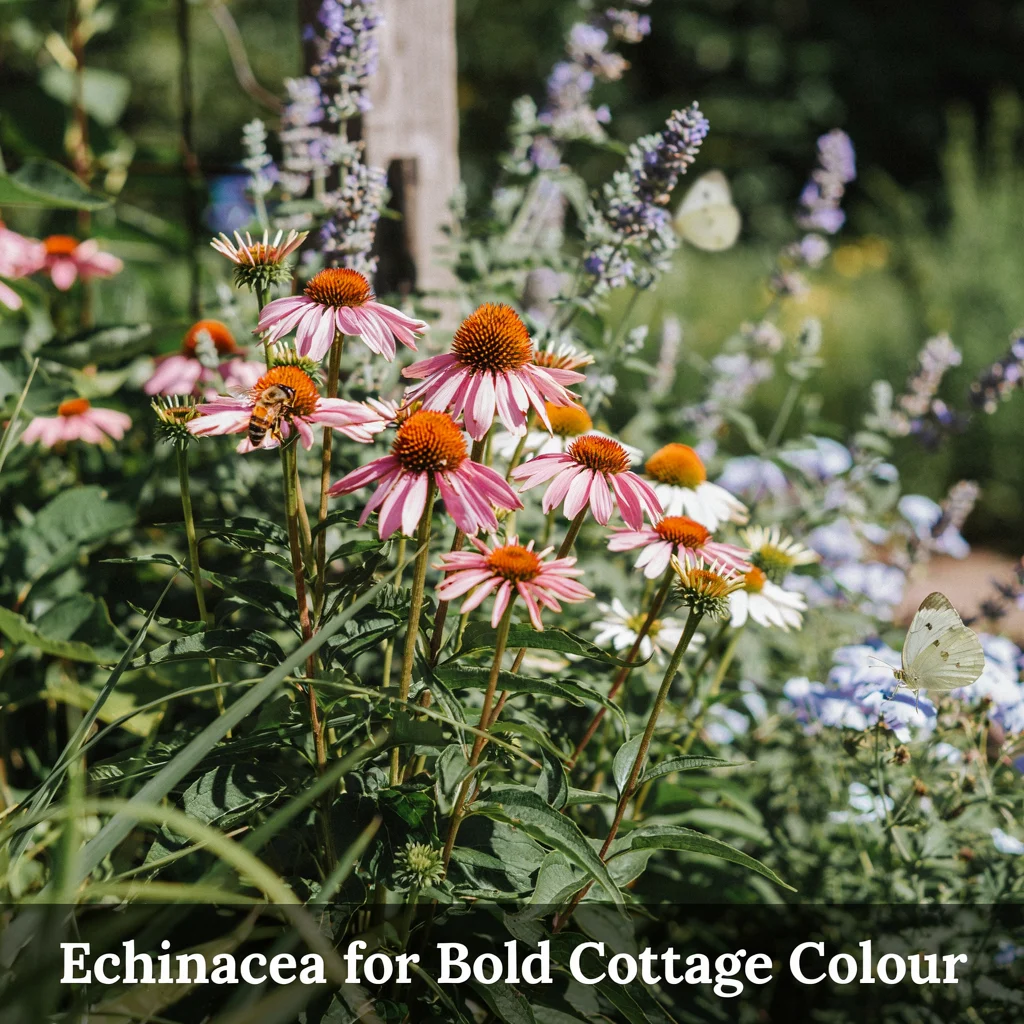
Echinacea, the coneflower, is among the best border flowers for bold, long-lasting colour, its large daisy flowers on strong stems providing a striking cottage-garden display. I use echinacea in many borders, because its bold flowers on sturdy upright stems provide reliable summer-to-autumn colour, attract pollinators, and stand well without staking, making it a dependable and beautiful border performer.
Why Echinacea Is a Great Border Flower
Bold flowers, strong stems, and pollinator appeal are three qualities that make echinacea a great border flower. Bold daisy flowers in pink, white, and warm shades provide striking colour. Strong upright stems stand well without staking. Pollinator appeal draws bees and butterflies, while the seed heads feed birds.
Growing Echinacea in a Border
Sun, well-drained soil, and minimal care are three requirements suited to echinacea. Sun provides the conditions for the best flowering. Well-drained but fertile soil suits the plant. Minimal care, as echinacea is drought-tolerant once established and needs little attention, makes it an easy border performer.
Hardy Geranium for Reliable Ground-Level Colour
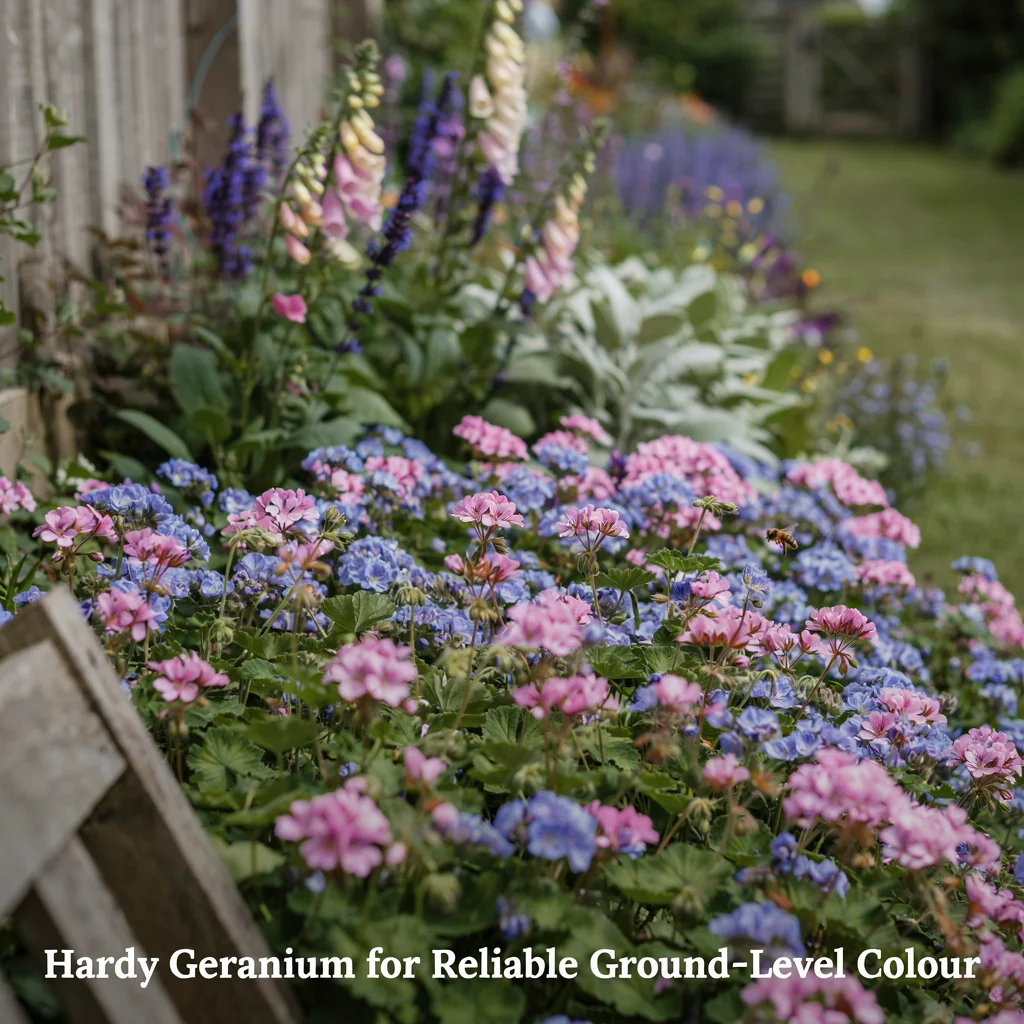
Hardy geranium, or cranesbill, is one of the best border flowers for reliable, low, spreading colour, its long flowering season and weed-suppressing habit making it invaluable. I use hardy geranium in almost every border, because it flowers reliably for months, spreads to fill gaps and suppress weeds, tolerates a range of conditions including some shade, and asks almost nothing in return, making it one of the most useful border plants of all.
Why Hardy Geranium Is Invaluable
Long flowering, spreading habit, and easy care are three qualities that make hardy geranium invaluable. Long flowering provides months of colour. A spreading habit fills gaps and suppresses weeds at the front of the border. Easy care, tolerating varied conditions with little attention, makes it dependable.
Growing Hardy Geranium in a Border
Sun or part shade, most soils, and a mid-season cutback are three points suited to hardy geranium. Sun or part shade suits the plant’s flexibility. Most soils are tolerated by this adaptable plant. A mid-season cutback after the first flush encourages fresh foliage and a second flowering.
Achillea for Flat-Topped Summer Colour
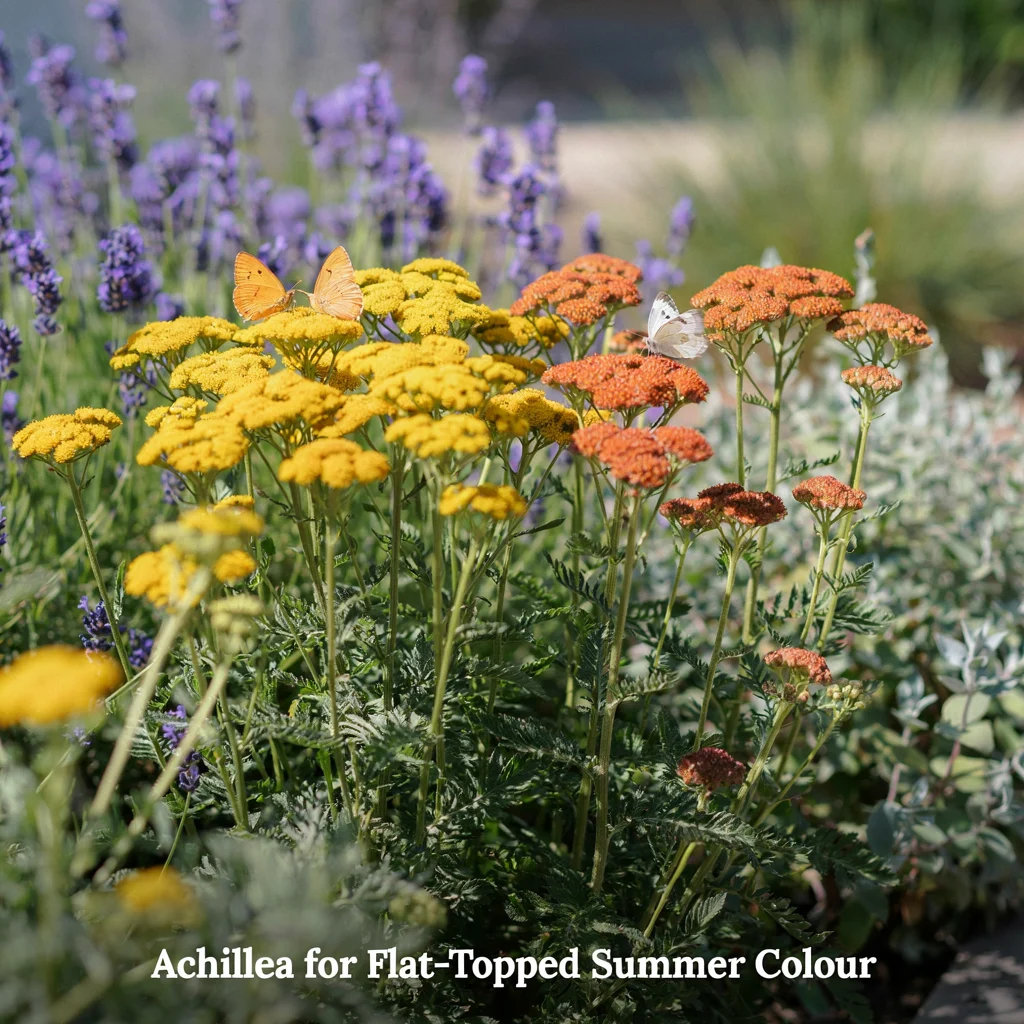
Achillea, or yarrow, is among the best border flowers for its distinctive flat-topped flower heads, providing horizontal colour, long flowering, and excellent pollinator value. I use achillea for its architectural flower form, because the flat plates of flower in yellow, pink, red, and white provide a distinctive horizontal element that contrasts beautifully with spiky and mounded plants, flowering long and drawing pollinators through summer.
Why Achillea Works in Borders
Flat-topped flowers, long flowering, and pollinator value are three qualities that make achillea work. Flat-topped flower heads provide a distinctive horizontal form. Long flowering through summer provides lasting colour. Pollinator value draws bees and beneficial insects to the flat landing pads of flower.
Growing Achillea in a Border
Sun, well-drained soil, and support if needed are three points suited to achillea. Sun provides the conditions for the best flowering. Well-drained soil suits the drought-tolerant plant. Support if needed keeps taller varieties upright, though many stand well on their own.
Astrantia for Shade and Subtle Beauty
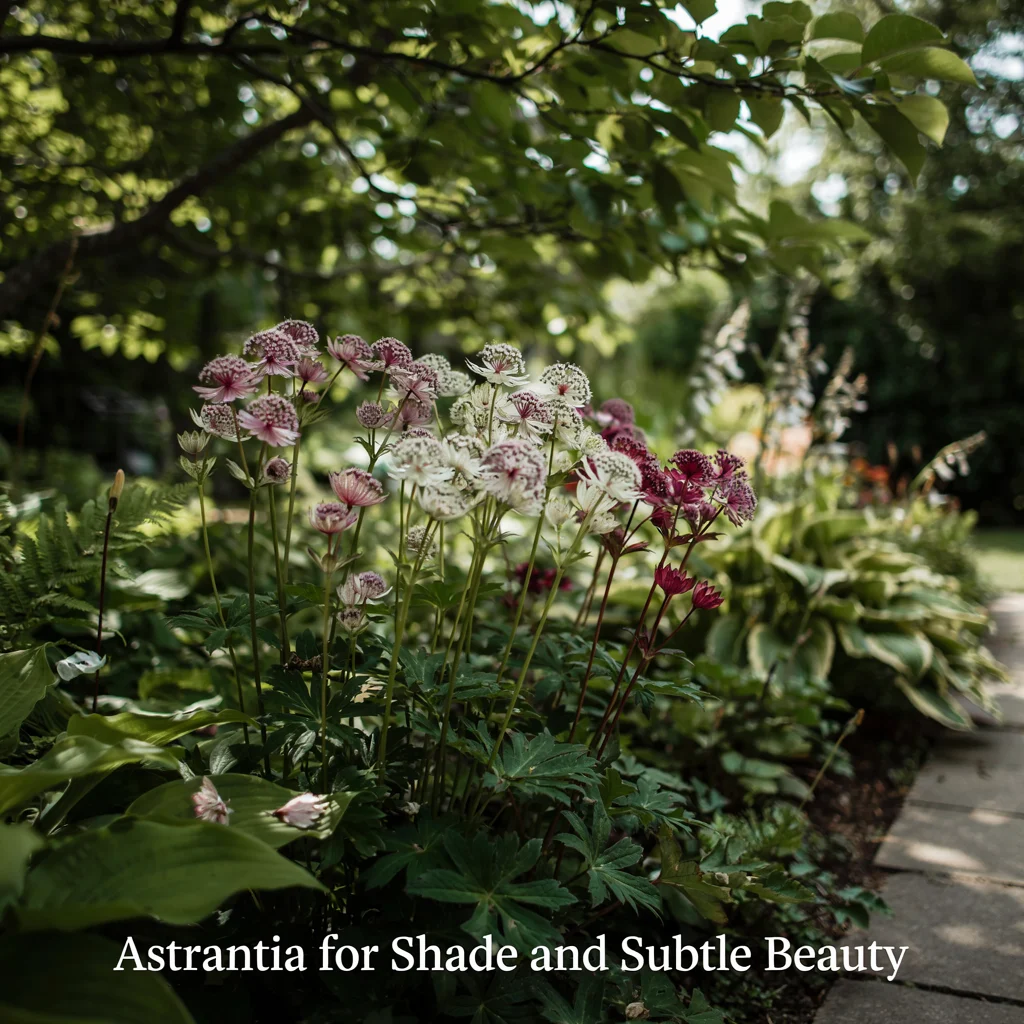
Astrantia, or masterwort, is one of the best border flowers for partial shade, its intricate pincushion flowers providing subtle beauty and long flowering in cooler, moister positions. I use astrantia in the shadier, moister parts of borders, because its delicate intricate flowers provide long-lasting subtle beauty where many sun-loving border flowers struggle, thriving in partial shade and moist soil to extend colour into the more difficult parts of the border.
Why Astrantia Suits Shadier Borders
Shade tolerance, intricate flowers, and long flowering are three qualities that make astrantia suit shadier borders. Shade tolerance allows astrantia to flower in partial shade. Intricate pincushion flowers provide subtle, detailed beauty. Long flowering through summer, especially with deadheading, provides lasting colour.
Growing Astrantia in a Border
Part shade, moist soil, and deadheading are three requirements suited to astrantia. Part shade suits this woodland-edge plant. Moist, fertile soil supports strong growth and flowering. Deadheading encourages repeat flowering and extends the astrantia season.
Penstemon for Long Summer Spires
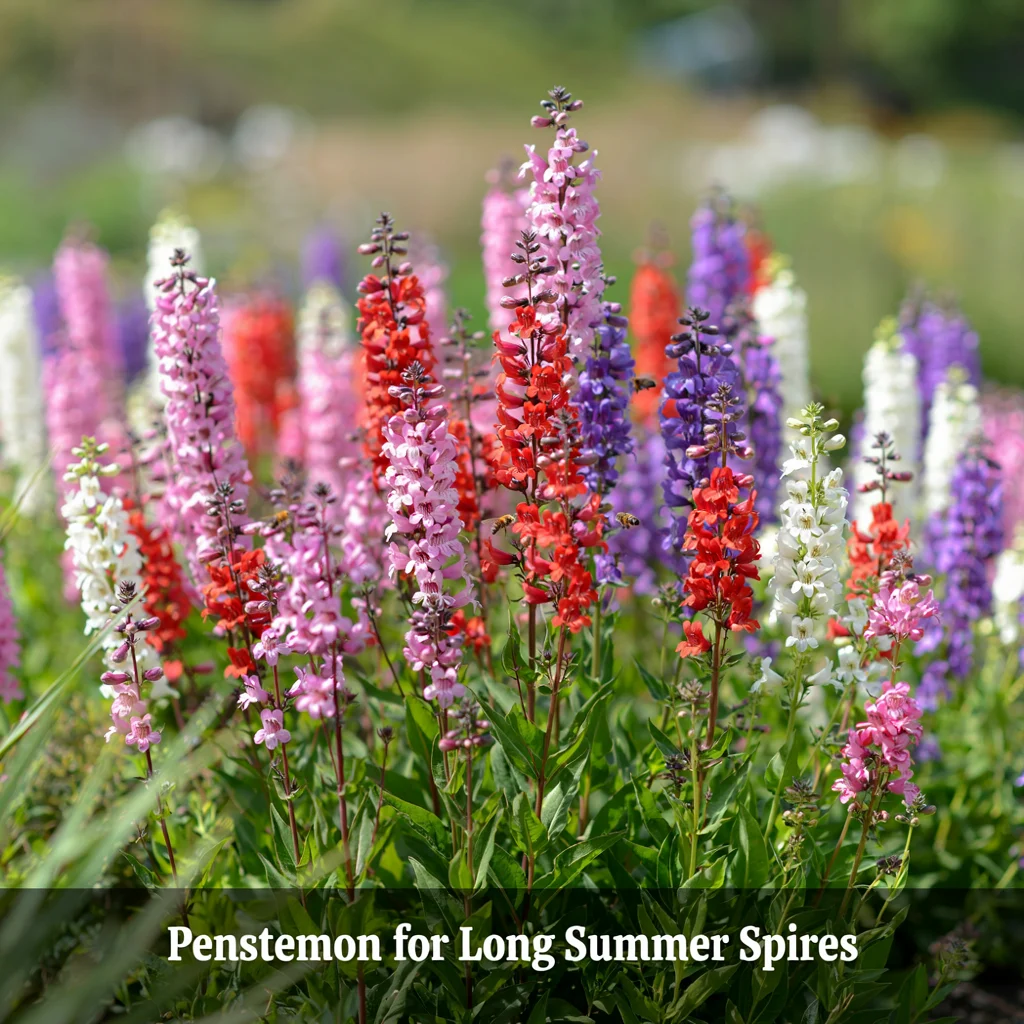
Penstemon is among the best border flowers for a long succession of tubular flower spires, providing reliable colour from summer into autumn and drawing pollinators throughout. I use penstemon for its long flowering season, because the elegant spires of tubular flowers in many colours bloom reliably from early summer well into autumn, providing vertical structure and lasting colour while attracting bees to the border.
Why Penstemon Is a Border Favourite
Long flowering, vertical spires, and varied colours are three qualities that make penstemon a favourite. Long flowering from summer into autumn provides an extended display. Vertical flower spires add structure and height. Varied colours across the many varieties suit any border scheme.
Growing Penstemon in a Border
Sun, well-drained soil, and deadheading are three requirements suited to penstemon. Sun provides the conditions for the best flowering. Well-drained soil helps the plant through winter. Deadheading spent spires encourages continued flowering through the long season.
Cosmos for Effortless Annual Colour
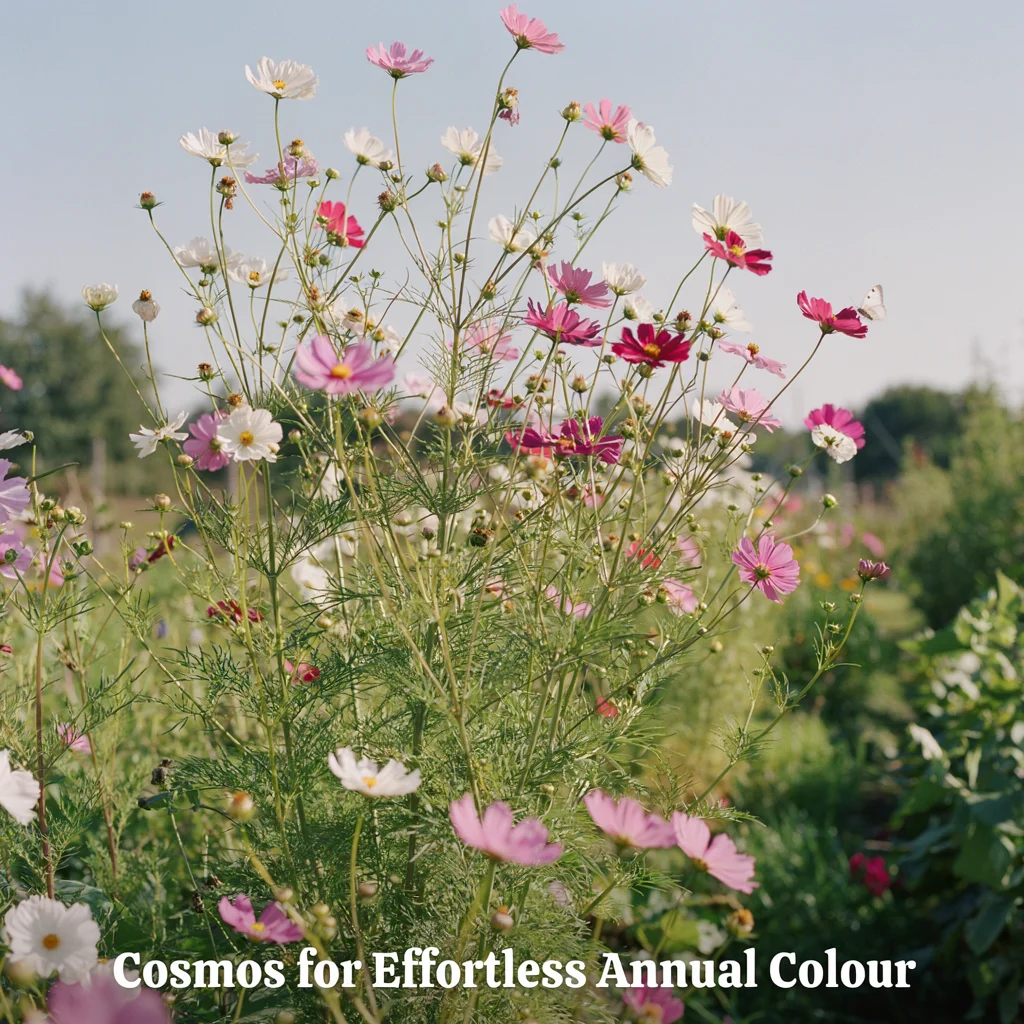
Cosmos is one of the best annual border flowers, providing effortless, long-lasting colour from summer to the first frosts on tall, airy plants. I use cosmos to fill borders with easy annual colour, because few plants provide such a long, generous, effortless display, flowering continuously from summer until frost on tall airy stems that add height and movement while asking almost nothing in return.
Why Cosmos Is a Top Annual
Long flowering, effortless growth, and airy height are three qualities that make cosmos a top annual. Long flowering from summer to frost provides months of colour. Effortless growth from seed makes cosmos easy and inexpensive. Airy height adds movement and fills gaps in the border.
Growing Cosmos in a Border
Sun, poor to average soil, and deadheading are three points suited to cosmos. Sun provides the conditions for prolific flowering. Poor to average soil actually suits cosmos, since rich soil encourages foliage over flower. Deadheading keeps the plants flowering continuously until the frosts.
Classic Annual Border Flowers
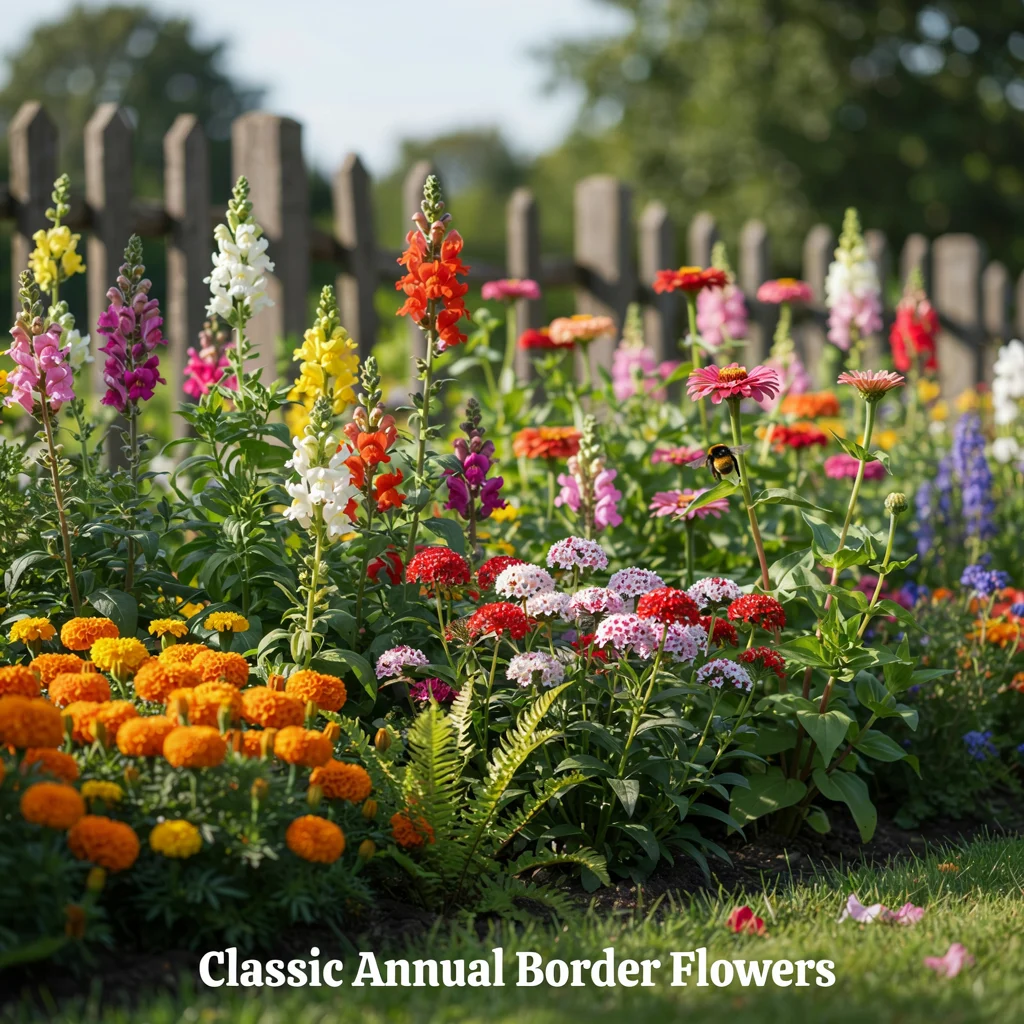
Classic annual border flowers provide quick, inexpensive, long-lasting colour to fill and brighten a border in a single season, complementing the permanent perennial planting. I use classic annuals to supplement borders, because they provide fast, generous, affordable colour that fills gaps, brightens the border, and allows the display to be varied each year alongside the permanent perennial framework.
Popular Annual Border Flowers
Zinnias, snapdragons, and marigolds are three classic annuals suited to a border. Zinnias provide bold, long-lasting colour in a wide range of shades. Snapdragons provide vertical flower spikes and cottage charm. Marigolds provide reliable, cheerful colour and are easy to grow from seed.
Using Annuals in a Border
Filling gaps, adding colour, and seasonal variation are three uses suited to annuals. Filling gaps with annuals covers bare soil while perennials establish. Adding colour brightens and extends the border display. Seasonal variation, changing the annuals each year, keeps the border fresh and allows experimentation.
Best Border Flowers for All-Year Colour
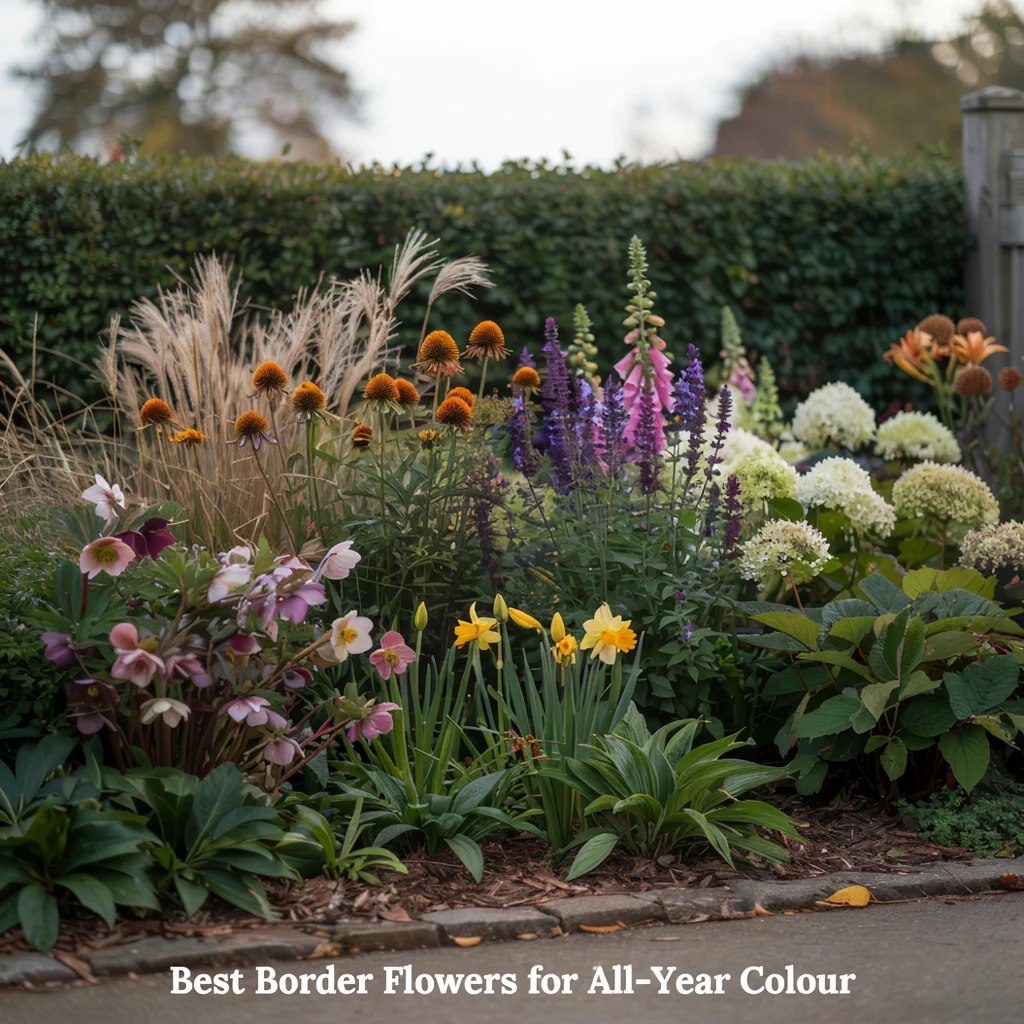
Best border flowers for all-year colour combine a succession of plants that flower and provide interest across the seasons, ensuring the border is never bare. I design borders for all-year interest, because a succession of flowering and structural plants across spring, summer, autumn, and winter ensures the border always has something to offer, avoiding the common trap of a border that peaks briefly and then falls flat.
Flowers for Each Season
Spring bulbs and early perennials, summer flowers, and autumn and winter interest are three seasonal layers suited to all-year colour. Spring bulbs and early perennials start the display. Summer flowers like salvia, geranium, and echinacea provide the main season. Autumn and winter interest from rudbeckia, seed heads, and evergreen structure carry the border through the cooler months.
Designing for Succession
Overlapping flowering, structural evergreens, and winter interest are three approaches suited to designing for succession. Overlapping flowering ensures continuous colour as one plant follows another. Structural evergreens provide permanent form. Winter interest from seed heads, grasses, and evergreens keeps the border alive in the quietest season.
Low-Maintenance Border Flowers
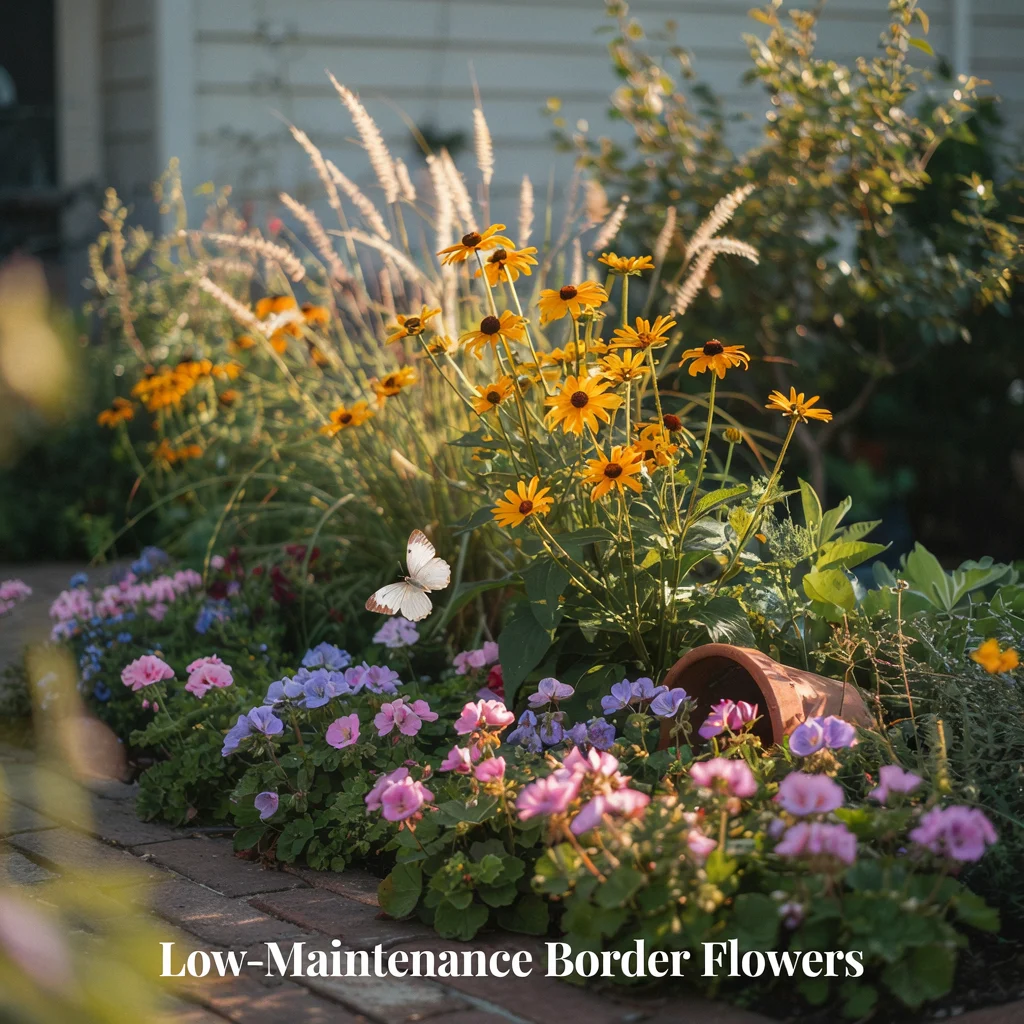
Low-maintenance border flowers provide reliable colour with minimal care, using tough, self-sufficient plants that thrive without constant attention. I build low-maintenance borders around these dependable plants, because choosing tough, reliable, self-sufficient flowers that need little staking, deadheading, or division creates a beautiful border that performs year after year without the constant work that fussier plants demand.
Easy-Care Border Flowers
Hardy geranium, echinacea, and achillea are three low-maintenance border flowers. Hardy geranium spreads to suppress weeds and needs little care. Echinacea is drought-tolerant and stands without staking. Achillea is tough and self-sufficient, together providing reliable colour with minimal maintenance.
Reducing Border Maintenance
Reliable plants, good spacing, and mulching are three approaches suited to reducing border maintenance. Reliable self-sufficient plants need less attention. Good spacing that lets plants fill in suppresses weeds and reduces gaps. Mulching conserves moisture and suppresses weeds, together minimizing the work the border demands.
Designing a Beautiful Flower Border
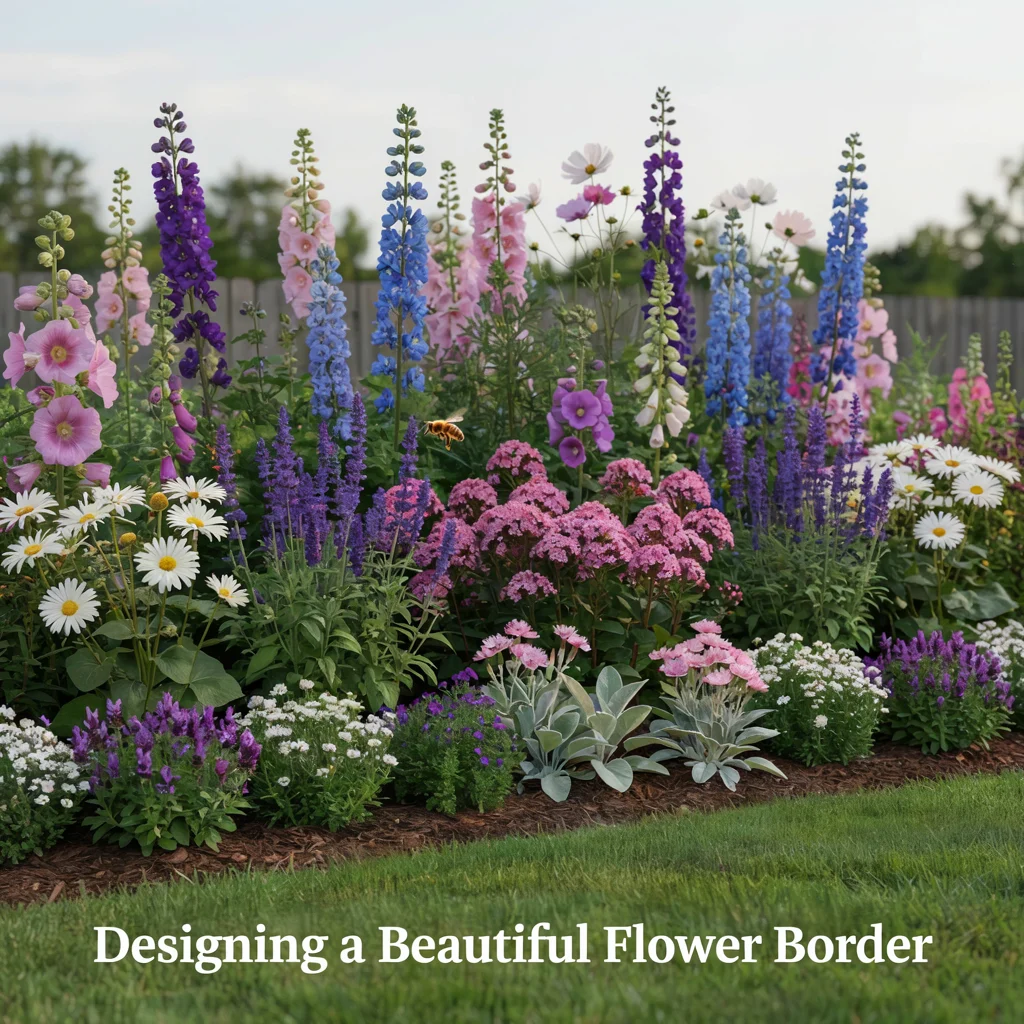
Designing a beautiful flower border arranges the chosen flowers into a cohesive, well-structured display, using the principles of layering, grouping, and colour that turn a collection of plants into a beautiful border. I design borders around these principles, because the arrangement of the plants — their height, grouping, colour, and succession — matters as much as the plants themselves in creating a border that reads as a beautiful, cohesive display rather than a jumble.
Border Design Principles
Layering by height, grouping in drifts, and considered colour are three border design principles. Layering by height, with tall plants behind and low at the front, creates structure. Grouping in drifts of three or more, rather than single plants, creates impact. Considered colour, whether harmonious or contrasting, gives the border cohesion.
Creating a Cohesive Border
A limited palette, repeated plants, and structural anchors are three approaches suited to a cohesive border. A limited palette of well-chosen plants avoids a jumbled effect. Repeated plants through the border create rhythm and unity. Structural anchors of shrubs or bold plants provide a framework for the flowering display.
Planting and Establishing a Flower Border
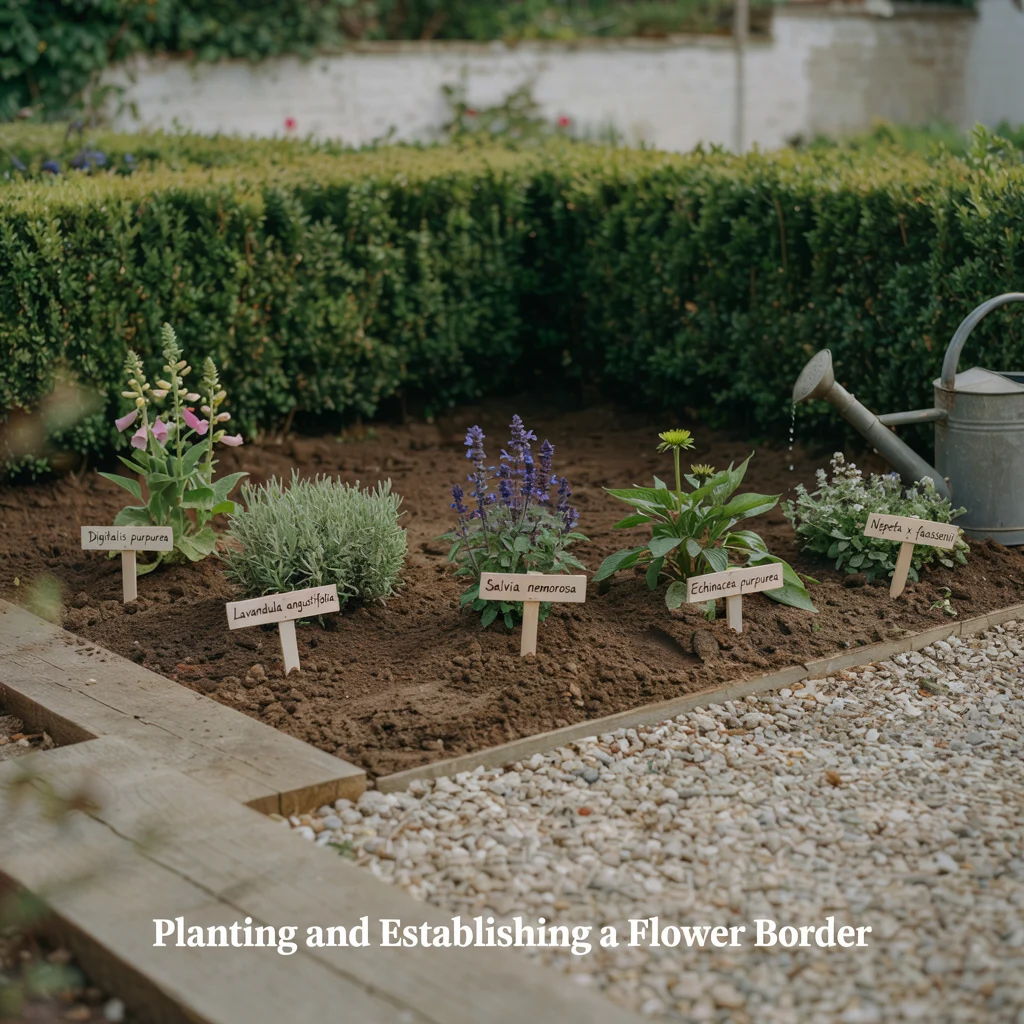
Planting and establishing a flower border covers the practical steps of preparing, planting, and settling a border so the flowers establish and thrive. I follow a clear approach to planting borders, because good soil preparation, correct planting, and establishment care give the flowers the best start, ensuring they establish quickly and perform well from the first season.
Planting a Flower Border
Soil preparation, correct spacing, and good planting are three steps suited to planting a border. Soil preparation, improving the soil with organic matter, gives the plants a strong foundation. Correct spacing allows plants room to grow and fill in. Good planting at the right depth and firmed in helps the flowers establish.
Establishing Border Flowers
Establishment watering, mulching, and first-season care are three approaches suited to establishing border flowers. Establishment watering through the first season helps the plants root and settle. Mulching conserves moisture and suppresses weeds. First-season care, including support and deadheading as needed, helps the border flowers establish and perform well from the start.
This pairs well with How to Build a Pet-Friendly Garden, Beginner-Friendly Flowers for a Cut Flower Garden, and The Best Woodland Garden Plants for Shady Areas if you are planning further. Readers planning this often also look at Vermicomposting for Beginners: Turn Kitchen Scraps into Garden Gold and Mini Garden Ideas That Fit Any Space.
Frequently Asked Questions
What are the best flowers for a garden border?
The best flowers for a garden border are reliable, long-flowering plants that combine beautiful blooms with good form and dependable performance, including lavender, salvia, rudbeckia, echinacea, hardy geranium, achillea, penstemon, and astrantia among the perennials, alongside annuals like cosmos, zinnias, and snapdragons. Lavender provides fragrance and structure, salvia and penstemon offer long-flowering vertical spires, rudbeckia and echinacea provide bold late-season colour, hardy geranium gives reliable spreading ground-level flower, and astrantia brings colour to shadier positions, while cosmos and other annuals fill gaps with effortless season-long colour. The very best border relies not on any single flower but on combining a handful of these reliable performers in generous groups, chosen to suit your conditions and arranged for a long succession of bloom, which creates a display far more beautiful and dependable than a crowd of one-off plants.
What are the best low-maintenance border plants?
The best low-maintenance border plants are tough, reliable, self-sufficient flowers that provide colour without needing constant staking, deadheading, or division, with hardy geranium, echinacea, achillea, rudbeckia, and lavender among the finest choices. Hardy geranium spreads to fill gaps and suppress weeds while flowering for months with little care, echinacea and achillea are drought-tolerant and stand well without staking, rudbeckia provides reliable late colour, and lavender offers fragrance and evergreen structure while thriving in poor, well-drained soil. Choosing plants genuinely suited to your conditions is the key to low maintenance, since a plant in the right place thrives with little help, and combining these dependable performers with good spacing and mulching creates a beautiful border that largely looks after itself and performs reliably year after year.
How do I get colour in my border all year round?
You get colour in your border all year round by planting a succession of flowers and structural plants that bloom and provide interest across the seasons, so that as one plant fades another takes over. Start the year with spring bulbs and early perennials, provide the main display through summer with reliable performers like salvia, hardy geranium, echinacea, and penstemon, carry the colour into autumn with rudbeckia and late flowers, and maintain winter interest with seed heads left standing, ornamental grasses, and evergreen structural plants. The key is designing for overlapping flowering so there is never a gap, choosing plants with a long season, and including structural evergreens and plants with good seed heads or form, which together ensure the border always has something to offer rather than peaking briefly and then falling flat for the rest of the year.
How do I design a flower border?
You design a flower border by arranging your chosen flowers according to height, grouping, colour, and succession, so the planting reads as a cohesive display rather than a jumble. Layer the plants by height with tall flowers toward the back and low ones at the front, group each plant in generous drifts of three or more rather than dotting single plants around, choose a considered colour palette whether harmonious or deliberately contrasting, and plan for a succession of bloom so the border has colour across the seasons. Using a limited palette of well-chosen plants, repeating key plants through the border to create rhythm, and including structural anchors like shrubs or bold plants all help create cohesion, so the secret to a beautiful border is planting fewer kinds in bigger groups with attention to how they work together, which delivers far more impact than a crowded collection of one-off plants.
When is the best time to plant border flowers?
The best time to plant border flowers depends on the type, but generally spring and autumn are the ideal planting seasons for most perennials, while tender annuals are planted after the last frost. Autumn planting allows hardy perennials to establish their roots before winter and get away strongly the following spring, spring planting suits many perennials and is the main season for planting up borders, and tender annuals like cosmos and zinnias should only go out once all danger of frost has passed. Whatever the season, good soil preparation with organic matter, correct spacing to allow the plants room to grow, and establishment watering through the first season all help the flowers settle and perform, so matching the planting time to the plant type and giving the flowers a good start ensures they establish quickly and reward you with a beautiful border display.