
How to Grow Morning Glory: Planting and Care Tips


Few climbing annuals reward so little effort with so much color, since morning glory grows fast, self-seeds readily, and produces trumpet-shaped blooms in shades of blue, purple, and pink from midsummer right up until the first frost. The steps below cover everything from starting seeds to keeping the vines under control, so there’s a clear path here whether this is a first attempt or a repeat planting.
Choosing a Sunny, Warm Planting Site
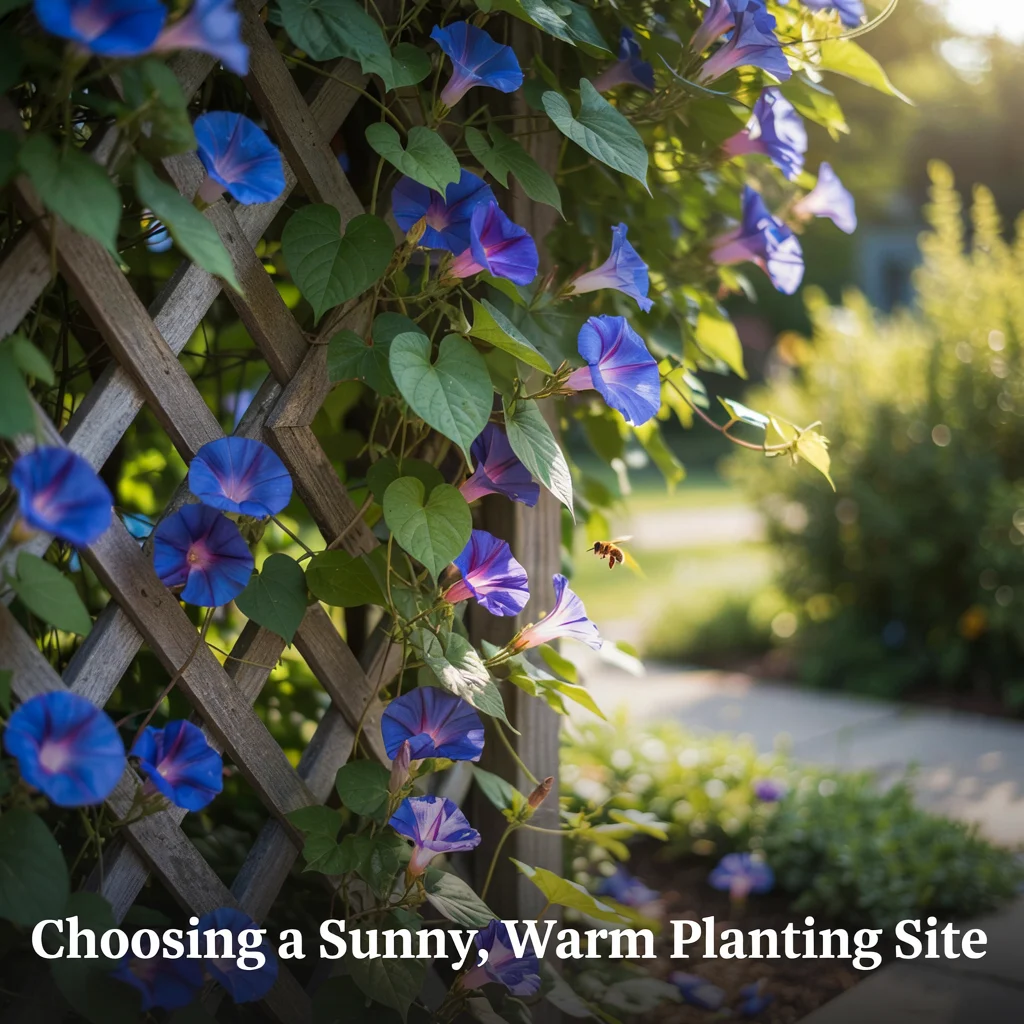
Choosing a sunny, warm planting site is the first real decision in growing morning glory well, since these vines need at least six hours of direct sun a day to flower reliably and won’t bloom heavily in a shaded corner.
Why Morning Glory Needs Full Sun to Flower
Why morning glory needs full sun to flower comes down to its tropical origins, and without enough light the plant tends to put energy into leafy vine growth rather than the trumpet-shaped blooms most gardeners are actually after.
Picking a Spot With Something to Climb
Picking a spot with something to climb matters just as much as sun exposure, since morning glory is a twining vine that needs a trellis, fence, or arbor nearby to wrap itself around as it grows.
Preparing and Scarifying the Seeds Before Planting
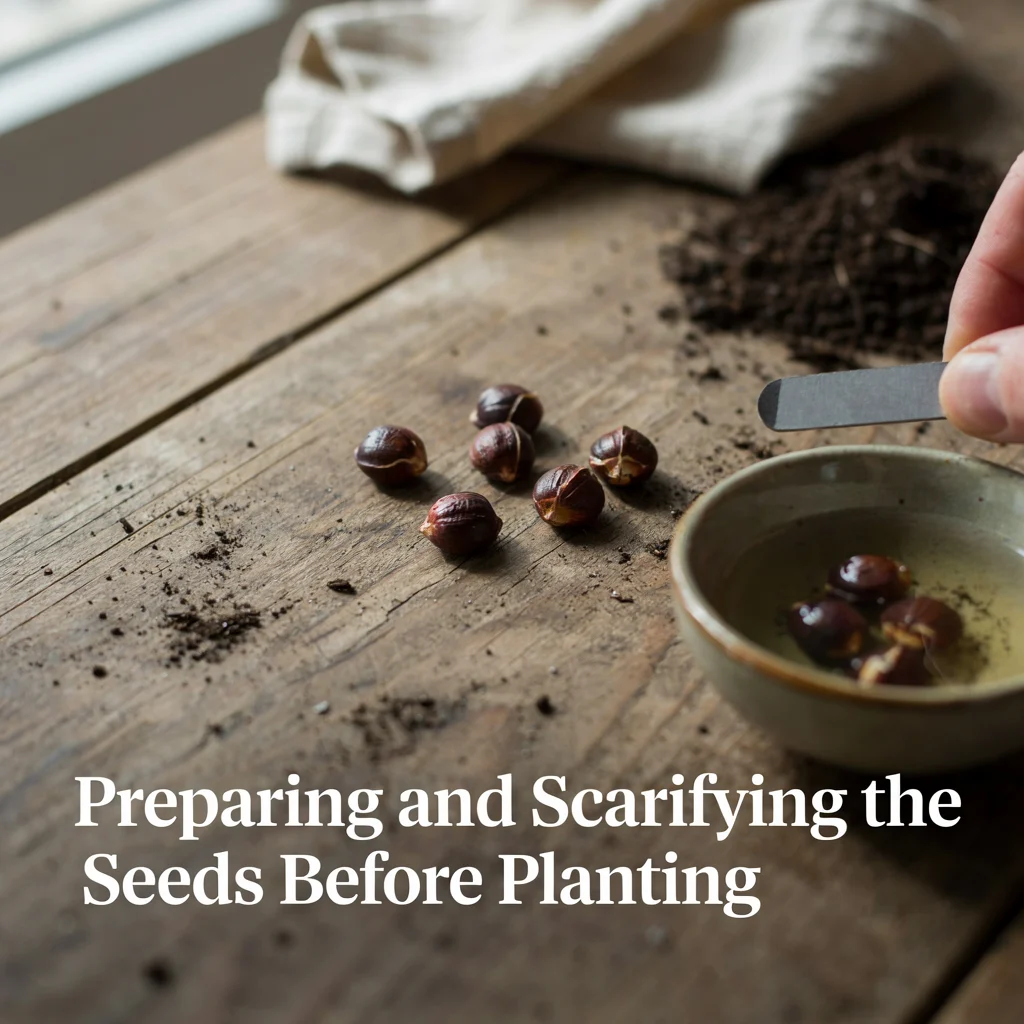
Preparing and scarifying the seeds before planting speeds up germination considerably, since morning glory seeds have a hard outer coat that can otherwise take weeks to soften naturally in garden soil.
Why Scarifying Seeds Improves Germination Rates
Why scarifying seeds improves germination rates comes down to breaking through that tough seed coat, typically by nicking it lightly with a nail file or soaking the seeds in warm water overnight before sowing.
How to Nick or Soak Morning Glory Seeds Safely
How to nick or soak morning glory seeds safely means filing just enough to scratch the outer shell without damaging the embryo inside, then soaking the nicked seeds for 24 hours until they swell slightly.
Sowing Seeds Directly After the Last Frost
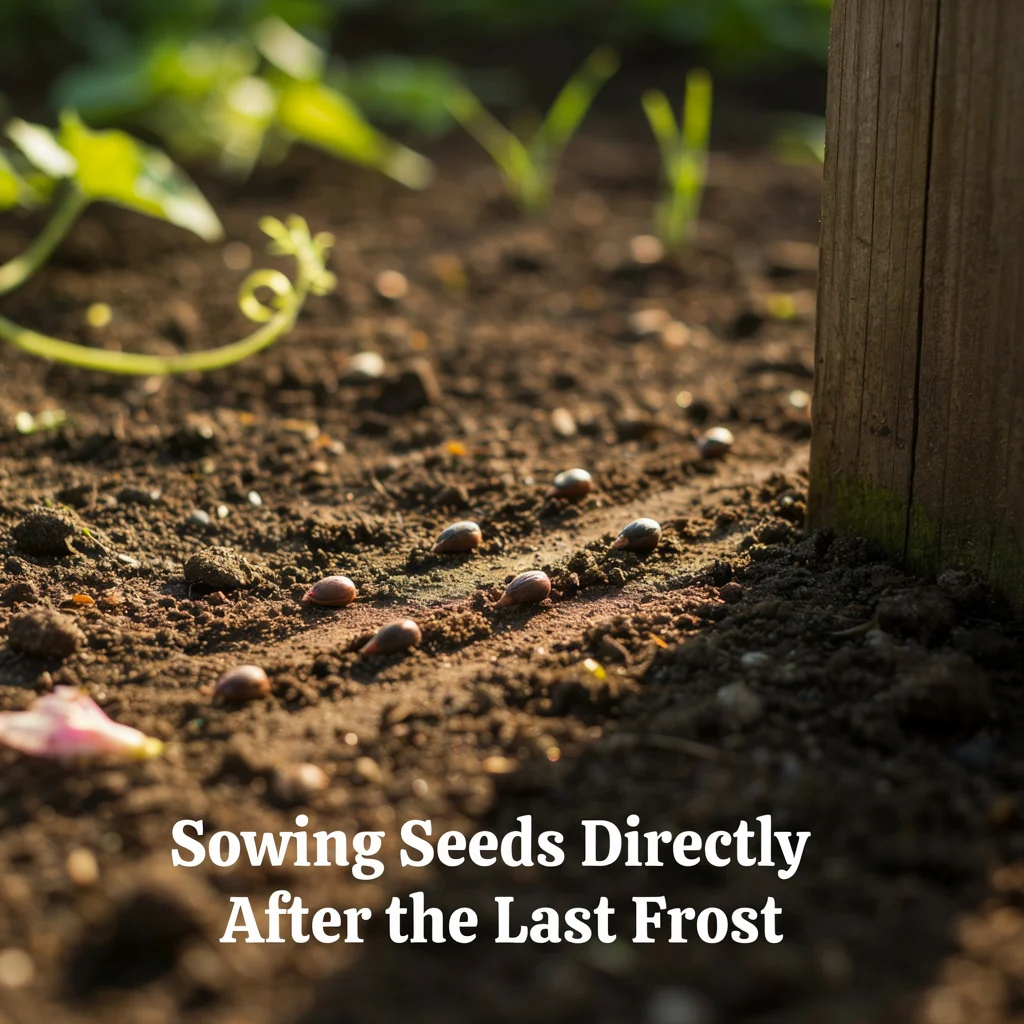
Sowing seeds directly after the last frost works better for morning glory than starting indoors, since the long taproot resents transplanting and seedlings started early often stall out once moved to the garden.
When It’s Warm Enough to Sow Outdoors
When it’s warm enough to sow outdoors generally means waiting until soil temperatures reach at least 60°F, since morning glory seeds sown into cold soil tend to rot rather than germinate.
Spacing and Planting Depth for Healthy Vines
Spacing and planting depth for healthy vines means sowing seeds about half an inch deep and spacing them 6 to 12 inches apart near the base of whatever structure they’ll climb.
Watering and Feeding Through the Growing Season
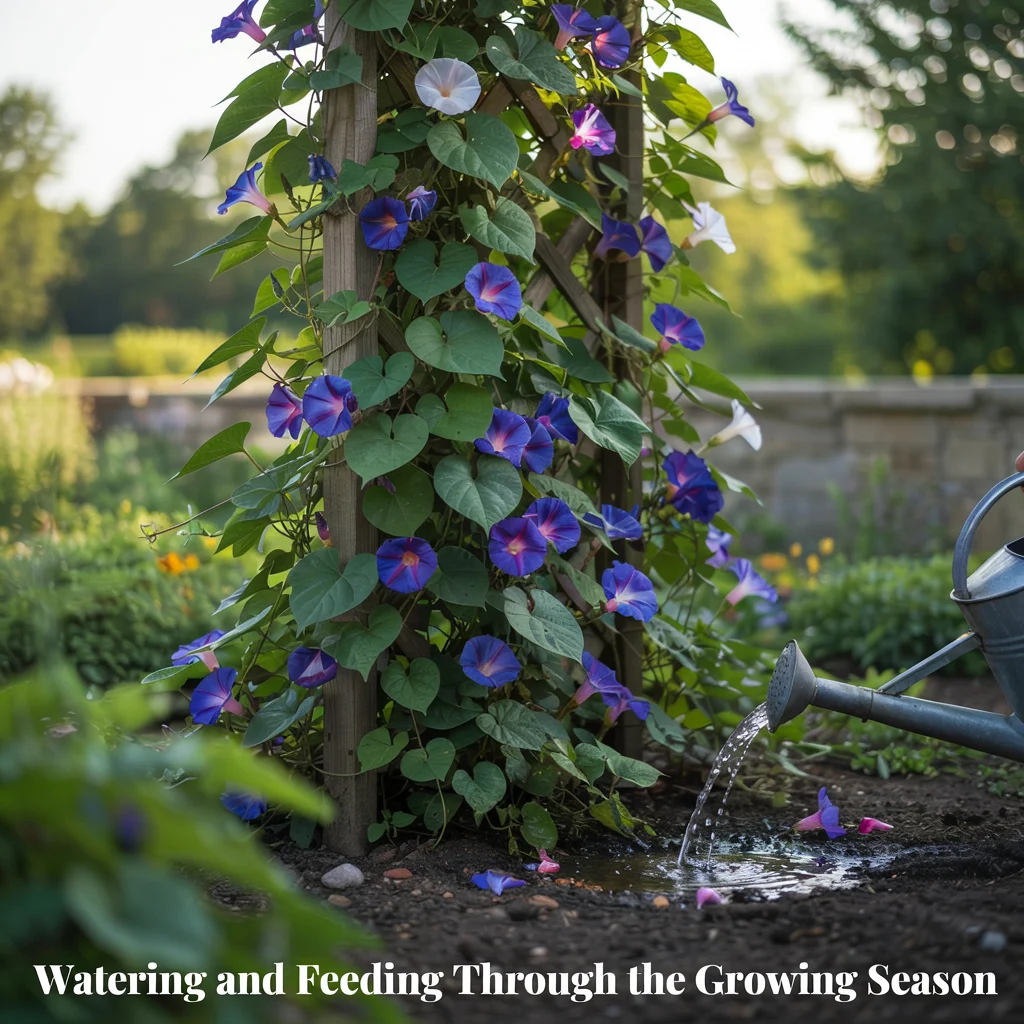
Watering and feeding through the growing season stays fairly simple with morning glory, since it’s a genuinely low-maintenance vine once established, needing only moderate water and almost no fertilizer to perform well.
How Much Water Morning Glory Actually Needs
How much water morning glory actually needs is less than many gardeners assume, since the vine tolerates short dry spells once rooted and overwatering can encourage leafy growth at the expense of flowers.
Why Too Much Fertilizer Reduces Blooming
Why too much fertilizer reduces blooming comes down to excess nitrogen pushing vigorous foliage growth while suppressing flower production, so skipping fertilizer entirely in average garden soil usually gives better results.
Training the Vines Onto a Trellis or Support

Training the vines onto a trellis or support early on helps morning glory grow in the direction intended, since the twining stems will latch onto whatever they reach first, including nearby plants or shrubs.
Guiding Young Vines in the Right Direction
Guiding young vines in the right direction simply means loosely looping the first few stems around the base of the support by hand, after which the plant takes over and climbs on its own.
Structures That Work Best for Climbing Vines
Structures that work best for climbing vines include narrow trellises, chain-link fences, and mailbox posts, since morning glory grips best onto thin, textured surfaces rather than smooth, wide ones.
Managing Reseeding So It Doesn’t Take Over
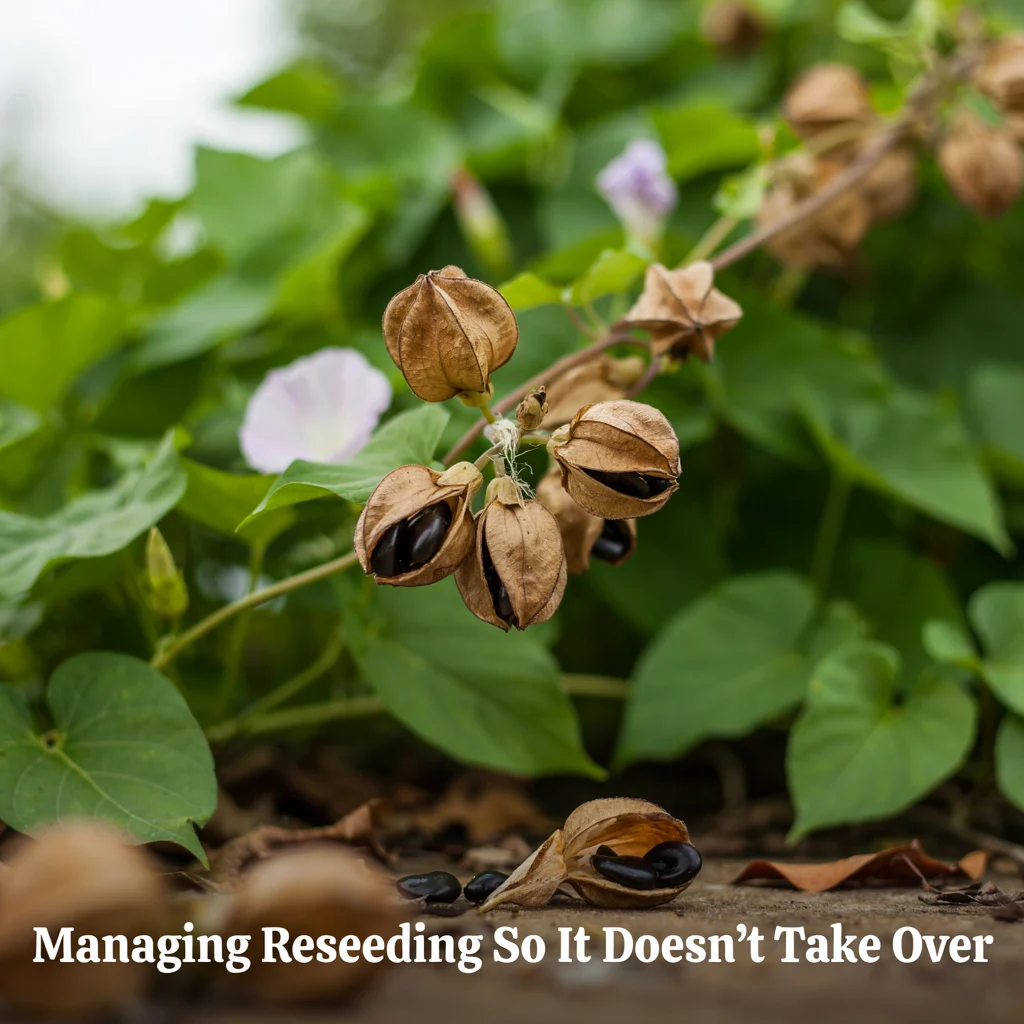
Managing reseeding so it doesn’t take over is worth planning for from the start, since morning glory drops seed pods freely at the end of the season and can become weedy in mild climates if left unchecked.
Why Morning Glory Is Considered Invasive in Some Areas
Why morning glory is considered invasive in some areas comes down to how easily its seeds survive winter and sprout the following spring, particularly in warmer regions where frost doesn’t reliably kill volunteer seedlings.
Deadheading and Cleanup to Limit Self-Seeding
Deadheading and cleanup to limit self-seeding means removing spent flowers and seed pods before they fully dry and split open, which keeps the vine contained to wherever it was originally planted.
The Bottom Line
Morning glory is about as forgiving as flowering vines get: scarify the seeds, sow them directly in full sun after the last frost, give them something to climb, and stay light on water and fertilizer. The only real upkeep is deadheading spent blooms if reseeding needs to be kept in check.
For more on this, our guides on How to Grow Ligularia: Planting and Care Guide, A Complete Guide to Dogwood Tree Care, and Simple Steps for Creating a More Eco-friendly Garden cover related ground. For related ideas, see our guides on How to Start a No-Till Raised Bed Garden and Plants That Like Wet Soil.
Frequently Asked Questions
How Long Does It Take for Morning Glory Seeds to Germinate?
Morning glory seeds typically germinate within 5 to 10 days when scarified and soaked beforehand, though unprepared seeds with an intact hard coat can take considerably longer, sometimes several weeks.
Does Morning Glory Come Back Every Year?
Morning glory is grown as an annual in most climates but often self-seeds so readily that it appears to come back every year, effectively behaving like a perennial in warmer growing zones.
Can Morning Glory Grow in Pots?
Morning glory can grow well in pots as long as the container is large enough for its root system and a trellis or stake is provided for the vine to climb.
Is Morning Glory Toxic to Pets?
Morning glory seeds contain compounds that are mildly toxic if ingested in large quantities, so it’s worth keeping curious pets away from the seed pods, particularly in households with dogs that chew on garden debris.
Why Is My Morning Glory Not Flowering?
Morning glory not flowering is usually caused by too much shade or too much nitrogen-rich fertilizer, both of which push the plant toward leafy vine growth instead of the blooms most gardeners are growing it for.