
How to Build a Bird Feeder Pole

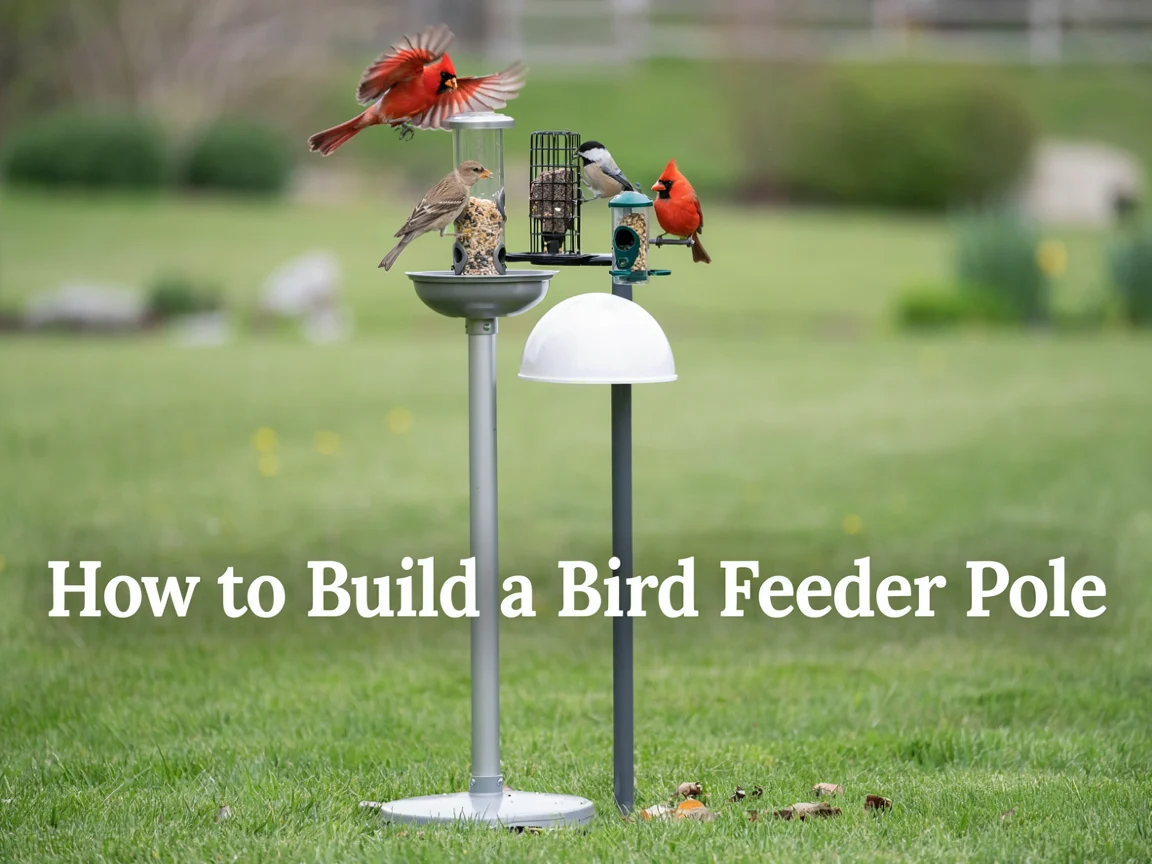
A single hanging feeder on a shepherd’s hook rarely stays squirrel-proof or stable for long, which is exactly why a properly built feeder pole, set in concrete with a real baffle, makes such a noticeable difference. The steps below cover the whole build, from picking a pole to positioning the finished setup where birds will actually feel safe using it.
Choosing the Right Pole Material and Height
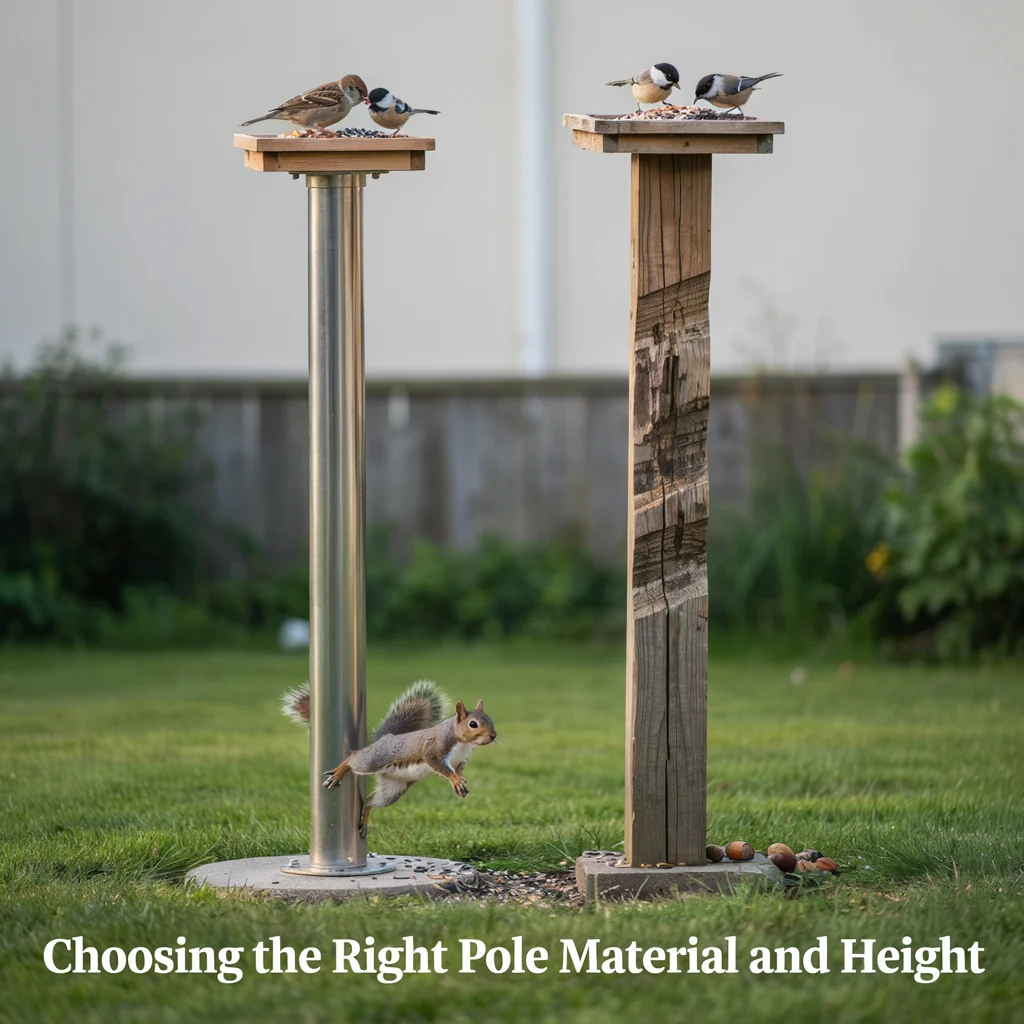
Choosing the right pole material and height sets the foundation for the whole project, since a pole that’s too short or too flimsy invites exactly the squirrel and predator problems the setup is meant to avoid.
Why a Smooth Metal Pole Works Better Than Wood
Why a smooth metal pole works better than wood comes down to grip, since squirrels can climb a rough wooden post with ease but struggle considerably more on a smooth, round metal pipe.
Choosing a Height That Keeps Feeders Out of Jumping Range
Choosing a height that keeps feeders out of jumping range generally means positioning feeders at least 5 feet off the ground and well away from anything a squirrel could jump from.
Planning Feeder Placement Before Digging
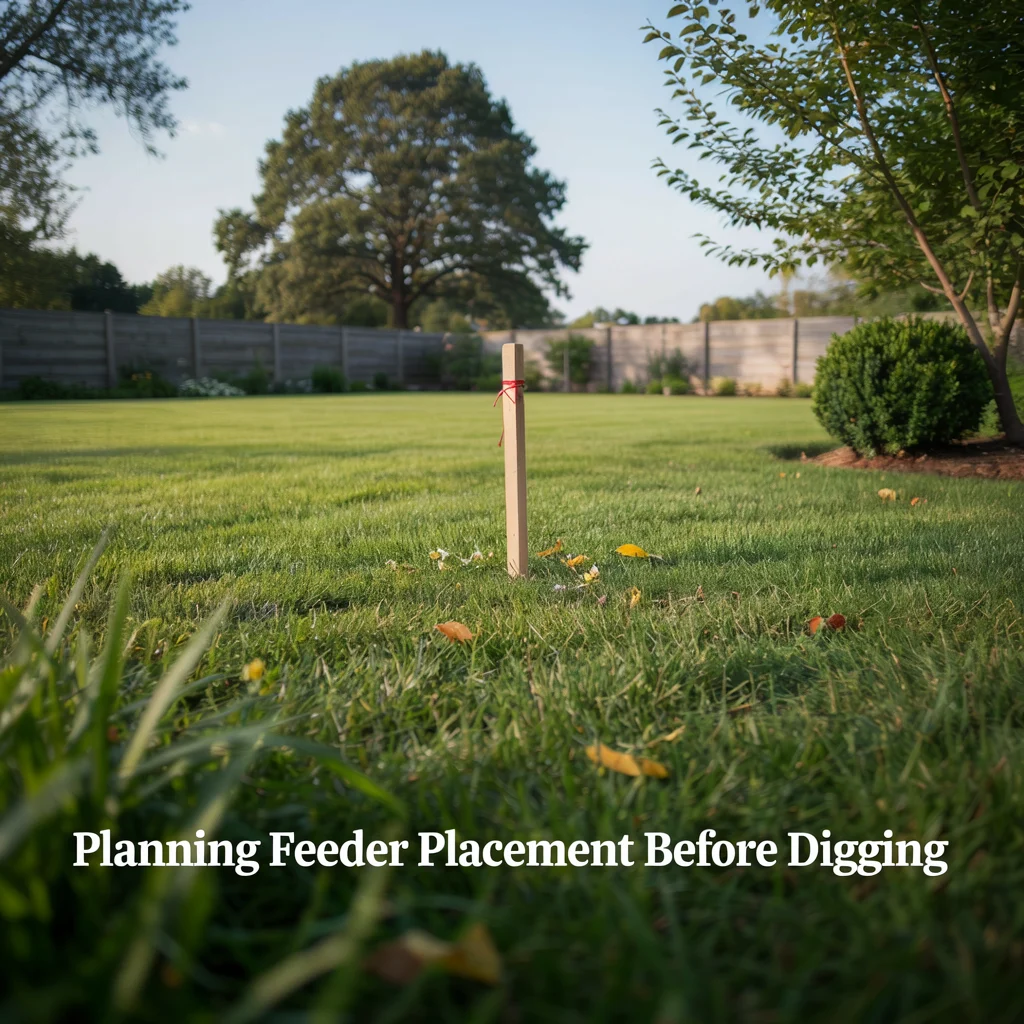
Planning feeder placement before digging avoids having to relocate a set-in-concrete pole later, so it’s worth thinking through sun exposure, visibility from the house, and distance from cover before committing to a spot.
Positioning Away From Trees and Fences Squirrels Can Jump From
Positioning away from trees and fences squirrels can jump from, generally at least 8 to 10 feet of clearance, is one of the most effective ways to keep a feeder pole squirrel-free.
Choosing a Spot With Some Nearby Cover for Bird Safety
Choosing a spot with some nearby cover for bird safety, like a shrub a short flight away, gives birds a place to retreat to quickly if a predator approaches while they’re feeding.
Digging and Setting the Post in Concrete
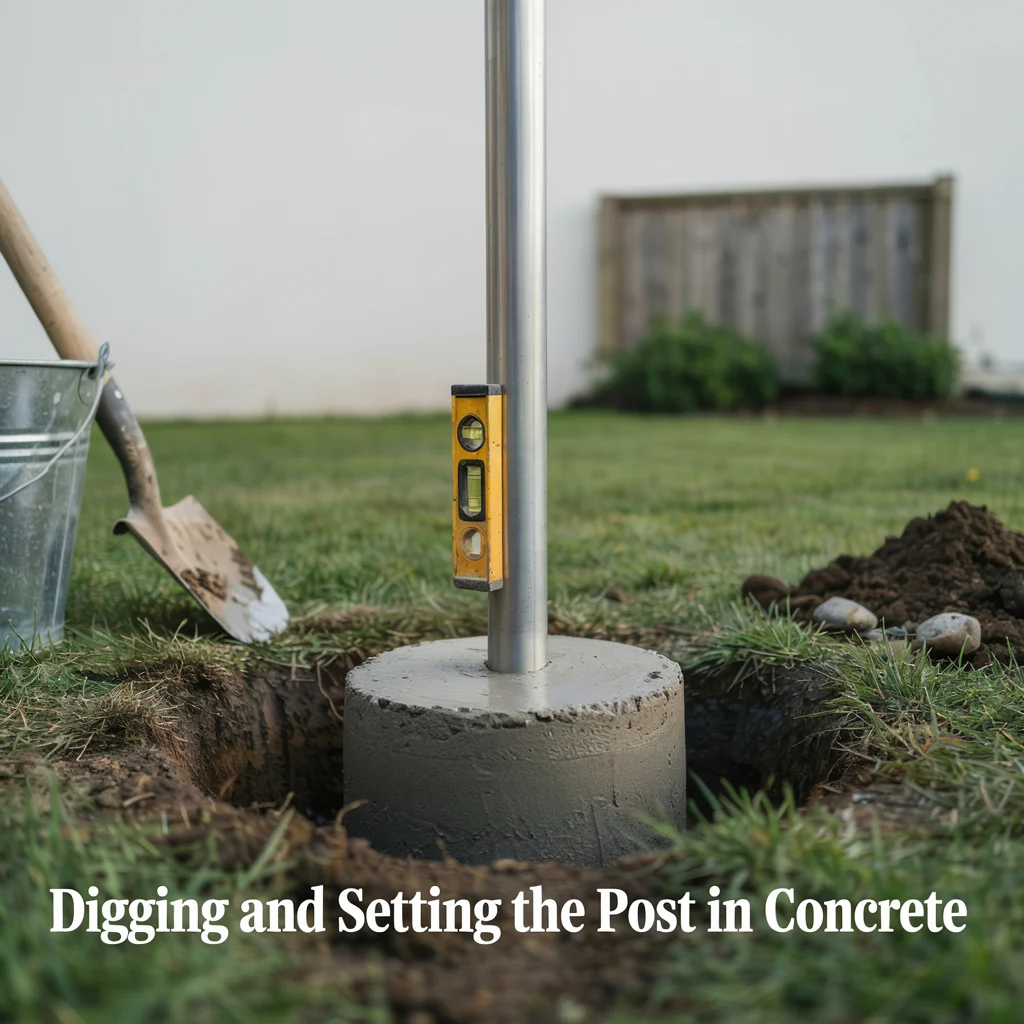
Digging and setting the post in concrete gives a feeder pole the stability it needs to handle wind, the weight of multiple feeders, and repeated squirrel attempts to shake it loose.
How Deep the Post Hole Needs to Be
How deep the post hole needs to be is typically at least 24 inches for a stable, permanent pole, though local frost line depth in colder climates may call for going deeper.
Mixing and Pouring Concrete Around the Base
Mixing and pouring concrete around the base, checking the pole for level as the concrete is poured, ensures the finished pole stands straight rather than leaning once it cures.
Adding a Squirrel Baffle Below the Feeders
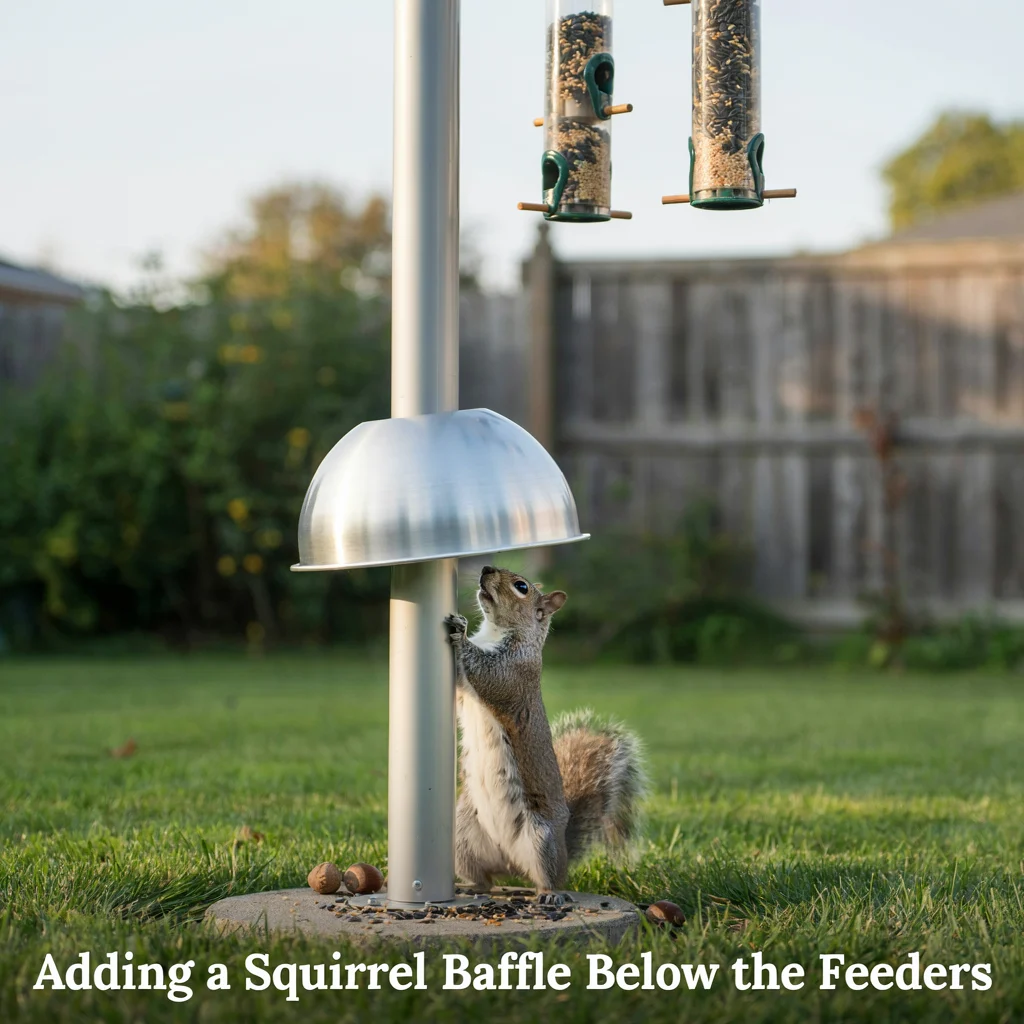
Adding a squirrel baffle below the feeders is genuinely one of the most important steps in the entire build, since even a tall, smooth pole can still be climbed without one.
How a Dome or Cone Baffle Actually Works
How a dome or cone baffle actually works comes down to its wide, slippery shape, which prevents a squirrel from getting a grip to climb past it toward the feeders above.
Positioning the Baffle at the Correct Height
Positioning the baffle at the correct height, generally at least 4 to 5 feet off the ground, keeps squirrels from simply jumping over it from the ground below.
Attaching Feeder Arms or a Multi-Feeder Hanger
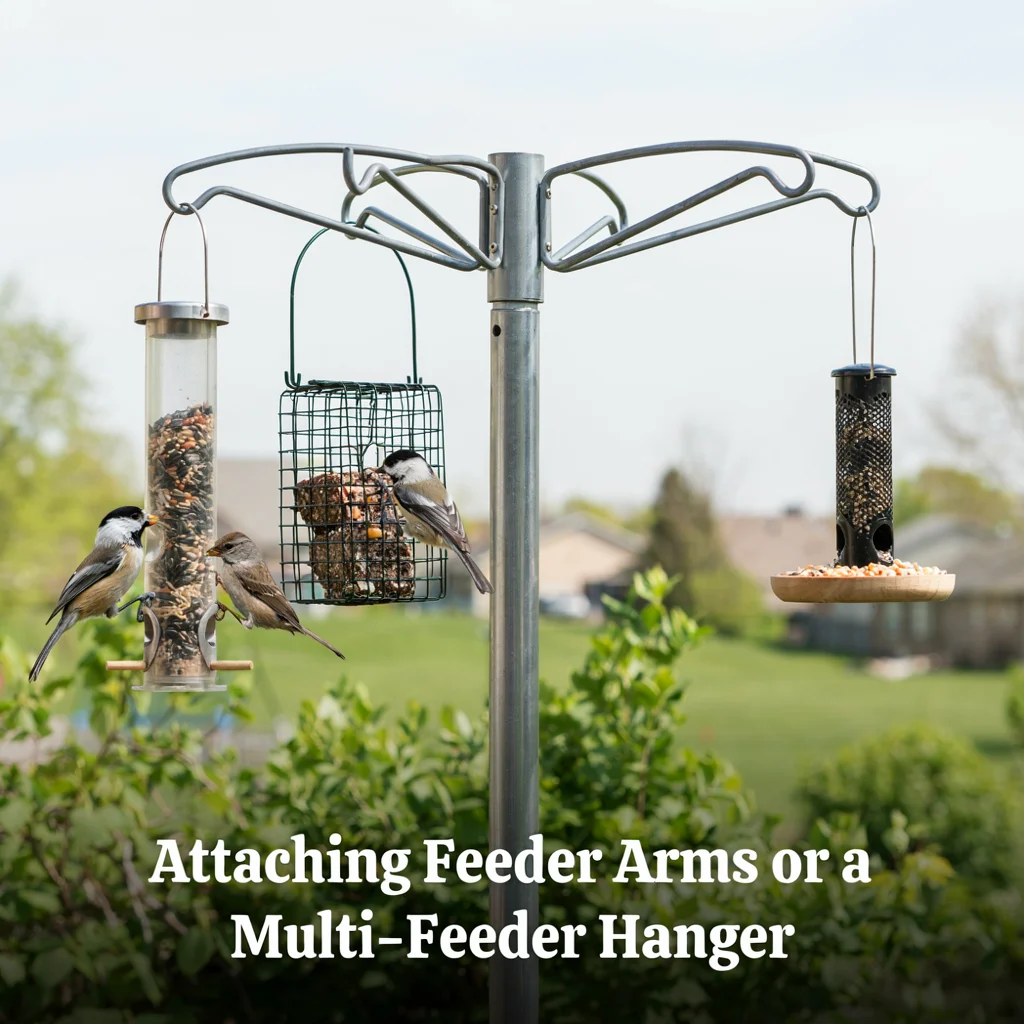
Attaching feeder arms or a multi-feeder hanger to the top of the pole lets multiple feeders hang from a single sturdy post, which is considerably more stable than several individual shepherd’s hooks scattered around a yard.
Choosing Between a Fixed Arm and a Rotating Hanger
Choosing between a fixed arm and a rotating hanger comes down to convenience, since a rotating top makes it easier to access and refill each feeder without walking all the way around the pole.
Spacing Feeders to Avoid Overcrowding
Spacing feeders to avoid overcrowding gives birds room to feed without constant competition, while also making it easier to fill and clean each feeder individually.
Weatherproofing and Checking Long-Term Stability
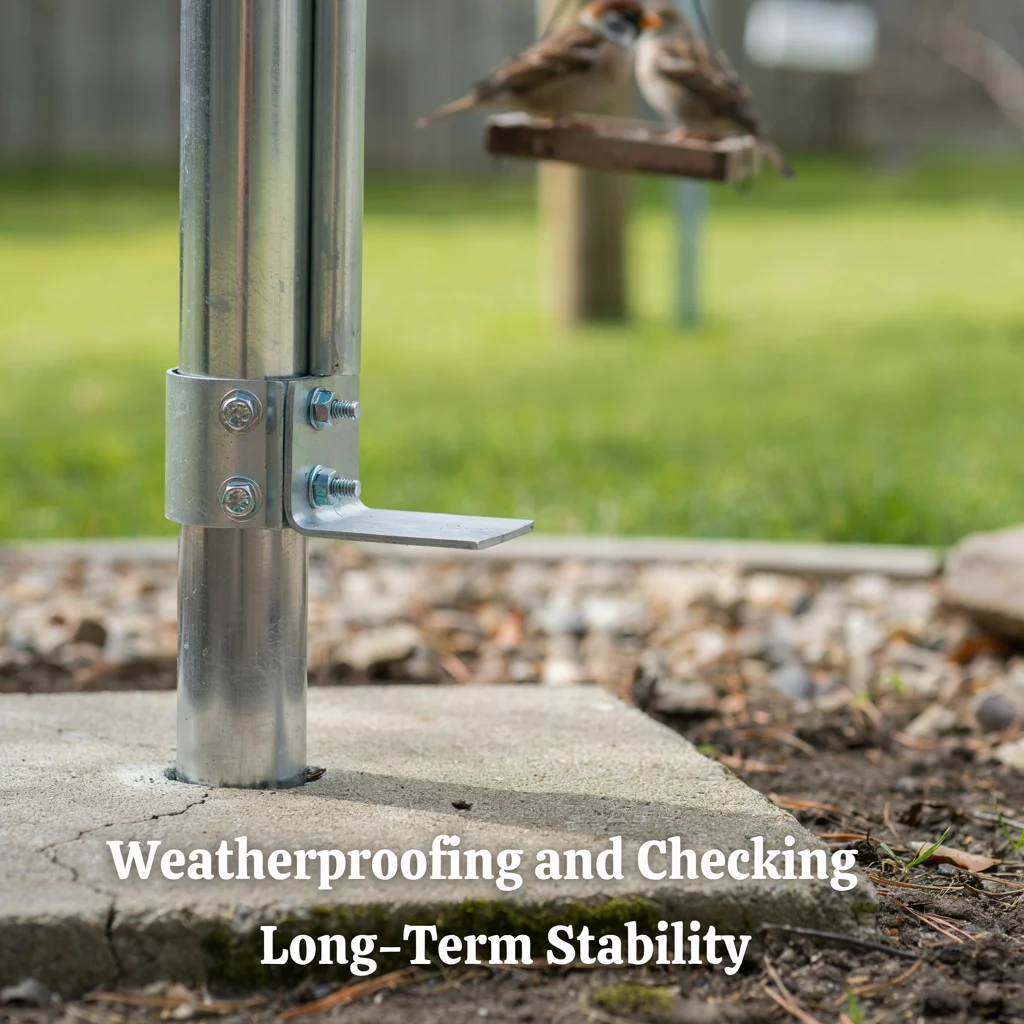
Weatherproofing and checking long-term stability ensures the pole holds up through wind, rain, and repeated seasonal use without loosening or rusting prematurely.
Choosing Rust-Resistant Hardware for All Connections
Choosing rust-resistant hardware for all connections, including galvanized or stainless steel bolts and hooks, prevents the kind of corrosion that can weaken a feeder setup over several seasons outdoors.
Rechecking the Pole for Wobble Each Season
Rechecking the pole for wobble each season, particularly after winter freeze-thaw cycles, catches any loosening at the concrete base before it becomes a bigger stability issue.
The Bottom Line
A stable, squirrel-resistant bird feeder pole comes down to four real decisions: a smooth metal post set deep in concrete, a properly positioned baffle, enough clearance from jumping-off points, and sturdy, weatherproof hardware holding it all together. Getting those right turns a feeder pole into a genuinely low-maintenance fixture rather than something that needs constant adjusting.
Readers working on this often also check How to Build a Pet-Friendly Garden, Bird Bath Ideas to Bring Genuine Life Into Your Garden, and Woodland Garden Bird Baths That Attract Birds. For related ideas, see our articles on Vermicomposting for Beginners: Turn Kitchen Scraps into Garden Gold, Mini Garden Ideas That Fit Any Space, and Outdoor Plant Pots Showing Their Age? Transform Them With Spray Paint!. This pairs well with Why Lilacs Should Be Pruned Right After Blooming and The Best Trees to Plant in Your Yard.
Frequently Asked Questions
How Tall Should a Bird Feeder Pole Be?
A bird feeder pole should generally stand at least 5 feet tall, with feeders positioned well above squirrel jumping range and a baffle placed partway up the pole for added protection.
Do Squirrel Baffles Actually Work on Feeder Poles?
Squirrel baffles genuinely work well on properly positioned feeder poles, especially when combined with a smooth metal post and enough distance from trees or structures squirrels could jump from.
What Is the Best Material for a DIY Bird Feeder Pole?
Smooth galvanized steel or aluminum pipe is generally the best material for a DIY bird feeder pole, since squirrels have a much harder time gripping and climbing smooth metal than wood or textured surfaces.
How Far Should a Feeder Pole Be From Trees?
A feeder pole should generally be positioned at least 8 to 10 feet from trees, fences, or other structures a squirrel could use to jump directly onto the feeders.
Can a Bird Feeder Pole Be Installed Without Concrete?
A bird feeder pole can be installed without concrete using a heavy-duty ground sleeve or auger-style base, though concrete generally provides more long-term stability, especially for taller, multi-feeder setups.