Outdoor Styling Mistakes You Might Be Making

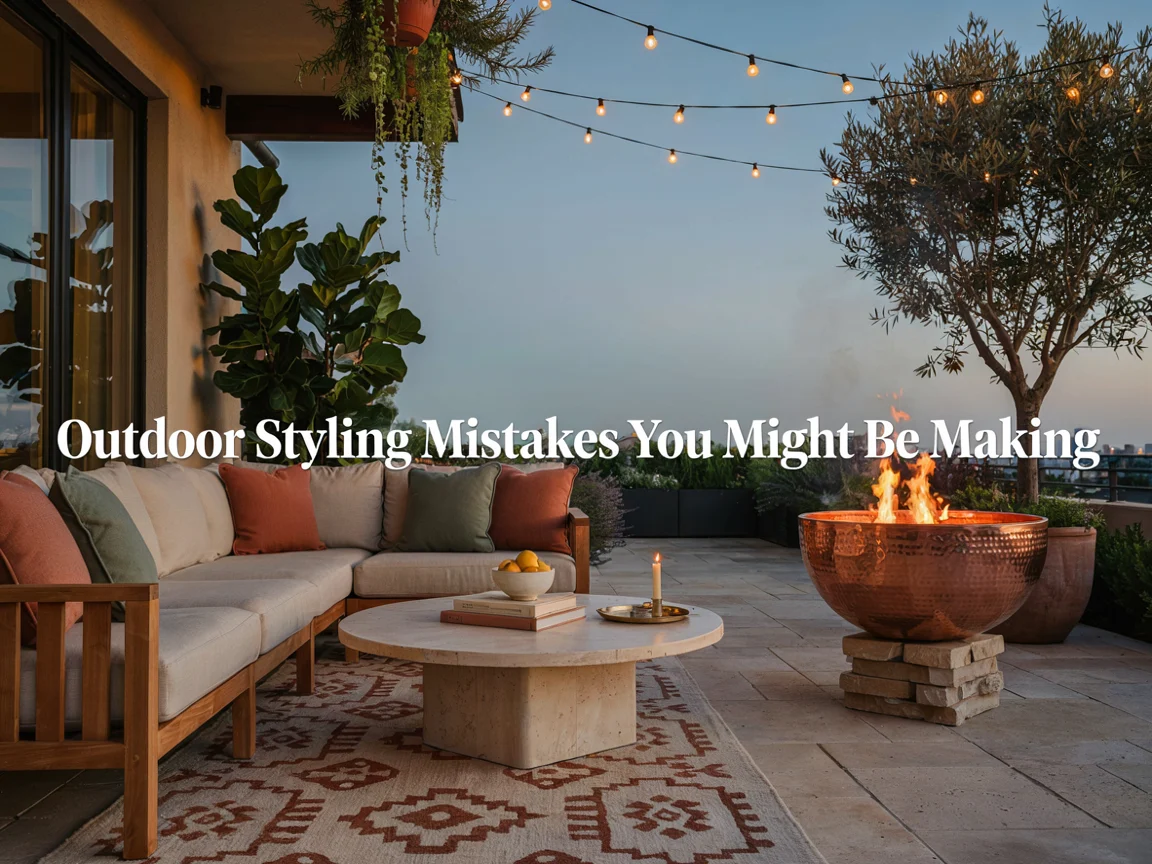
A patio or backyard can have great bones, decent furniture, and healthy plants, and still feel oddly unfinished, and the reason usually comes down to a handful of styling habits rather than the space itself. The mistakes below cover the ones that show up most often, along with what tends to fix them.
Overcrowding the Space With Too Much Furniture
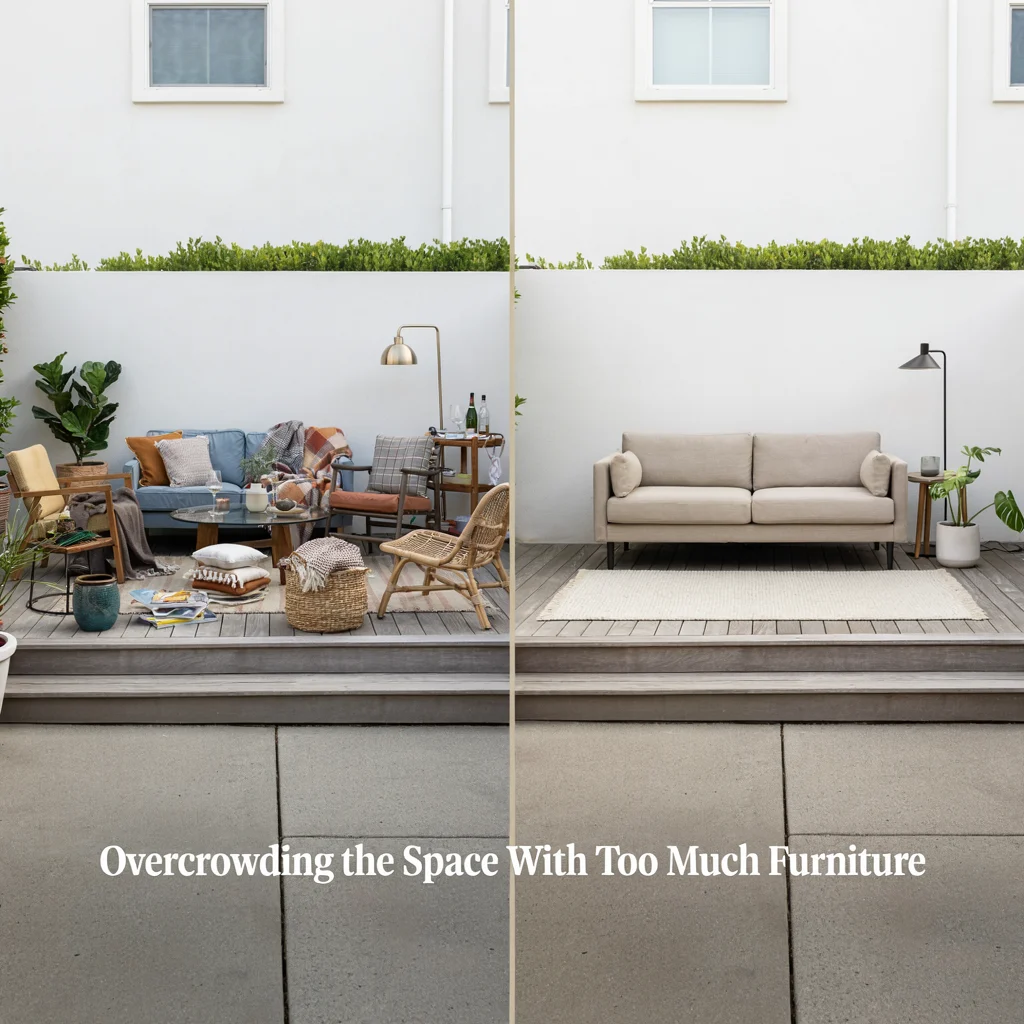
Overcrowding the space with too much furniture is one of the most common outdoor styling mistakes, since a small patio packed with every piece available leaves no room to actually move or relax comfortably.
Why Empty Space Is Part of Good Outdoor Design
Why empty space is part of good outdoor design comes down to the same principle that applies indoors, negative space gives the eye room to rest and makes the furniture that is there feel more intentional.
How to Edit Down an Overcrowded Patio
How to edit down an overcrowded patio usually means removing one or two pieces entirely rather than rearranging everything, since fewer, well-placed items almost always read as more considered.
Ignoring Scale When Choosing Outdoor Furniture
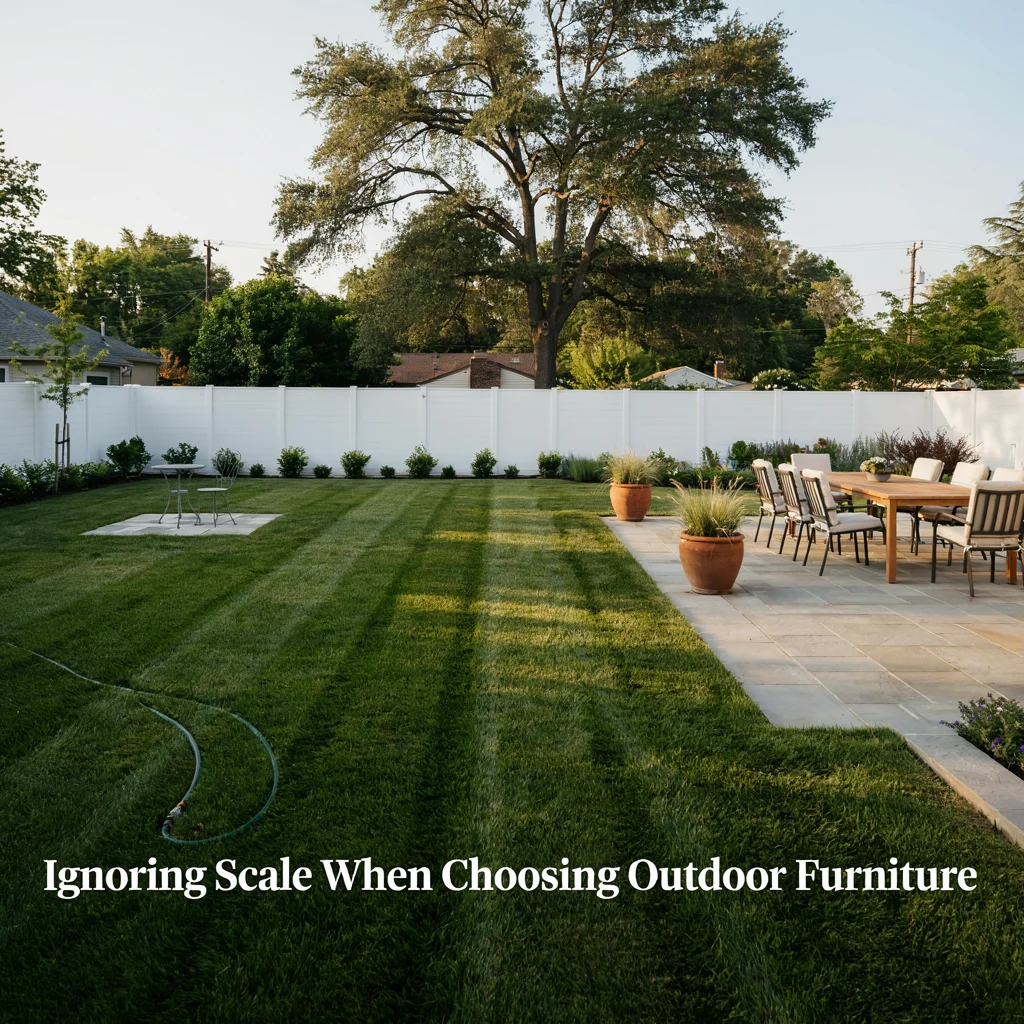
Ignoring scale when choosing outdoor furniture leads to seating that looks either lost in a large yard or oversized and cramped on a small patio, since outdoor scale works differently than indoor scale.
Why Outdoor Furniture Often Needs to Be Larger Than Expected
Why outdoor furniture often needs to be larger than expected comes down to open sky and surrounding landscape, which visually shrink furniture that would look perfectly sized inside four walls.
Measuring the Space Before Buying Anything
Measuring the space before buying anything, including walkways and clearance around each piece, avoids the common mistake of furniture that technically fits but leaves no room to walk comfortably.
Skipping Layered Outdoor Lighting
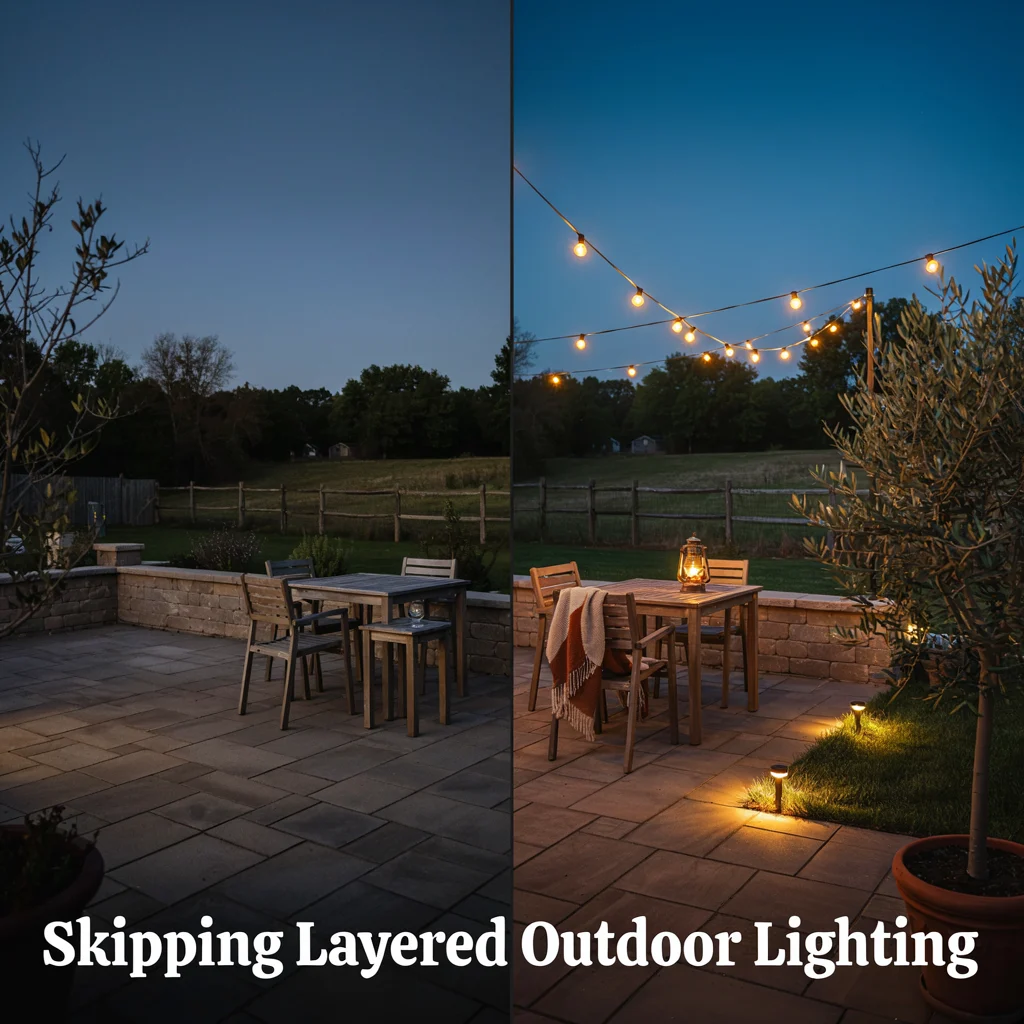
Skipping layered outdoor lighting is an easy mistake to make, since a single overhead or porch light leaves most outdoor evening spaces feeling flat and uninviting after sunset.
Why One Light Source Isn’t Enough Outdoors
Why one light source isn’t enough outdoors comes down to the same layering principle used indoors, combining ambient, task, and accent lighting creates depth that a single bright fixture simply can’t.
Simple Ways to Add Layers Without Rewiring
Simple ways to add layers without rewiring include string lights overhead, solar path lights along walkways, and battery lanterns on tables, all of which add layers without any electrical work.
Using Indoor-Only Fabrics and Materials Outside
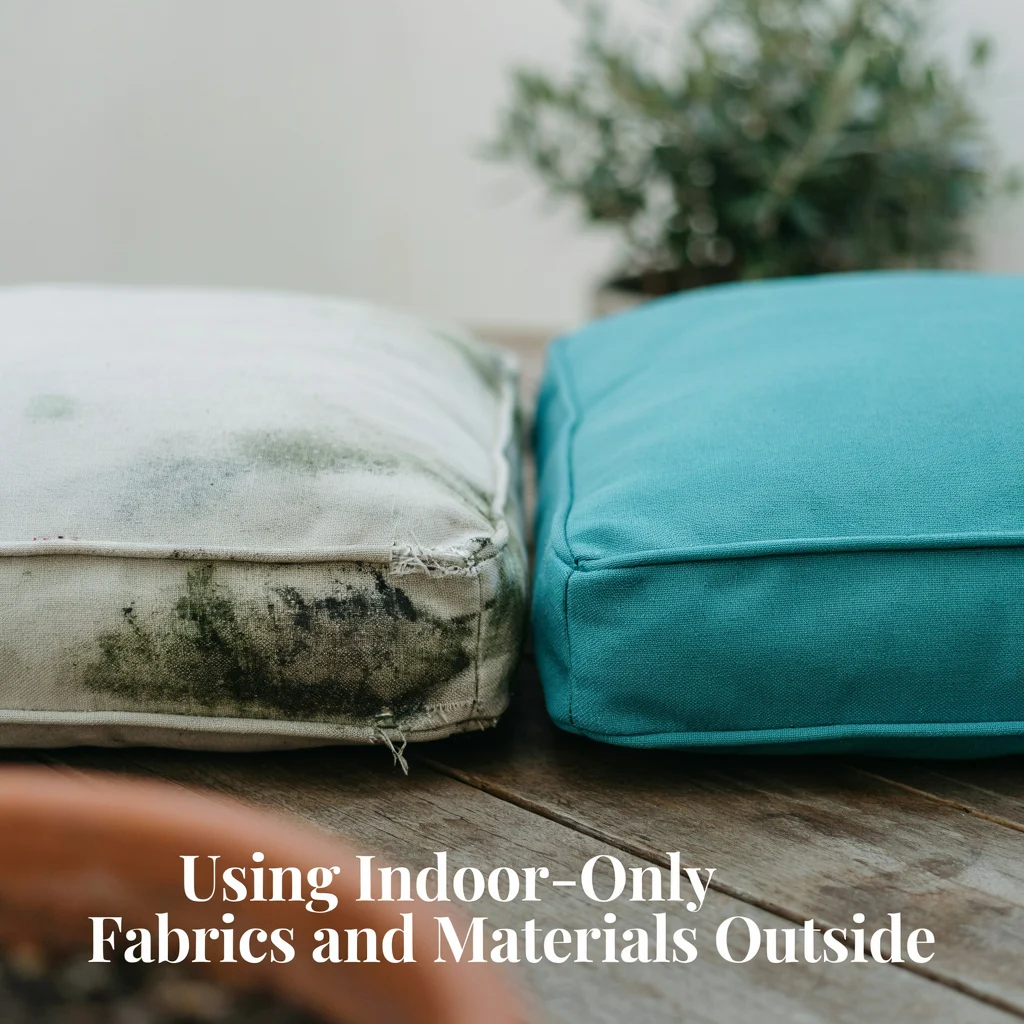
Using indoor-only fabrics and materials outside leads to cushions that fade, mildew, or fall apart within a single season, since standard upholstery fabric isn’t built for sun and moisture exposure.
Why Outdoor Fabric Actually Matters
Why outdoor fabric actually matters comes down to UV and mildew resistance, features that let genuinely outdoor-rated textiles survive rain and direct sun without the damage indoor fabric would show quickly.
Signs a Fabric Isn’t Meant for Outdoor Use
Signs a fabric isn’t meant for outdoor use include a soft, absorbent feel and care labels that mention indoor use only, both of which signal the material will struggle outside.
Neglecting a Clear Focal Point
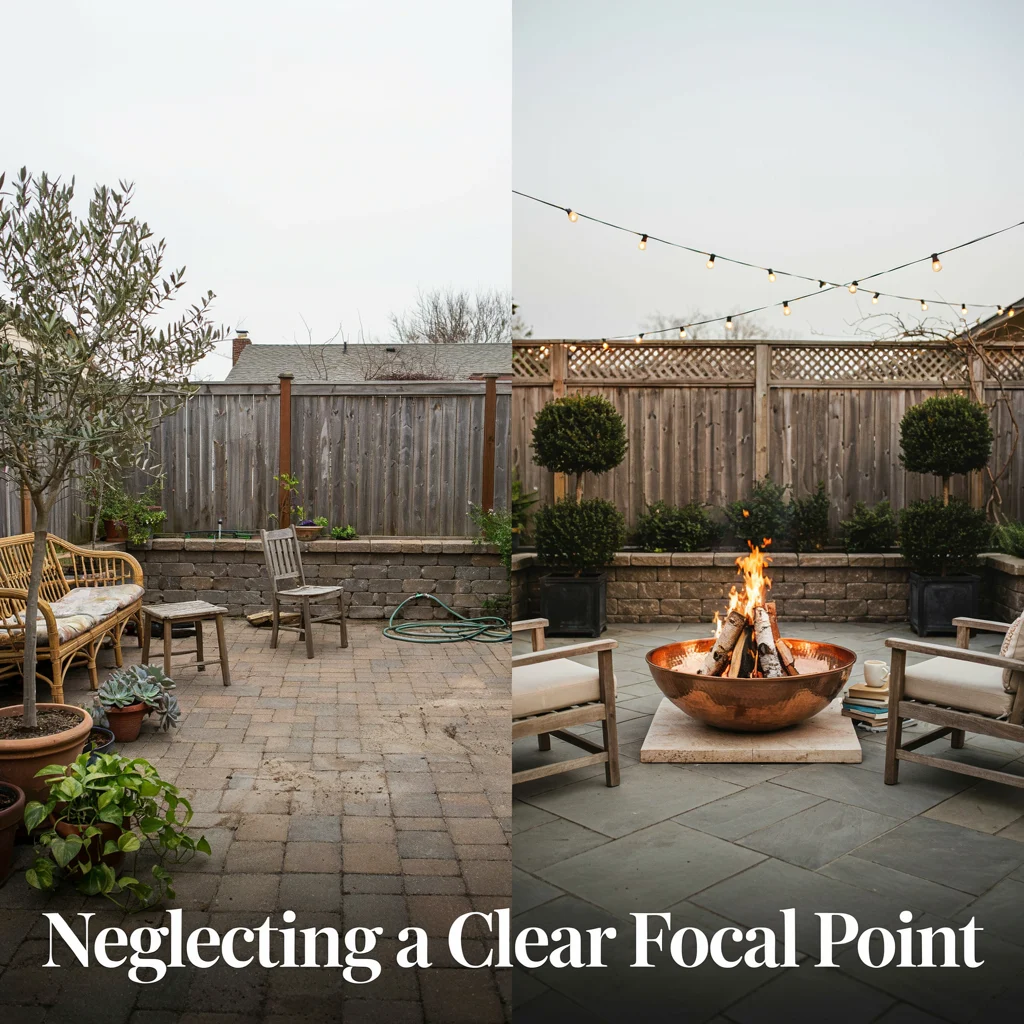
Neglecting a clear focal point leaves an outdoor space feeling directionless, with furniture and plants scattered around the perimeter but nothing drawing the eye or anchoring the layout.
Why Every Outdoor Room Benefits From One Anchor
Why every outdoor room benefits from one anchor comes down to basic design logic, a fire pit, water feature, or defined seating cluster gives the space a clear reason for being arranged the way it is.
Easy Focal Points for Small Backyards
Easy focal points for small backyards include a single statement planter, a small fire bowl, or even a well-placed bench, none of which require major construction or budget.
Forgetting to Plan Around Sun and Shade
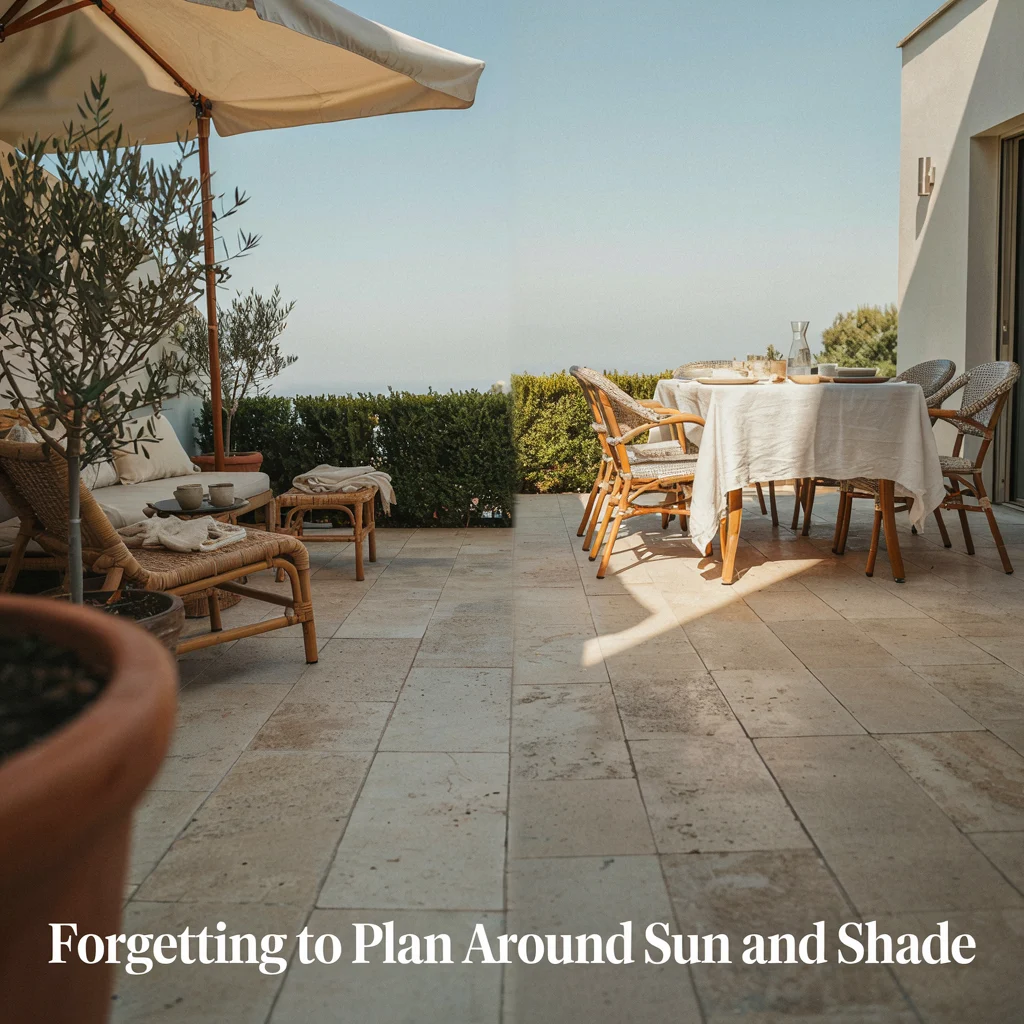
Forgetting to plan around sun and shade means placing seating or dining areas in spots that turn out to be unusable during the hottest or coldest parts of the day.
Why Tracking the Sun Before Furnishing Matters
Why tracking the sun before furnishing matters comes down to timing, since a spot that’s shaded at 6 p.m. dinner time but blazing at noon behaves very differently depending on when the space actually gets used.
Adding Shade Without a Full Pergola Build
Adding shade without a full pergola build can be as simple as a large umbrella, a shade sail, or strategically placed potted trees, all of which soften harsh sun without major construction.
Mismatching Style Across Different Outdoor Zones
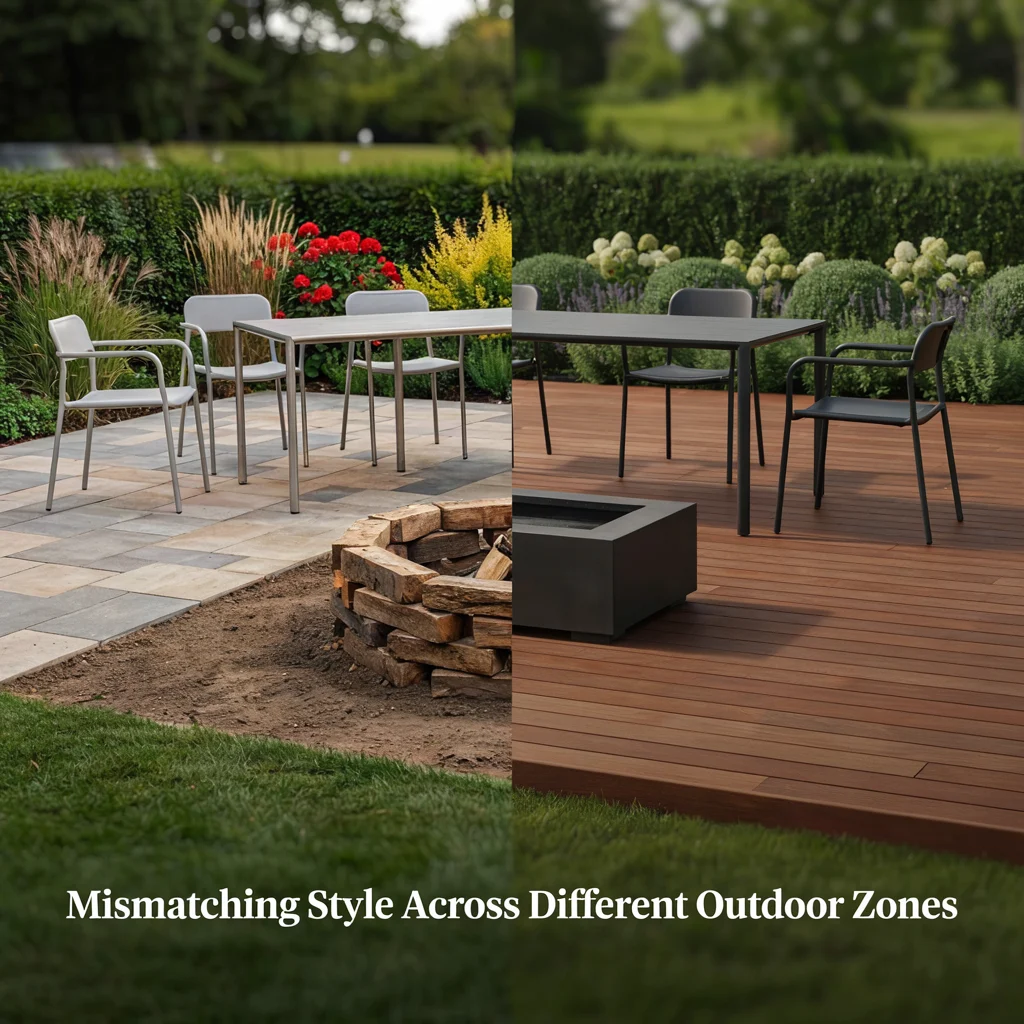
Mismatching style across different outdoor zones, such as a modern dining set next to a rustic wood fire pit with no visual connection, makes a yard feel like several unrelated spaces rather than one cohesive design.
Why a Consistent Material Palette Ties a Yard Together
Why a consistent material palette ties a yard together comes down to repetition, using the same two or three materials, like a specific wood tone or metal finish, across different zones creates visual cohesion.
Connecting Zones With Shared Colors or Textures
Connecting zones with shared colors or textures, even through something as simple as matching planters or a repeated cushion color, links separate areas without requiring identical furniture everywhere.
Underestimating the Styling Power of Greenery
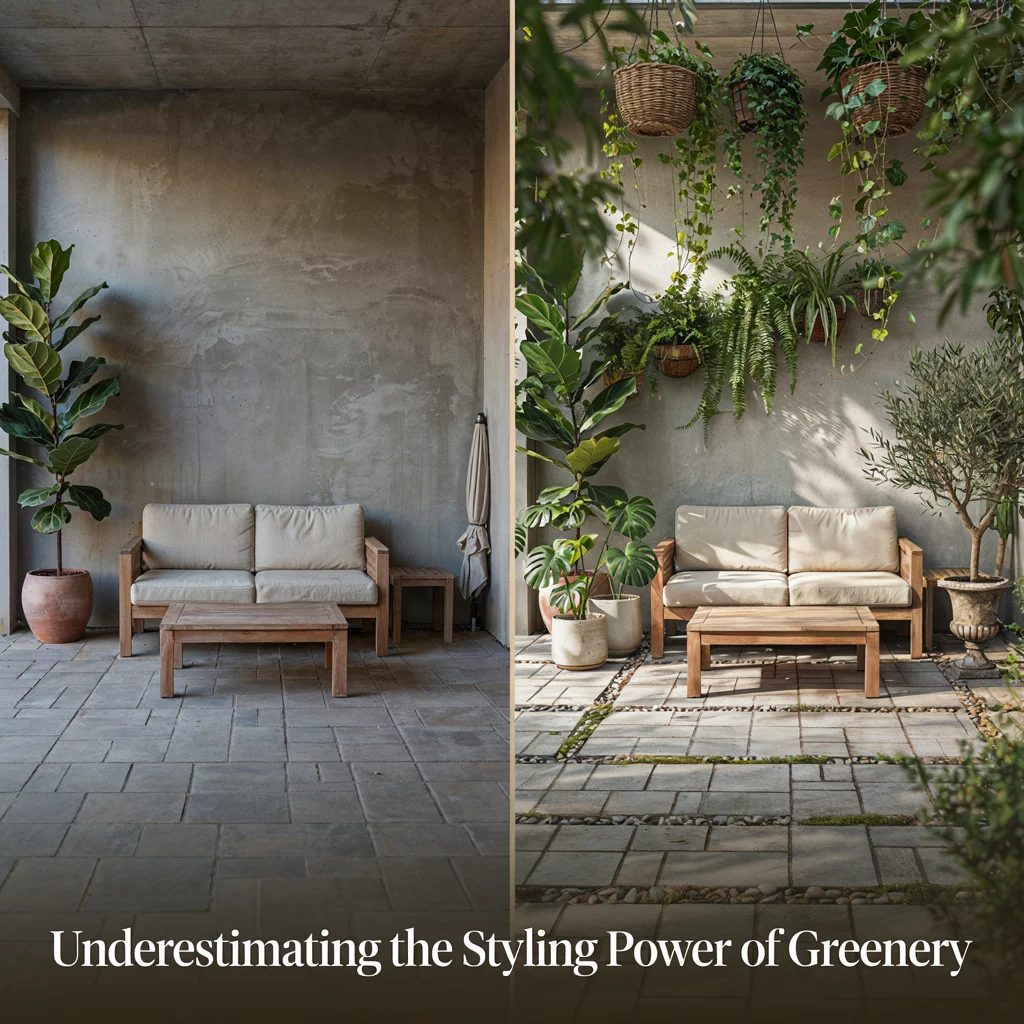
Underestimating the styling power of greenery leaves hard surfaces like patios and decks feeling stark, since plants are often the single fastest way to make an outdoor space feel finished.
Why Greenery Softens Hardscaping So Effectively
Why greenery softens hardscaping so effectively comes down to contrast, plants introduce organic shape, texture, and movement that balance out the straight lines of pavers, decking, and furniture.
Fast Ways to Add Greenery Without a Full Garden Redesign
Fast ways to add greenery without a full garden redesign include grouping a few large potted plants, adding a vertical planter, or hanging a couple of baskets near the main seating area.
The Bottom Line
Most outdoor styling mistakes come down to skipping a step rather than making a wrong choice, whether that’s editing down clutter, layering light properly, or checking the sun path before committing to a layout. Fixing even two or three of these usually makes a bigger visible difference than buying new furniture.
For related ideas, see our articles on Simple Steps for Creating a More Eco-friendly Garden, How to Start a No-Till Raised Bed Garden, and Plants That Like Wet Soil. This pairs well with our guide to A Complete Guide to Dogwood Tree Care.
Frequently Asked Questions
What Is the Most Common Outdoor Styling Mistake?
Overcrowding the space with too much furniture is generally the most common outdoor styling mistake, making even a well-designed patio feel cramped and difficult to move through comfortably.
How Can I Make My Patio Feel More Finished Without a Big Budget?
Adding a few large potted plants, layering in simple lighting like string lights, and editing down existing furniture are low-cost ways to make a patio feel more finished without a major redesign.
Does Outdoor Furniture Really Need to Be a Different Size Than Indoor Furniture?
Outdoor furniture often needs to be slightly larger than its indoor equivalent, since open sky and surrounding landscape visually shrink furniture that would look correctly sized inside a room.
Why Do My Outdoor Cushions Keep Wearing Out So Fast?
Outdoor cushions typically wear out fast when they’re made from indoor-only fabric, which lacks the UV and mildew resistance genuinely outdoor-rated textiles are built with.
How Many Light Sources Does a Small Patio Actually Need?
A small patio generally benefits from at least two light sources, such as overhead string lights paired with a few low path or table lights, to avoid the flat look a single fixture creates.