
Woodland Garden With Fire Pits for Cozy Nights

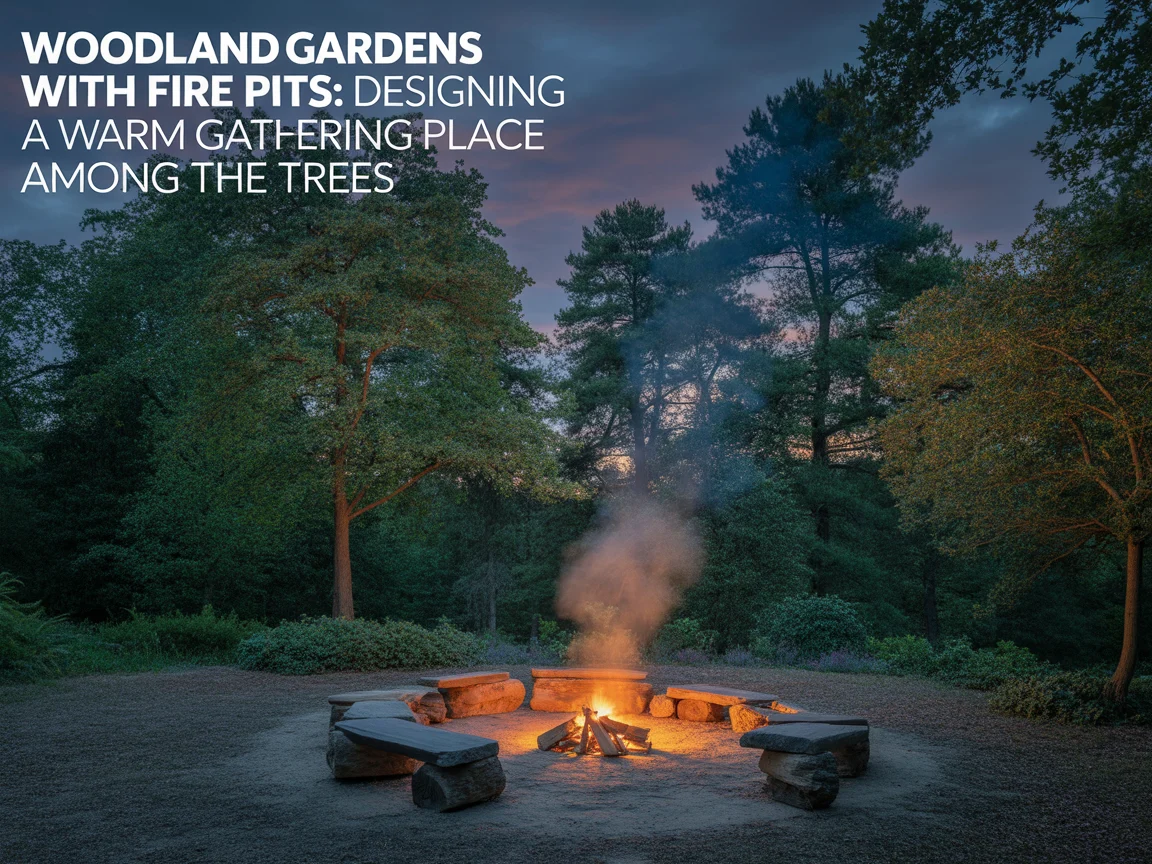
The best evening I ever spent in a garden I designed was around a sunken stone fire pit set in a small woodland clearing, on a cold night in late October. Eight of us sat on log rounds in a loose circle, the fire throwing its restless orange light up onto the surrounding trunks, the smell of woodsmoke mixing with damp leaves and moss, and the dark woodland pressing in close all around the warm pool of firelight. Nobody wanted to move for hours. What struck me was how completely the fire changed the woodland — by day it was a quiet, shaded green space, but by firelight it became somewhere primal and intimate, a clearing in a forest where people had gathered around flame for thousands of years. That night confirmed what I had long suspected: a fire pit is the single feature that turns a woodland garden from a place you look at into a place you live in after dark.
Woodland gardens with fire pits combine a contained outdoor fire feature — a sunken stone pit, a raised metal bowl, a cast iron fire feature, or a natural rock fire circle — with a carefully cleared and safely positioned woodland clearing, surrounded by fern, moss, and shade planting and rustic seating beneath a tree canopy, to create a dramatic, cozy gathering destination that extends woodland garden enjoyment into evening and cooler-season hours. The fire pit gives the woodland garden warmth, light, and a social focal point, while the surrounding trees and planting give the fire its enclosed, atmospheric, forest-clearing character.
Since that October evening I have designed, built, and refined fire pit areas across woodland gardens ranging from compact suburban plots with a single sheltered corner to large rural sites with genuine woodland clearings. I have created simple, safe natural fire circles for very little cost, and I have also built elaborate sunken stone fire pit terraces that become the entire reason a garden is used after dark. In this article I am sharing the best woodland garden fire pit ideas covering pit types, clearing design, seating, materials, planting, and the fire safety that is non-negotiable in a woodland setting.
Sunken Stone Fire Pit in a Woodland Clearing
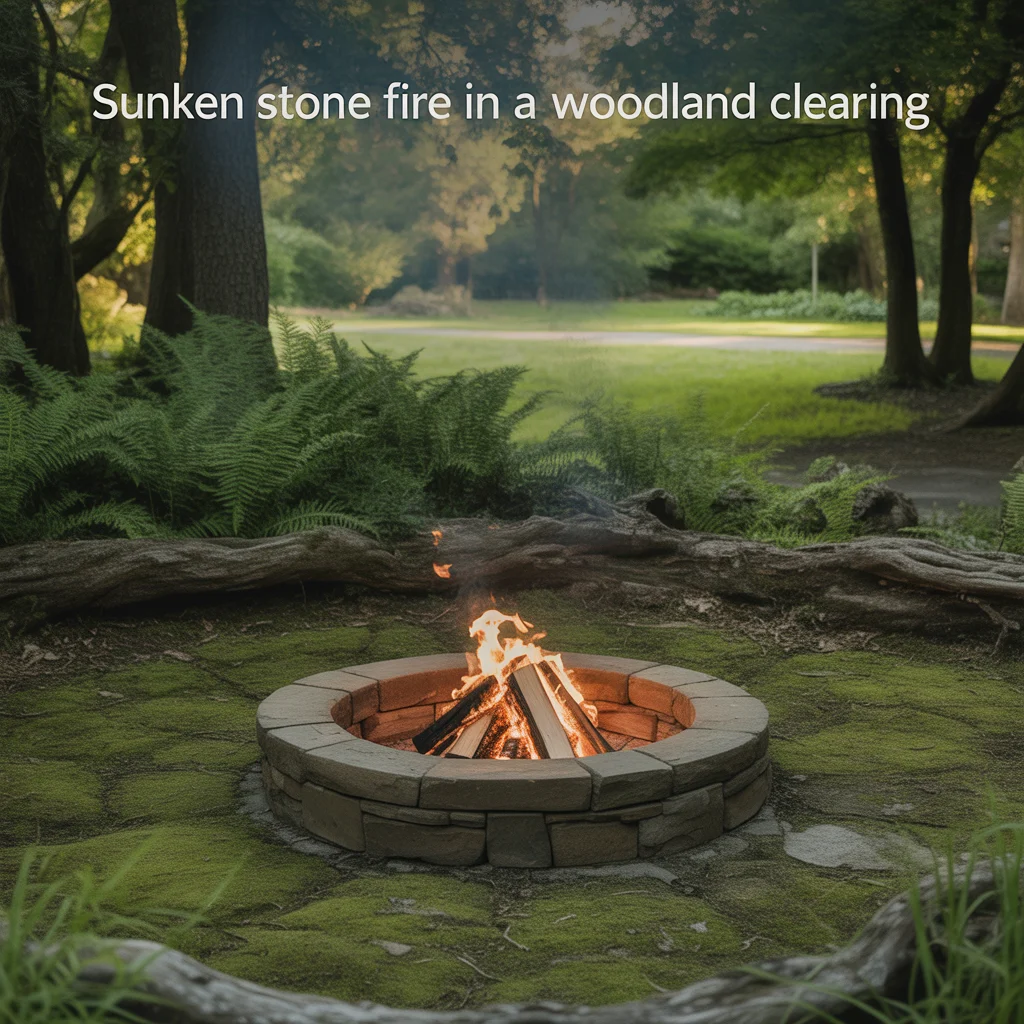
A sunken stone fire pit set into a woodland clearing is the most atmospheric and naturally integrated fire pit idea for a woodland garden, recessing the fire below ground level within a natural stone-lined circle so the flames sit low and intimate at the heart of a forest opening. I built a sunken stone fire pit in a small woodland clearing surrounded by ferns, and the way the recessed fire glowed up from below ground level, sheltered and contained within its stone ring, created the most intimate and primal gathering space I have ever made in a garden.
Stone Types for a Sunken Fire Pit
Natural fieldstone, granite setts, and firebrick-lined stone are three options suited to a sunken woodland fire pit. Natural fieldstone gathered or matched to the local landscape provides the most authentic woodland appearance and weathers naturally into the setting. Granite setts provide a durable, heat-resistant lining that withstands repeated fires without spalling. Firebrick lining the inner face of a stone pit provides the essential heat protection, since ordinary stone can crack or shatter under direct fire heat, making firebrick the safe inner layer behind a natural stone outer face.
Building a Sunken Fire Pit Safely
A sunken fire pit is built safely by excavating below ground level, lining the pit with heat-resistant firebrick, and providing drainage at the base so water does not collect. I excavate the pit to a depth that holds the fire low and contained, line the inner face with firebrick rated for direct fire contact, and lay a gravel drainage base so rainwater drains away rather than pooling in the pit. A sunken pit must never be built where water collects or in a position that could trap dangerous quantities of smoke.
Sizing a Sunken Woodland Fire Pit
A 30 to 36-inch internal diameter, a 12 to 18-inch depth, and a generous surrounding clearance are three dimensions suited to a sunken woodland fire pit. An internal diameter of 30 to 36 inches provides a fire large enough to warm a gathering without being unmanageable. A depth of 12 to 18 inches holds the fire low and sheltered while allowing easy tending. A generous clearance around the pit, kept clear of all combustible planting and overhanging branches, is the single most important dimension in a woodland setting.
Raised Metal Fire Bowl on a Woodland Terrace
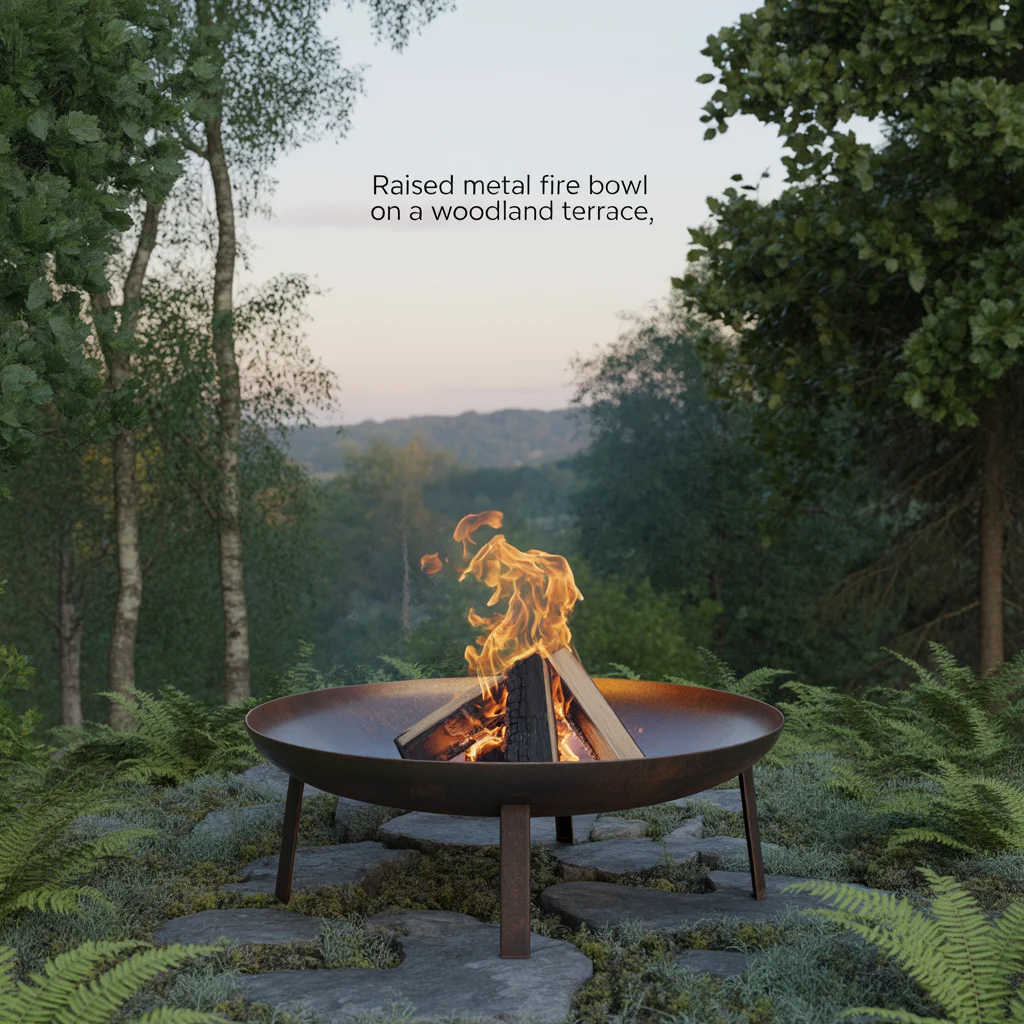
A raised metal fire bowl on a woodland terrace lifts the fire above ground level in a freestanding bowl, providing a portable, lower-commitment fire feature that suits a woodland terrace or seating area where a permanent excavated pit is not wanted. I placed a raised steel fire bowl on a small woodland terrace, and the elevated fire at seated eye level, with its visible flames and easy portability, provided instant warmth and atmosphere without the construction and permanence of a built-in pit.
Metal Fire Bowl Types for a Woodland Garden
Corten steel fire bowls, cast iron fire bowls, and stainless steel fire bowls are three types suited to a woodland terrace. Corten steel fire bowls develop a warm rusted patina that suits the natural woodland palette beautifully and weathers attractively over time. Cast iron fire bowls provide the heaviest, most durable bowl that retains and radiates heat well, suiting a fixed terrace position. Stainless steel fire bowls provide the most rust-resistant and low-maintenance option, suiting a homeowner who wants a cleaner, more contemporary look on the woodland terrace.
Protecting a Terrace Beneath a Fire Bowl
A heat-resistant base, a spark guard, and adequate clearance are three protections suited to a raised fire bowl on a terrace. A heat-resistant base or fire-proof mat beneath the bowl protects timber decking or planting from radiated heat and falling embers. A spark guard or mesh screen over the bowl contains sparks, which is especially important in a woodland setting full of dry leaf litter. Adequate clearance around and above the bowl, well clear of furniture, planting, and overhanging branches, keeps the raised fire safe.
Natural Rock Fire Circle
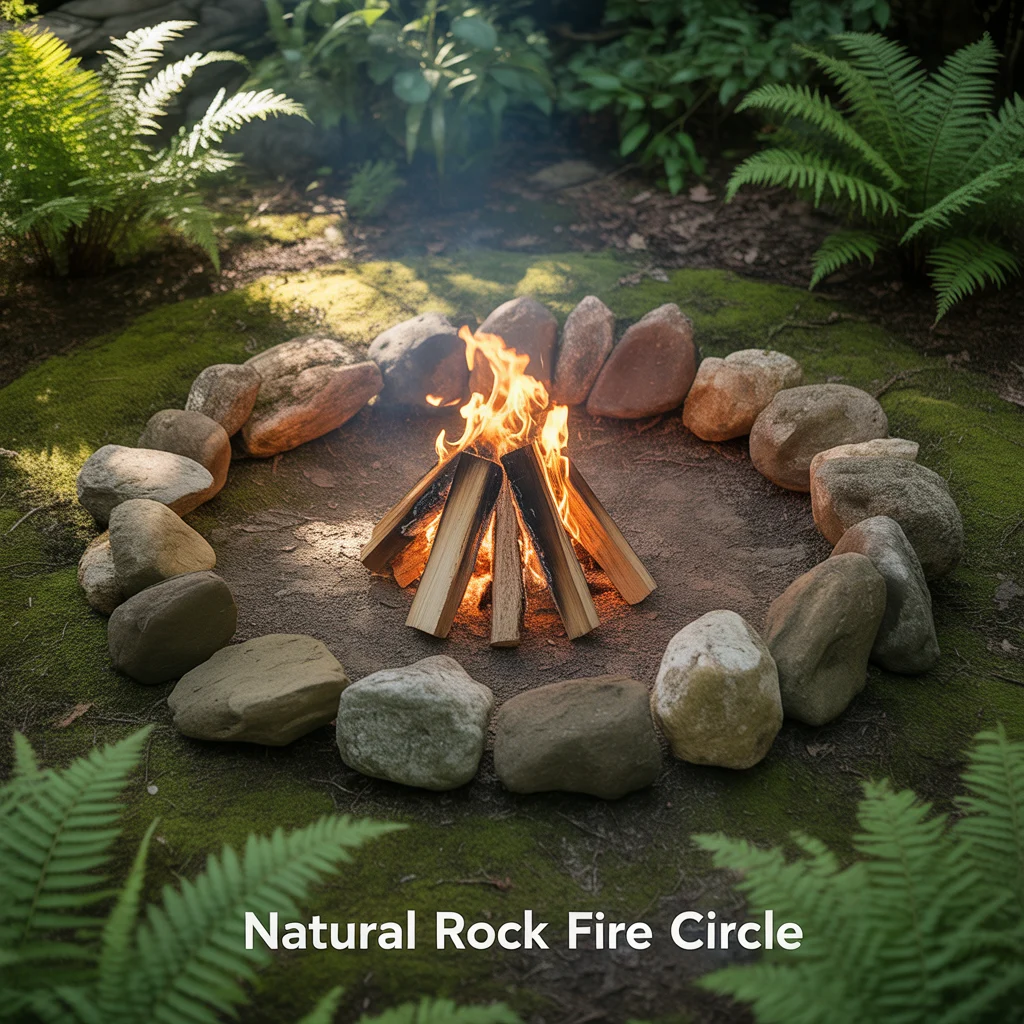
A natural rock fire circle uses a ring of large natural boulders or rocks arranged around a simple fire to create the most rustic and primal fire pit idea for a woodland garden, recalling the elemental fire rings of genuine wild camps. I built a natural rock fire circle in a woodland garden using a ring of moss-edged boulders around a gravel fire base, and the raw, unrefined character of the stone circle around the fire created an atmosphere of ancient simplicity that no manufactured fire feature could match.
Rock Selection for a Fire Circle
Large weathered boulders, flat-topped sitting stones, and heat-tolerant igneous rock are three choices suited to a natural fire circle. Large weathered boulders arranged in a rough ring provide the rugged, naturalistic enclosure that defines the fire circle. Flat-topped sitting stones incorporated into the ring double as informal seating around the fire. Heat-tolerant igneous rock such as granite or basalt resists cracking under fire heat, whereas porous or layered stone can shatter dangerously when heated, making rock selection a genuine safety matter.
Avoiding Dangerous Stone in a Fire Circle
Porous river stones, layered sedimentary rock, and any wet or sealed stone are three types to avoid in a fire circle. Porous river stones can trap moisture internally and explode when heated, which is a serious hazard. Layered sedimentary rock can split and fragment along its bedding planes under fire heat. Any wet or recently rained-on stone should never be heated rapidly. I always use dry, dense, heat-tolerant igneous stone for the inner ring of a fire circle and keep porous decorative stone well away from direct heat.
Cast Iron Fire Pit Feature
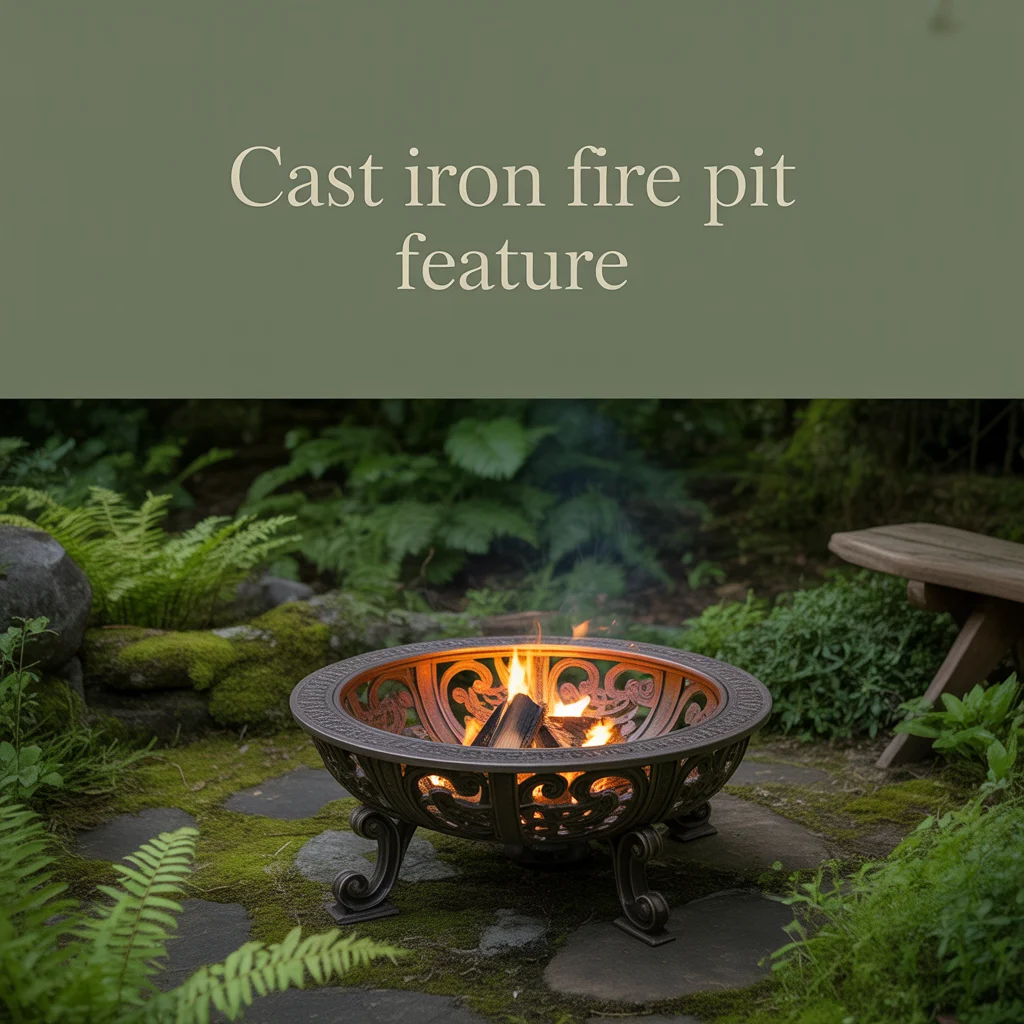
A cast iron fire pit feature provides a durable, characterful, often decorative freestanding fire pit that combines heavy heat-retaining metal with traditional or ornate design, suiting a woodland garden where a substantial, lasting fire feature is wanted without major construction. I positioned a cast iron fire pit in a sheltered woodland corner, and its heavy, solid presence and the way it held and radiated heat long after the flames died down made it a reliable, characterful centerpiece for cooler-season evenings.
Cast Iron Fire Pit Styles
A bowl-style cast iron pit, a deep cauldron pit, and a decorative pierced pit are three styles suited to a woodland garden. A bowl-style cast iron pit provides an open, classic fire bowl with good visibility of the flames. A deep cauldron pit holds a larger, longer-burning fire suited to extended evening gatherings. A decorative pierced cast iron pit casts patterns of firelight through cut-out sides onto the surrounding planting, adding a magical lit detail to the woodland setting.
Caring for Cast Iron in a Woodland Setting
A cover, periodic oiling, and ember management are three care practices suited to a woodland cast iron fire pit. A weatherproof cover protects the iron from the damp, humid conditions of a woodland garden that accelerate rust. Periodic oiling of the metal maintains its surface and prevents corrosion. Clearing ash and managing embers after each use both prolongs the pit’s life and removes the residue that holds moisture against the metal in the damp woodland air.
Designing the Woodland Fire Pit Clearing
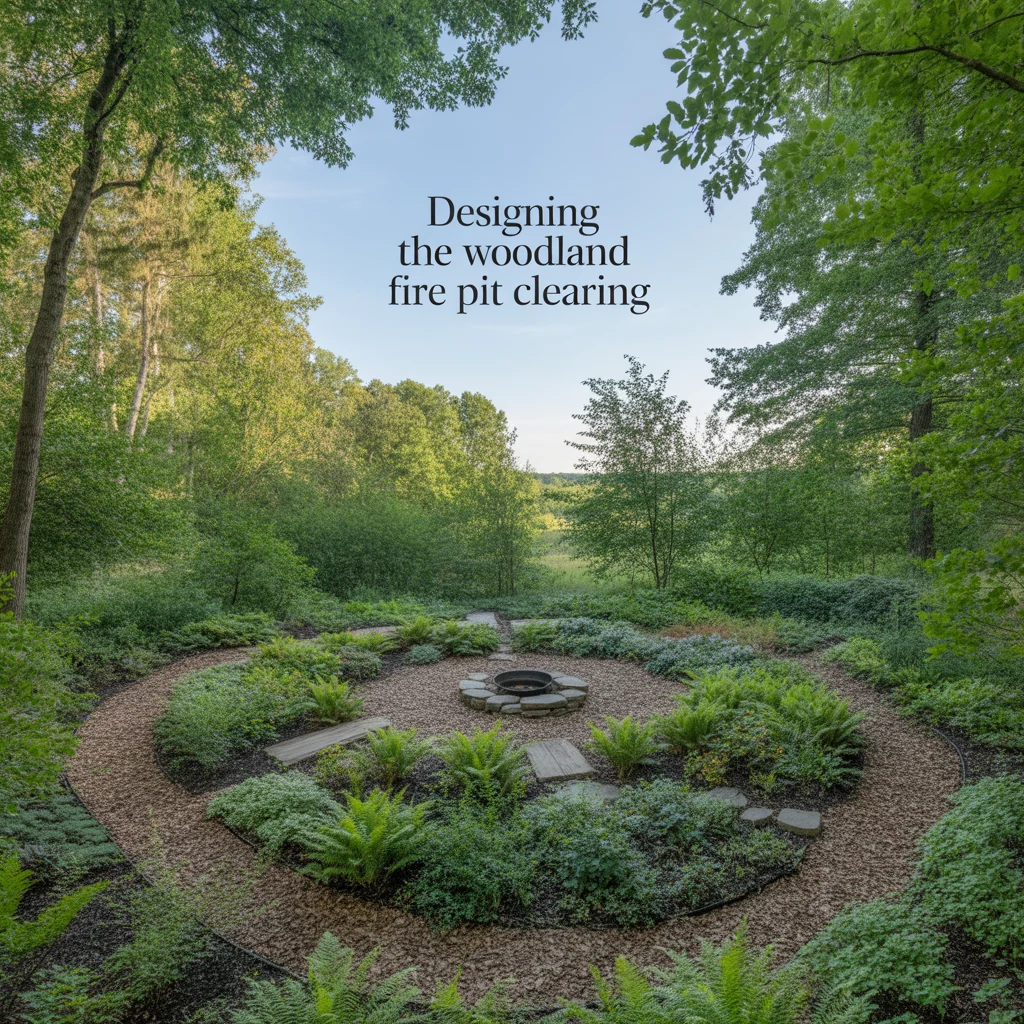
Designing the woodland fire pit clearing is the foundation of the whole feature, because the fire pit needs a properly cleared, safe, and well-proportioned opening in the woodland to sit within, balancing enclosure and atmosphere against the essential fire safety clearance. I always design the clearing before the pit itself, because the size, shape, and safe margins of the woodland opening determine everything about how the fire feature will look, feel, and perform.
Sizing the Fire Pit Clearing
A central pit position, a seating ring zone, and a safety clearance margin are three zones suited to a woodland fire pit clearing. A central pit position places the fire at the heart of the clearing as the natural focal point. A seating ring zone around the pit provides space for a circle of seating at a comfortable, safe distance from the heat. A safety clearance margin beyond the seating, kept clear of all combustible material and well back from surrounding trees, is the essential outer zone that makes a woodland fire feature safe.
Shaping a Natural-Looking Clearing
An irregular organic edge, a retained canopy gap, and a soft planted transition are three principles suited to a natural woodland clearing. An irregular organic edge to the clearing reads as a natural forest opening rather than a built circular patio. A retained canopy gap directly above the fire is essential so no branches overhang the flames, while the surrounding canopy still encloses the space. A soft planted transition of ferns and shade plants around the clearing edge, set safely back from the fire, blends the opening into the surrounding woodland.
Rustic Log Seating Around the Fire
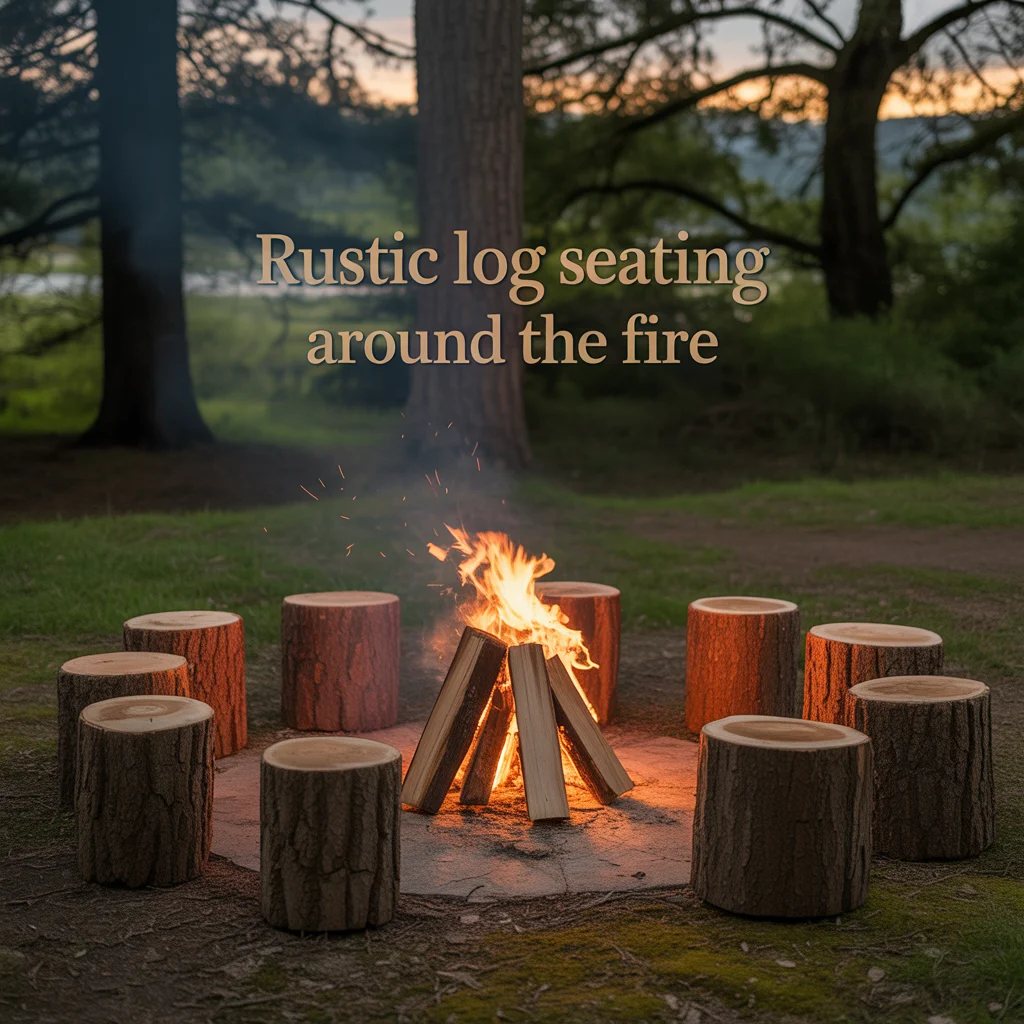
Rustic log seating arranged around a woodland fire pit provides the most naturally appropriate seating, using simple log rounds, timber benches, or felled-trunk seats to create an informal circle that suits the woodland setting and the primal character of the fire. I set a circle of oak log rounds around a woodland fire pit, and the simple timber seats looked so naturally part of the woodland, and felt so right around the fire, that no manufactured furniture could have suited the space half as well.
Log Seating Types for a Fire Circle
Solid log rounds, a split-log bench, and a felled-trunk seat are three rustic seating types suited to a woodland fire circle. Solid log rounds of generous diameter provide individual stool seating that can be arranged and rearranged around the fire. A split-log bench with a flattened top provides more comfortable shared seating for several people. A felled-trunk seat using a horizontal log on low supports provides a long natural bench that follows the curve of the seating circle.
Arranging Seating Around a Fire Pit
A complete or partial circle, a comfortable heat distance, and a clear access gap are three arrangement principles suited to fire pit seating. A complete or partial circle of seating focuses everyone toward the fire and each other, creating the communal gathering the fire pit is for. A comfortable heat distance, set back far enough that the fire warms without scorching, keeps seating both cozy and safe. A clear access gap in the seating ring provides a safe route to tend the fire and for people to move in and out without stepping over the flames.
Fern and Moss Planting Around the Fire Pit
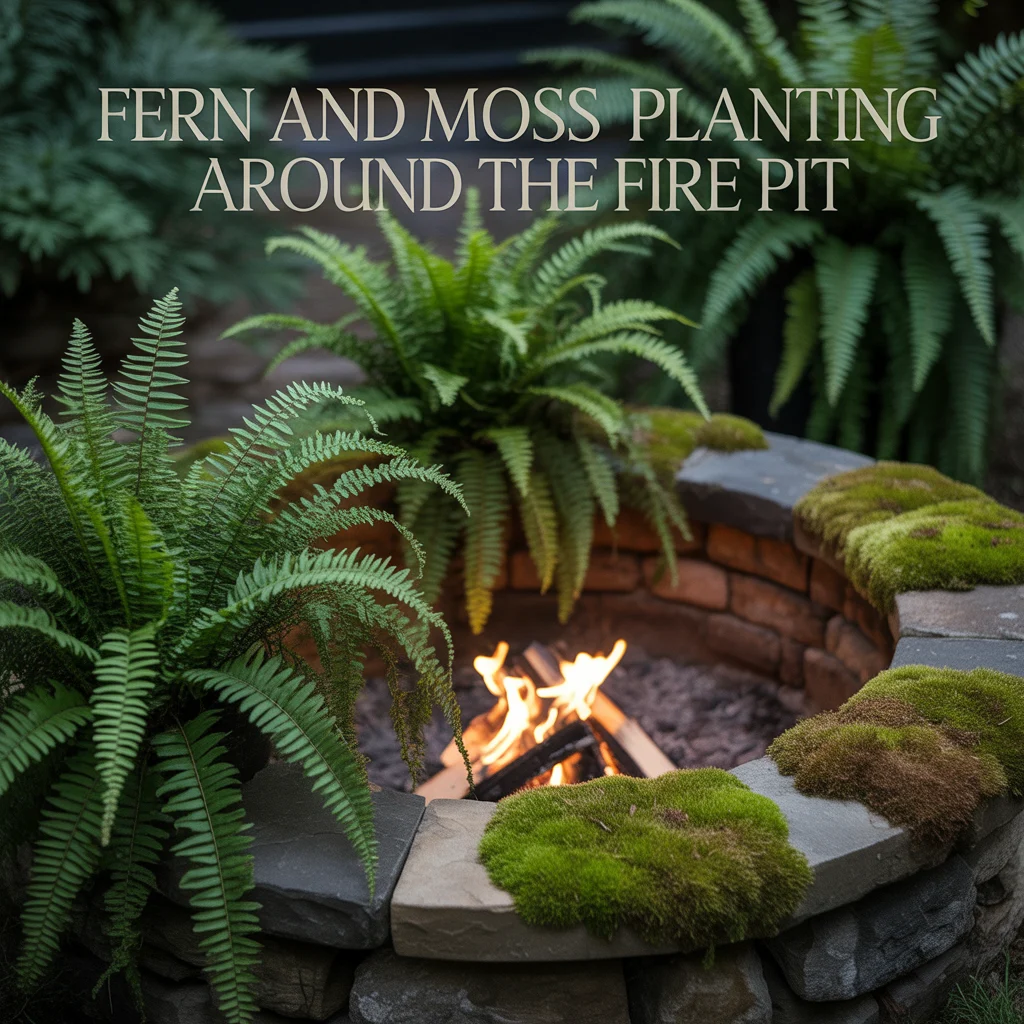
Fern and moss planting around a woodland fire pit clearing softens the edges of the opening and binds the fire feature into the surrounding woodland, using lush shade planting set safely back from the heat to frame the clearing in green. I planted the margins of a fire pit clearing with ferns and encouraged moss over the surrounding stones, and the contrast between the lush green planting framing the clearing and the warm fire at its center made the space feel like a genuine, long-established woodland glade.
Safe Planting Distances From a Fire
A clear inner zone, a low-planting middle zone, and a lush outer frame are three planting zones suited to a fire pit clearing. A clear inner zone immediately around the fire, kept entirely free of any planting, is the essential safety margin. A low-planting middle zone of moss and ground cover, set back from the heat, softens the clearing floor without introducing combustible height near the flames. A lush outer frame of ferns and shade plants at the clearing edge, well clear of the fire, provides the green enclosure that defines the woodland glade.
Plants for a Woodland Fire Pit Margin
Dryopteris filix-mas, moss, and Hosta sieboldiana are three plants suited to a woodland fire pit margin. Dryopteris filix-mas provides robust ferns at the outer clearing edge that frame the space with arching fronds at a safe distance from the fire. Moss carpeting the cooler, shaded ground and stones around the clearing provides soft green continuity. Hosta sieboldiana provides bold foliage at the clearing margin that anchors the planting and contrasts with the fine fern texture, all kept safely back from the heat.
Gas Fire Pit for a Low-Smoke Woodland Setting
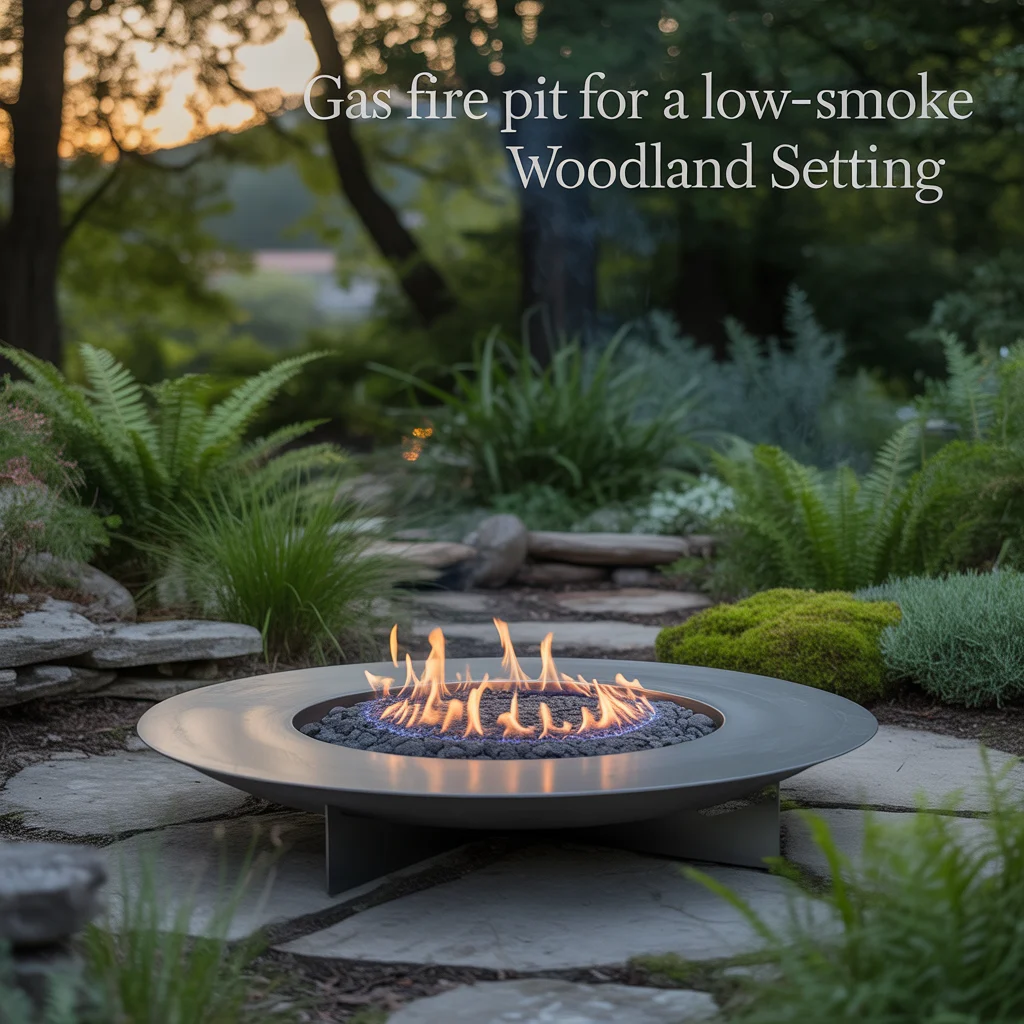
A gas fire pit provides a clean, controllable, low-smoke fire feature that suits a woodland garden where the spark and ember risk of a wood fire is a particular concern, delivering instant flame and warmth with far greater safety near trees and dry vegetation. I installed a gas fire pit in a woodland garden surrounded by mature trees where an open wood fire would have been too great a risk, and the controllable flame with no sparks or flying embers provided the atmosphere of a fire pit with a fraction of the woodland fire hazard.
Gas Fire Pit Types for a Woodland Garden
A gas fire bowl, a gas fire table, and a built-in gas pit are three types suited to a woodland garden. A gas fire bowl provides a simple freestanding gas flame in a portable bowl. A gas fire table combines the fire feature with a usable surface around the flames, suiting a woodland terrace gathering. A built-in gas pit integrated into a stone or terrace structure provides the most permanent and refined gas fire feature within the woodland garden.
Advantages of Gas in a Woodland Setting
No sparks or embers, instant control, and clean operation are three advantages of gas in a woodland setting. The absence of sparks and flying embers dramatically reduces the fire risk that loose burning material poses among dry woodland leaf litter and overhanging branches. Instant control allows the flame to be lit and extinguished immediately, removing the prolonged dying-ember period of a wood fire. Clean operation with no smoke, ash, or wood storage suits a woodland garden where smoke drift and ember risk are genuine concerns.
Backyard Woodland Fire Pit for a Small Garden
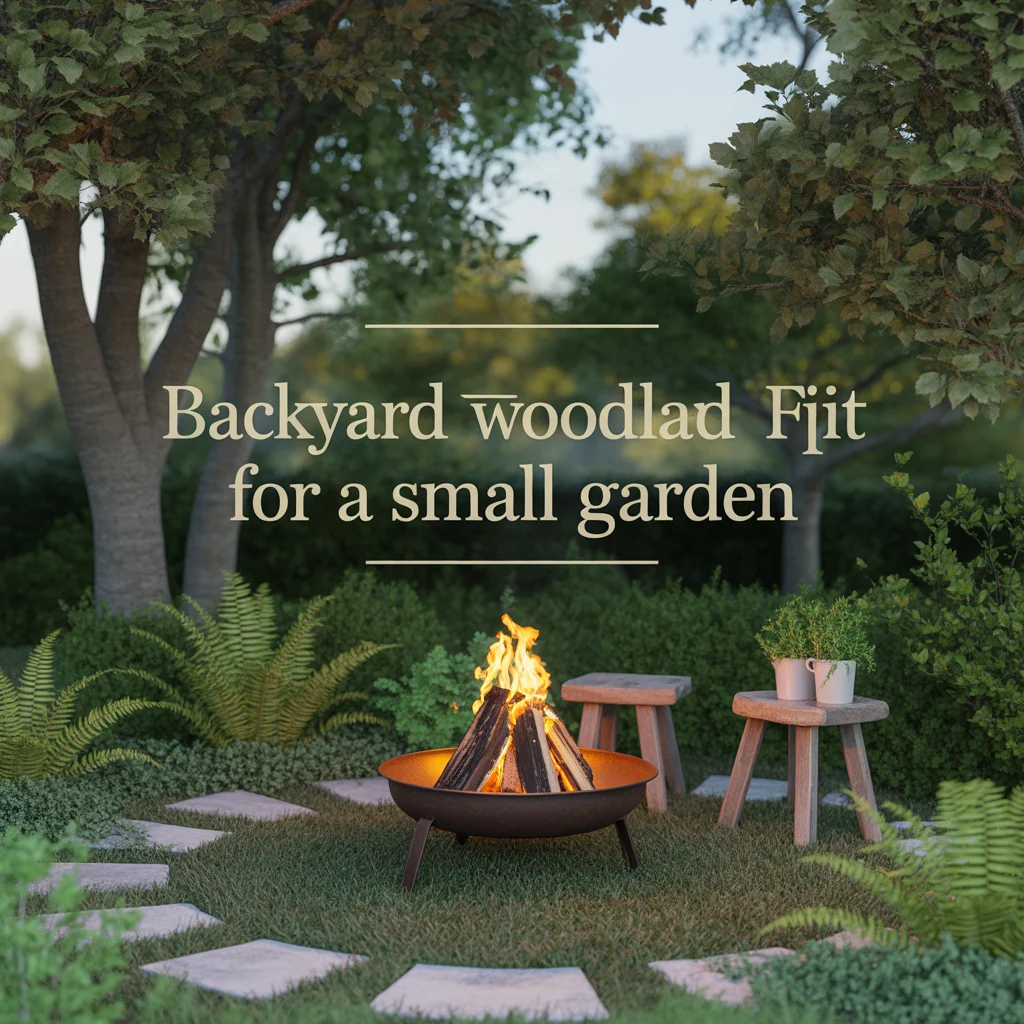
A backyard woodland fire pit for a small garden brings the atmosphere of a woodland fire feature to a compact suburban plot, using a scaled, carefully positioned pit within a small shaded corner to create an intimate gathering space without the room a full clearing requires. I built a small backyard woodland fire pit in a compact shaded garden corner, and the modest scaled pit with a tight ring of seating created an intimate, enclosed fire gathering that made the small space feel like a private woodland retreat.
Scaling a Fire Pit to a Small Garden
A compact pit size, a tight seating arrangement, and a single sheltered position are three principles suited to a small backyard woodland fire pit. A compact pit of around 24 to 30-inch diameter provides genuine fire atmosphere proportionate to a small space. A tight seating arrangement of a few log rounds or compact seats creates an intimate circle. A single sheltered position in the most enclosed corner of the small garden, with safe clearance still maintained, makes the most of limited space.
Safety in a Small Woodland Fire Pit Space
Maintained clearance, a spark guard, and a non-combustible base are three safety essentials for a small fire pit space. Maintained clearance from fences, sheds, and overhanging branches is even more critical in a small garden where everything is closer to the fire. A spark guard contains embers in the confined space. A non-combustible base of stone or gravel beneath and around the pit protects the small garden from heat and falling embers, since the margins for error are smaller in a compact plot.
Fire Pit and Woodland Stream Combination
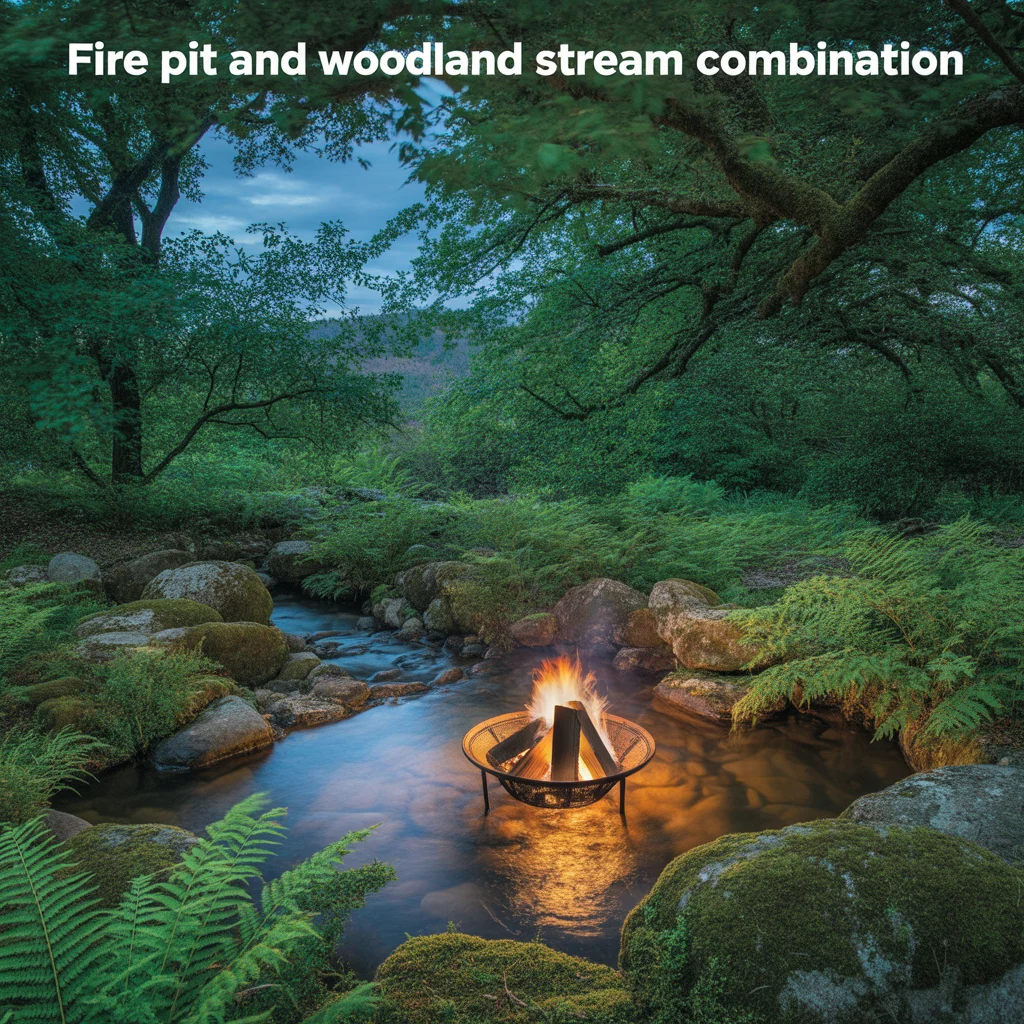
A fire pit and woodland stream combination pairs the warmth and light of a fire feature with the sound and movement of nearby water, creating a multi-sensory woodland gathering space where the crackle of flames meets the trickle of a stream. I positioned a fire pit clearing beside a small woodland stream, and the combination of firelight on the moving water and the mingled sounds of flame and flowing water created the most sensory-rich gathering space I have ever built in a woodland garden.
Positioning a Fire Pit Near Water
A safe bank setback, a firelight-on-water sightline, and a connecting path are three considerations suited to a fire pit beside a stream. A safe bank setback keeps the fire and seating clear of the wet, unstable ground at the water’s edge. A firelight-on-water sightline positions the fire so its glow reflects across the moving water for maximum atmospheric effect. A connecting path links the fire pit and the stream so both features are part of a single woodland journey.
Sensory Benefits of Fire and Water Together
Combined sound, reflected light, and contrasting elements are three sensory benefits of pairing fire and water. The combined sound of crackling fire and trickling water creates a rich, layered woodland soundscape. The reflected firelight dancing on the moving water doubles the visual drama of the flames. The contrast of the two primal elements, warm fire and cool water, in a single setting heightens the sensory experience of the woodland gathering space.
Seating Terrace Fire Pit Area
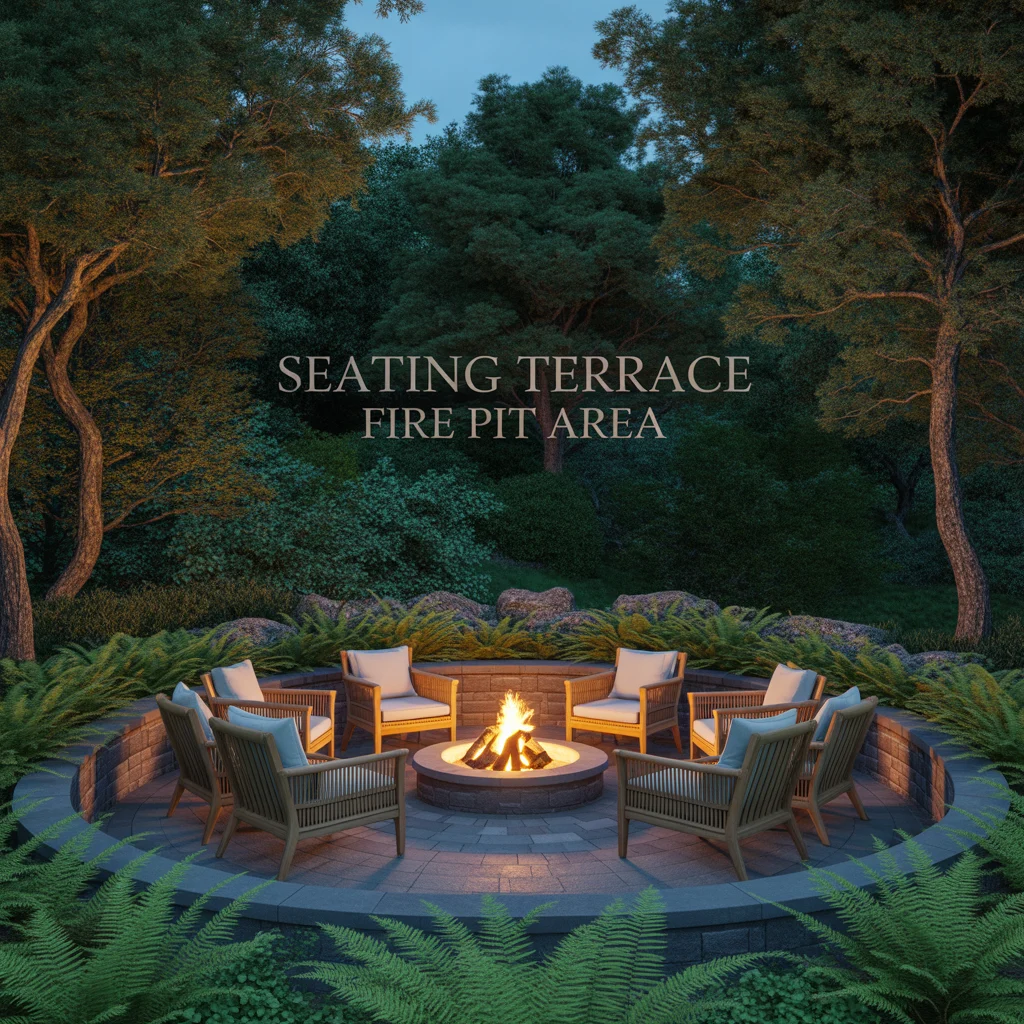
A seating terrace fire pit area builds a defined, levelled terrace within the woodland garden to host the fire pit and a more substantial seating arrangement, providing a firm, comfortable, all-weather gathering destination among the trees. I built a stone terrace fire pit area within a woodland garden using a levelled natural stone surface, and the firm, defined terrace made the fire pit usable in all conditions and provided a proper outdoor room within the woodland for larger gatherings.
Terrace Surface Materials for a Woodland Fire Area
Natural stone paving, compacted gravel, and stone setts are three surface materials suited to a woodland fire pit terrace. Natural stone paving provides the most refined, durable, and non-combustible terrace surface around the fire. Compacted gravel provides a more informal, free-draining, and affordable woodland terrace surface. Stone setts provide a characterful, traditional surface that suits the rustic woodland setting while offering a firm, level base around the pit.
Integrating a Terrace Into the Woodland
An organic terrace shape, retained existing trees, and soft planted edges are three principles suited to integrating a terrace into woodland. An organic, irregular terrace shape reads more naturally in a woodland than a rigid geometric platform. Retaining existing trees at the terrace edges, with safe clearance from the fire, keeps the woodland character intact. Soft planted edges of ferns and shade plants blend the terrace into the surrounding garden so it feels part of the woodland rather than imposed upon it.
Woodland Fire Pit Lighting and Atmosphere
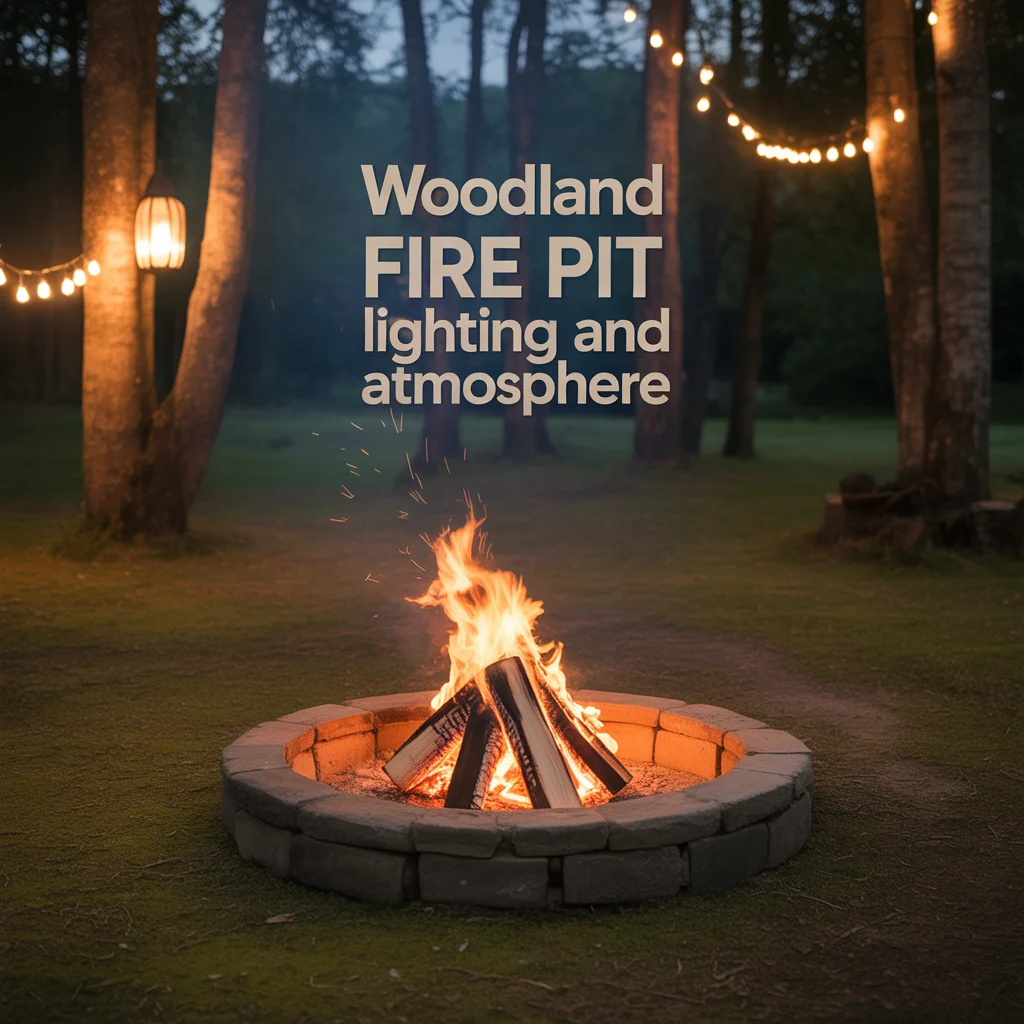
Woodland fire pit lighting and atmosphere layer subtle additional lighting around the fire pit clearing to extend and enhance the firelight, providing gentle navigation and ambiance that complements rather than competes with the fire. I added low warm lighting around a fire pit clearing to mark the path and softly light the seating, and the combination of the central fire with subtle surrounding glow created a complete, magical evening setting that worked even before the fire was lit.
Lighting to Complement a Fire Pit
Low path lighting, subtle seating glow, and tree uplighting are three lighting layers suited to a fire pit clearing. Low warm path lighting marks the safe route to and from the fire pit clearing in the dark. A subtle glow around the seating provides gentle ambient light without overpowering the firelight. Warm tree uplighting of the surrounding trunks, kept low and warm, frames the clearing in atmospheric light that extends the magic beyond the reach of the fire.
Keeping Lighting Subtle Around Fire
Warm color temperature, low brightness, and minimal fixtures are three principles suited to fire pit clearing lighting. A warm color temperature matching the firelight keeps the supplementary lighting harmonious rather than clashing with the fire’s glow. Low brightness ensures the lighting supports the fire as the focal point rather than competing with it. Minimal fixtures, used only where genuinely needed for safety and gentle ambiance, preserve the primal, fire-centered atmosphere that is the whole point of the feature.
Seasonal Woodland Fire Pit Use
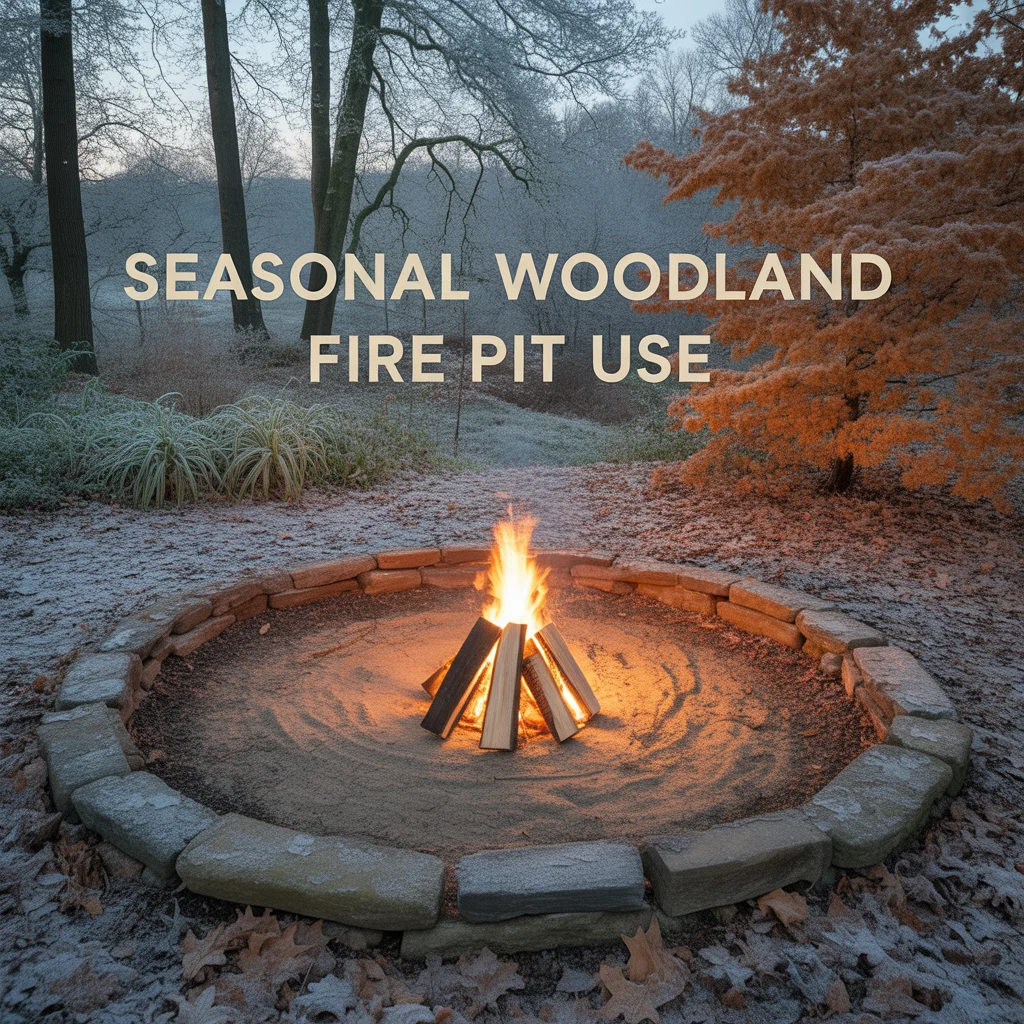
Seasonal woodland fire pit use makes the most of the fire feature across autumn and winter when its warmth and atmosphere have the greatest appeal, turning the coldest, darkest months into the time the woodland garden is most enjoyed. I designed a fire pit area specifically for autumn and winter use, and the warmth, light, and gathering focus of the fire transformed the cold-season woodland garden from a space that was abandoned by October into the most-used part of the whole garden through the darkest months.
Autumn Fire Pit Atmosphere
Falling-leaf surroundings, longer evenings, and warm gatherings are three qualities suited to autumn fire pit use. The falling-leaf surroundings of an autumn woodland provide a beautiful seasonal backdrop to the fire, though they also demand extra care in clearing combustible leaf litter from the fire zone. The longer, darker evenings of autumn make the firelight and warmth increasingly welcome. Warm autumn gatherings around the fire extend the outdoor entertaining season well past summer.
Winter Fire Pit Comfort
Maximum warmth appeal, bare-canopy drama, and cozy enclosure are three qualities suited to winter fire pit use. The maximum warmth appeal of a fire is at its greatest in winter, when the heat draws people outdoors into the woodland. The bare winter canopy reveals the sculptural tree structure around the fire, providing dramatic silhouettes against the firelight. The cozy enclosure of warm seating around the fire in the cold, dark woodland creates the most intimate and inviting gathering atmosphere of the entire year.
Fire Pit Cooking in a Woodland Garden
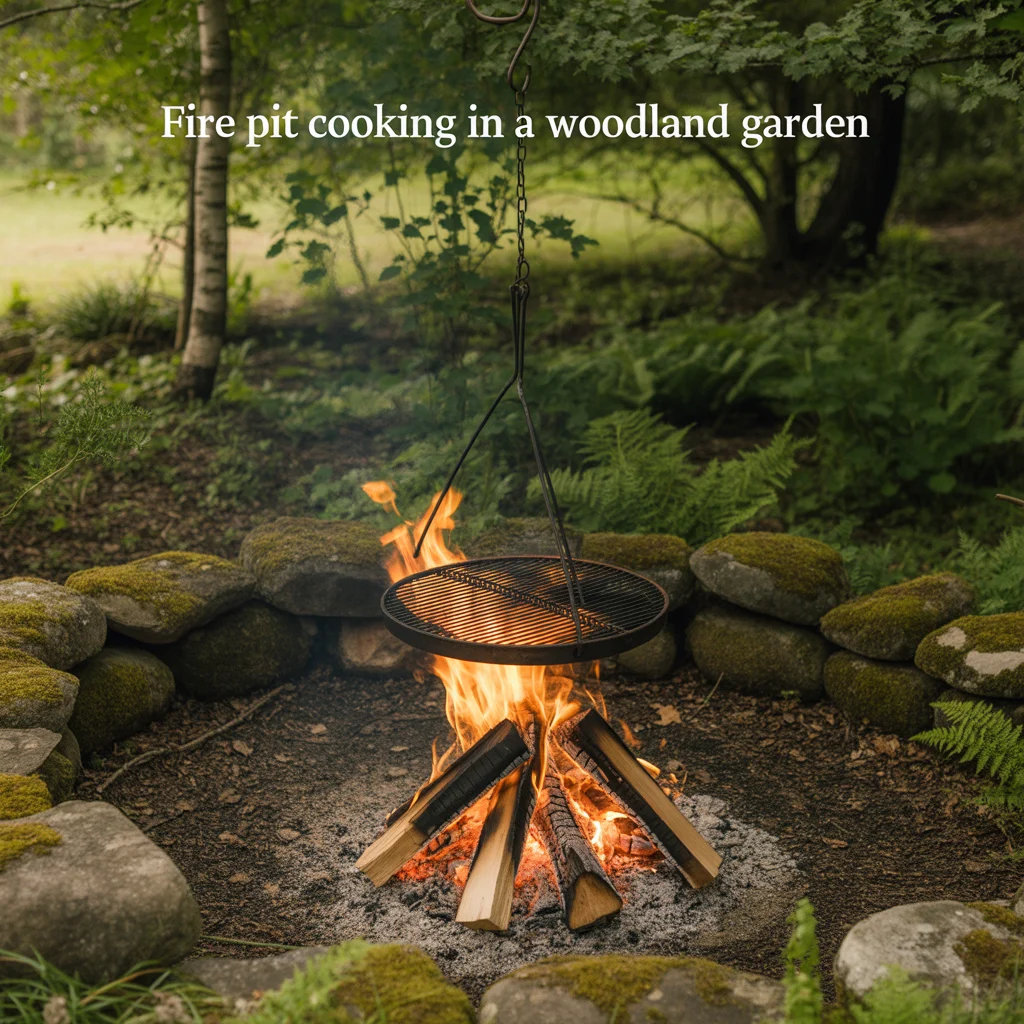
Fire pit cooking in a woodland garden adds a functional, sociable dimension to the fire feature, using the fire for grilling, toasting, and open-flame cooking to make the woodland gathering space a place to share food as well as warmth. I added a simple grill grate to a woodland fire pit, and the ability to cook over the open flames transformed the fire from a feature to gather around into a complete outdoor kitchen and dining experience at the heart of the woodland.
Cooking Equipment for a Fire Pit
A swing-arm grill grate, a tripod cooking setup, and a flat plancha plate are three cooking options suited to a woodland fire pit. A swing-arm grill grate that pivots over the fire allows food to be grilled and moved on and off the heat easily. A tripod cooking setup suspends a pot or grill over the flames for slower cooking. A flat plancha plate set over part of the fire provides a solid cooking surface for a wider range of food.
Safe Fire Pit Cooking Practices
Stable equipment, controlled flames, and safe food handling are three practices suited to fire pit cooking. Stable, securely positioned cooking equipment prevents spills of hot food or embers. Controlled flames and a bed of embers rather than high flames provide the steady, manageable heat that open-fire cooking needs. Safe food handling, with proper tools and heat protection, keeps cooking over the woodland fire both enjoyable and safe.
Woodland Fire Pit Safety Essentials
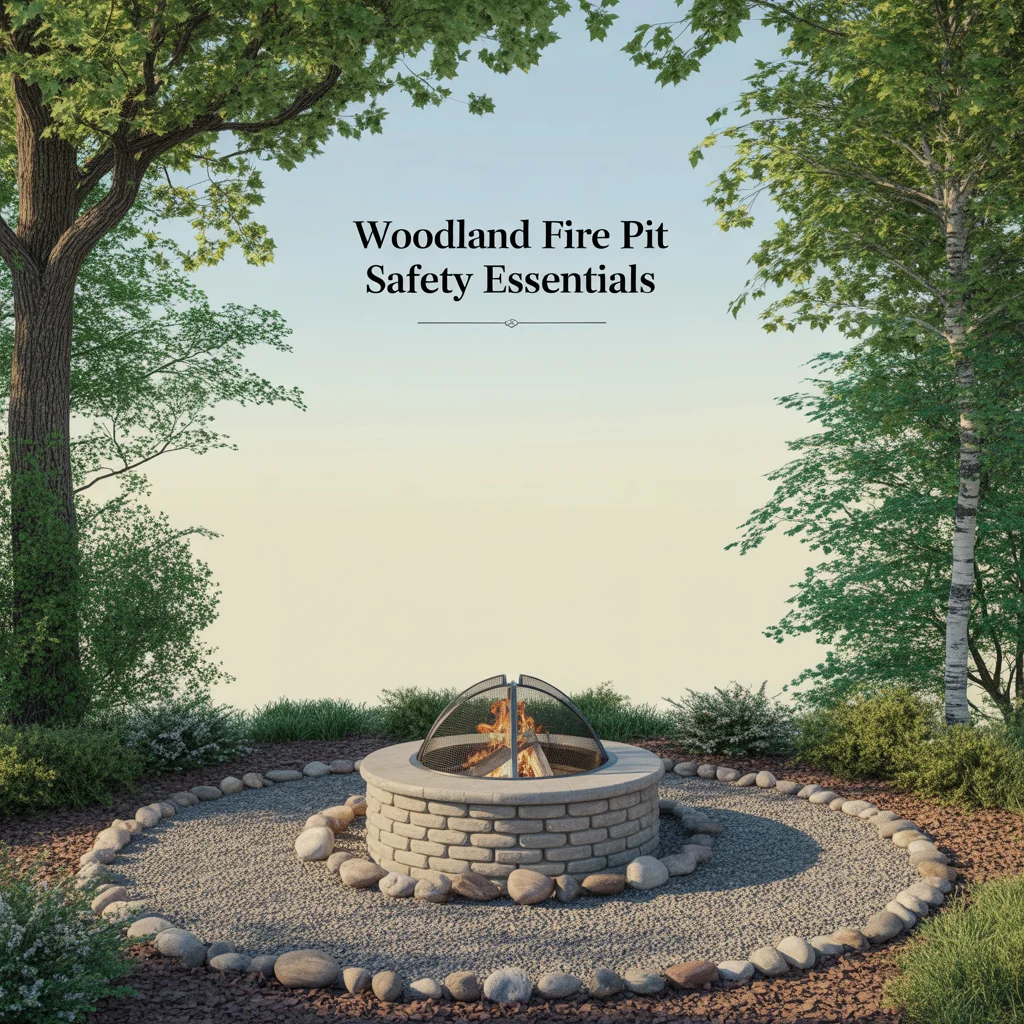
Woodland fire pit safety essentials are the non-negotiable foundation of any fire feature among trees, because the combination of open flame, dry leaf litter, overhanging branches, and standing timber makes fire safety more critical in a woodland garden than in any other setting. I treat fire safety as the first and most important part of every woodland fire pit project, because the atmosphere and enjoyment of a woodland fire mean nothing if the feature is not genuinely safe among the trees.
Essential Woodland Fire Safety Measures
Generous clearance, no overhanging branches, and a spark guard are three essential safety measures for a woodland fire pit. Generous clearance of all combustible planting, furniture, and structures around the fire is the primary safety requirement. No overhanging branches above the fire is essential, since a clear canopy gap directly over the flames prevents the most serious woodland fire risk. A spark guard or mesh screen contains the flying embers that are especially dangerous among dry woodland leaf litter.
Fire Management and Extinguishing
Constant supervision, water or sand on hand, and full extinguishing are three management practices suited to a woodland fire pit. Constant supervision of the fire at all times, never leaving it unattended, is the most important fire management rule in a woodland setting. Water or sand kept on hand provides the means to control or extinguish the fire immediately if needed. Full extinguishing of the fire and embers at the end of every gathering, ensuring nothing is left smouldering among the surrounding leaf litter, is essential before leaving the woodland fire pit.
Frequently Asked Questions
Is it safe to have a fire pit in a woodland garden?
A fire pit can be safe in a woodland garden provided it is positioned and managed with the extra care a woodland setting demands, since the combination of overhanging branches, dry leaf litter, and standing timber makes fire safety more critical here than in an open garden. The essential measures are a generous cleared zone around the fire kept free of all combustible material, a clear canopy gap directly above the flames so no branches overhang the fire, a spark guard to contain flying embers, and constant supervision with water or sand always on hand. For woodland gardens where ember and spark risk is a particular concern, a gas fire pit removes the flying-ember hazard entirely while still providing the warmth and atmosphere of a fire feature, making it the safest choice among dense trees.
What is the best type of fire pit for a woodland setting?
The best type of fire pit for a woodland setting depends on the balance you want between atmosphere and safety, with a sunken stone fire pit providing the most naturally integrated and intimate wood-burning feature, a natural rock fire circle providing the most rustic and primal character, and a gas fire pit providing the safest low-spark option among dense trees. A sunken stone pit lined with firebrick sits the fire low and sheltered at the heart of a clearing, a raised metal fire bowl provides a portable lower-commitment option, and a cast iron pit offers durable heat-retaining character. The single most important factor in any woodland setting is fire safety, so the choice should weigh the spark and ember risk of open wood fires against the cleaner, more controllable flame of gas in the specific conditions of your garden.
How far should a fire pit be from trees?
A fire pit should be positioned with generous clearance from trees, with no branches overhanging the fire and a clear canopy gap directly above the flames, since overhanging branches and nearby foliage are the most serious fire risk in a woodland setting. Beyond the canopy gap above, the fire needs a cleared horizontal zone around it kept free of trunks, low branches, dry planting, and combustible structures, with the surrounding seating and planting set safely back from the heat. Local fire regulations and guidance vary, so the safe distance should always meet or exceed local requirements, and in a woodland garden it is always better to err on the side of greater clearance given the abundance of dry leaf litter and standing timber that surrounds the fire.
What can I use for seating around a woodland fire pit?
Rustic log seating is the most naturally appropriate choice for a woodland fire pit, using solid log rounds as individual stools, a split-log bench with a flattened top for shared seating, or a felled-trunk seat as a long natural bench that follows the seating circle. Log and timber seating suits the woodland setting and the primal character of the fire far better than manufactured furniture, and arranging it in a complete or partial circle around the pit focuses everyone toward the fire and each other for a communal gathering. Whatever seating is used, it should be set at a comfortable heat distance that warms without scorching, with a clear access gap in the ring so the fire can be tended and people can move in and out safely.
When is the best time to use a woodland garden fire pit?
A woodland garden fire pit is at its best in autumn and winter, when the warmth, light, and gathering focus of the fire have their greatest appeal and transform the coldest, darkest months into the time the garden is most enjoyed. Autumn brings longer, darker evenings and a beautiful falling-leaf backdrop that make the firelight increasingly welcome, while winter offers maximum warmth appeal, dramatic bare-canopy silhouettes against the firelight, and the cozy enclosure of warm seating in the cold, dark woodland. The fire pit extends woodland garden enjoyment well beyond the summer season, turning a space that might otherwise be abandoned in the cooler months into a warm, atmospheric gathering destination used year-round.